
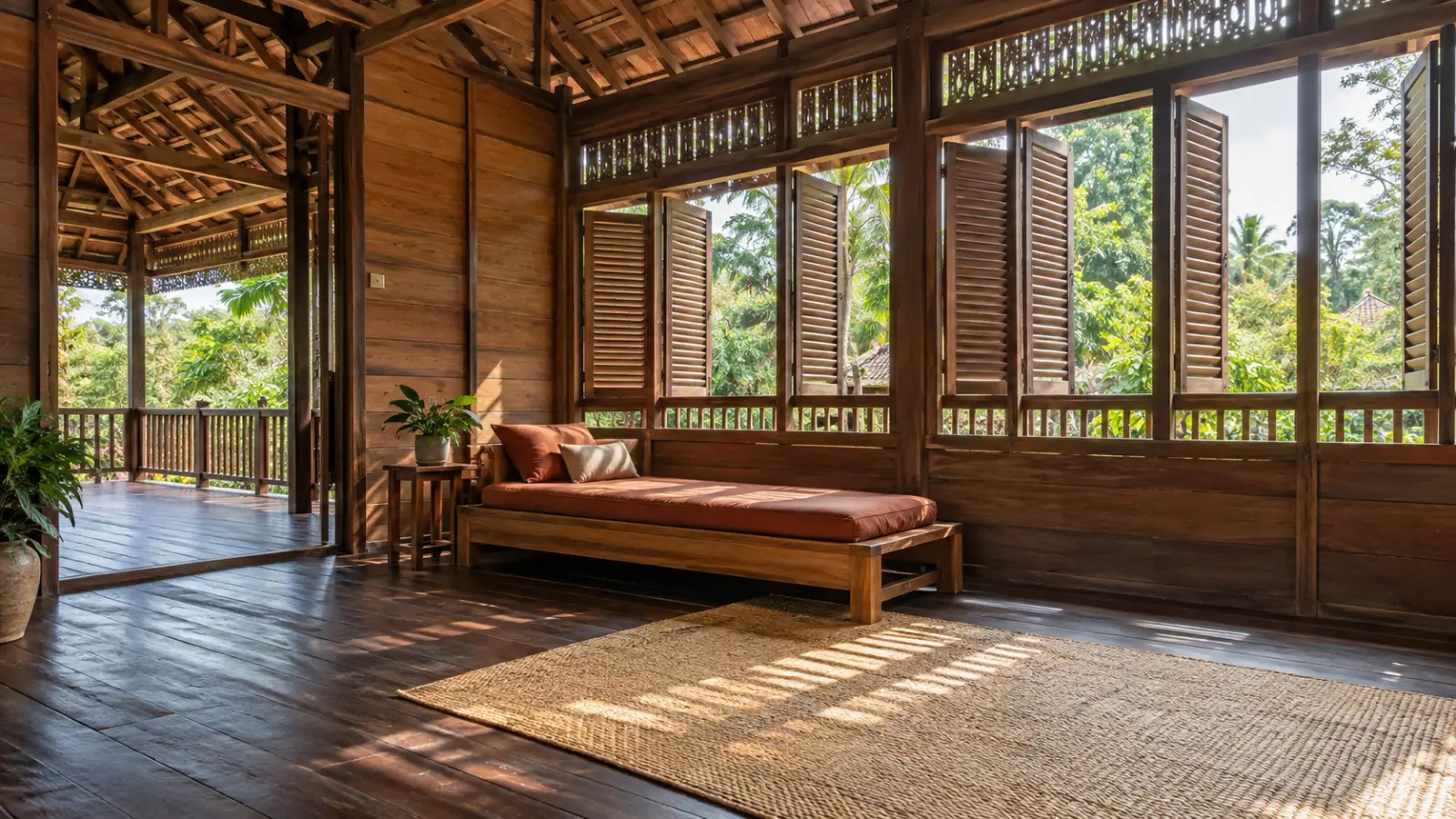
Choosing furniture for a humid climate starts with one question. What happens to this piece when the air stays wet for weeks at a time? A dresser drawer that slid fine in spring sticks in August. Gray spots appear on the back of a bookcase nobody has moved in a year. Sofa cushions start to smell faintly musty after a rainy week.
None of this means humid air is the enemy. Plenty of furniture materials work well in humid homes, from teak and rattan frames to breathable linen upholstery and powder-coated aluminum outdoors. Problems usually come from the wrong material in the wrong spot, or from furniture that never gets a chance to dry out.
If you're short on time, start with the numbers in section 1 and the mold advice in section 7.
In this article
- 1. What Humidity Actually Does to Furniture
- 2. Give Furniture Room to Breathe
- 3. The Best Wood for Furniture in a Humid Climate
- 4. Solid Wood vs MDF in Humidity
- 5. Rattan Furniture in a Humid Climate
- 6. The Best Sofa Fabric for a Hot, Humid Climate
- 7. How to Prevent Mold on Furniture
- 8. Furniture for Covered Porches, Lanais and Balconies
- 9. A Care Routine for Rainy Seasons and Muggy Summers
- Final Thoughts
- Frequently Asked Questions
1. What Humidity Actually Does to Furniture
Humidity changes how much water porous materials hold. Wood, cane, cotton and foam absorb moisture from damp air and release it when the air dries. So they swell, shrink and, if they stay damp long enough, grow mold.
In plain terms, wood soaks up water from humid air and gives it back when the air dries, so it's always slightly changing size. The USDA's Wood Handbook puts numbers on it. At room temperature, wood settles at roughly 9% moisture in 50% humidity and roughly 16% in 80%. Species and finish shift those figures a little. That swing is why drawers stick and tabletops crack between seasons.
| What to watch | Starting figure |
|---|---|
| Indoor relative humidity | Below 60% RH, ideally 30–50% RH |
| Wood moisture at 50% humidity | About 9% |
| Wood moisture at 80% humidity | About 16% |
| Drying wet items to help prevent mold | Within 24–48 hours |
| Gap behind furniture on an exterior wall | About 10 cm (4 in) where possible |
| Mold you can clean up yourself | Small patches, under about 1 m² (10 sq ft). Larger or recurring growth needs a closer look. |
The humidity, drying and cleanup figures come from the U.S. EPA's guide to mold and moisture. A cheap digital hygrometer tells you which side of 60% your rooms sit on.
2. Give Furniture Room to Breathe
Most mold on furniture shows up where you can't see it. Think behind the sofa, under the bed, or on the back panel of a wardrobe.
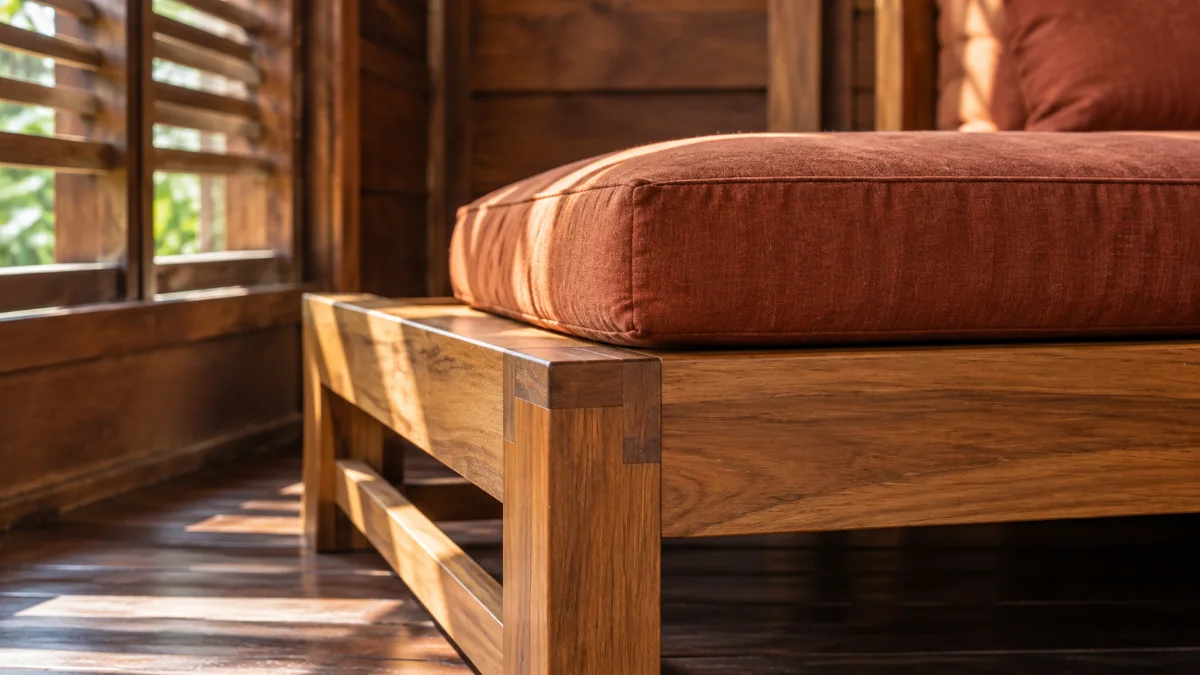
Exterior walls are the worst spot. They're cooler, especially in air-conditioned rooms during a hot afternoon, and moist air condenses on cool surfaces. Housing advice on damp often recommends leaving a gap behind furniture. One UK housing association's condensation and mold leaflet suggests at least 10 cm (4 in), and notes that any gap is better than none. Where you can, put wardrobes and bookcases on interior walls instead.
Also avoid spots under a wall-mounted air conditioner, which can drip when the drain clogs, and beside windows left open in storms. Strong afternoon sun fades fabric and dries wood unevenly, so a sheer curtain helps.
Open-backed and leggy furniture helps too, since air moves under and through it. Walkway widths and where the sofa goes are covered in the living room layout guide.
3. The Best Wood for Furniture in a Humid Climate
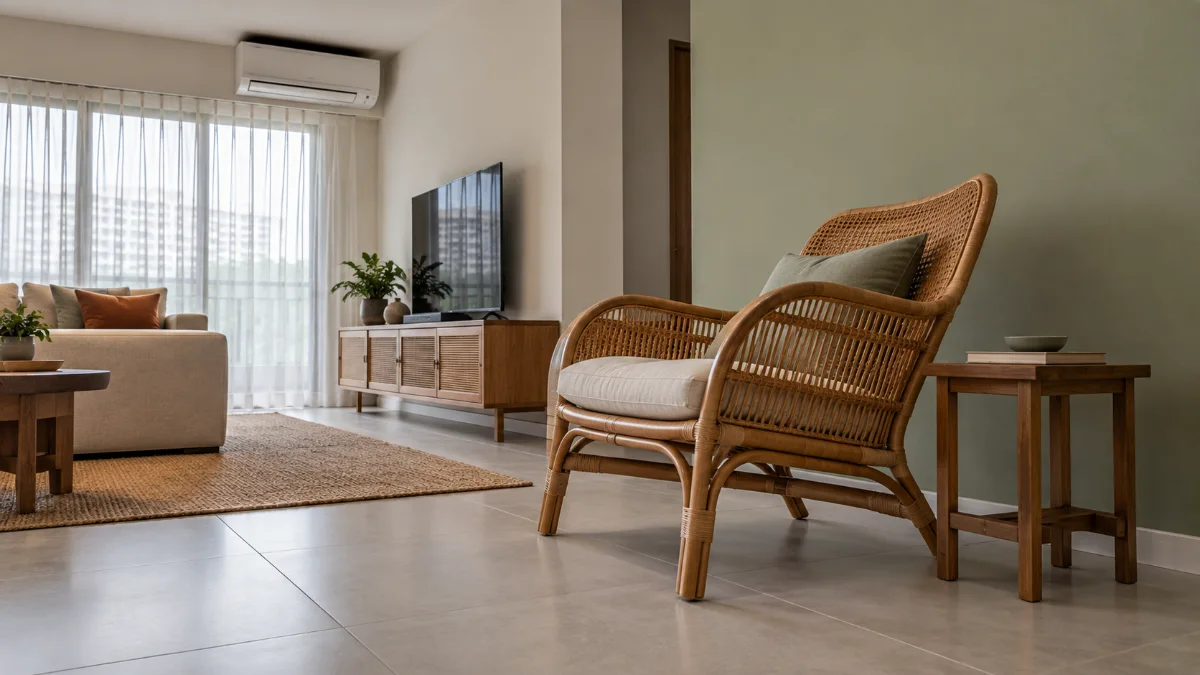
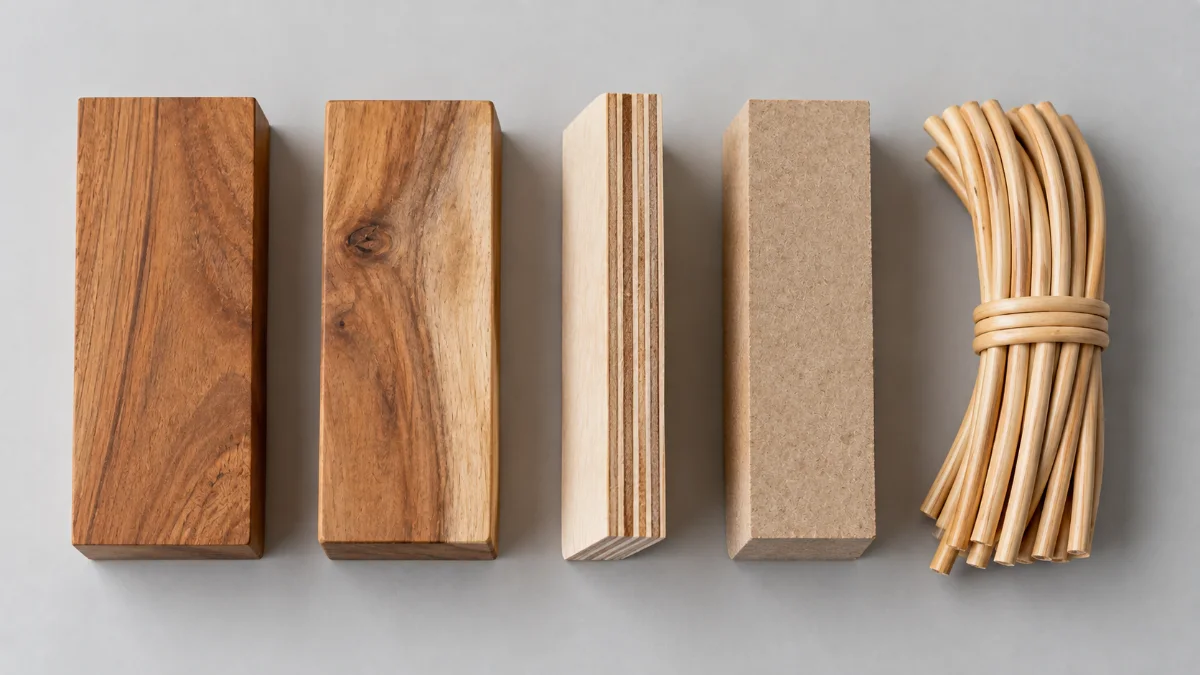
Teak is one of the most reliable woods for furniture in a humid climate. It's dense, naturally oily, very resistant to decay, and relatively stable as humidity changes. Well-dried acacia and other solid hardwoods also work indoors when they're properly sealed.
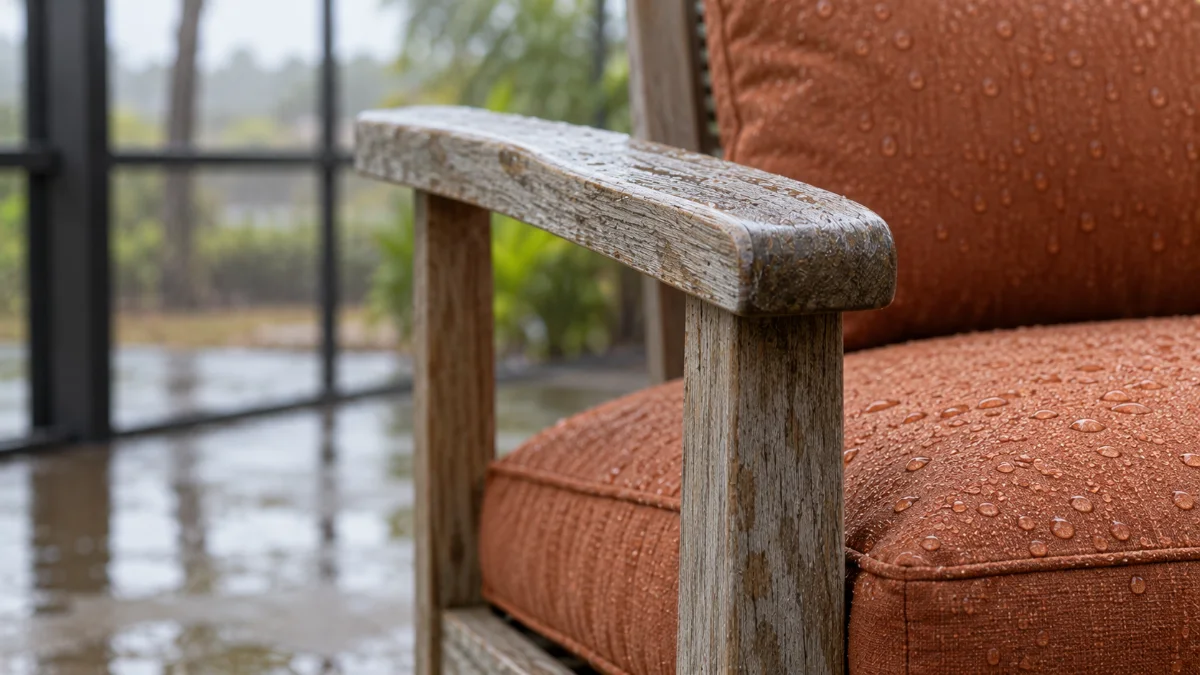
The stability isn't just reputation. The Wood Database lists teak's tangential shrinkage at about 5.3% from green to oven-dry. That's roughly half the 10.5% it lists for white oak. Teak is also widely used outdoors. Left unfinished, it tends to weather to a silver-gray. Regular oiling can help keep its honey-brown color.
Acacia is the common lower-cost alternative, especially for dining tables and benches. Quality varies a lot because "acacia" covers many species and suppliers, and poorly dried pieces are more likely to crack.
One trap to watch for when shopping is that "teak finish" or "teak color" describes a stain, not the wood. Search for "solid teak" and check the materials list for the actual species. "Kiln-dried" suggests the wood was dried properly before it was made into furniture. "FSC-certified" tells you about responsible sourcing, not humidity.
4. Solid Wood vs MDF in Humidity
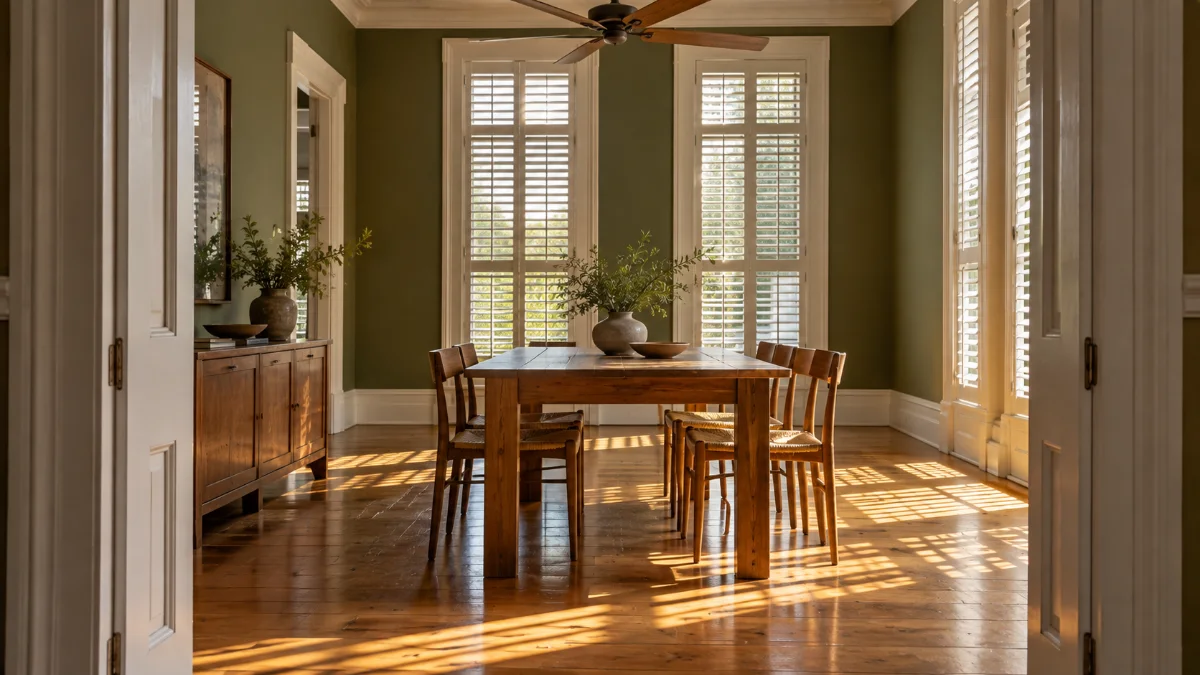
Well-made, properly finished solid wood usually copes with humidity better than standard MDF, because it can move, dry out and be sanded or refinished. The species, joinery and finish still matter. MDF is stable in dry rooms. But once water gets into an unsealed edge, the board swells and usually doesn't return to its original shape.
That doesn't rule MDF out. In an air-conditioned bedroom or study, a well-made MDF wardrobe with fully sealed edges can last for years. The risk is liquid water. Think of a mopped floor that splashes the plinth, a leak inside a cabinet, or condensation on a back panel against an exterior wall.
For anything near a kitchen, bathroom or exterior wall, look for moisture-resistant MDF (often sold as MR MDF, often with a green core) or plywood. Plywood's cross-layered sheets move less than solid boards, and exterior-grade or marine plywood uses glues meant for wet conditions. Moisture-resistant isn't waterproof, though. It buys time.
Here's a quick test in a store or when a delivery arrives. Tip the piece and look underneath and at the back. Raw, unsealed edges and a thin fiberboard back panel are where humidity gets in first. That matters in apartments, where built-in cabinets are often laminated board.
5. Rattan Furniture in a Humid Climate
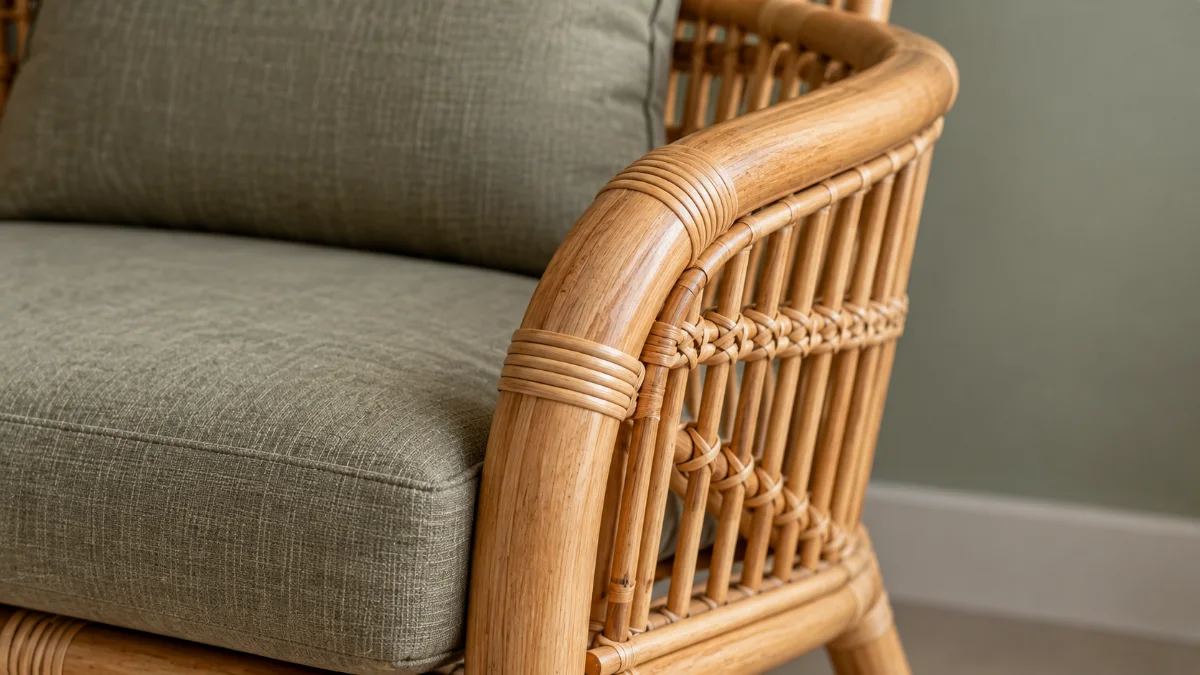
Rattan is a climbing palm, not a wood. An open woven chair lets air pass straight through, where a solid upholstered piece would trap it.
Natural rattan furniture in a humid climate does well indoors when air keeps moving around it. Its weak point is staying wet. A chair under an open window during a storm, or one that's been sitting in a damp corner for months, can develop gray or white mildew in the weave. Parked right in front of an air-conditioner vent, it can turn brittle instead.
For covered outdoor spots, look at resin or synthetic wicker instead. Most outdoor-rated versions are woven from HDPE, a type of plastic, over an aluminum frame. That combination handles rain well, and aluminum doesn't rust. "Rattan" in a product name doesn't say which you're getting, so check for natural or synthetic and an outdoor rating.
To clean natural rattan, brush the dust out of the weave with a soft brush. Wipe it with a barely damp cloth and mild soap, and let it dry in the shade rather than in hard sun. Don't soak it. The Japandi living room guide covers styling woven and natural materials in different climates.
6. The Best Sofa Fabric for a Hot, Humid Climate
The best sofa fabric for a hot, humid climate is one that breathes and dries quickly. Linen, linen blends and tightly woven cotton feel cooler than heavy weaves. Solution-dyed synthetics can be a practical choice where sun and spills are the main worry.
Linen is the standout natural option. It's breathable, it dries faster than cotton, and it doesn't feel sticky against bare legs in July. It creases, though. Cotton is comfortable too, but it holds onto moisture longer, which matters if the room is damp. Velvet, chenille and heavy bouclé trap more heat in their pile. Leather can feel tacky in heat and grow mold when it's stored in damp rooms.
"Performance fabric" covers a lot of different things, so read the fiber content. For fade resistance, look for solution-dyed acrylic or polyester, where the color goes through the fiber rather than sitting on top.
Removable, washable covers are worth a lot in humid homes, because you can wash and air them properly. For sofa construction, rub counts and fabric durability, see our guide on how to choose a sofa.
7. How to Prevent Mold on Furniture
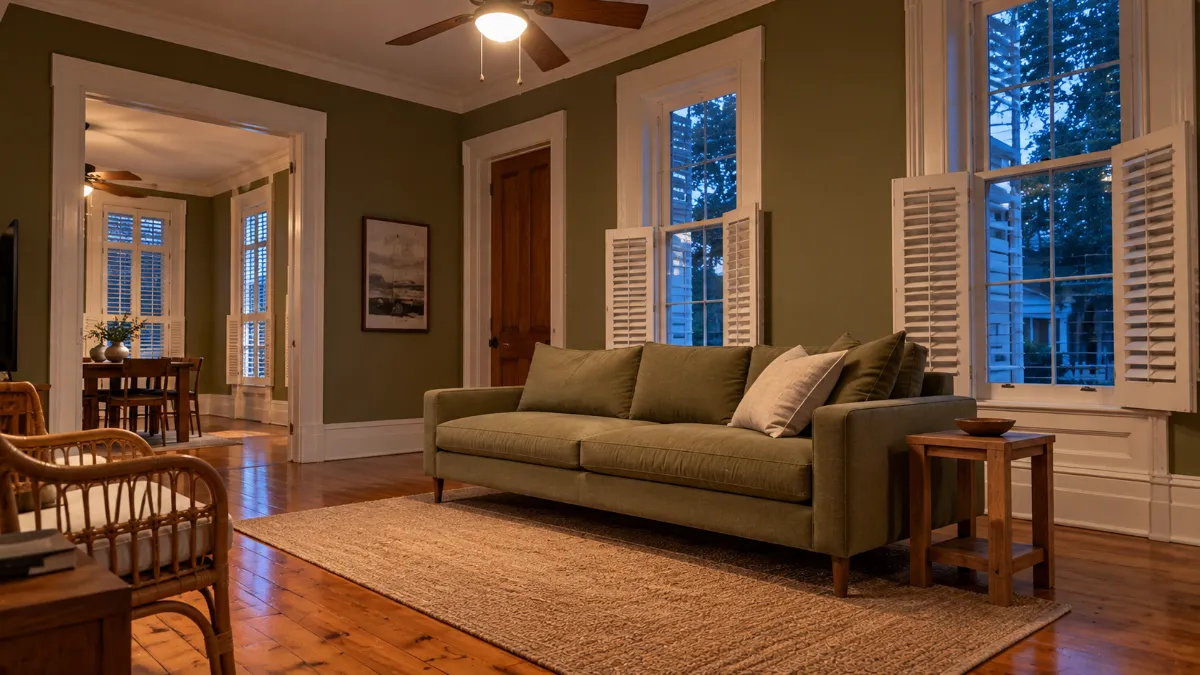
To prevent mold on furniture, keep indoor humidity below 60%. Keep air moving around and behind large pieces, and dry anything that gets wet as fast as you can. The EPA's guideline is within 24–48 hours, though a soaked cushion or sofa can hold water inside long after the surface feels dry. Cleaning removes mold, but only controlling moisture stops it coming back.
Air conditioning helps because it removes water from the air as it cools. Many ductless mini-splits also have a "dry" mode for muggy days when you don't need much cooling. A portable or whole-house dehumidifier does the same job in basements and Gulf Coast summers.
During long wet spells, a short routine covers most of it:
- Pull large pieces on exterior walls out once a month and look behind them.
- Open wardrobe and cabinet doors for an hour on dry days.
- Put moisture absorber tubs in closed cabinets and empty them when full.
- Dry spills and wet cushions the same day, standing cushions on edge so air reaches both sides.
- Never cover or store furniture while it's still damp.
If mold does appear, EPA advice is to scrub hard surfaces with detergent and water and let them dry completely. Upholstery and foam that stayed wet and moldy may need replacing, since mold can grow deep inside. If the moldy area is larger than about 1 m² (10 sq ft), or it keeps returning, there's likely a leak or damp wall to fix, and it's worth calling a professional.
8. Furniture for Covered Porches, Lanais and Balconies
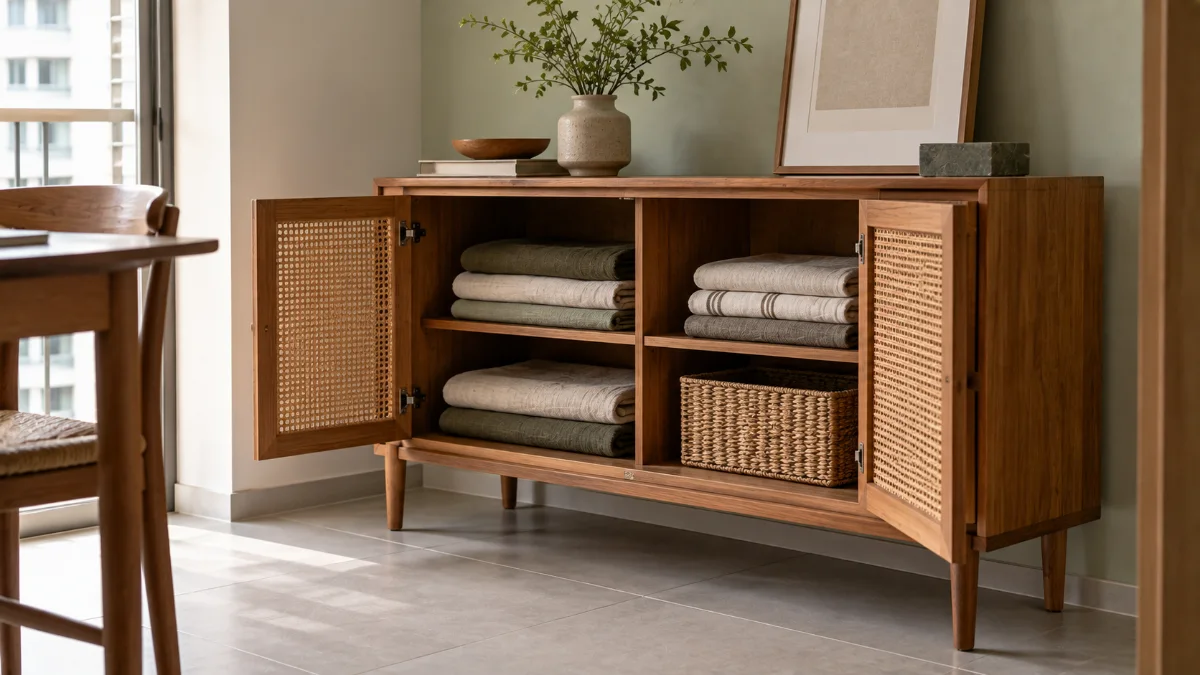
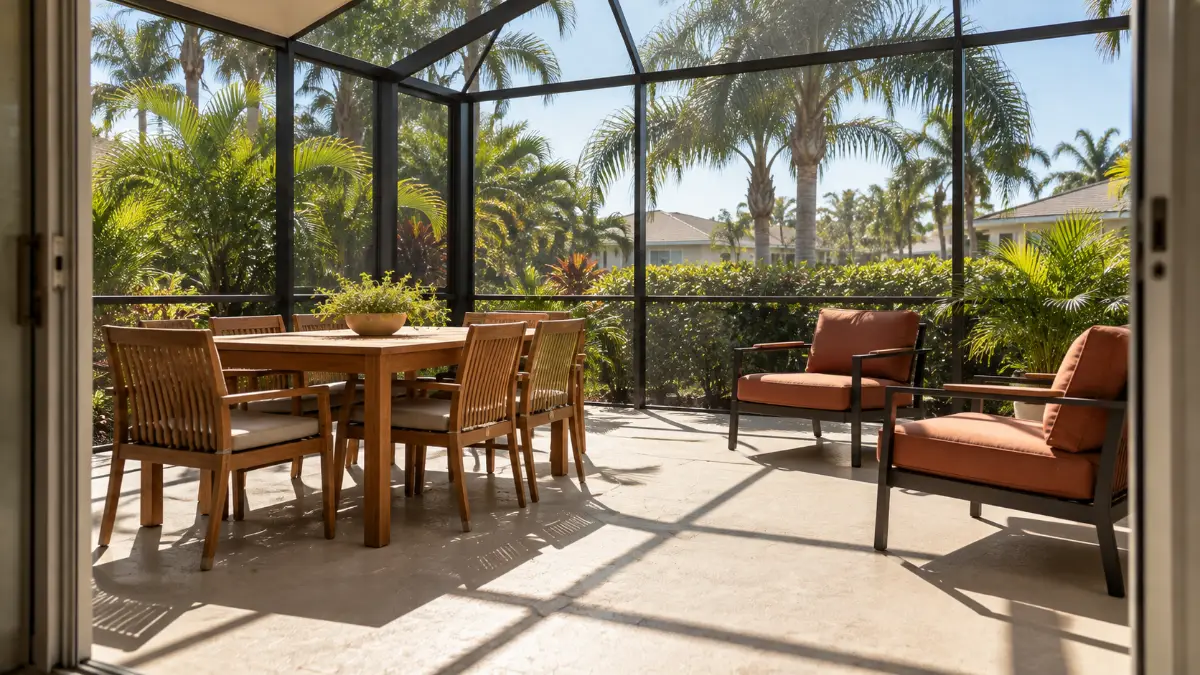
A screened lanai in Florida feels like part of the house. But rain blows through screens, dew settles on everything and UV gets in under the roof.
Treat any covered outdoor space as outdoors. Teak and powder-coated aluminum are the easiest frames to live with here. Aluminum doesn't rust, though it can dull near salt air. Near the sea, look for marine-grade stainless steel hardware.
Cushions matter as much as frames. Covers in solution-dyed acrylic resist fading, and quick-dry foam lets rain drain through instead of holding it like a sponge. Store them in a deck box only when dry.
Apartment balconies follow the same rules. For tight spaces, see the small condo living room guide.
9. A Care Routine for Rainy Seasons and Muggy Summers
Humidity damage builds slowly. A light routine during a long rainy season or a muggy Southern US summer catches problems early.
For wood, wipe spills straight away and use coasters. Re-oil acacia and indoor teak when the surface looks dry or water stops beading, following the maker's instructions. Never oil over a damp or moldy surface.
For rattan, dust the weave every couple of weeks and check the wrapped joints for loose cane. For upholstery, vacuum regularly, air cushions on dry days, and wash removable covers before stains set. For MDF and laminated board, keep mops away from plinths, check inside sink and bathroom cabinets for leaks, and fix chipped edging before water reaches the core.
For rugs in humid rooms, see the living room rug size guide.
Final Thoughts
There's no single material that fixes everything. Teak, rattan and linen all do well in damp air, and all of them will still mold in a corner that never dries. Good furniture for a humid climate comes from two decisions. One is the right material for where the piece will live. The other is a room that lets it dry.
Start here. Before you buy your next piece, decide exactly where it will sit. If it's going on a balcony or porch, choose outdoor-rated frames and cushions. If it's against an exterior wall or near a window, check that its edges and finish are sealed, and leave a gap behind it. If you're not sure how damp that spot gets, a hygrometer will tell you within a week.