
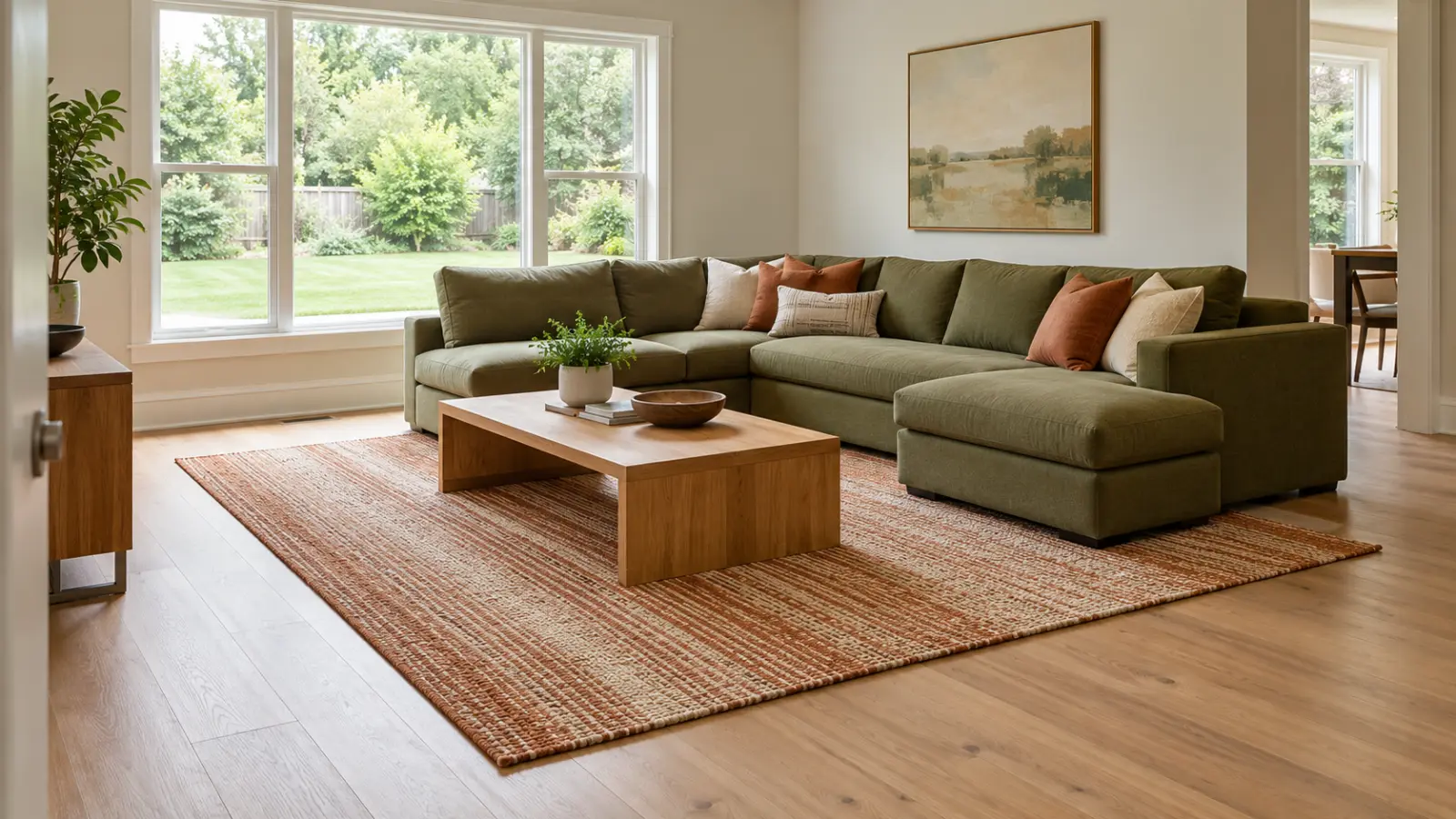
Learning how to choose a sofa mostly comes down to three things. The measurements, what's inside it, and the fabric on top. Once those are right, picking a color and style gets much easier.
The problem is that online listings lead with a nice photo. A sofa can look perfect online and still be too deep for your room or get stuck on the stairs.
If you're short on time, start this sofa buying guide with seat depth in section 3 and getting the sofa through the door in section 5.
In this article
- 1. Start With How You'll Actually Use It
- 2. What Size Sofa Do I Need?
- 3. How Deep Should a Sofa Be?
- 4. Seat Height, Arms and Back
- 5. Will It Fit? Measuring Doorways, Stairs and Elevators
- 6. Frame and Suspension: What's Under the Upholstery
- 7. Cushion Filling: Foam, Fiber, Feather or a Mix
- 8. How to Choose Sofa Fabric
- 9. Rub Counts and Performance Fabric: What the Numbers Mean
- 10. Best Sofa Fabric for Kids and Pets
- Final Thoughts
- Frequently Asked Questions
1. Start With How You'll Actually Use It
Some sofas are for sitting up and talking. Others are for movie nights with your feet up. So before you look at colors, picture a normal evening on yours.
Do people sit upright, curl up or lie down? Are there kids or a dog? If your family lies down to watch TV, you'll want a deeper seat and maybe a chaise (a long seat section for stretching your legs). If an older relative visits often, a firmer, higher seat is easier to get up from. If you have a dog, the fabric and how you clean it matter more than the exact shade.
A sofa next to a big sunny window can fade faster. Humid homes need different materials too, covered in furniture for a humid climate.
2. What Size Sofa Do I Need?
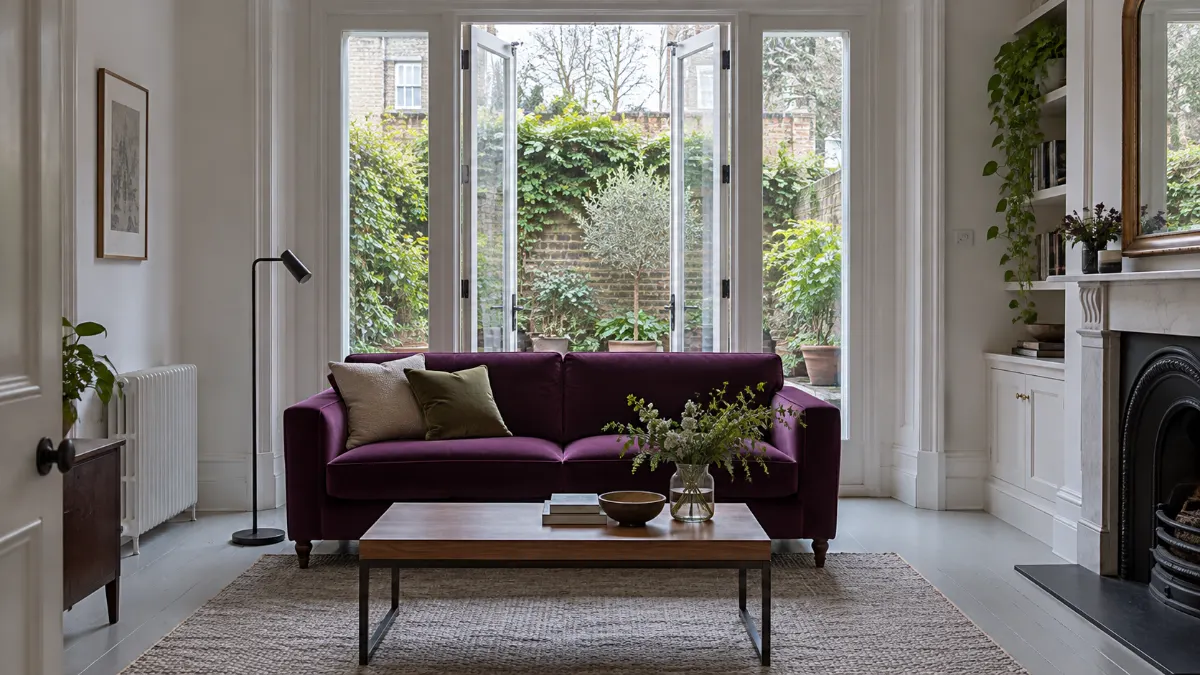
Start with the floor, not the sofa. Measure the space, then take away room for walkways and the coffee table. The biggest sofa that fits what's left is your limit, not your goal.
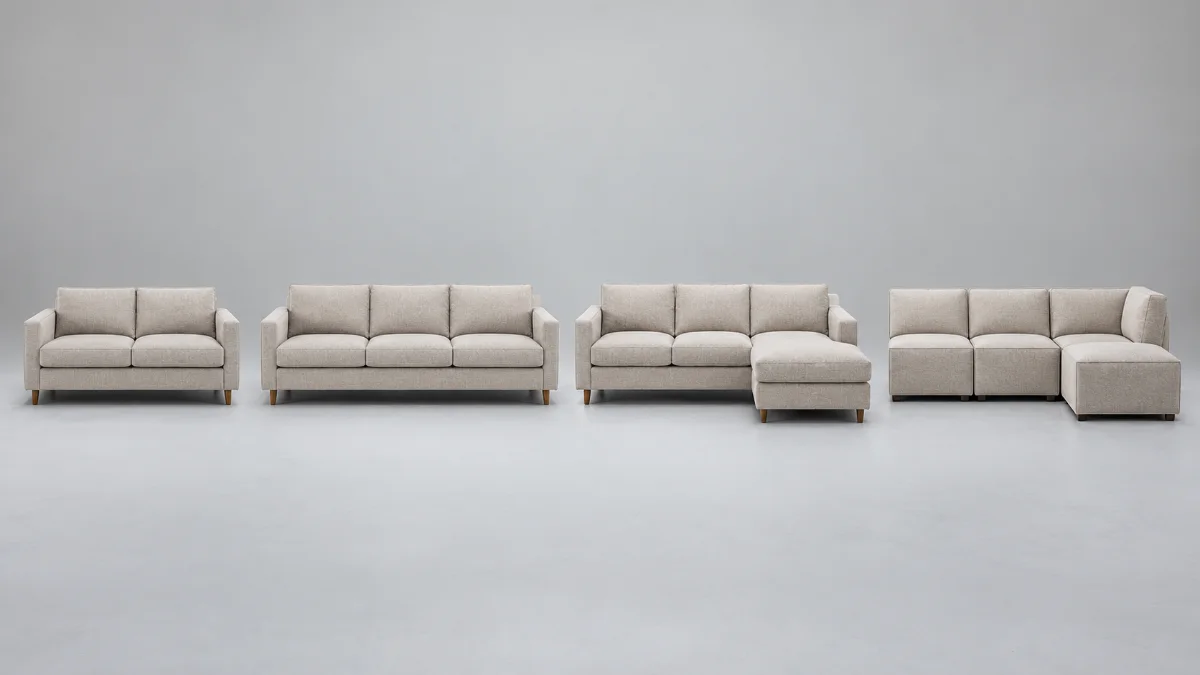
As a rough guide, a loveseat is often about 122–183 cm (48–72 in) wide. Most three-seat sofas are roughly 180–218 cm (71–86 in) wide, according to Wayfair's sofa size guide. Sectionals vary much more. Their overall width usually runs from about 229 cm (90 in) to 427 cm (168 in), so measure both sides against your walls.
The most common mistake is checking the width and forgetting the depth. Leave about 90 cm (35 in) for the main path through the room. For the other gaps, like the space between the sofa and coffee table, see our guide on how to arrange living room furniture. Before you buy, mark the sofa's outline on the floor with masking tape.
With a chaise, check which side it's on, or look for a "reversible chaise sectional." With a modular sofa, check how many pieces the price includes. The photo often shows more than you get. If your room is very small, our small condo living room ideas cover sofas that fit tight spaces.
3. How Deep Should a Sofa Be?
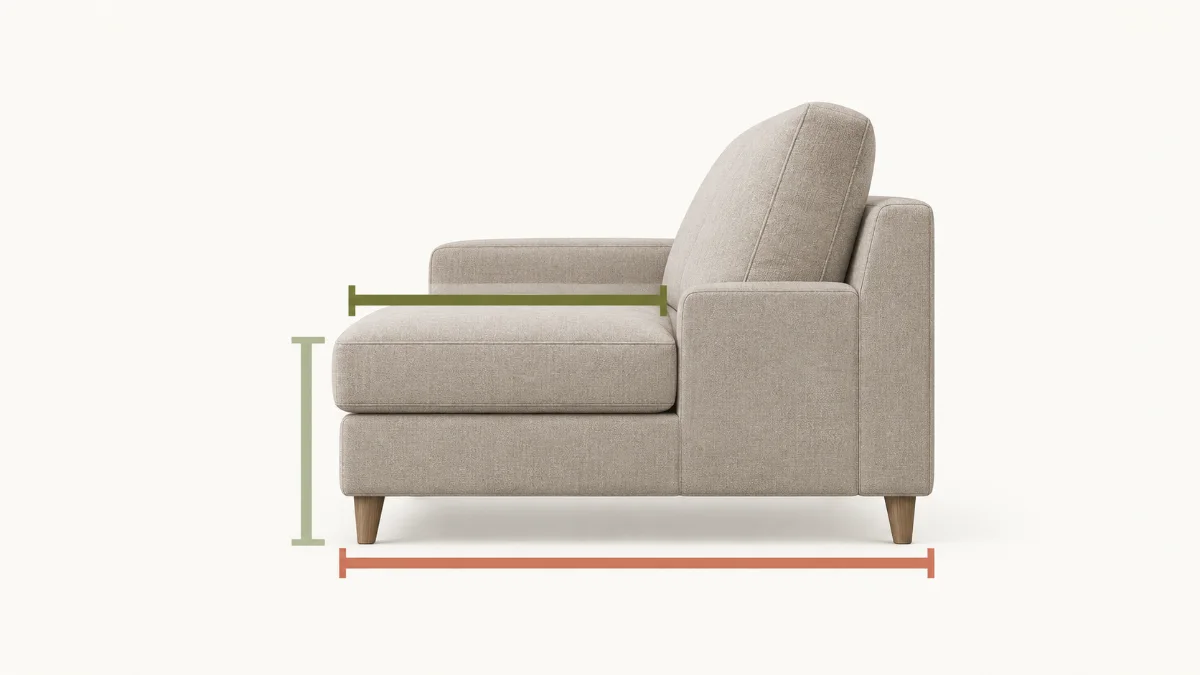
For comfort, look at the seat depth, not the overall depth. Most sofas have a seat depth of about 51–64 cm (20–25 in). Around 53–56 cm (21–22 in) suits many people of average height. Deep-seat sofas go to about 71 cm (28 in) or more, which suits lounging.
Seat depth runs from the front edge of the seat to the back cushion. Overall depth is the whole sofa, usually about 81–102 cm (32–40 in). So a sofa listed as 102 cm (40 in) deep can still have a normal 56 cm (22 in) seat.
Here's a simple test. Sit all the way back. If your feet rest flat and the seat edge sits just behind your knees, the depth works for sitting upright. If you end up perched on the front edge, it's too deep for you. Taller people often prefer a deeper seat, and shorter people a shallower one.
| Measurement | Common range | What it affects |
|---|---|---|
| Seat depth | About 51–64 cm (20–25 in), with 53–56 cm (21–22 in) standard | Sitting up vs lounging |
| Deep-seat sofas | About 71 cm (28 in) and up | Lying down, curling up |
| Seat height | About 38–51 cm (15–20 in), most 43–46 cm (17–18 in) | How easy it is to sit down and stand up |
| Overall depth | About 81–102 cm (32–40 in), most often 89 cm (35 in) | How much floor the sofa takes |
| Overall height | About 66–91 cm (26–36 in) | Whether it fits under a window or art |
| Three-seat sofa width | About 180–218 cm (71–86 in), most often 213 cm (84 in) | How much wall you need |
The ranges come from Wayfair's US sofa size guide. Brands vary, so always check the listing.
4. Seat Height, Arms and Back
Two sofas of the same width can feel nothing alike. The difference comes from three smaller measurements.
Seat height is the distance from the floor to the top of the seat cushion. Most sofas sit at about 43–46 cm (17–18 in). Low lounge sofas take more effort to get out of, which matters for older relatives or sore knees. Online, compare it with a seat you already find comfortable.
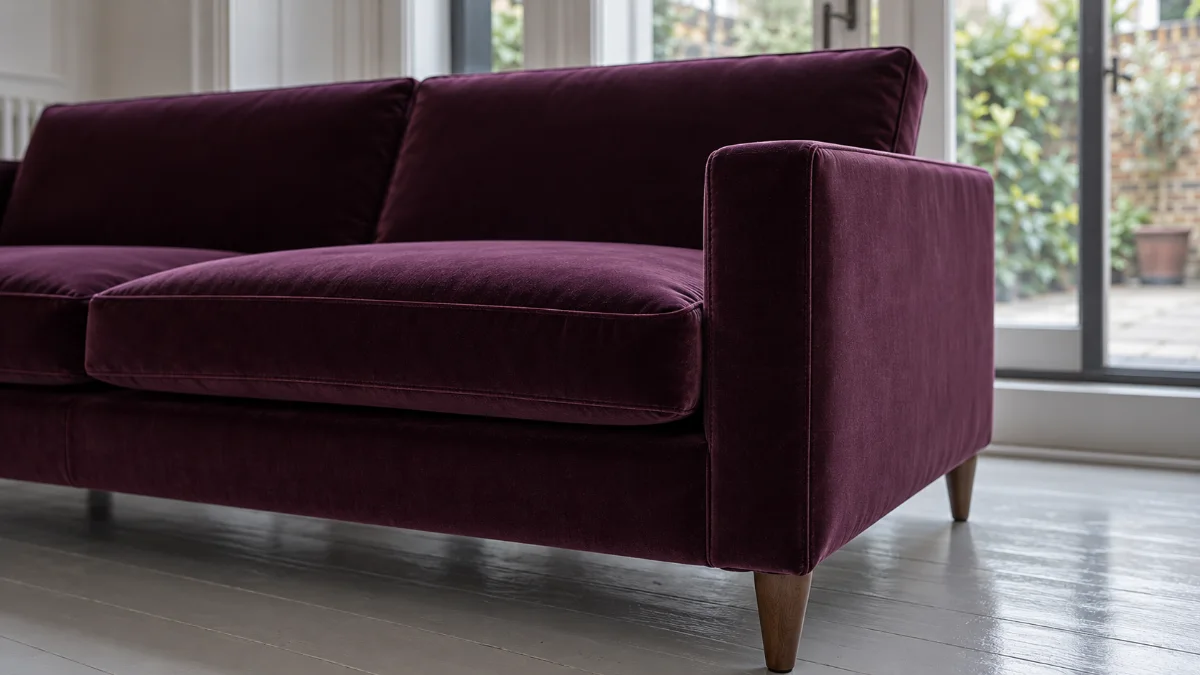
Arm width decides how much seat you actually get. Wide, rounded arms can turn a three-seater into a two-seater. So compare the seat width inside the arms. Slim, square "track arms" leave more room.
Back height is a trade-off. A low back looks lighter and fits neatly under a window. A taller back supports your head for naps.
5. Will It Fit? Measuring Doorways, Stairs and Elevators
The sofa fits your room perfectly. Then it gets stuck on the second-floor landing. It happens in walk-ups, London terraces and condos from Toronto to Miami.
Measure the whole route before you order.
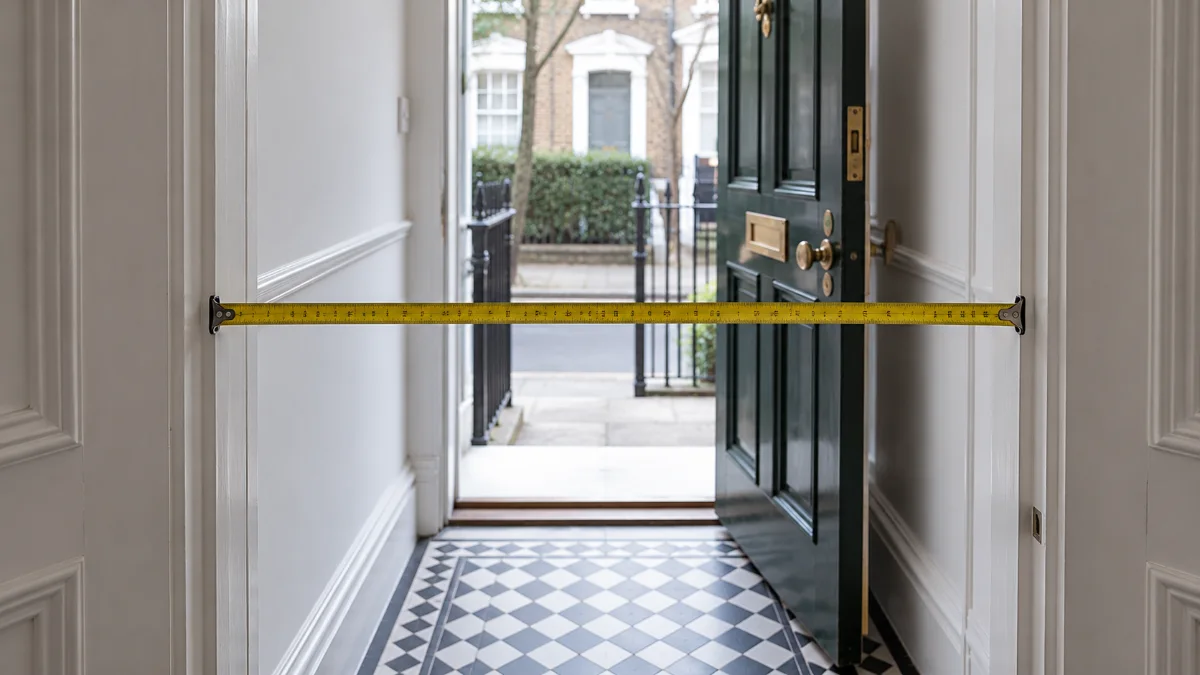
- Every door, measured inside the frame with the door fully open
- Hallway widths, and every corner the sofa has to turn
- Stair width, the ceiling height above the stairs, and any landing turns
- The elevator door and the inside of the elevator, especially its depth
- Gates, side paths and porch railings outside
Compare the narrowest opening with the sofa's packaged size, since wrapping adds a little to every side. If the packaged depth or height is smaller, the sofa can often go through on its side. If not, ask for the diagonal depth, measured from the top back corner to the bottom front edge. A delivery team may tip the sofa so this measurement clears the door.
If it's tight, look for removable legs, a modular sofa, or a compressed "sofa in a box" that's put together in the room.
6. Frame and Suspension: What's Under the Upholstery
You can't see what holds a sofa together, so look for listings that name the frame material.
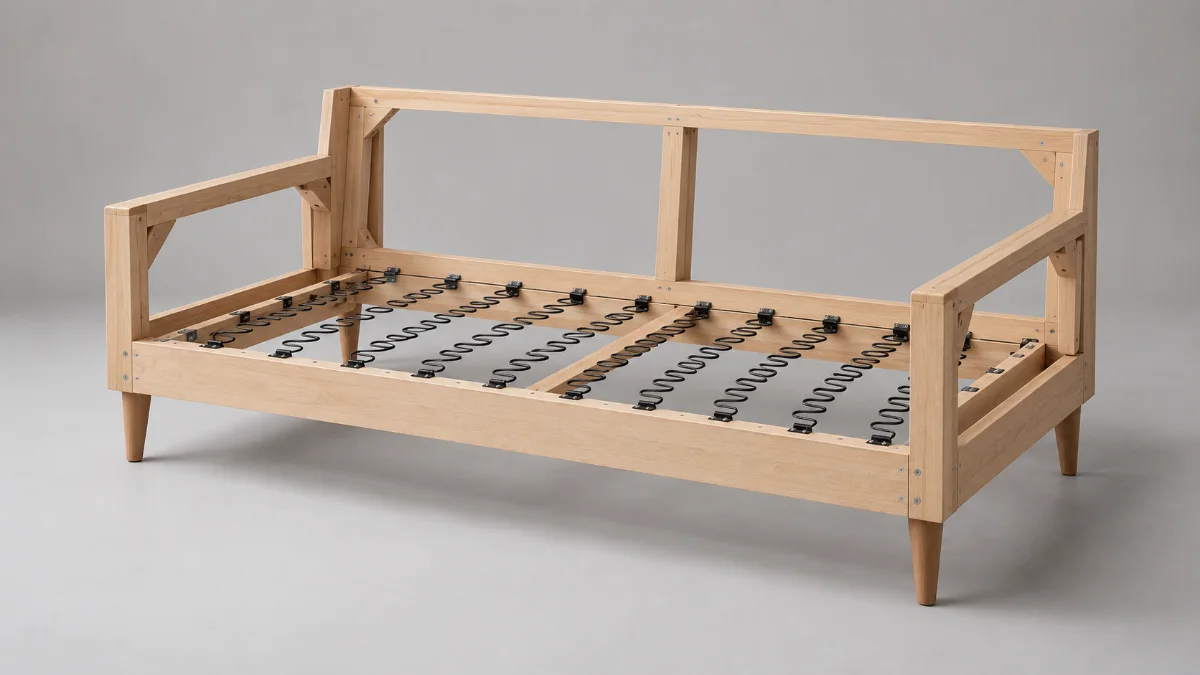
Kiln-dried hardwood has been dried in an oven to remove moisture. That makes it less likely to warp or crack later. Good layered plywood can be strong too. Particleboard and MDF are common in budget frames. They can hold screws less firmly than solid wood, and some types swell if they get damp. Glued and screwed joints with corner blocks tend to last longer than staples alone.
In a store, lift one front corner slightly off the floor. If the other front leg lifts too, the frame is solid. If it stays down, the frame is twisting. Online, check for a separate frame warranty.
Suspension is the support under the seat cushions. The most common type is zigzag springs, also called sinuous springs. They work well when they're close together and firmly attached. Eight-way hand-tied coils are a traditional method on pricier sofas. Webbing straps are common on slim Scandinavian-style sofas. Judge the whole build, not the spring name.
7. Cushion Filling: Foam, Fiber, Feather or a Mix
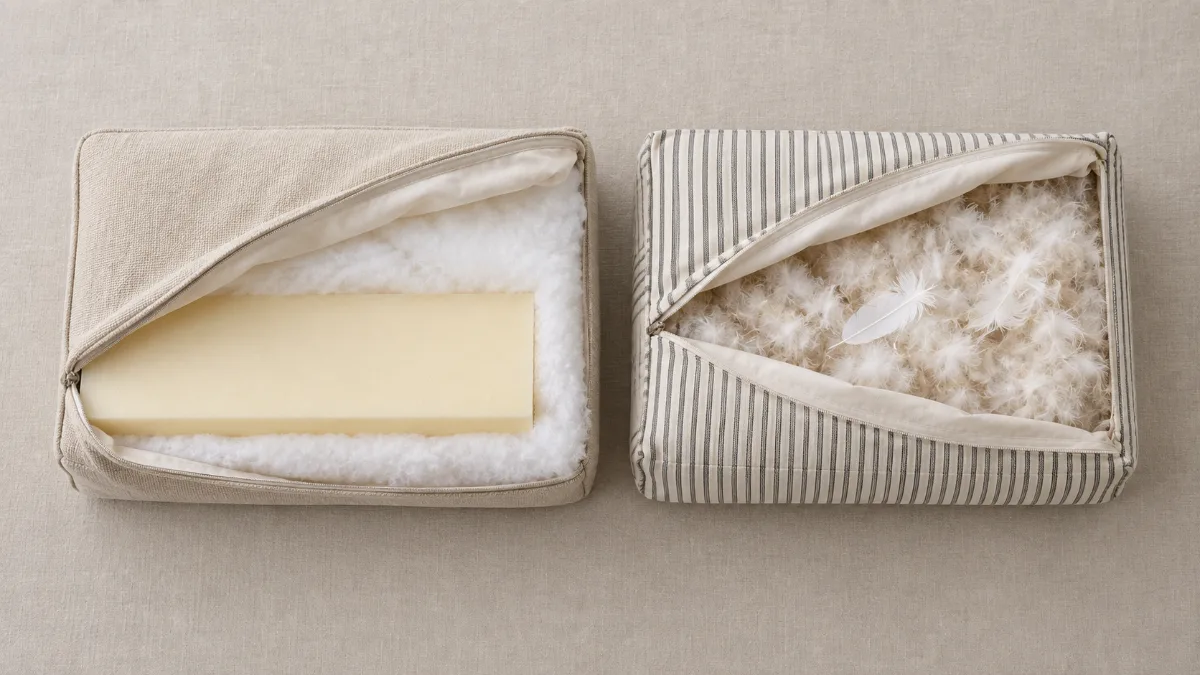
Foam gives a firmer, neater seat that springs back on its own. Fiber and feather feel softer but need regular plumping. Many sofas mix them, usually with a foam core wrapped in fiber or feathers.
Density and firmness aren't the same. Density is about how long foam keeps its shape. Firmness is how hard it feels. Look for "high-density" or "high-resilience" foam.
Fiber is soft and cheap, but it flattens over time. Feather and down feel the softest, but they need plumping almost daily. Loose cushions can also be flipped to spread the wear. Fixed backs look tidy, but you can't turn them when they sag.
8. How to Choose Sofa Fabric
When you choose sofa fabric, think about cleaning first. Then think about how it feels and what color you like.
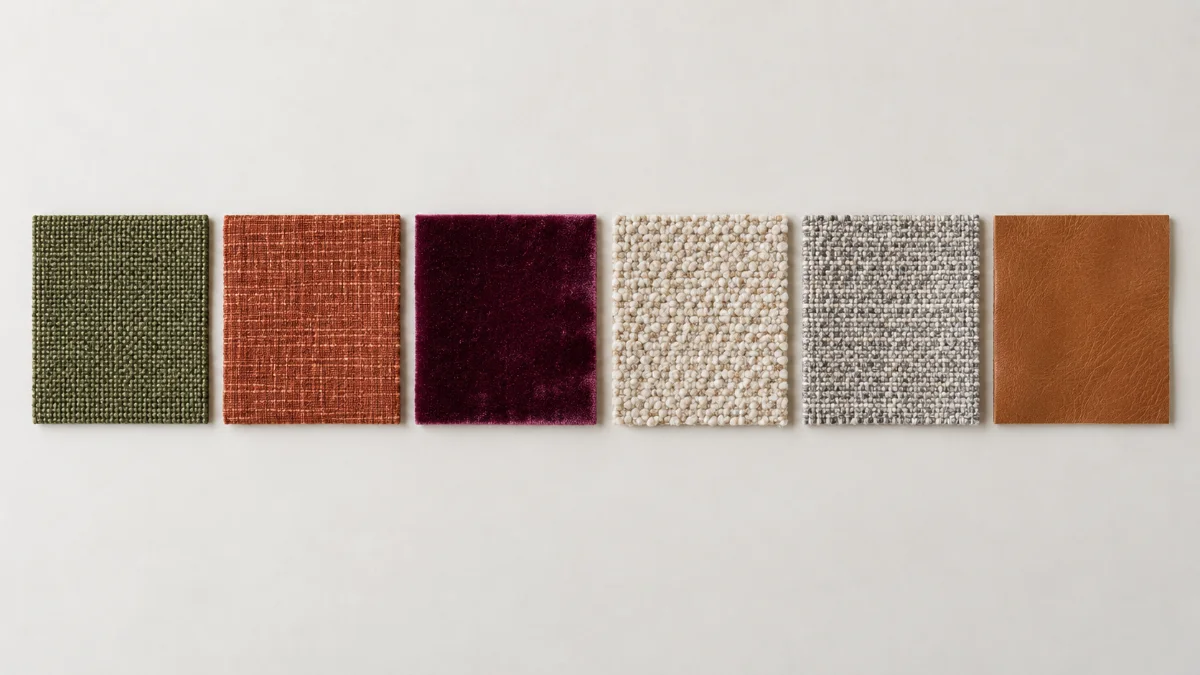
Synthetic fabrics like polyester, polypropylene (also called olefin) and microfiber tend to resist stains and wear well. Solution-dyed fabrics, colored before the fiber is spun, also resist fading. Cotton and linen feel cool but stain more easily. A blend is a practical middle ground.
Velvet can show marks where people sit. Wool is tough but usually costs more. Leather wipes clean, but it can scratch. Bonded leather can also peel. If you're leaning toward brown leather, see these living room ideas with a brown sofa.
Next, find the cleaning code on the tag or in the listing. In North America, it's usually one of four letters.
- W: water-based cleaners are fine
- S: solvent (dry-cleaning) cleaners only
- WS: either type works
- X: vacuum only, no liquids at all
For a busy family room, W or WS is the easiest choice. A "removable" cover isn't always machine-washable.
Medium and mixed-tone colors hide marks better than very pale or dark ones. To match the sofa to your walls, try these living room color schemes. For mixing textures around it, see our modern cozy living room ideas.
9. Rub Counts and Performance Fabric: What the Numbers Mean
A rub count is a lab test of how well fabric handles rubbing. North American listings usually use the Wyzenbeek test, measured in "double rubs." European listings usually use the Martindale test, measured in "cycles." The two tests work differently, so you can't convert one number into the other.
Clear guidelines exist for office and hotel upholstery. The Association for Contract Textiles lists 15,000 double rubs or 20,000 Martindale cycles for low-traffic spaces. For busy public spaces, it lists 30,000 double rubs or 40,000 cycles. Herman Miller's textile standards use the same numbers. These aren't home standards, but they're a useful reference.
A rub count doesn't tell you how many years a sofa will last, though. Both documents say results above 100,000 double rubs haven't been shown to mean a longer-lasting fabric. The weave and fiber matter as much as the score.
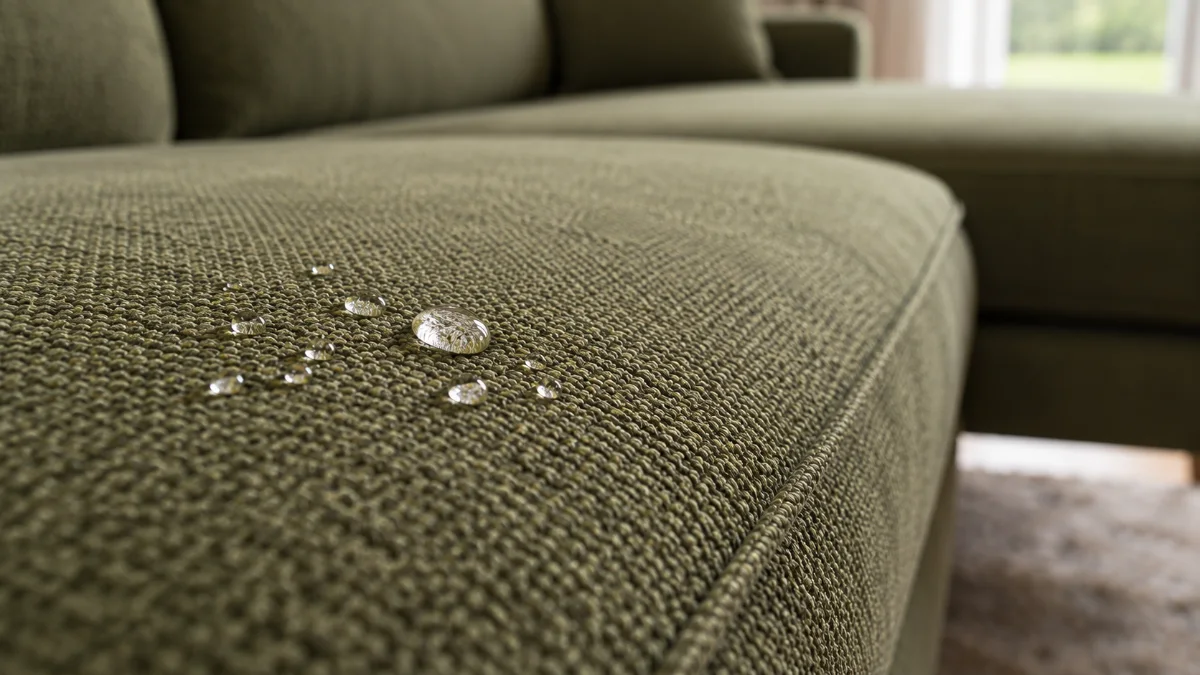
"Performance fabric" is a sales term, not an official standard. Before paying more, ask questions. Is the stain resistance in the fiber, or a coating that can wear off? What's the cleaning code? Does the warranty cover stains?
10. Best Sofa Fabric for Kids and Pets
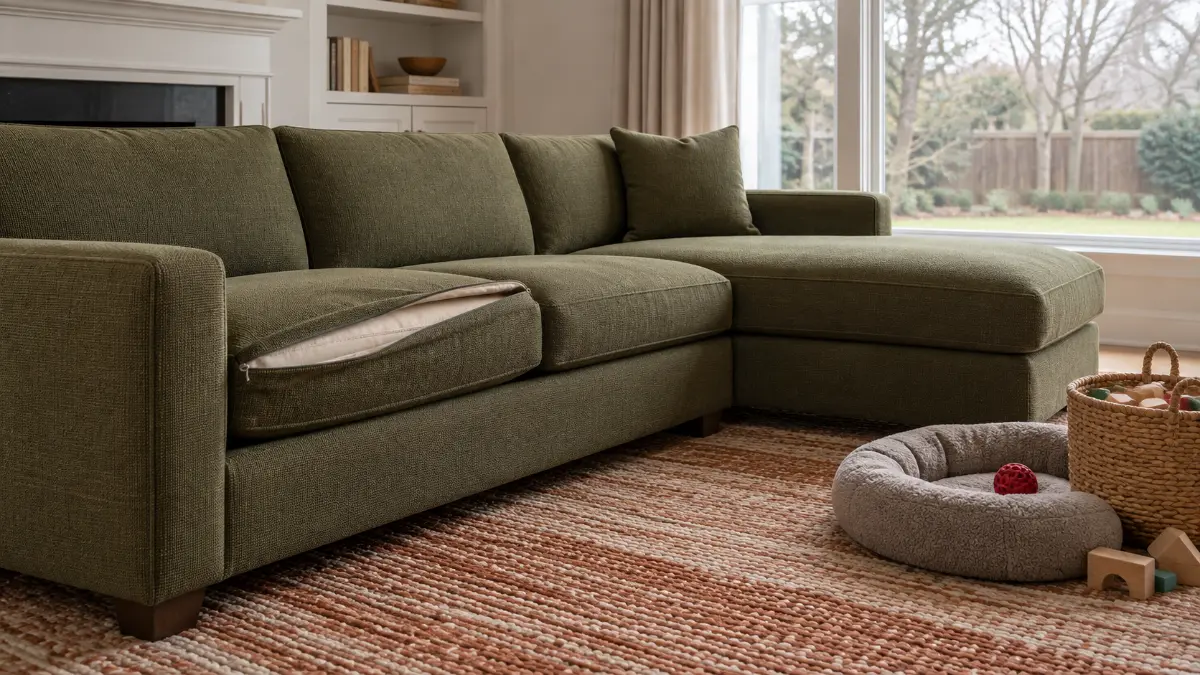
No fabric is fully pet-proof or kid-proof. A good place to start is a tightly woven synthetic or performance fabric. Look for a W or WS cleaning code, a medium or mixed-tone color, and covers you can take off and wash.
With pets, claws are the biggest risk. Loopy fabrics like bouclé (a bumpy, curly fabric) snag easily, as our bouclé furniture guide explains. Flat, tight weaves and microfiber tend to hold up better.
With kids, easy cleaning matters most. Search for "removable washable cover" or "slipcover sofa," and check whether replacement covers are sold.
Final Thoughts
Most sofa regret comes from a number nobody checked. The seat is too deep, the door is too narrow, or the fabric can't be cleaned the way your family lives.
Here's an easy first step. Measure your narrowest doorway and the seat depth of a seat you find comfortable. Then use those two numbers to filter every listing.