
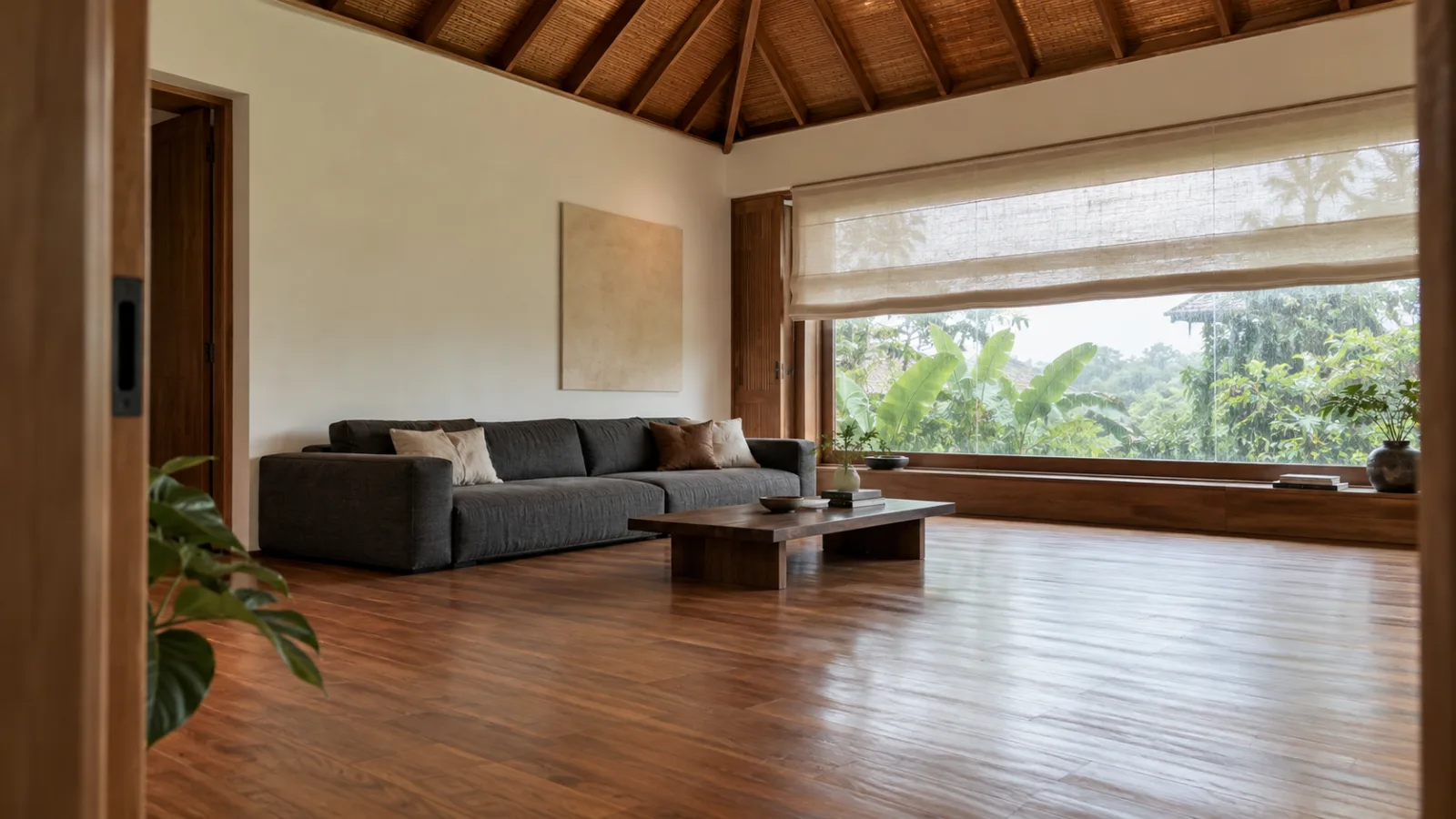
Most Japandi living room ideas online end up with the same photo: a beige sofa, a pale rug, one branch in a vase and nothing else in sight. It's a lovely picture. It's also a room where nobody seems to own a TV, a phone charger or a pair of slippers.
A Japandi living room doesn't have to look like that. The style mixes the calm and simple shapes of Japanese homes with the comfort of Scandinavian ones. If you're new to the term, start with what Japandi style means. The useful part isn't the color of the sofa. It's a handful of choices about height, spacing, wood, light and storage.
Below are 8 ideas, then notes on climate and small rooms. You don't need all of them. If you only try two, start with the removal test in idea 1 and the storage fixes in idea 6.
In this article
- 1. Start by Taking Things Out
- 2. Keep It Low and Leave Space Between Things
- 3. Pick Two Wood Tones, Not Five
- 4. Go Beyond Beige: Japandi Living Room Colors
- 5. Light It Low and Soft
- 6. Hide the Everyday Things
- 7. Balance the Room Without Making It Match
- 8. One Handmade Object per Surface, Changed With the Seasons
- Japandi in Hot and Cold Climates
- Small Japandi Living Room and Budget Tips
- Frequently Asked Questions
- Final Thoughts
1. Start by Taking Things Out
Most people start a Japandi makeover by shopping. It tends to work better the other way round.
Pick one weekend and move everything that isn't furniture into another room. That means cushions, throws, trays, candles, frames, baskets and the stack of magazines. Then live with the bare room for a week. Each time someone really misses something, bring it back. Whatever's still in the other room after seven days probably wasn't doing much.
This works better than a rule like "keep only five objects", because it's based on how your household actually uses the room. The things people reach for tend to be practical, like a reading lamp, a side table for tea or one blanket. The things nobody misses tend to be purely decorative.
A mistake to avoid: don't throw everything away on day one. Some pieces will look better once the room is quieter, and you might want them back for idea 8.
2. Keep It Low and Leave Space Between Things
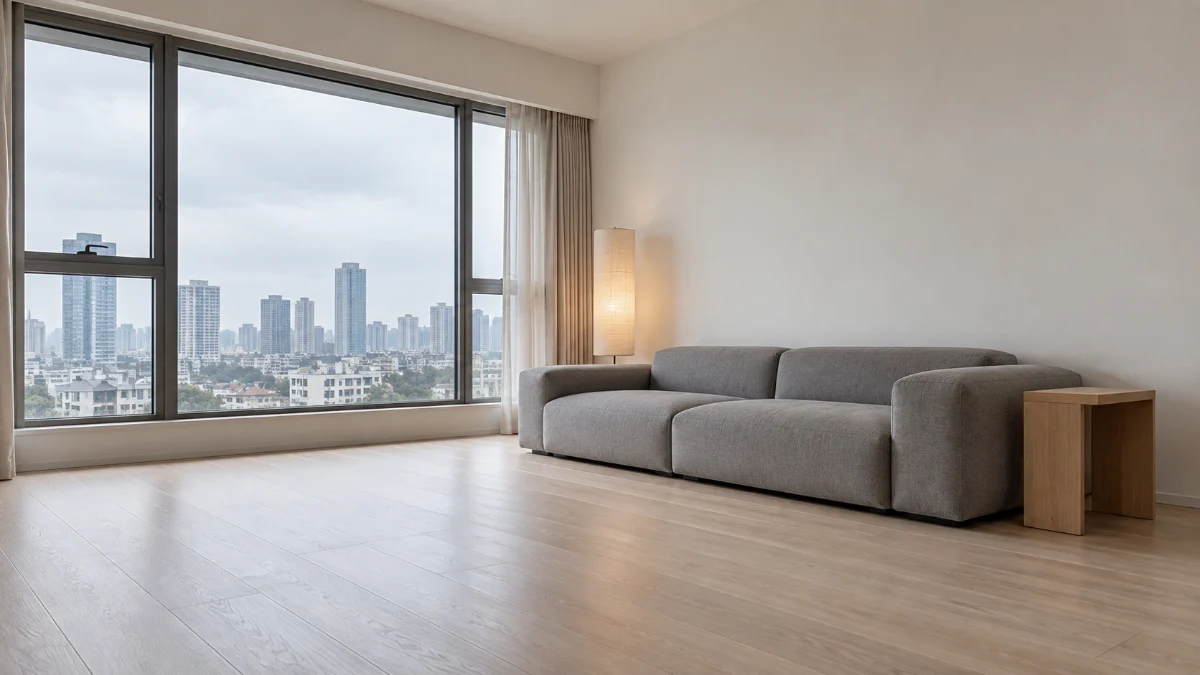
Traditional Japanese homes were lived in close to the floor, with people sitting on tatami mats. Lowering the main Japandi living room furniture is the quickest way to borrow that feeling.
Most sofas have a seat about 43–46 cm (17–18 in) off the floor. A lower seat, somewhere around 38–42 cm (15–17 in), helps the room feel calmer and more grounded. Keep the coffee table level with the sofa seat or a little lower. The coffee table guide covers heights in more detail. A low media console or sideboard leaves a long stretch of bare wall above it.
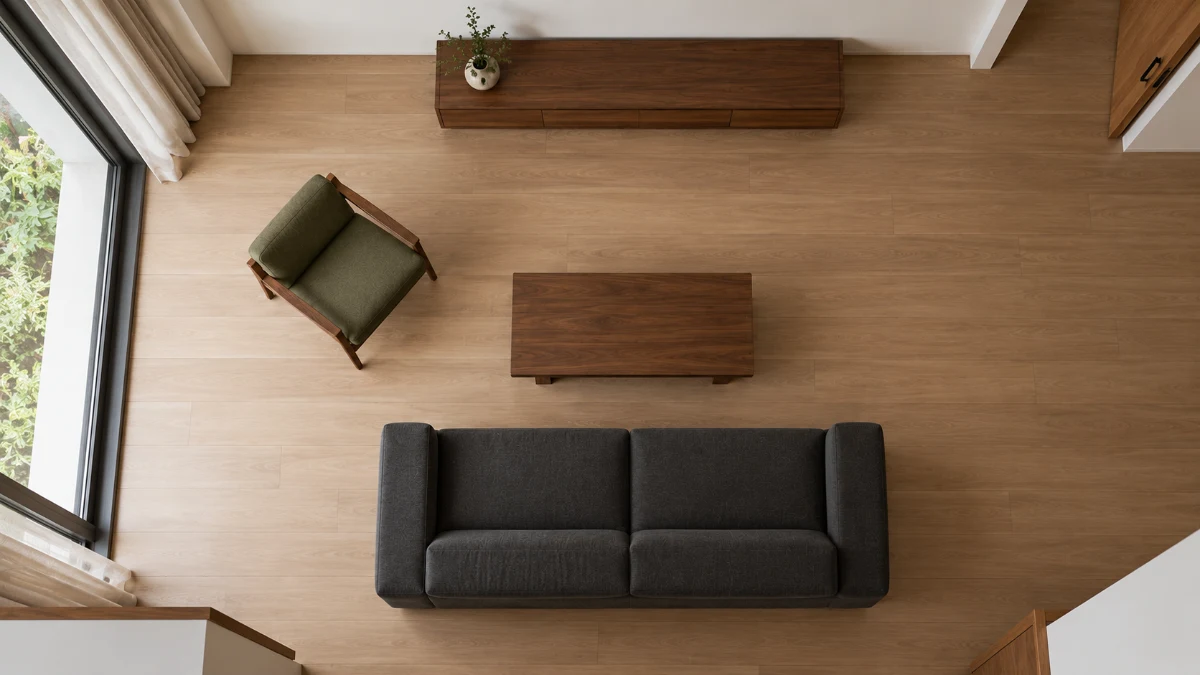
The second half of this idea is ma. It's a Japanese word for a pause, gap or empty space between things (Japan House Los Angeles). In a living room, it's the space around each piece that lets you see its shape. Leave clear paths to walk through. About 90 cm (35 in) is a common target for main walkways, and the furniture layout guide explains the spacing. Pull the sofa a little off the wall rather than pushing everything flat against it. Let at least one wall stay completely bare.
A simple test: sketch the room from above and shade the furniture. If the shaded shapes touch each other all the way around, there's no ma yet.
The trade-off: very low sofas can be hard to get out of for older family members or anyone with knee trouble. A seat nearer the top of that range, with firm cushions, is a sensible middle ground.
3. Pick Two Wood Tones, Not Five
You'll often read that you can mix woods freely in a Japandi room. You can, but without a plan it tends to look accidental rather than layered.
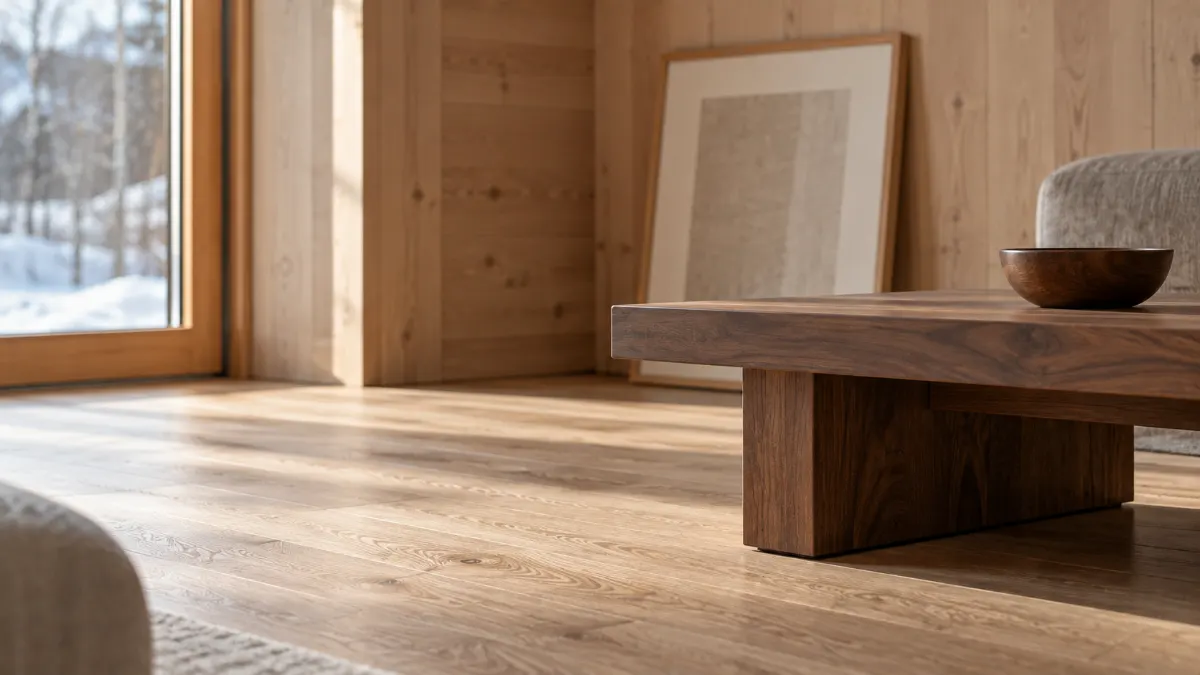
One simple approach is to choose one light wood and one dark wood, and repeat each at least twice. For example, a light oak floor with light oak picture frames, and a walnut coffee table with a walnut stool or bowl. Pale woods like oak, ash and birch are common in Scandinavian interiors. Japanese-influenced rooms may use deeper tones, like walnut, dark-stained cedar or charred timber.
Your floor counts as one of the two. If you have mid-tone laminate or tiles you can't change, pick the other wood so it clearly contrasts with the floor. A rug can sit between them as a buffer.
Watch the finish too. Glossy, orange-toned varnish can make a Japandi room look dated. Matte oil or hard-wax finishes let more of the grain show.
4. Go Beyond Beige: Japandi Living Room Colors
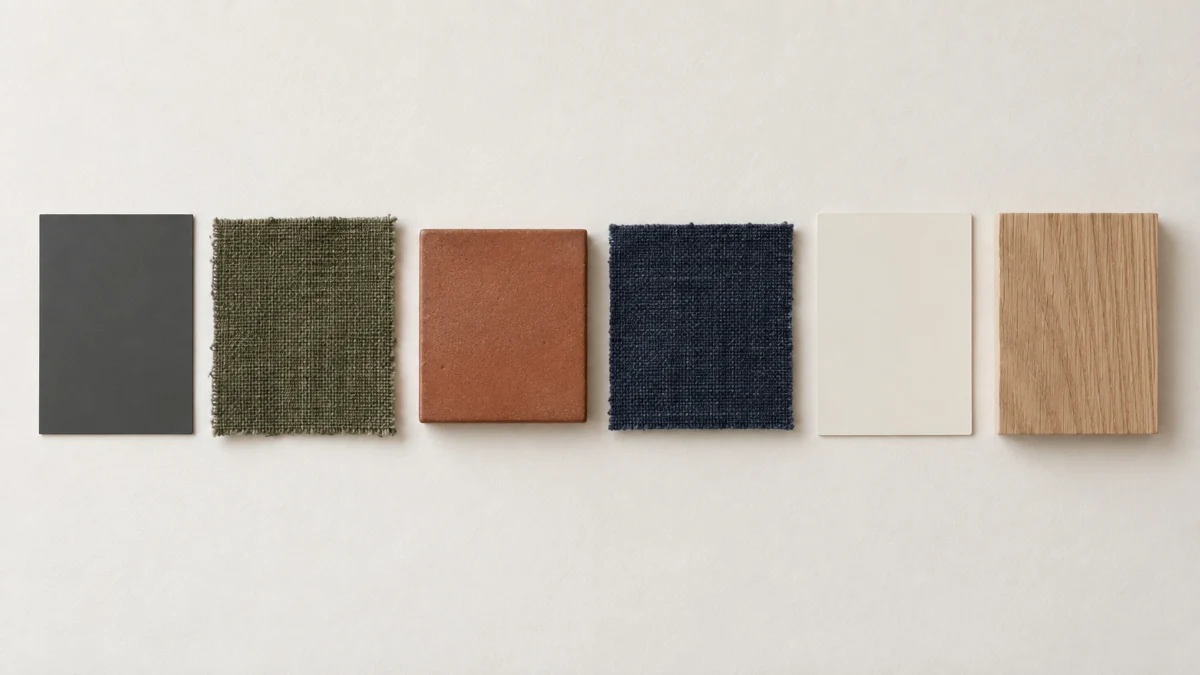
Beige is the default Japandi color, which is exactly why so many rooms look alike. Both traditions offer darker, earthier colors too.
- Ink charcoal: for a sofa, a curtain or a single painted wall.
- Moss or sage green: for cushions, a rug or a plant pot.
- Rust clay: for ceramics, a throw or an accent chair.
- Indigo: a nod to Japanese indigo-dyed cloth, nice in cotton cushions or a runner.
Keep the walls warm white, soft gray or pale clay. Then pick no more than two accent colors, and repeat each in two or three places. For undertones and how to test paint, see the guide to living room color schemes.
Dark rooms can feel the coziest of all. If your living room gets little daylight, a charcoal wall behind a light oak sofa can feel calmer than a pale wall straining to look bright.
5. Light It Low and Soft
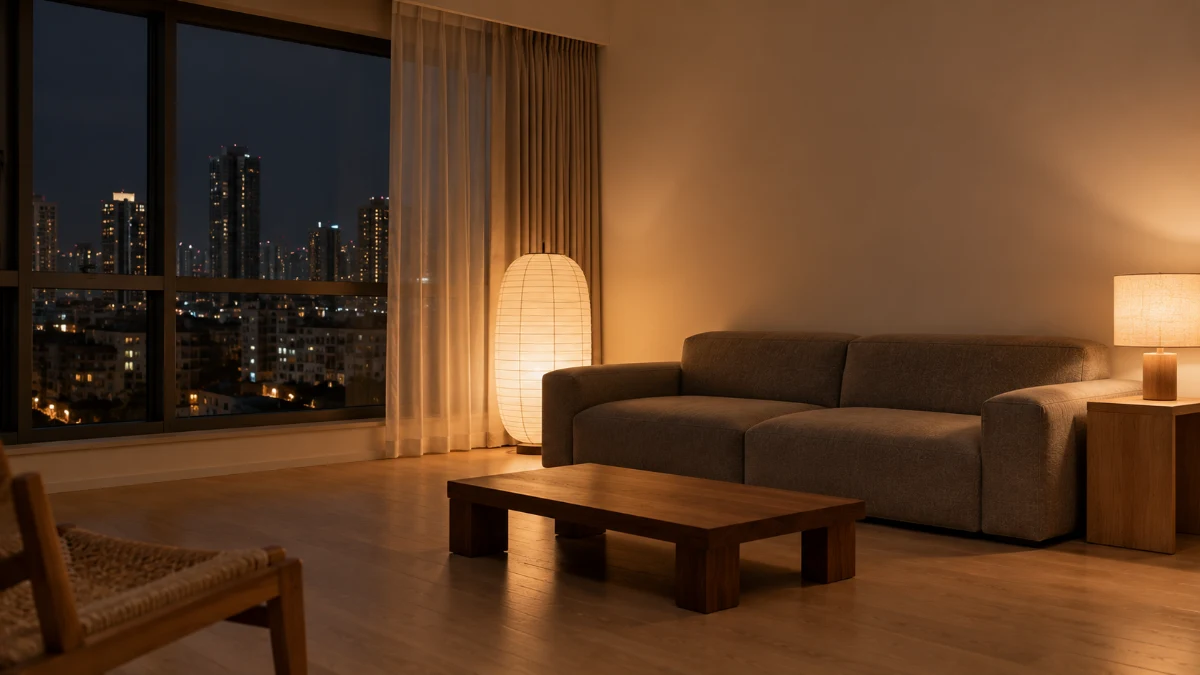
Japanese interiors have a long history of filtered light, from paper shoji screens to paper lanterns. Scandinavian homes, with long dark winters, often use several small lamps instead of one ceiling light. Put those together and you get a simple approach: soft light from several low sources.
Choose paper, linen or frosted glass shades that hide the bulb. Aim for three light sources, such as a floor lamp near the sofa, a table lamp and one small light elsewhere. Keep most shades below standing eye level.
For bulbs, warm white around 2700K suits the soft look. A CRI of 90 or higher helps wood and fabric colors look more natural. The living room lighting guide explains both numbers and where to place each lamp.
A mistake to avoid: one bright ceiling light on its own. It flattens every texture in the room, including all the wood you chose so carefully.
6. Hide the Everyday Things
This is the idea most Japandi articles skip. Calm rooms aren't calm because the owners don't have stuff. They're calm because the stuff has a door.
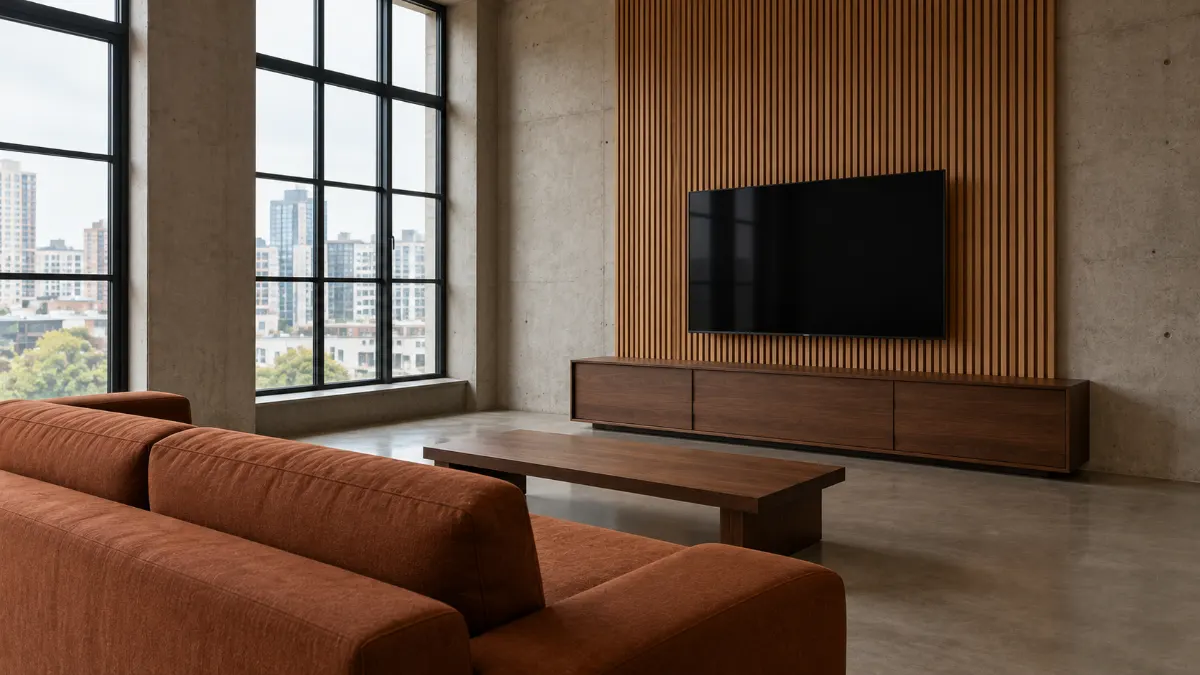
Start with the TV, usually the biggest dark shape in the room. You can mount it low on a wood-slatted wall panel so it sits inside a pattern of vertical lines. Or keep it in a low sideboard with sliding doors that close when it's off. The guide to TV wall ideas covers mounting height and hiding cables. For panel types and how to fit them, see our wood slat wall ideas article.
Then give everything else a closed home. Remotes, chargers and game controllers go in a lidded box or drawer. Kids' toys go in a low cabinet or lidded baskets they can open themselves. Keep open shelves for the few things you want to look at, and closed storage for everything you just need to use. There are more ideas in the living room storage guide.
Run cables through the back of the sideboard, or along a cable channel painted the wall color. Tangled cables are often one of the first things people notice.
7. Balance the Room Without Making It Match
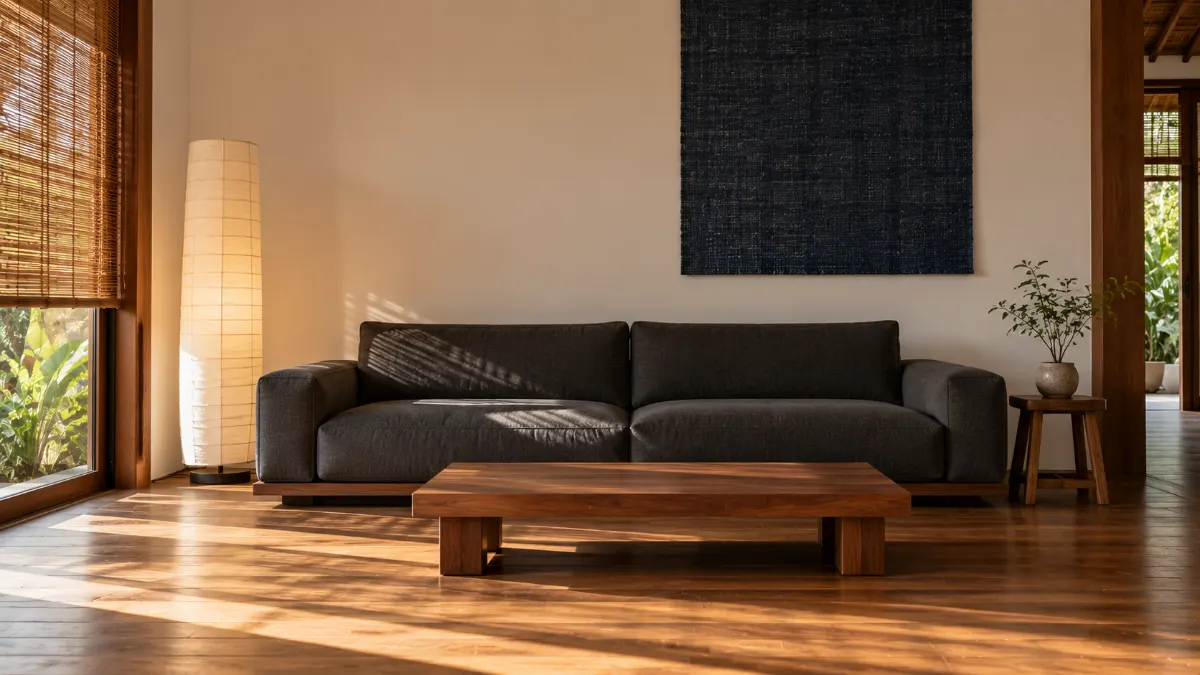
Matching lamps on matching side tables either side of the sofa can look staged. Japanese design often prefers balance that isn't a mirror image.
Try pairing things by how big or heavy they look, instead of by type:
- A tall floor lamp on one side of the sofa, and a low wooden stool with a plant on the other.
- A large piece of art off-center on the wall, balanced by a sideboard on the opposite side.
- A single armchair angled toward the sofa, rather than two identical chairs facing it.
A quick test: squint at the room from the doorway. If one side feels heavier, add height or a darker piece to the lighter side, rather than another matching object. It can also save money, since you don't need to buy pairs of anything.
8. One Handmade Object per Surface, Changed With the Seasons
Traditional Japanese reception rooms often had a tokonoma, a small alcove for displaying a hanging scroll or flowers. The scroll could be changed with the season or for a special guest (British Museum, via Smarthistory). It's a nice idea to borrow, and it stops shelves from slowly filling up.
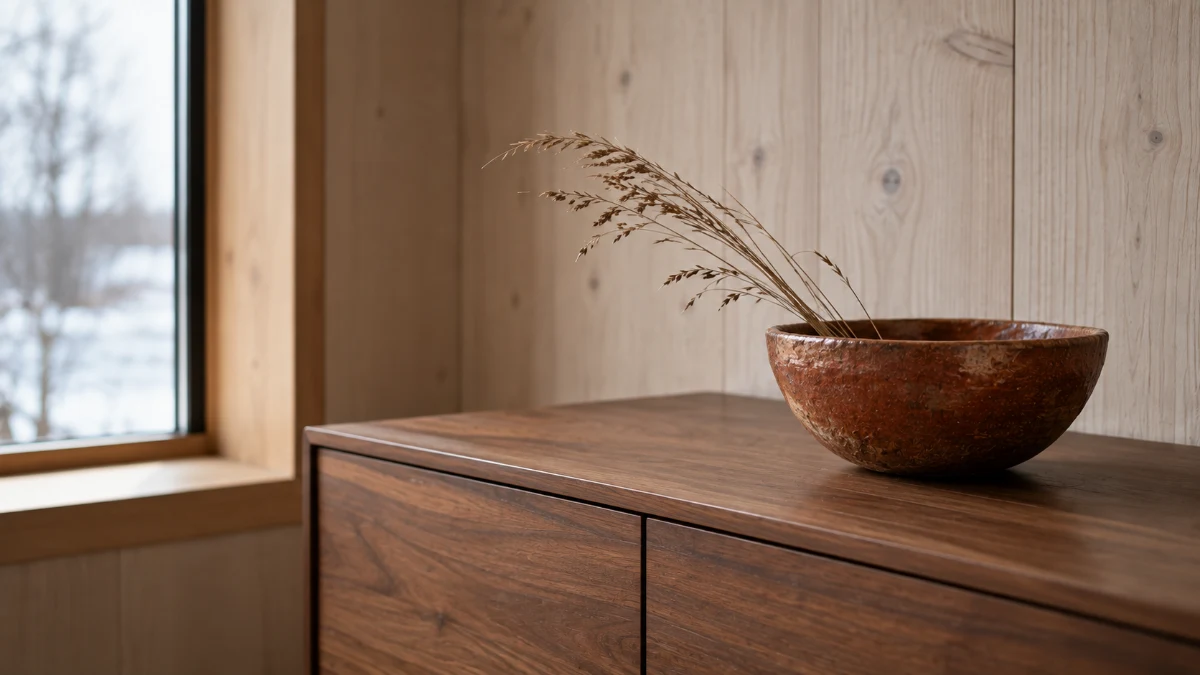
Give each surface one object: the coffee table, the sideboard, one shelf. Choose pieces that show they were made by hand, like a glazed bowl with uneven edges or a woven basket. This connects to wabi-sabi, the Japanese idea of finding beauty in imperfect, natural things.
Then change them every few months. Try fresh branches in spring, a bowl of stones in summer, dried grasses in autumn and pine cuttings in winter. The room doesn't fill up, and it doesn't look frozen either.
Japandi in Hot and Cold Climates
Most Japandi advice is written for cool, dry homes. A modern Japandi living room in a hot, humid place needs a few changes.
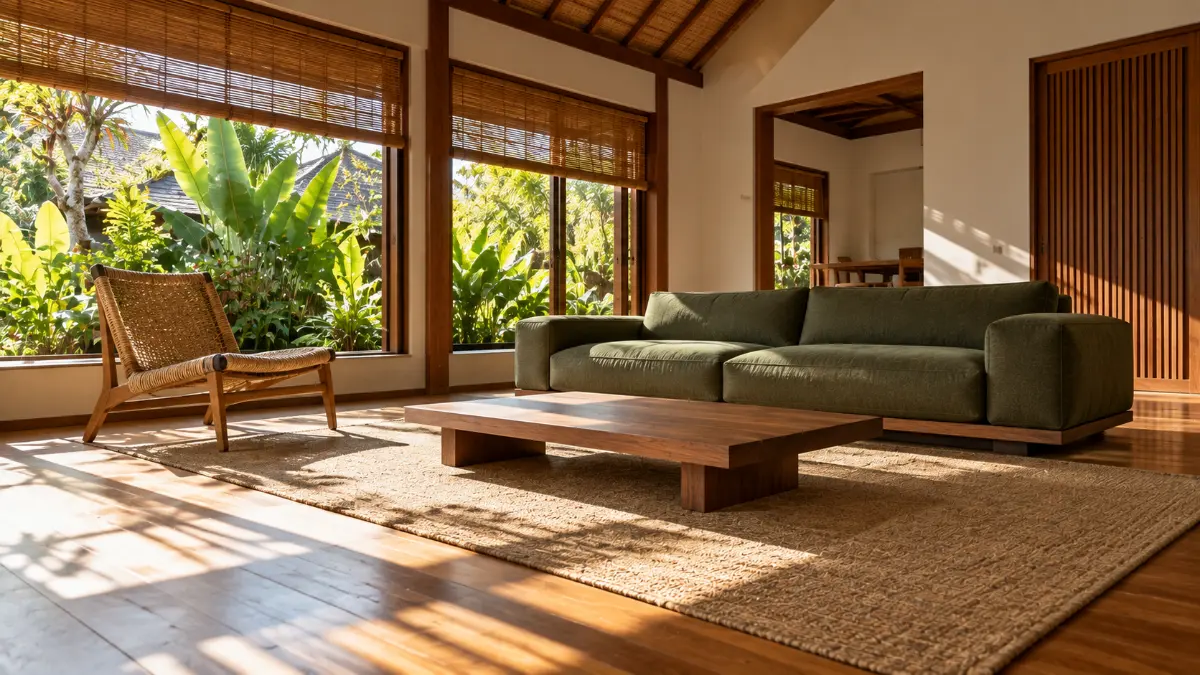
Damp air is hard on some materials. Like cotton, linen can grow mildew if it stays damp, so leave some airflow around the sofa and dry spills quickly. Rattan and cane suit chairs and lamp shades in warm rooms. The guide to furniture for a humid climate compares woods and fabrics in more detail. For rug materials in damp homes, see the living room rug guide.
In cold climates, go the other way. Wool rugs, heavier linen curtains and more lamps help on long winter afternoons. Curtains are often made about 1.5–2 times the width of the window, so they still look full when closed.
Small Japandi Living Room and Budget Tips
A small Japandi living room is easier than it sounds. Low furniture and open floor are exactly what small rooms need.
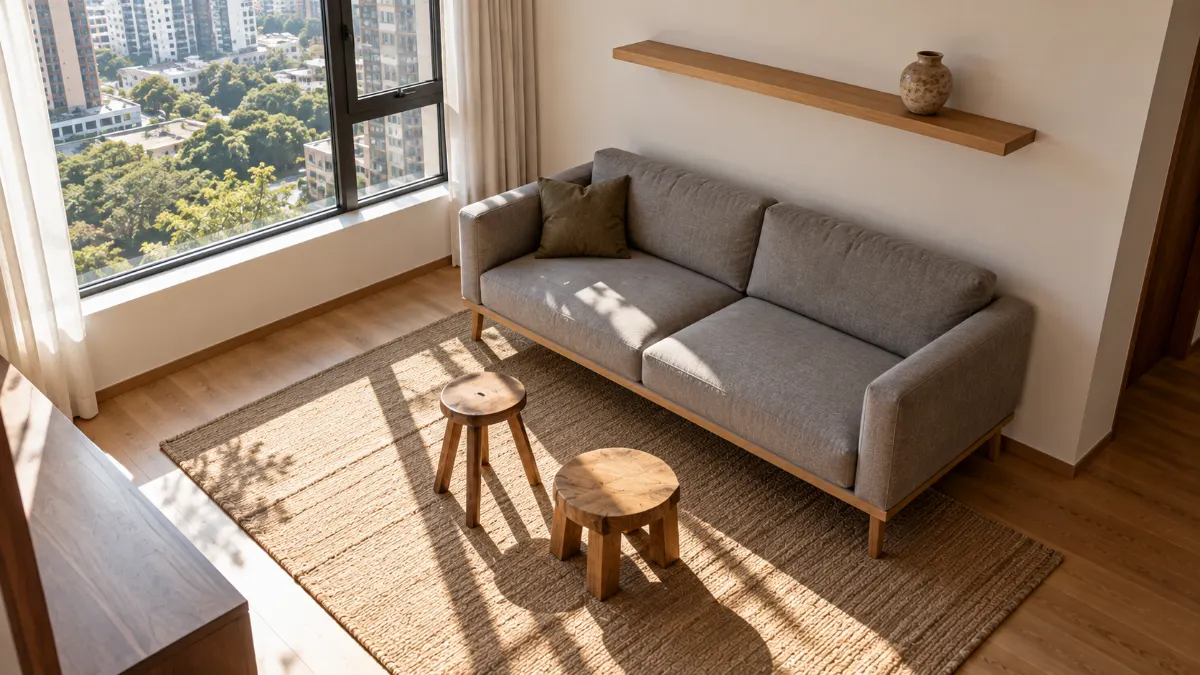
- Choose a compact sofa with visible legs, so you can see the floor underneath it.
- Swap a bookcase for one wall-mounted shelf.
- Use one large rug rather than several small ones.
- Replace the coffee table with two low stools you can move when you need floor space.
There are more space-saving ideas in the guide to small condo living rooms.
On a budget, spend on what you touch every day, like the sofa and one good lamp, and save on the rest. Second-hand wooden furniture is often solid wood, and a light sanding and an oil finish can help it fit your two-tone scheme. Paper lanterns are usually one of the cheaper ways to get soft, good-looking light.
Final Thoughts
Japandi isn't a shopping list. It's closer to a habit of asking what a room actually needs, then giving those few things enough space to be seen. Some weeks your living room will have toys on the floor and mugs on the table, and that's fine. The structure underneath is what keeps it calm.
For more rooms and ideas in this style, browse the Japandi ideas page or the guide to Japandi bedroom ideas.
Start this weekend: move every decorative object out of the living room, and only bring back what you miss by next Sunday.