
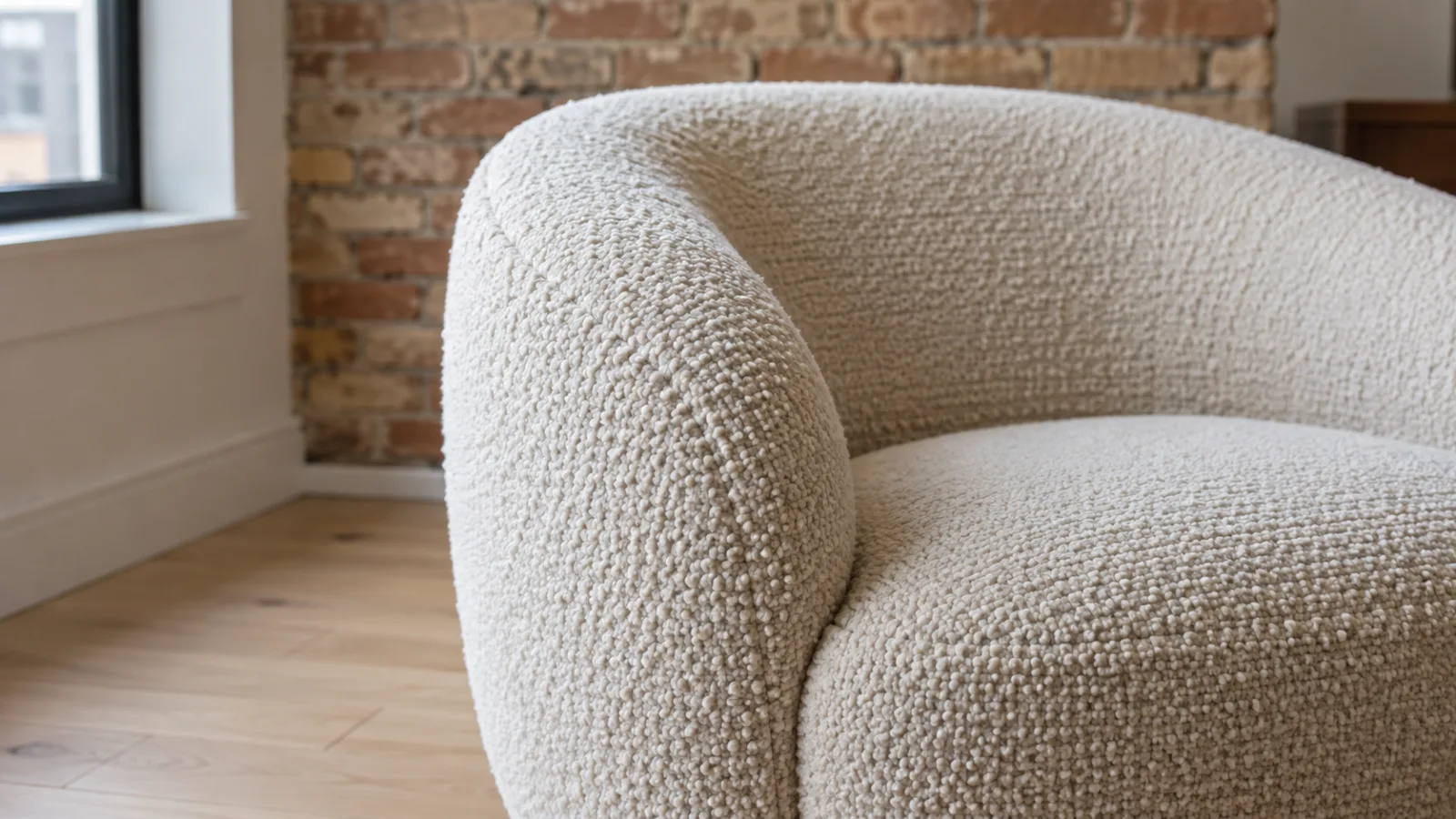
Bouclé furniture is easy to recognize by its soft, textured surface and tiny loops of yarn. Often found on curved sofas, accent chairs and ottomans, it adds warmth and texture to a room without relying on bold patterns. But its distinctive finish also raises practical questions about durability, cleaning and everyday wear.
Is bouclé furniture worth buying? That depends on your household, the fabric's construction and how much maintenance you're willing to do. Loose loops can snag on pet claws, while crumbs and dirt can settle into the textured surface. On the other hand, the right bouclé piece can bring depth and a cozy feel to a living room or reading corner.
This guide covers the main pros and cons of bouclé furniture, how it compares with linen, how to care for it, and what to check before buying. If you have children or pets, pay particular attention to the fabric's loop size, color and care instructions before choosing a piece.
In this article
- What Is Bouclé Furniture?
- 1. The Pros of Bouclé Furniture
- 2. The Cons of Bouclé Furniture
- 3. Is Bouclé Durable With Kids and Pets?
- 4. How to Clean Bouclé Furniture
- 5. Bouclé vs Linen: Which Is Easier to Live With?
- 6. Bouclé Chair, Loveseat, Ottoman or Sofa: Where to Start
- 7. How to Buy Bouclé Furniture Without Regretting It
- Final Thoughts
- Frequently Asked Questions
What Is Bouclé Furniture?
Bouclé is a fabric made from yarn with small loops or curls in it. The name comes from the French word bouclé, meaning "curly", from the verb boucler, "to curl" (Merriam-Webster). It describes how the yarn is made, not what it's made from. So bouclé can be wool, cotton, polyester, acrylic or a blend.
This matters when you shop. Two sofas sold as bouclé can look the same in a photo but wear and clean very differently. The fiber, the size of the loops and the backing fabric all make a difference.
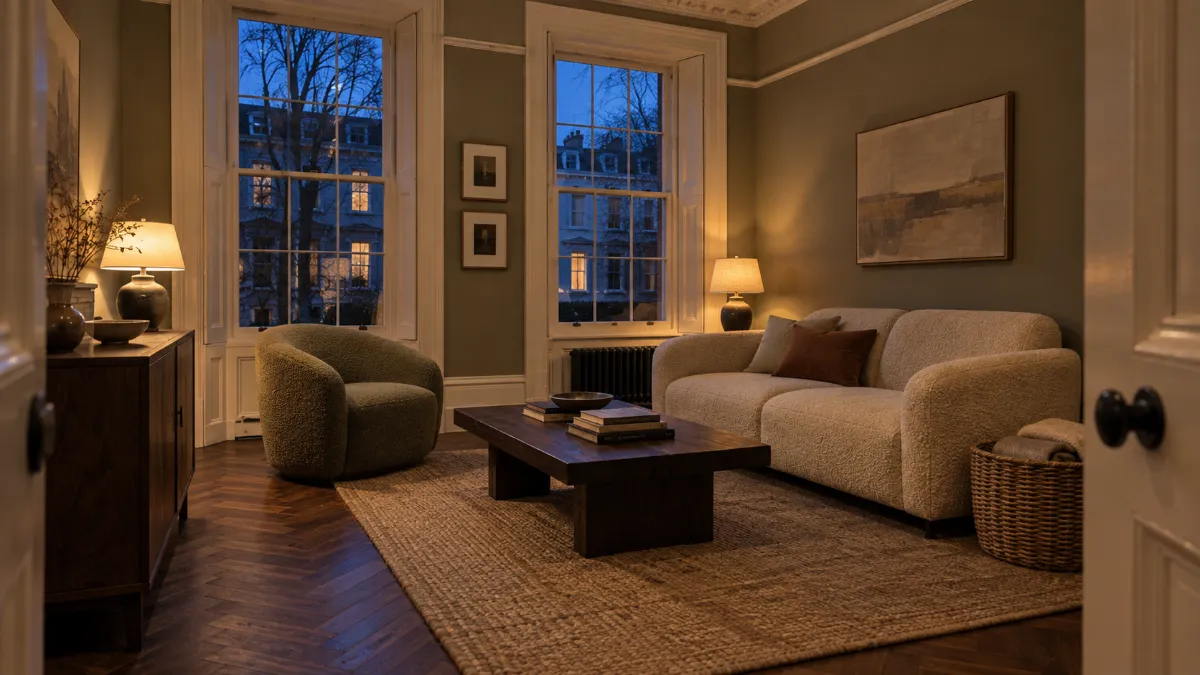
Most people picture it in cream, ivory or oatmeal. It also comes in olive, rust, brown and charcoal. Either way, the loops give a plain chair or sofa some texture without needing a pattern.
1. The Pros of Bouclé Furniture
The main appeal is the texture. It has more going on than a smooth fabric, but it looks quieter than velvet or a bold print.
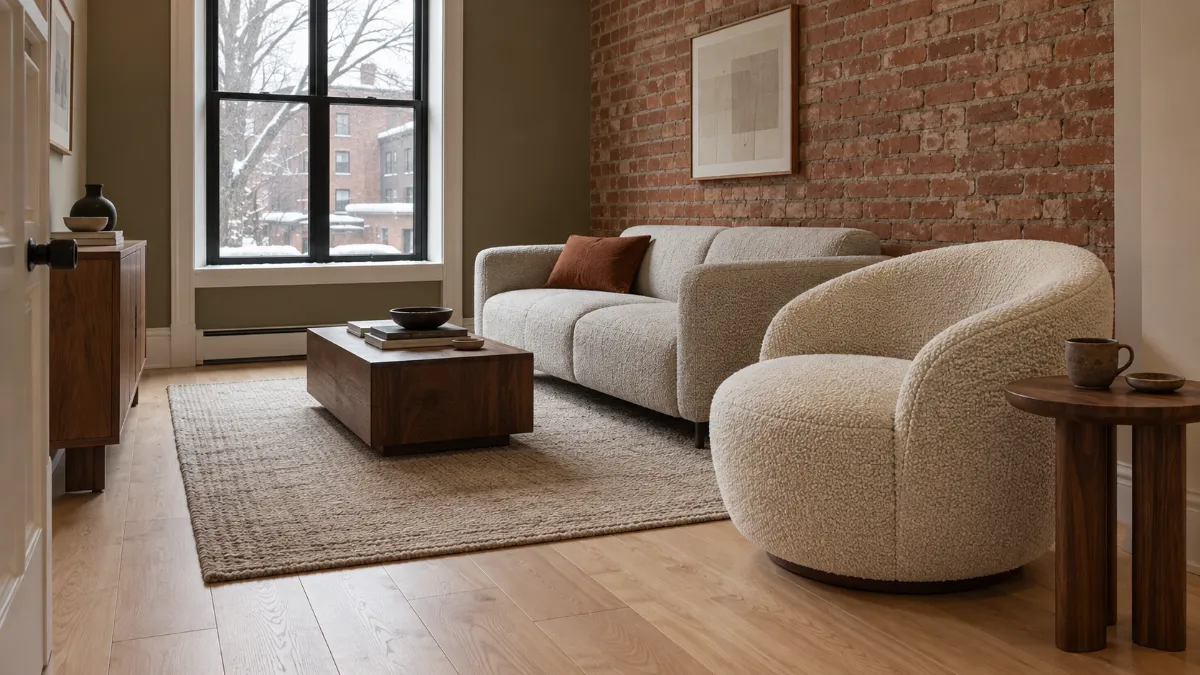
It adds texture without a busy pattern. A cream bouclé chair can sit next to wood, stone, leather or linen without clashing. That helps in a room that already mixes several textures.
It suits rounded furniture. You often see it on curved sofas, barrel chairs and round ottomans. The soft fabric matches the soft shape, so the piece can look relaxed rather than formal.
It looks soft. The bumpy surface catches small bits of light and shadow, so even a simple piece can look cozy.
It comes in more than cream. Darker shades like olive, brown or rust give you the same texture and tend to hide everyday marks better.
A small piece can stand out. A looped-fabric chair doesn't need a fancy frame or a bright color to get noticed. The texture does that for it.
The catch is that the same texture also makes marks, flattened patches and loose loops easier to see.
2. The Cons of Bouclé Furniture
Bouclé isn't fragile by default, and it isn't tough by default either. How it wears depends on the specific fabric. Still, a few problems come up often in care guides.
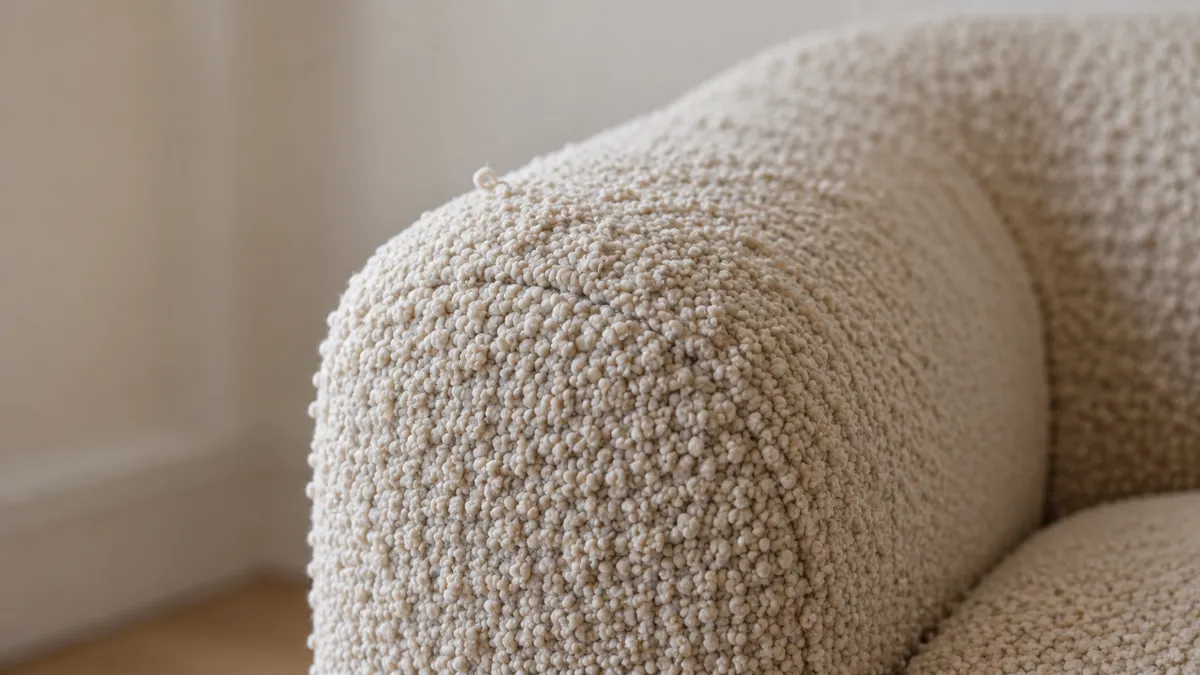
Loops can snag. Pet claws, rings, the zip on a pair of jeans and the buckle on a bag can all catch a loop and pull it out. Retailer care guides list claws, keys and jewelry as common causes (Feather & Black). A pulled loop tends to show more than a small mark on a smooth fabric.
Light colors show dirt. A cream piece looks lovely in a quiet sitting room. In a home with muddy shoes, snacks and pets, it needs more cleaning to stay that way.
Crumbs hide in the texture. The bumpy surface gives dust, hair and crumbs more places to settle. You'll likely need to vacuum it more often than a smooth fabric.
Scrubbing can leave a mark of its own. On a flat fabric, a cleaned spot usually looks flat again. On loop yarn, rubbing too hard can crush or fuzz the loops. So you may end up with a patch that looks different even after the stain is gone.
Bouclé sofa pros and cons at a glance
Pros
- Soft texture without a pattern
- Suits curved and rounded shapes
- Comes in light and darker colors
- Makes a simple chair stand out
Cons
- Loops can snag on claws and jewelry
- Light colors show dirt quickly
- Crumbs and hair settle into the loops
- Needs gentle cleaning, not scrubbing
3. Is Bouclé Durable With Kids and Pets?
Bouclé can work in a family home. But it helps to be picky about which piece you choose and where it goes.
Snags and stains are the problems care guides warn about most, and they're different from normal wear. A cat that scratches furniture can catch loops quickly. A child eating crackers on a cream loveseat creates a cleaning problem, not a wear problem. One fabric maker suggests bouclé suits lower-traffic accent pieces better than a main sofa in a pet home (Revolution Fabrics).
So think about what the furniture will actually face. "We have a dog" isn't enough to decide. A calm older dog that rarely climbs on the sofa is very different from a young cat that sharpens its claws on everything.
If your home is busy, a few choices can help. Pick a mid-tone or darker color, since olive, taupe, brown and charcoal tend to hide small marks better than bright ivory. Look for loops that feel firmly anchored when you run your hand across them. Choose removable cushion covers where you can, and only wash them if the care label allows it.
Placement matters too. A reading chair in a corner has an easier life than the main sofa, where everyone eats, naps and drops their bags.
Climate plays a part as well. In a Toronto or Chicago winter, wet coats and salty boots end up near the sofa. In a humid apartment, a damp patch can take longer to dry. For fabrics and care in damp homes, see the guide to furniture for a humid climate.
4. How to Clean Bouclé Furniture
The safest way to clean bouclé is to check the care label first, then treat spills gently. Strong cleaners and hard scrubbing are the quickest ways to make a small problem bigger. The steps below are general guidance. Always follow the instructions for the piece you own.
Vacuum regularly
Use the upholstery brush on a low setting. Move it slowly over the fabric instead of dragging a hard nozzle across it. Pay attention to seams, cushion edges and the gaps where crumbs collect. One furniture retailer suggests vacuuming bouclé weekly with a soft brush attachment (Feather & Black).
Blot spills right away
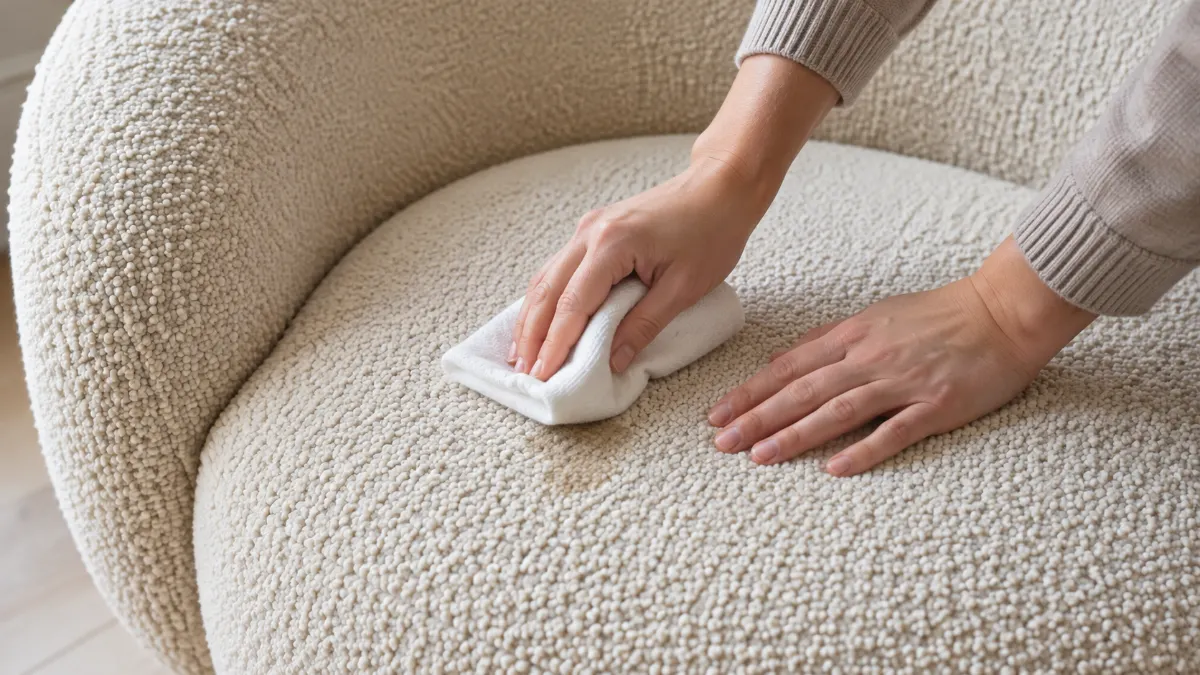
Press a clean, dry, white cloth onto the spill to soak it up. Don't rub back and forth. Rubbing pushes the liquid deeper and roughs up the loops. Work from the outer edge of the spot toward the center so it doesn't spread (Room & Board).
Check the cleaning code
Many furniture labels, especially in North America, use a letter code (Rainbow Restoration):
- W: water-based cleaners are okay. This doesn't mean the fabric is machine washable.
- S: use only a solvent-based, water-free cleaner.
- W/S (or SW): either type is fine for spot cleaning.
- X: vacuum only. For anything more, ask a professional upholstery cleaner.
Labels outside North America may not use these letters. Follow whatever care symbols or instructions came with the piece.
Test first, then let it air-dry
Test any cleaner on a hidden spot first, such as the back of a cushion. A textile professor quoted by CBC suggests pre-testing any cleaning product this way, then blotting rather than rubbing (CBC). Afterwards, blot away extra moisture and let the fabric air-dry. A cleaning expert quoted by Homes & Gardens warns that heat can shrink the fabric (Homes & Gardens).
Don't yank a pulled loop
A pulled loop is tempting to tug or snip. Pulling on it can draw out more of the yarn. Care advice on trimming varies between brands, so check the maker's instructions or ask an upholsterer before you cut anything.
Call a professional for big stains
Large spills, oily marks and pet accidents are best handled by a professional upholstery cleaner. Trying one home product after another can set the stain or damage the loops.
5. Bouclé vs Linen: Which Is Easier to Live With?
Bouclé and linen both show up in relaxed, natural-looking rooms. But they behave quite differently on a sofa.
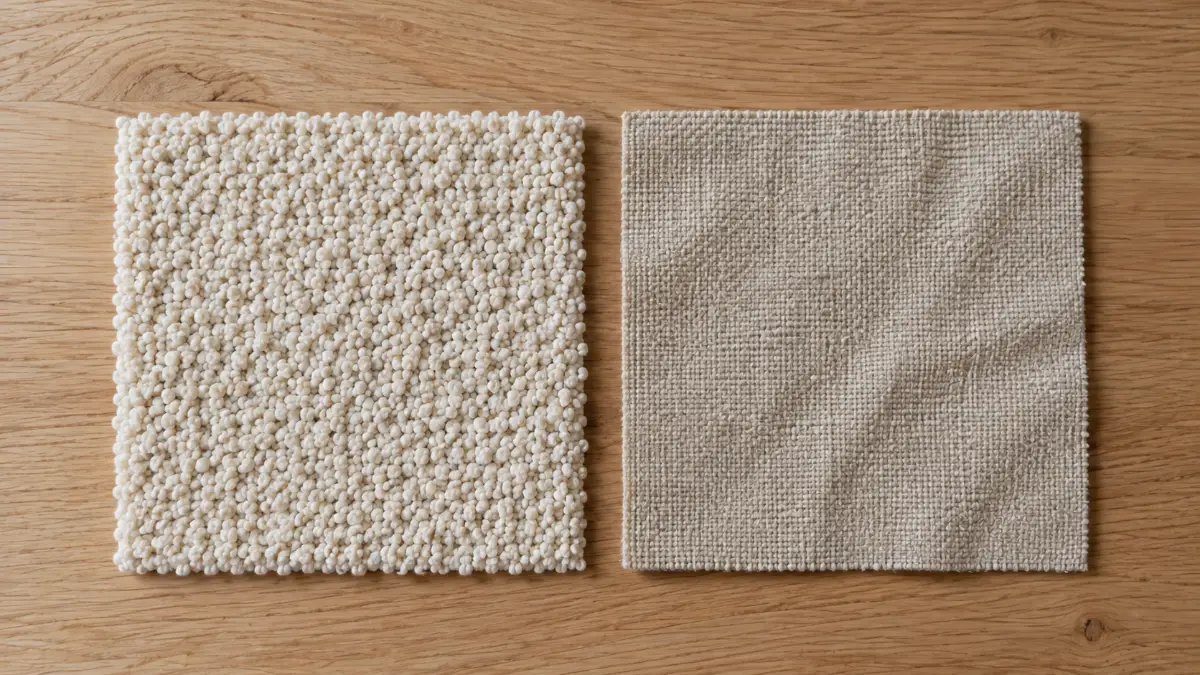
Bouclé is thick and bumpy. Its texture can hide small flaws, but loops can snag and crumbs can settle in. Linen is flat and woven, with a slightly crumpled look. Creases are part of its charm, though some people find them annoying. Linen stains too, so its care depends a lot on the blend and finish.
| Bouclé | Linen | |
|---|---|---|
| Surface | Looped and bumpy | Flat weave |
| Look | Soft, thick, cozy | Relaxed, natural, slightly crumpled |
| Main worry | Snags, trapped crumbs, marks on light colors | Creases and stains |
| Good for | Curved chairs, accent seating, cozy sofas | Relaxed sofas, slipcovers, casual rooms |
| Cleaning | Gentle vacuuming, careful spot cleaning | Depends on the blend and finish |
Neither one wins in every home. Bouclé can suit you if you like the texture and don't mind watching for snags. Linen can suit you if you prefer a flatter fabric and can live with creases. Linen is also often described as feeling cooler in warm weather, which some people like in hot climates.
For sofa size, depth, frame and fabric rub counts, see how to choose a sofa. This section only covers what the fabric itself changes.
6. Bouclé Chair, Loveseat, Ottoman or Sofa: Where to Start
You don't need a bouclé sofa to get the look. A smaller piece is often the easier place to start, especially if you're unsure about the upkeep.
Bouclé chair
A bouclé chair is the most flexible option, and it suits curved, organic shapes. A cream swivel chair can sit next to a sofa in a different fabric, and the two can still look good together. It suits a reading corner, a bedroom, or a part of the living room that doesn't see much traffic.
Bouclé loveseat
A loveseat gives you more of the soft look without a big sectional. An oatmeal one can work well in a London flat or a small condo living room. Just remember that if it's your main sofa, it gets the same daily use as a full-size one. Smaller doesn't mean less upkeep.
Bouclé ottoman
An ottoman is another low-risk way to try the fabric. It can be a footrest, a spare seat or a soft piece next to a wood or travertine coffee table. Ottomans get moved around a lot. Keep them away from sharp table edges and metal legs that could catch the loops.
Bouclé sofa
The sofa is the biggest commitment. Look closely at the fabric details, the care label and the cushions. A cream bouclé sofa can look perfect in a product photo. Picture it on a Saturday morning instead, with a bowl of cereal, a wet raincoat and whatever else your household brings to the sofa.
7. How to Buy Bouclé Furniture Without Regretting It
Treat the fabric details as seriously as the shape. Before you buy, check these things:
- Fiber content. "Bouclé" alone doesn't tell you what the fabric is made of.
- Care label. Know the cleaning code before the first spill happens.
- Rub count. A Martindale number (in rubs) or a Wyzenbeek number (in double rubs), if the listing gives one, shows how well the fabric resists wear from rubbing. Fabric maker Fibreguard notes these tests measure abrasion only, not overall durability (Fibreguard). They don't tell you about snags, pets or stains, so use the number as one clue, not the whole answer.
- What's underneath. The frame, cushion filling and seams matter as much as the fabric.
- Color. Olive, tobacco brown, warm gray, rust and charcoal give you the texture and tend to show fewer marks.
- The way in. A big upholstered piece still has to fit through doors, elevators and stairwells, so measure first.
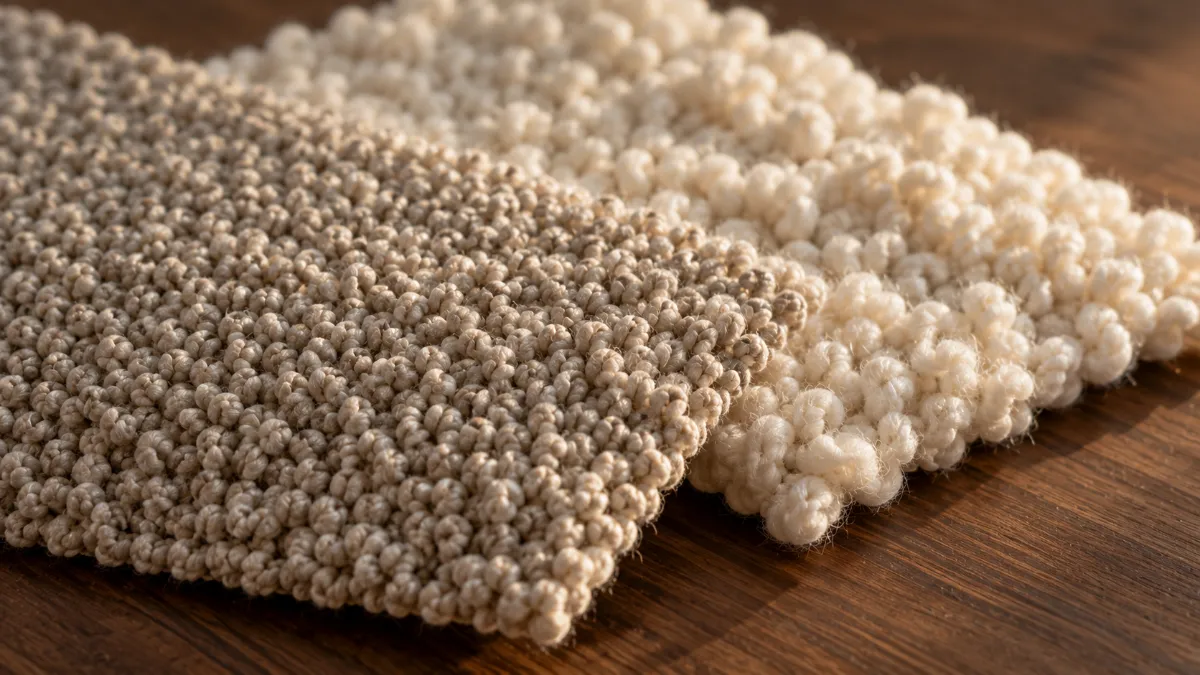
Then look closely at the loops. They range from small, tight loops to big, fluffy ones, and they won't all behave the same way. Some sellers' buying guides suggest tighter loops hold their shape longer, while loose loops flatten and pull free more easily. A simple test is to run your palm across a swatch. Loops that shift or lift easily may catch more.
If you're buying online, zoom in on the close-up photos. A wide photo of a bright room can make two very different fabrics look alike. Many furniture sellers also offer fabric swatches. A swatch lets you feel the loops and test how marks show before you commit.
Final Thoughts
Bouclé furniture makes sense if you love texture and don't mind a little care. It makes less sense if you want a fabric you never have to think about.
If you're unsure, start small. Put a bouclé chair or ottoman in a quieter part of the room. Live with it for a few months, and see how it copes with crumbs, cleaning and claws before you buy a sofa.