

A travertine coffee table puts real stone in the middle of your living room. Most come in warm cream, beige, ivory or soft brown. Small holes and cloudy markings mean no two tables look quite the same.
That look comes with a catch. Travertine soaks up liquids, scratches more easily than people expect, and reacts to acids like lemon juice. It can still suit many homes, as long as you know how to look after it.
If you're unsure, start with durability in section 2 and the pros and cons in section 7. For size and shape, see how to choose a coffee table.
Quick verdict: a travertine coffee table gives you natural texture and warm, easy colors that suit many rooms. But travertine is a soft, calcium-based stone. Acidic spills can leave dull marks, and it scratches more easily than granite or quartz. Choose it if you like natural variation and don't mind coasters and gentle cleaning. If you want a surface that stays perfect with no care, wood or ceramic may suit you better.
In this article
- What Is a Travertine Coffee Table?
- 1. Filled vs Unfilled Travertine
- 2. Is Travertine Durable Enough for a Coffee Table?
- 3. Weight, Floors and Getting It Home
- 4. Sealing and Stain Care
- 5. How to Clean Travertine Without Damaging It
- 6. Travertine vs Marble Coffee Table
- 7. Travertine Coffee Table Pros and Cons
- 8. How to Style a Travertine Coffee Table
- 9. Travertine Side Table Ideas for Small Spaces
- Final Thoughts
- Frequently Asked Questions
What Is a Travertine Coffee Table?
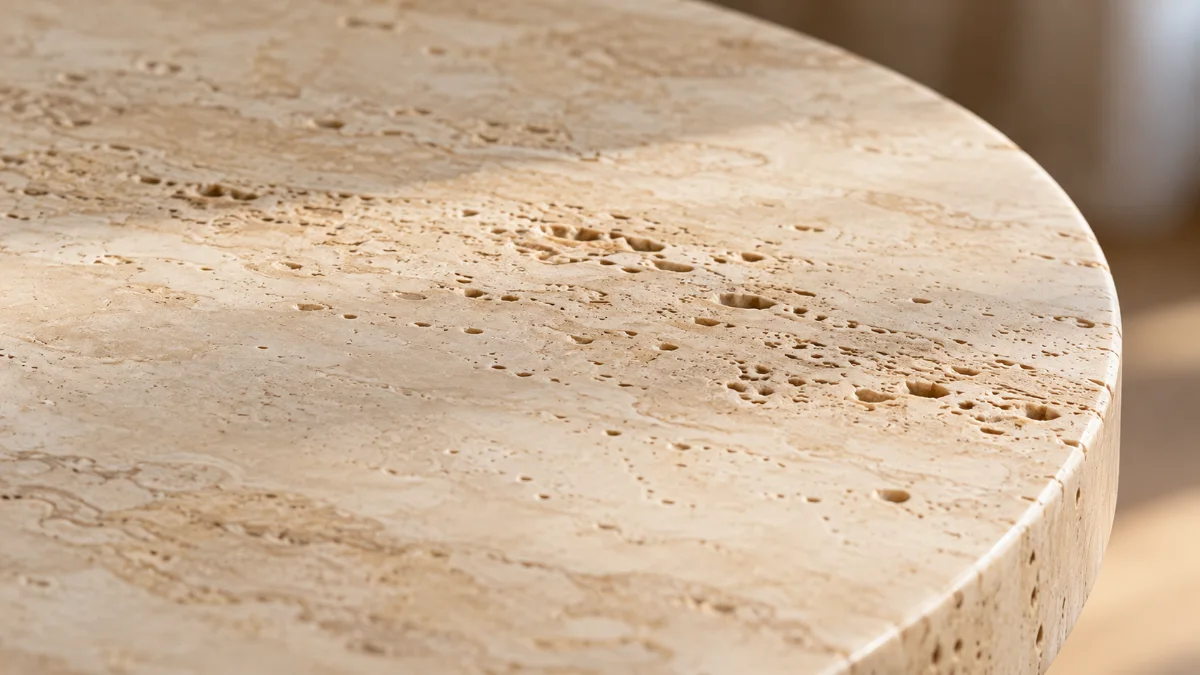
A travertine coffee table has a top, a base, or both made from travertine. Travertine is a natural stone in the same family as limestone and marble. It forms when mineral-rich water, often from hot springs, reaches the surface and releases dissolved carbon dioxide, which leaves layers of calcium carbonate behind (USGS). Gas bubbles leave the small holes that give it its look.
The finish changes how the table looks and feels. A honed finish is smooth and matte, with very little shine. It hides small marks fairly well. A polished finish is shiny and looks dressier. The downside is that dull marks from acids show up more clearly on a shiny surface.
1. Filled vs Unfilled Travertine
Filled travertine has its natural holes packed with a color-matched filler. Unfilled travertine leaves those holes open.
Filled travertine
The filler is usually a resin or cement-based paste in a matching shade. The top ends up smooth, so a cloth glides across it. For a table that holds mugs, snacks and the TV remote, this is often the easier choice.
Filling the holes is not the same as sealing the stone. A filled top can still absorb a spill.
Unfilled travertine
Unfilled travertine keeps the stone's open texture, from tiny pinholes to larger, uneven pits. It suits rustic Mediterranean rooms and organic modern spaces, where a slightly raw look is the point.
The trade-off is cleaning. Crumbs settle into the holes, and spilled coffee can sit in a pit before you notice it. A soft brush, or the brush attachment on your vacuum, helps.
Neither finish is better. It depends on whether you want an easy top or more texture.
2. Is Travertine Durable Enough for a Coffee Table?
Yes, for most homes, as long as you're comfortable with some wear. Travertine is made mostly of calcite, which sits at 3 on the Mohs hardness scale (geology.com). That's about the same as marble, and softer than granite or quartz.
A properly made stone top can handle normal living room use. The surface is the weaker part. Keys, rough-bottomed ceramic bowls and toy cars can leave fine scratches over time.
Acids are the bigger issue. Lemon juice, vinegar, soda and many fruit juices can react with calcite. The Natural Stone Institute warns that acidic products "may dull or etch calcareous stones" (Natural Stone Institute). This leaves a dull, slightly lighter patch called an etch. An etch is damage to the surface itself, not a stain sitting in it. Sealing doesn't prevent it.
Here's a fair test. Picture the table after a year, with a few dull spots and fine scratches. If that would bother you every day, a wood or ceramic top may suit you better.
3. Weight, Floors and Getting It Home
Stone tables look light in photos. They don't feel light on a narrow staircase.
Here's a rough example. Travertine weighs about 144–150 lb per cubic foot (about 2,300–2,500 kg per cubic meter), based on figures quoted for ASTM testing (BuildDirect). A square top 91 × 91 cm (36 × 36 in), 3 cm (1.2 in) thick, holds about 0.9 cubic feet of stone. That works out at roughly 59–61 kg (130–135 lb) for the top alone. A round top of the same width is about a fifth lighter. A solid stone pedestal base adds a lot more. These are estimates. Thickness, shape and the stone itself all change the number, so check the product listing for the exact weight.
Before you order, measure the route into your home, including the elevator, stairs and doors. Many apartment buildings also have move-in rules, such as booking the freight elevator. The sofa buying guide explains how to measure doors and stairs, and the same checks apply here.
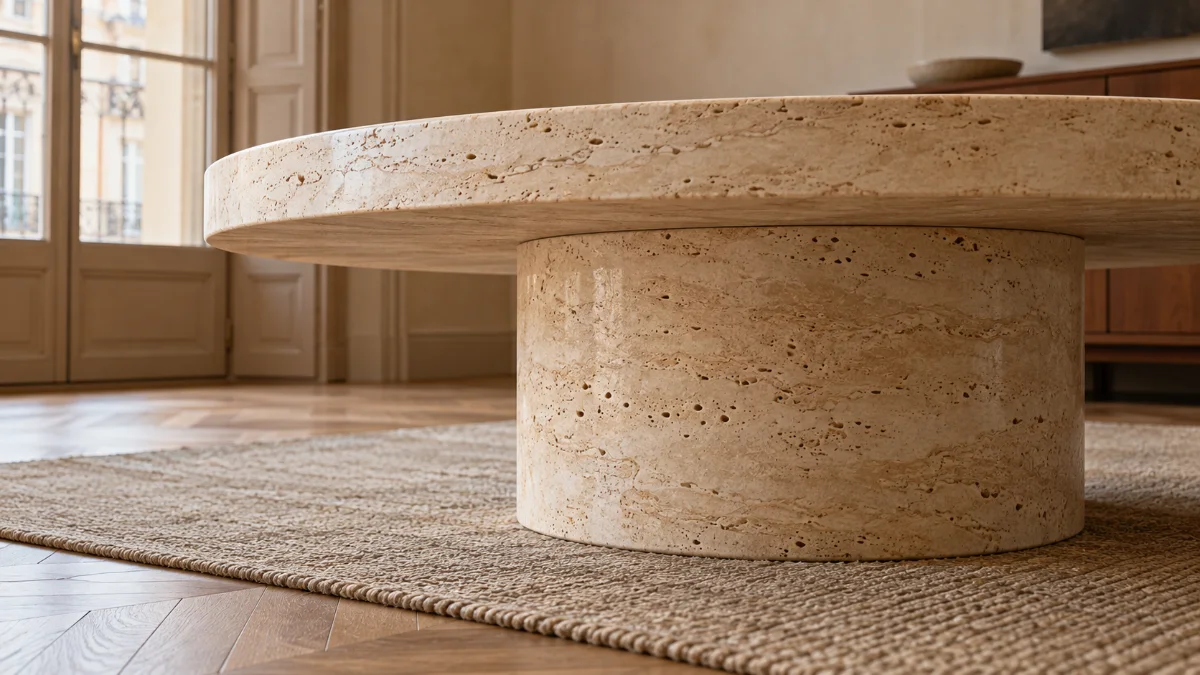
Then think about the floor. A pedestal base puts all of the table's weight on a small area. On wood or vinyl floors, felt pads under the base can help prevent dents and scratches. A rug under the table also protects the floor. Rug sizes are covered in the living room rug size guide.
Dragging a stone table can scratch the floor and chip the stone's edge. Lift it with two or more people instead.
4. Sealing and Stain Care
A sealer helps travertine resist stains, but it doesn't stop acid marks. Think of it as extra time to wipe up a spill, not a shield. The Natural Stone Institute notes that sealing makes stone more stain-resistant, not stain-proof.
Most travertine sealers are penetrating sealers. They sink into the pores and slow down how fast liquid gets in. They don't form a hard coating on top.
Stains and etches need different responses. A darker mark usually means something soaked in, like coffee or cooking oil. A pale, dull mark is more likely an etch from something acidic. On a cream tabletop, the two can look alike at first.
| Sealing helps with | Sealing does not prevent |
|---|---|
| Slowing down how fast liquid soaks in | Acid etching |
| Lowering the chance of deep stains | Scratches |
| Giving you more time to wipe spills | The need for regular cleaning |
There's no single resealing schedule for every table. Follow the instructions from the table's maker or the sealer you buy.
You can try a simple water test. Put a few drops of water on a hidden spot and wait a few minutes. If the stone darkens, water may be getting in, and the table may need resealing. Treat this as a rough check, not a replacement for the maker's care instructions. Never test with vinegar or lemon juice.
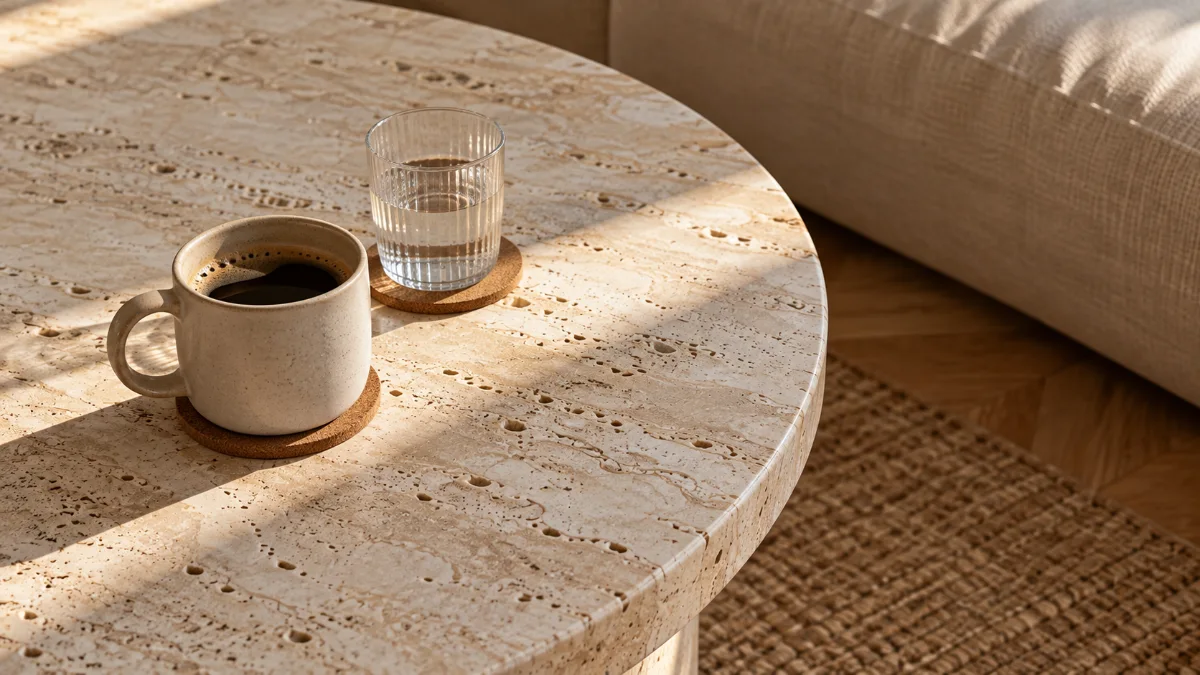
Coasters matter even more in humid homes, where cold drinks gather more condensation. For other materials in humid rooms, see the guide to furniture for a humid climate.
5. How to Clean Travertine Without Damaging It
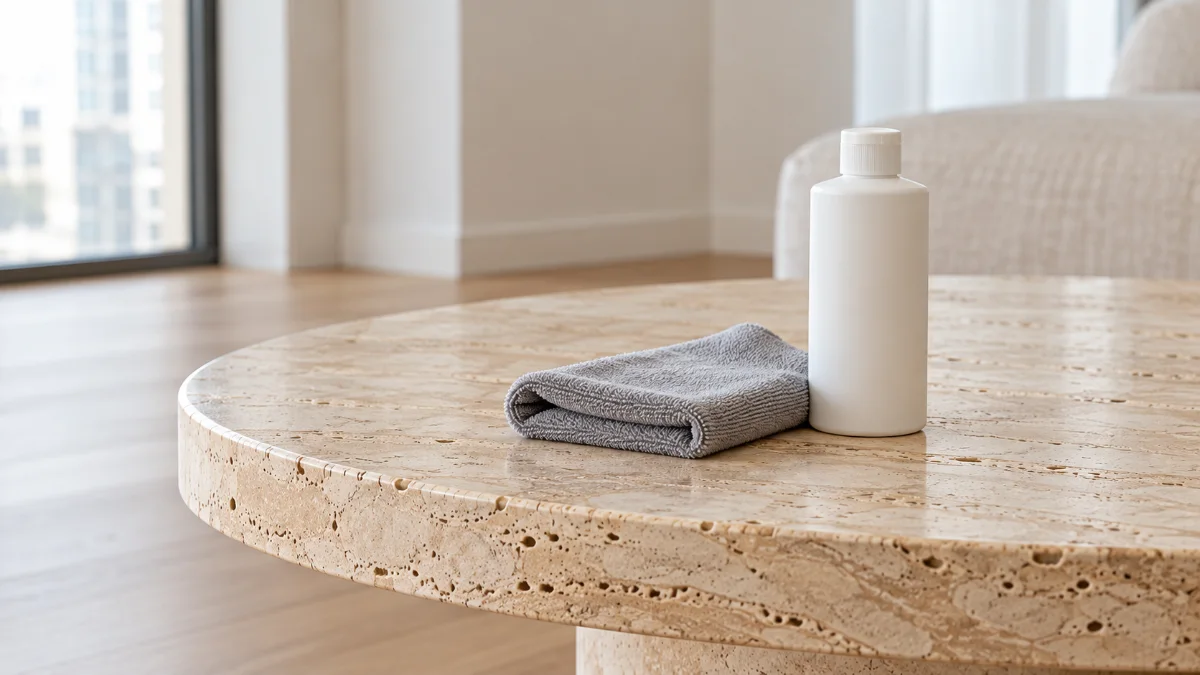
To clean travertine, dust it with a soft, dry cloth first. For spills and sticky marks, wipe with a damp cloth and a neutral cleaner, stone soap or a mild dish soap in warm water, as the Natural Stone Institute suggests. Then dry the surface with a clean cloth. For a fresh spill, blot rather than wipe, so it doesn't spread.
The most common mistake is grabbing whatever spray is nearby. Many household cleaners contain acids or harsh chemicals that dull the finish. Keep these away from the stone:
- Vinegar and lemon-based cleaners
- Bathroom and limescale cleaners
- Bleach and ammonia (never mix the two)
- Scouring powders, creams and scrubbing pads
Don't scrub hard, either. A scouring pad can leave a dull patch that looks worse than the spill.
If a mark won't come off, work out what it is first. A stain can sometimes be drawn back out. A stone-care professional may suggest a poultice, which is a paste that pulls stains out of stone as it dries. An etch is damage to the surface, so no cleaner will remove it. The Natural Stone Institute suggests calling a professional stone restorer to refinish etched areas. That usually means honing, which lightly grinds the surface smooth again.
6. Travertine vs Marble Coffee Table
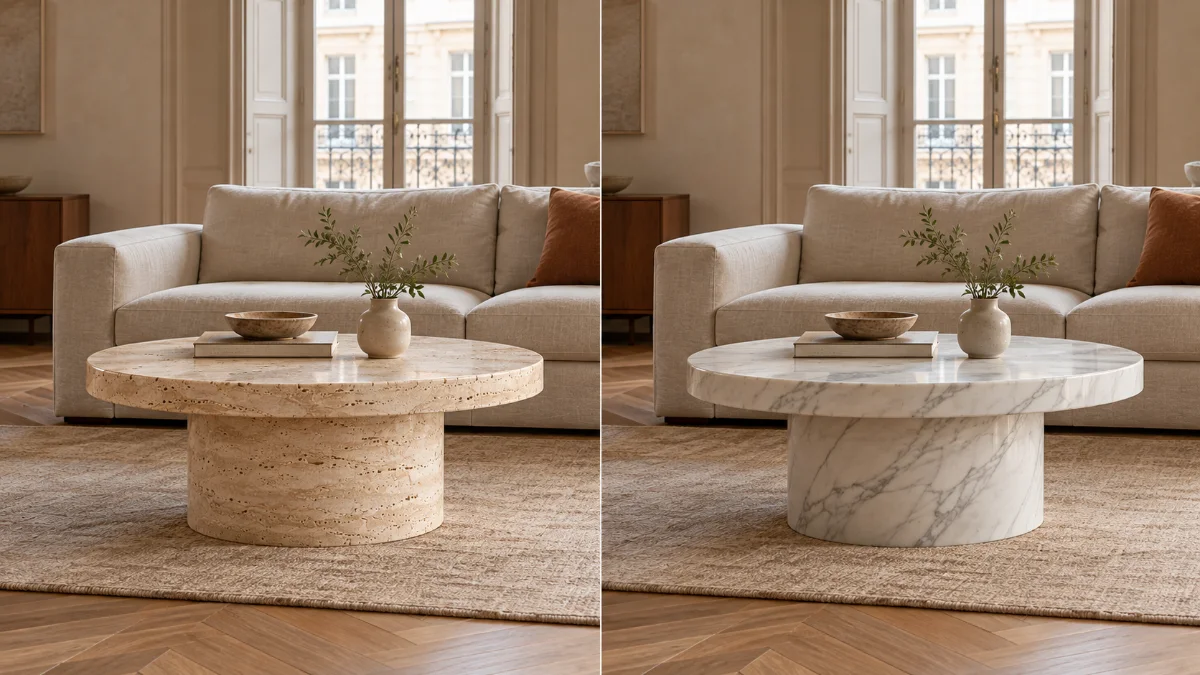
Many people pick marble because they think it's tougher. In practice, the two behave much the same. Most marble and travertine are calcite stones with similar hardness. Both can scratch, and both can etch.
The real difference is the look. Travertine looks softer and more earthy, with pores, cloudy patches and gentle bands. Marble usually has clearer veins, which can be bold and dramatic.
| Travertine | Marble | |
|---|---|---|
| Look | Warm, earthy, with pores and soft bands | Clearer veins, often bolder |
| Mohs hardness | About 3 | About 3 |
| Etches from acids | Yes | Yes |
| Sealing | Often recommended | Often recommended |
| Good reason to choose it | Texture and warmth | Veining and contrast |
Travertine can make sense if you want a quiet stone that sits well with linen, wood, wool and earthy colors. Marble can make sense if you want the tabletop to be the main pattern in the room. If you already have a patterned rug or busy shelves, a pale travertine top may look calmer.
Either way, look at close-up photos of the actual piece. The slab tells you more than the label.
7. Travertine Coffee Table Pros and Cons
The easiest way to decide is to put the look next to the upkeep.
Pros
- Every piece is different. Color shifts, pores and bands mean your table won't look mass-produced.
- The colors are easy to live with. Cream, beige and warm brown sit well next to wood, linen, leather and muted colors.
- It suits several styles. A round pedestal can look modern, while a chunky unfilled block leans rustic or Mediterranean.
- Wear tends to blend in. On a honed finish, small marks often become part of the stone's character.
- It's a real natural material. If you prefer stone and wood over plastic finishes, that's a big part of the appeal.
Cons
- It can etch. Acidic drinks and cleaners can leave dull marks.
- It can scratch. Travertine is a soft stone.
- It needs regular care. Coasters, quick spill cleanup and occasional resealing come with owning it.
- It's heavy. Moving a large pedestal table often takes two or more people.
- Unfilled tops collect crumbs. Open pores need a brush now and then.
- It's never perfectly even. If you want a uniform surface, the variation may frustrate you.
Pits, color shifts and filled patches are part of the stone, not factory defects. It's better to know that before you buy.
8. How to Style a Travertine Coffee Table
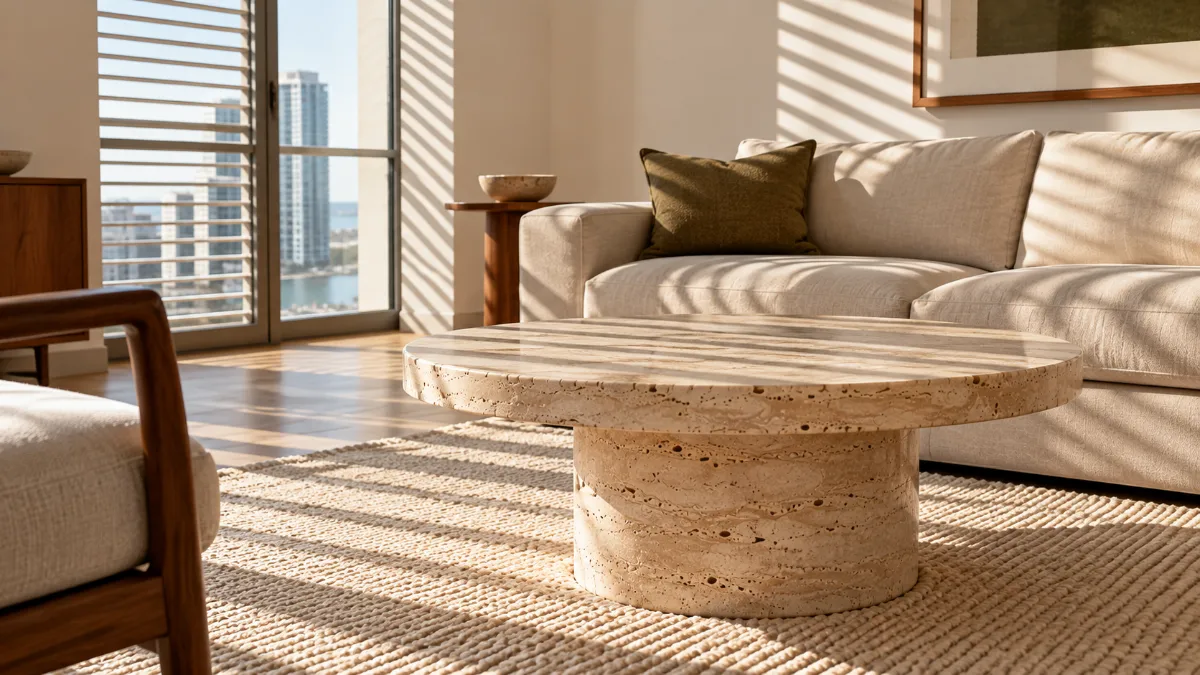
Travertine already has texture, so it doesn't need much on top. Contrasting materials around it tend to do more.
Pair it with warm wood
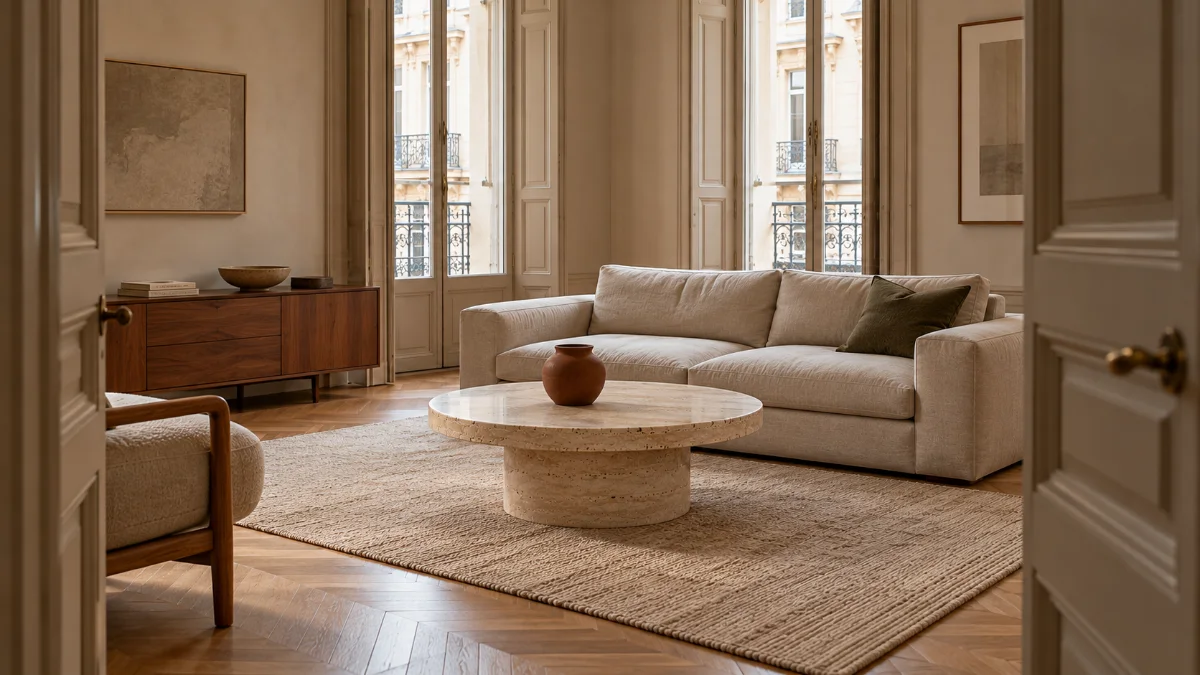
Walnut, oak and teak add a darker, warmer tone next to pale stone. Try a low walnut cabinet behind a cream travertine table, or a wooden chair frame nearby.
Bring in earthy color
A stone table doesn't mean the whole room has to be neutral. Olive, rust, terracotta and warm brown pick up the soft tones in the stone. For choosing a palette for the whole room, see the living room color schemes guide. Curved stone tables also fit well in an organic modern room, covered in organic modern living room ideas.
Soften it with fabric
Linen, wool, cotton and bouclé make a nice contrast with hard stone. A cognac leather chair beside pale travertine can also make the stone feel warmer.
Keep the top simple
A tray, a low bowl or one larger object is often enough. The stone is already the decoration. On an unfilled table, leave some of the surface bare so the texture can show.
Spacing still follows the usual rules. The gap between sofa and coffee table is covered in how to arrange living room furniture.
9. Travertine Side Table Ideas for Small Spaces
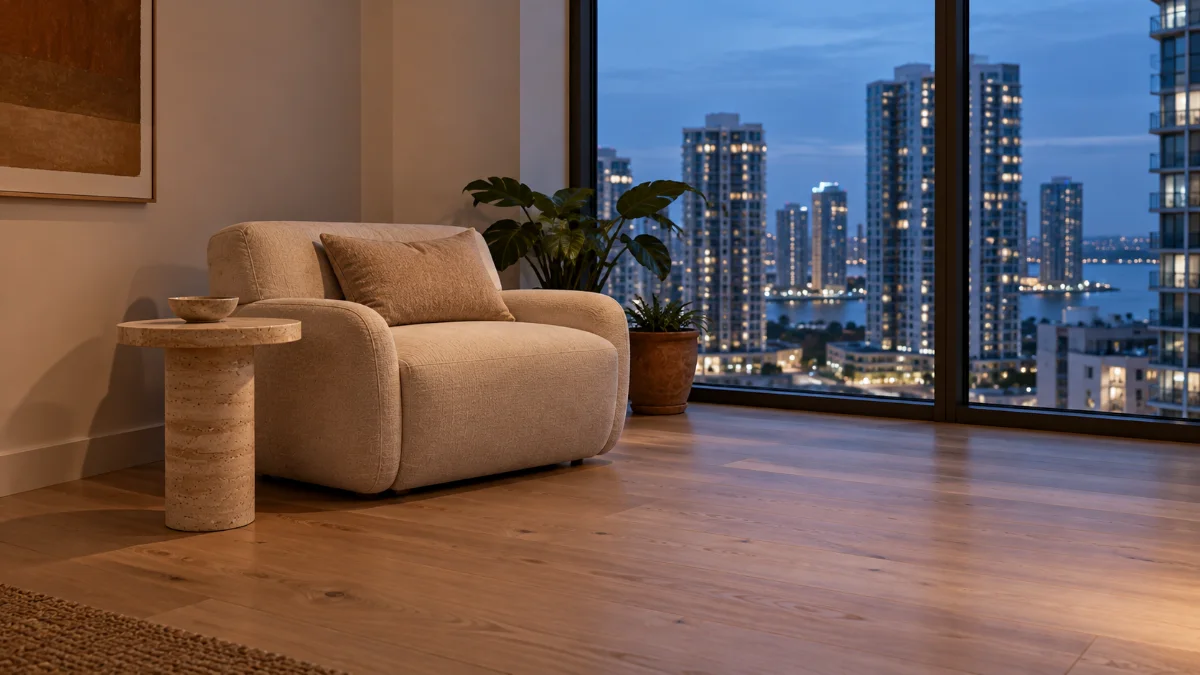
A travertine side table gives you the stone's warmth without a large, heavy coffee table.
This can work well in a small apartment, where a big stone pedestal may fill too much of the floor. A compact round side table beside a reading chair brings in the same stone on a smaller scale.
Weight still matters. A small solid-stone table can be heavier than it looks, so check the listing first.
In a tight room, look for a slim base or an open design. A small top on a thick, chunky base can still look bulky.
You don't need stone everywhere, either. A travertine side table next to a wooden coffee table gives the room some variety.
Final Thoughts
Travertine suits you if you want a coffee table that looks like natural stone rather than a perfectly even surface. The same pores and softness that give it character also mean coasters and gentle cleaners.
Start here. Before you buy, ask the seller three things. Is the stone filled or unfilled? Is the finish honed or polished? Has it been sealed, and with what? The answers will tell you more about daily life with the table than the word "travertine" alone.