
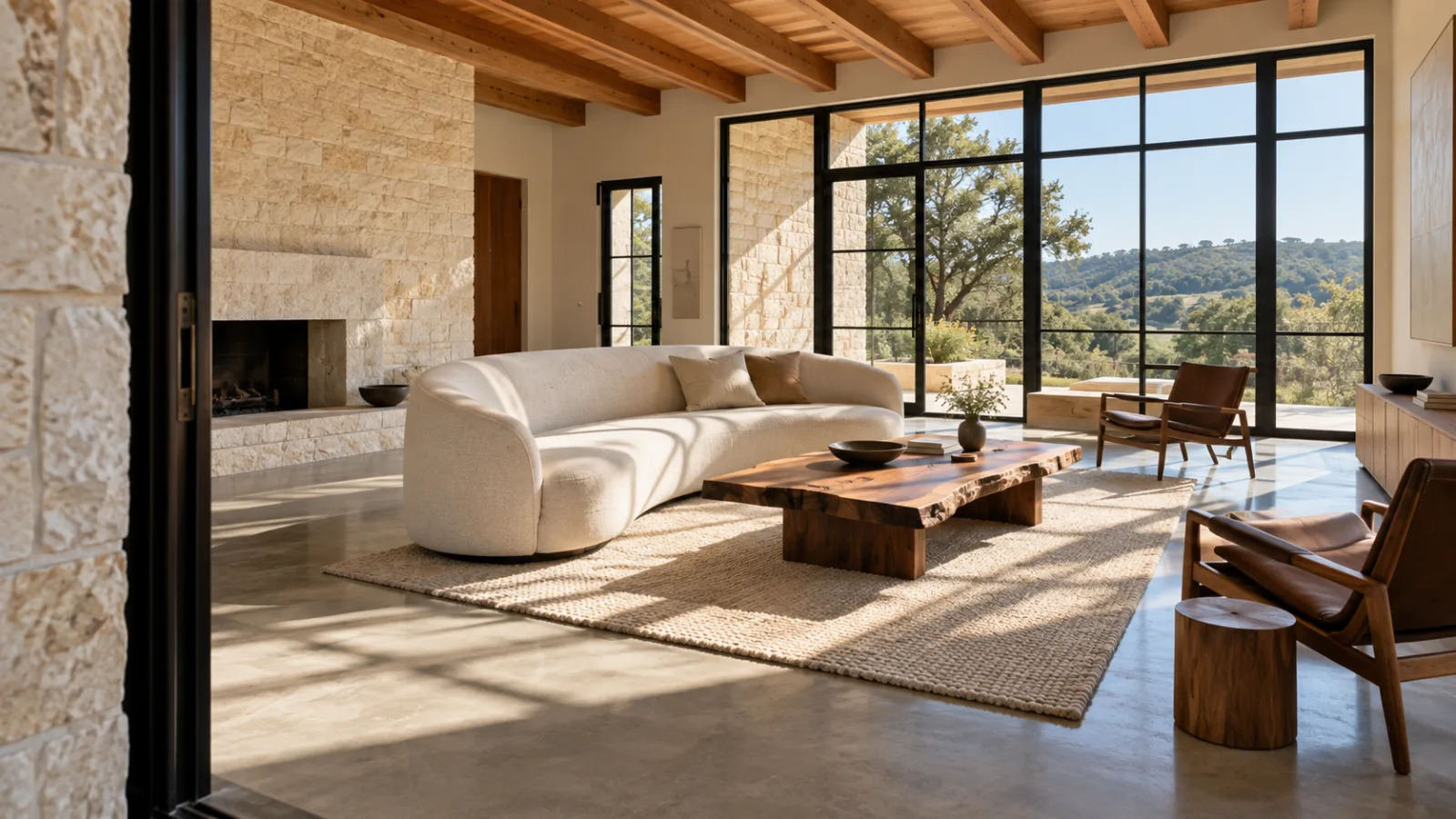
Organic modern living room ideas are for people who like a clean, modern room but find it a little cold. Instead of adding more cushions and blankets, you change the furniture itself. A boxy sofa becomes a rounded one. A glossy table becomes real wood. Matching decor becomes a few pieces that clearly came from someone's hands.
That's the main difference from simply making a modern room cozier. You can put a knit blanket on a sharp gray sofa and the room will feel softer, but it still won't look organic modern. The look comes from shapes and materials, so a few well-chosen pieces usually do more than lots of small additions.
If you're working with the furniture you already have, start with idea 10, which shows how to change one big piece at a time.
In this article
- What Is an Organic Modern Living Room?
- 1. Start With a Curved Sofa
- 2. Organic Modern Furniture: Curved Shapes Beyond the Sofa
- 3. Let the Wood Grain Show
- 4. Build an Organic Modern Color Palette
- 5. Use Raw Finishes: Stone, Plaster and Clay
- 6. Organic Modern Decor: Fewer, Handmade Pieces
- 7. Mix Curves With Straight Lines
- 8. Small Organic Modern Living Room Ideas
- 9. Adapt the Look to Warm and Cold Climates
- 10. Change the Room Slowly
- Organic Modern vs Modern Cozy: What's the Difference?
- Final Thoughts
- Frequently Asked Questions
What Is an Organic Modern Living Room?
An organic modern living room mixes a simple, modern room with softer shapes and natural materials. The walls and layout stay plain. The furniture brings the curves, and materials like wood, stone, linen, wool and clay bring the texture.
"Organic" here means more than natural materials. It also means shapes that look like they came from nature. Think of rounded corners, uneven wood grain, or a vase that isn't perfectly even.
It helps to think of three parts working together.
- A modern base. Plain walls, clear surfaces and simple furniture.
- Soft shapes. Curved sofas, round or oval tables, rounded chairs.
- Natural materials. Wood, stone, plaster, linen, wool and clay.
If you lose the modern base, the room starts to look rustic or boho. If you lose the soft shapes and natural materials, it's just a modern room.
1. Start With a Curved Sofa
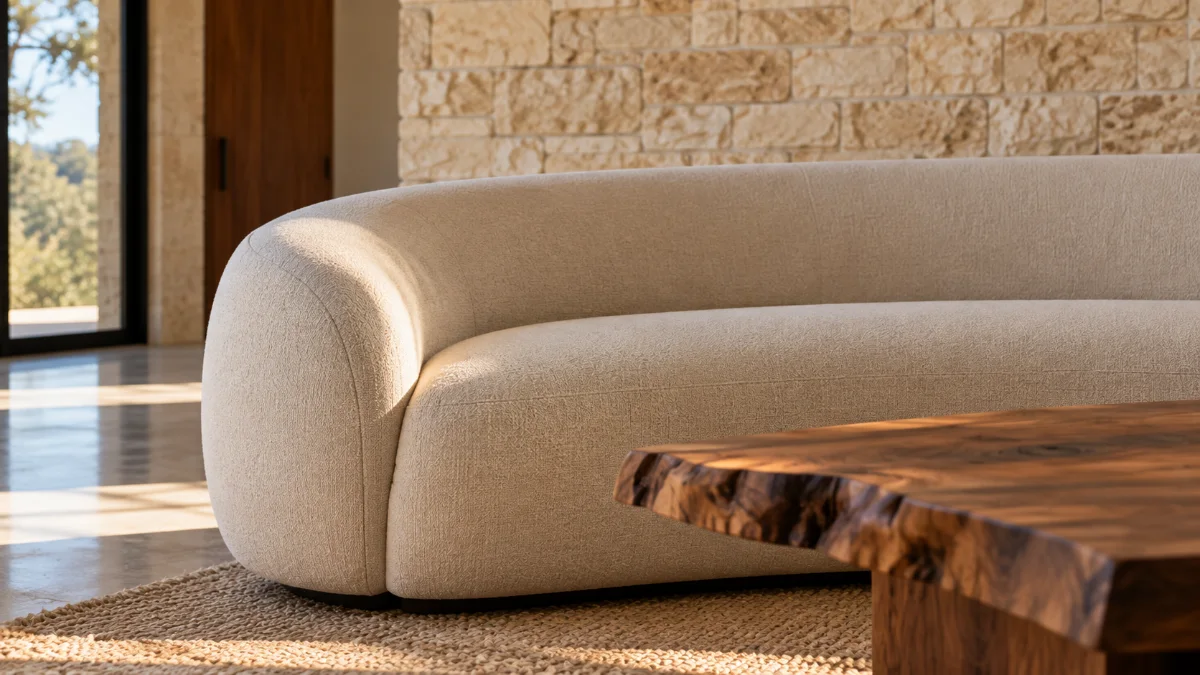
A curved sofa is the easiest place to start. It's usually the biggest piece in the room, so its shape is the first thing people notice. In a room full of straight walls and square cabinets, one rounded sofa makes more difference than any cushion or vase.
Cream, oatmeal or ivory fabric is a good first choice. It's light, but it still feels warm. The curve doesn't have to be dramatic either. A sofa with rounded arms or a gently curved back gives a similar feel and is easier to fit than a full half-moon shape. When you shop, search for "curved sofa" or "rounded arm sofa".
Before you buy, think about where it will go. A curved back doesn't sit flat against a straight wall, so these sofas usually look best pulled out into the room. That means you need space around them. Measure the depth, too, because the curve pushes the middle of the sofa forward. The furniture layout guide has the walkway measurements.
Cream also shows marks. If you have kids or pets, look for a removable cover or a performance fabric. Bouclé, a soft fabric with small loops, is common on curved sofas, and our bouclé furniture guide explains how it holds up.
2. Organic Modern Furniture: Curved Shapes Beyond the Sofa
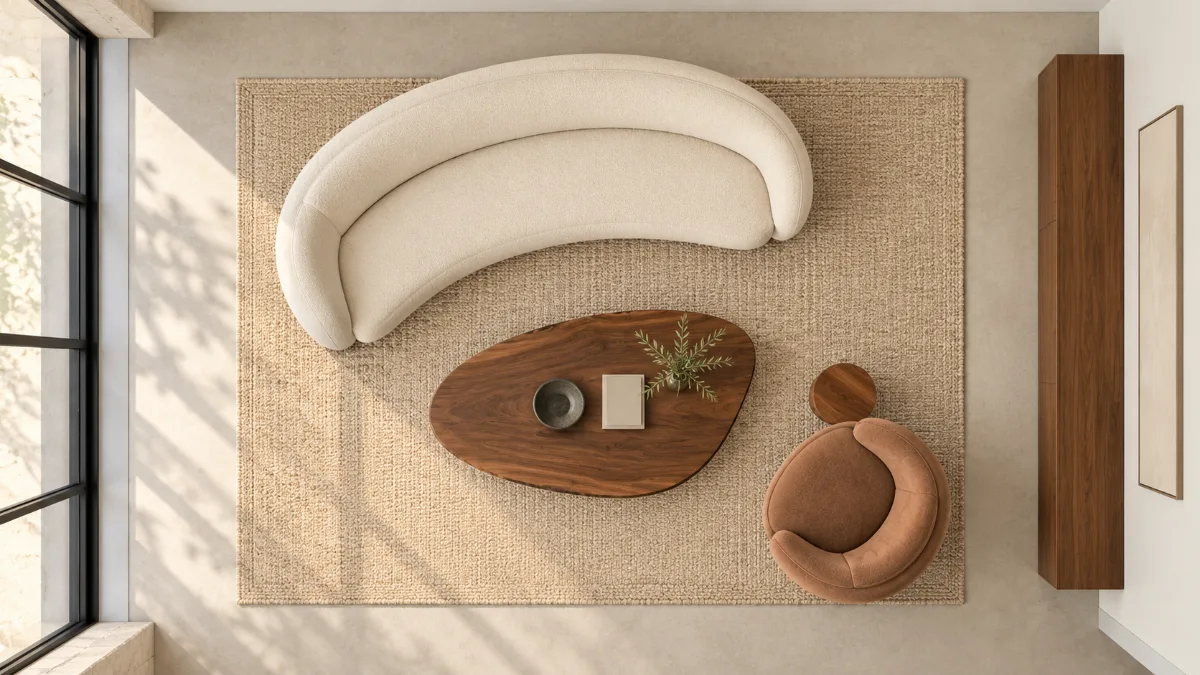
Once you start looking for curved furniture, it's easy to want everything round. You don't need that. A few curves at different heights, like a coffee table, a chair and a lamp, usually look better than a whole set of round pieces.
Here's what each shape adds, and what to watch out for.
| Shape | What it adds | What to watch |
|---|---|---|
| Round coffee table | Breaks up the straight lines of the sofa, with no sharp corners | Smaller surface than a rectangle, and can look small next to a long sofa |
| Oval coffee table | The length of a rectangle with softer ends | Can look stretched in a square room |
| Pedestal base | Looks lighter and leaves room for your legs | Check it's steady, especially with a heavy stone top |
| Barrel chair | Wraps around you and stands out on its own | Takes up more floor than you'd expect |
| Rounded cabinet | Adds a curve at eye level | Curved fronts can mean less space inside |
| Globe or mushroom lamp | A small round shape on a table or shelf | Easy to overdo with other round things |
If you're choosing a coffee table, size matters as much as shape. Our guide on how to choose a coffee table covers sizes and heights.
3. Let the Wood Grain Show
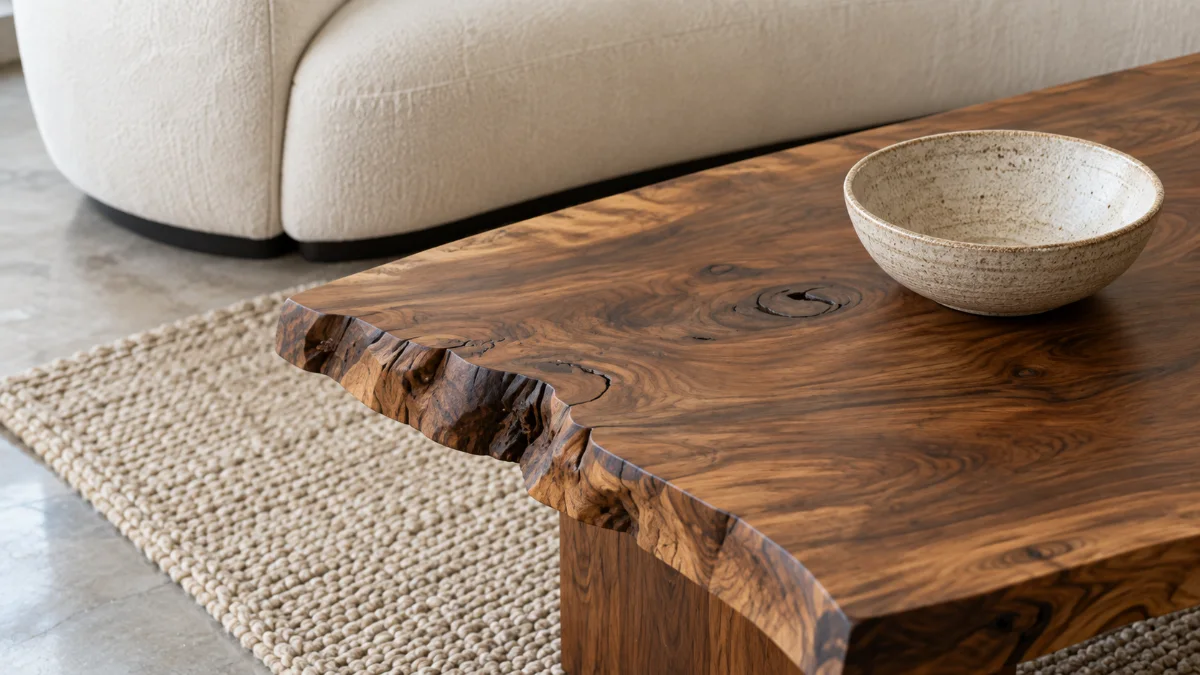
Wood is what stops this style from looking like a showroom. Pick pieces where you can actually see the grain, like walnut, oak or ash. Matte, oiled or waxed finishes show the grain better than thick, shiny ones.
A live-edge table takes this further. The edge of the table follows the natural shape of the tree, so no two are the same. Put one in front of a curved cream sofa and you get two natural shapes that don't copy each other. One is smooth and padded. The other is hard and uneven. Keep the furniture around it simple so it has room to stand out.
The finish is a trade-off. Oil and wax look closest to raw wood, and you can fix small marks yourself, but they tend to show water rings more easily. A matte lacquer usually handles spills better, but it looks a little more coated. You also don't need every wood to match. Two or three wood tones that sit well together are fine.
4. Build an Organic Modern Color Palette
An organic modern color palette starts with warm neutrals. Think ivory, cream, oatmeal, sand and taupe for the walls and big furniture. Add walnut or oak wood. Then bring in small amounts of earthy color, like clay, olive, rust or a dusty brown.
The warmth matters more than the exact shade. A pale gray with a cool, bluish tone can make the same sofa and wood table look cold. A warm white or soft greige (a gray-beige mix) keeps everything feeling like it belongs together. If you're picking paint, the living room color guide explains how to test samples in your own light.
And it doesn't have to be all beige. An olive cushion, a terracotta pot or a dark wood side table gives the eye something to rest on. When every surface is the same pale color, the room can look washed out, even with good furniture.
5. Use Raw Finishes: Stone, Plaster and Clay
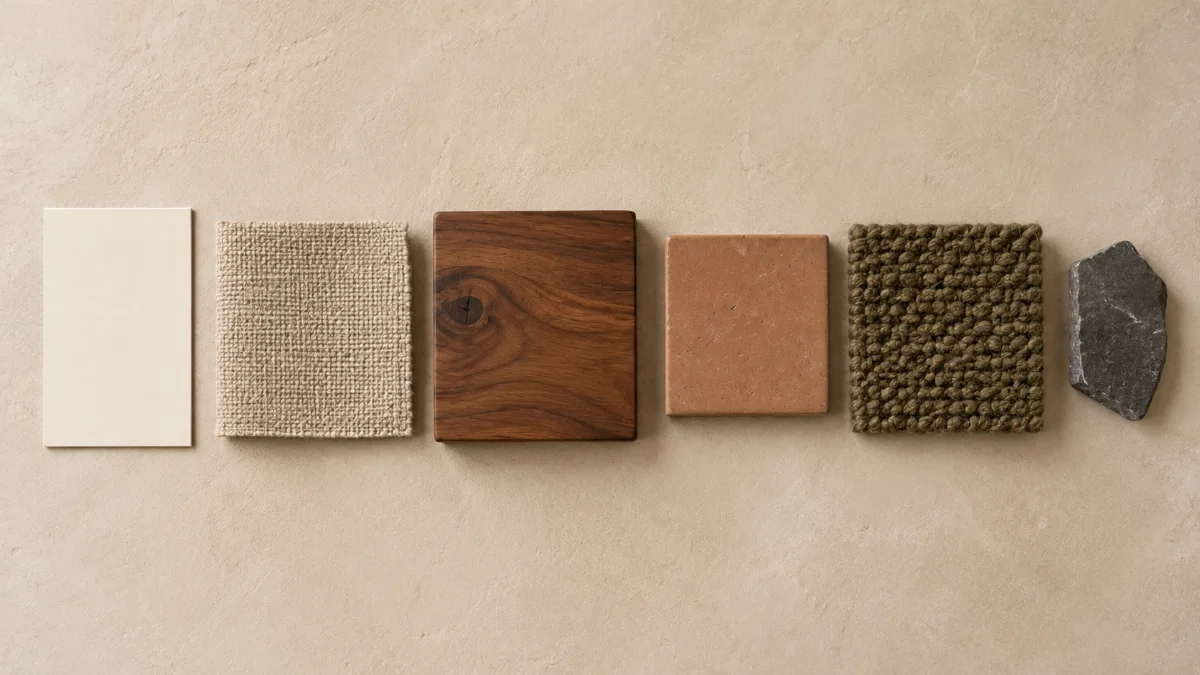
The other half of this look is surfaces that feel a little raw. That means stone with a soft, matte finish instead of a shiny one. It also means walls with a plaster texture and clay pots without a glossy glaze.
These work best next to something different. Smooth stone looks better beside a chunky wool rug. A linen sofa stands out against a rough plaster wall. Keep the colors close and let the textures do the work.
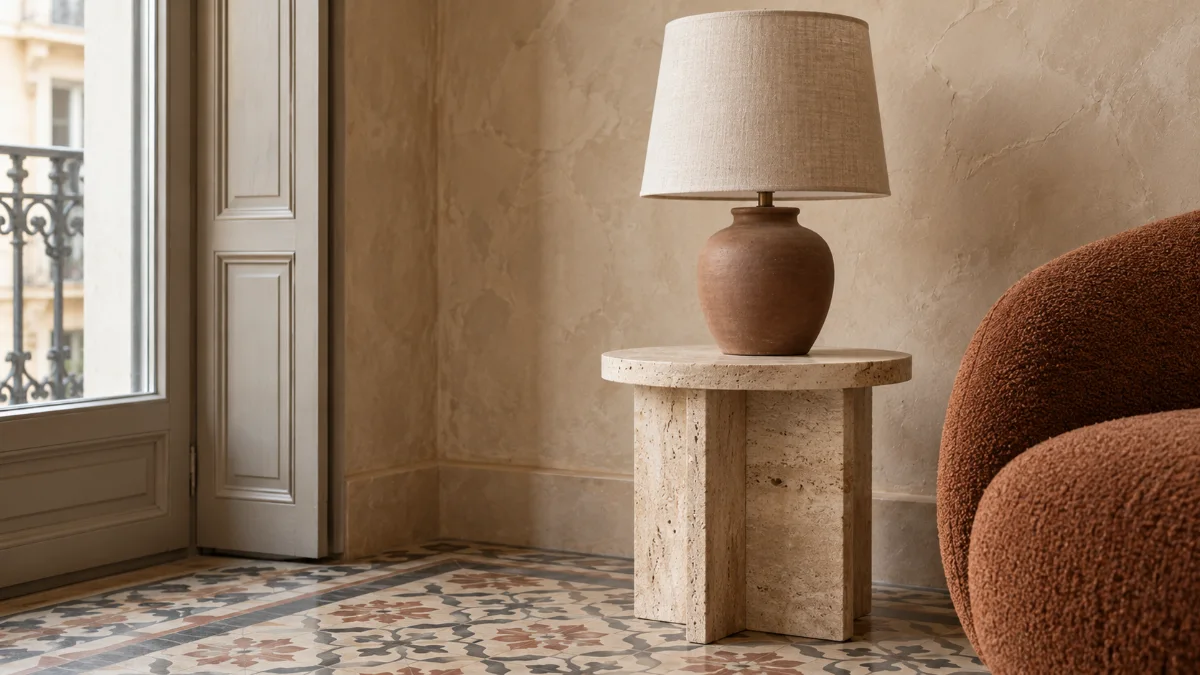
Stone needs some care. Travertine is a pale natural stone with small holes in its surface. Like marble, it can stain or dull from coffee, juice or anything acidic, and many stone tables need sealing. Not sure about stone? Try a small travertine side table before a big coffee table. Our travertine coffee table guide goes into the details.
6. Organic Modern Decor: Fewer, Handmade Pieces
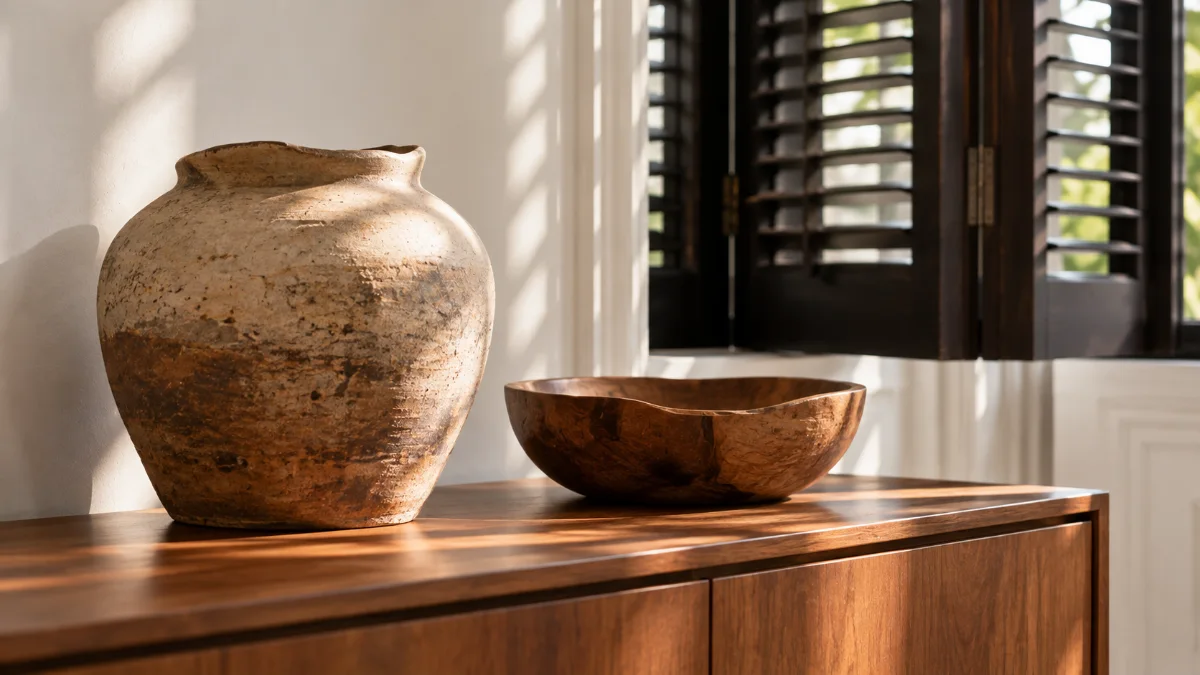
Factory-made furniture tends to look perfect. Handmade pieces don't, and that's why organic modern decor uses them. A vase with an uneven rim, a carved wooden bowl or a woven basket gives a clean room a bit of life.
You don't need many. One large handmade vase on a plain cabinet usually looks better than a shelf full of small ornaments. When there are too many, they start to compete and the room feels busy.
Watch out for too much roughness, too. Old beams, chunky baskets and rough pottery all together can make the room look more like a farmhouse. If that's happening, swap one rough piece for something smooth.
7. Mix Curves With Straight Lines
Once the curved pieces arrive, it's tempting to keep going. A round rug, then a round mirror, then an arched shelf. Before long, the room looks like it's following a theme.
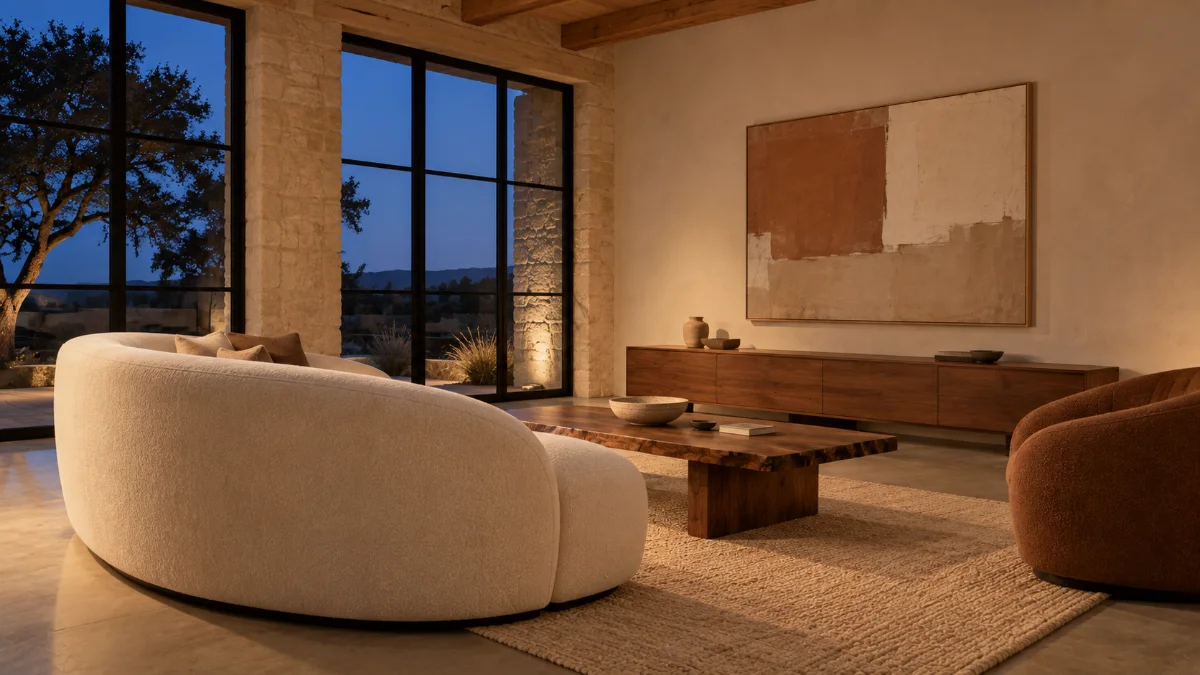
Keep some straight lines on purpose. A rectangular rug, a low media cabinet or a simple shelf all help. Curves only stand out when there's something straight next to them. A rounded sofa under a plain rectangular painting shows off both shapes.
The walls work the same way. Warm white or soft greige lets the furniture be the focus. Simple art is enough, especially if it repeats a color already in the room. And it's fine to leave one wall mostly empty.
8. Small Organic Modern Living Room Ideas
A small organic modern living room doesn't need a big curved sofa. A big one can take over a small room. A rounded chair or a round coffee table brings in the style while using less floor space.
A simple setup could start with a small sofa with rounded arms and a round coffee table. Add one barrel chair, a plain wood cabinet and a rug to pull it together. Round tables help in tight spaces because there are no corners to bump into.
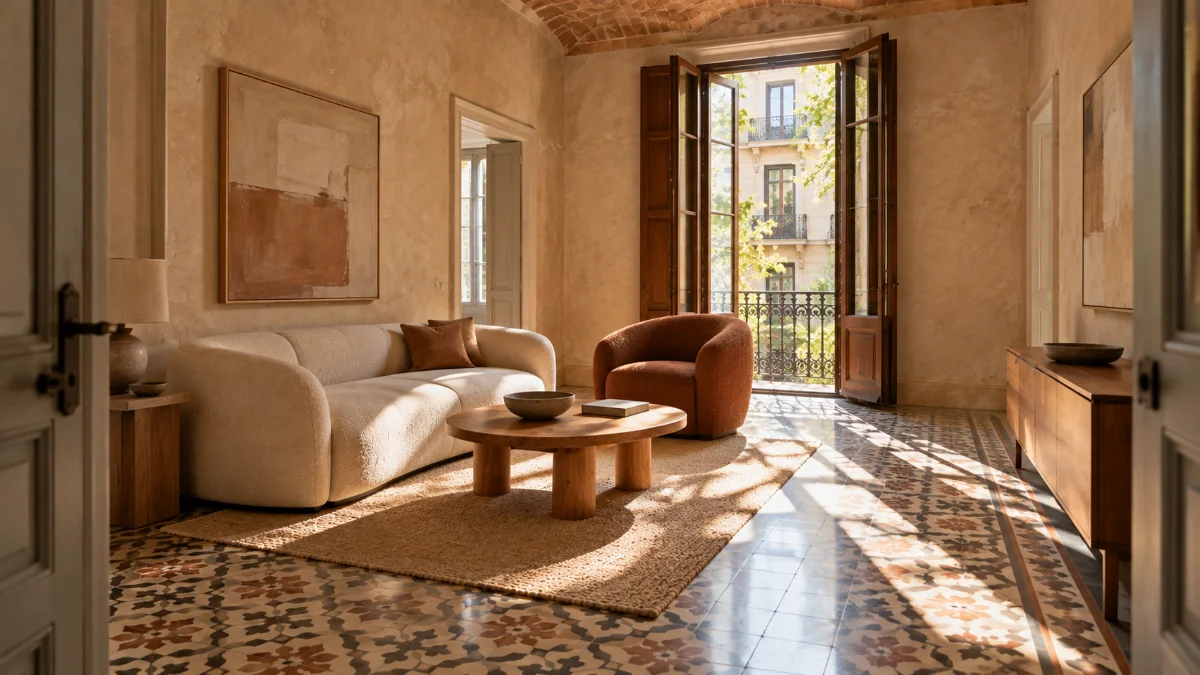
Picture an older apartment with patterned tile floors and tall balcony doors. A rust barrel chair and a round oak table are enough to set the style. The old features of the apartment do the rest. Just keep the path to the balcony clear.
9. Adapt the Look to Warm and Cold Climates
In cold places like Chicago or Berlin, wool rugs, wool or bouclé fabric and heavier linen curtains help the room feel warm. Keep wood furniture away from radiators and heating vents. Dry heat pulls moisture out of wood, and wood shrinks as it dries, which can lead to splits and small surface cracks (USDA Wood Handbook). Leave a small gap between big furniture and cold outside walls, so moisture doesn't collect behind it and turn into mold.
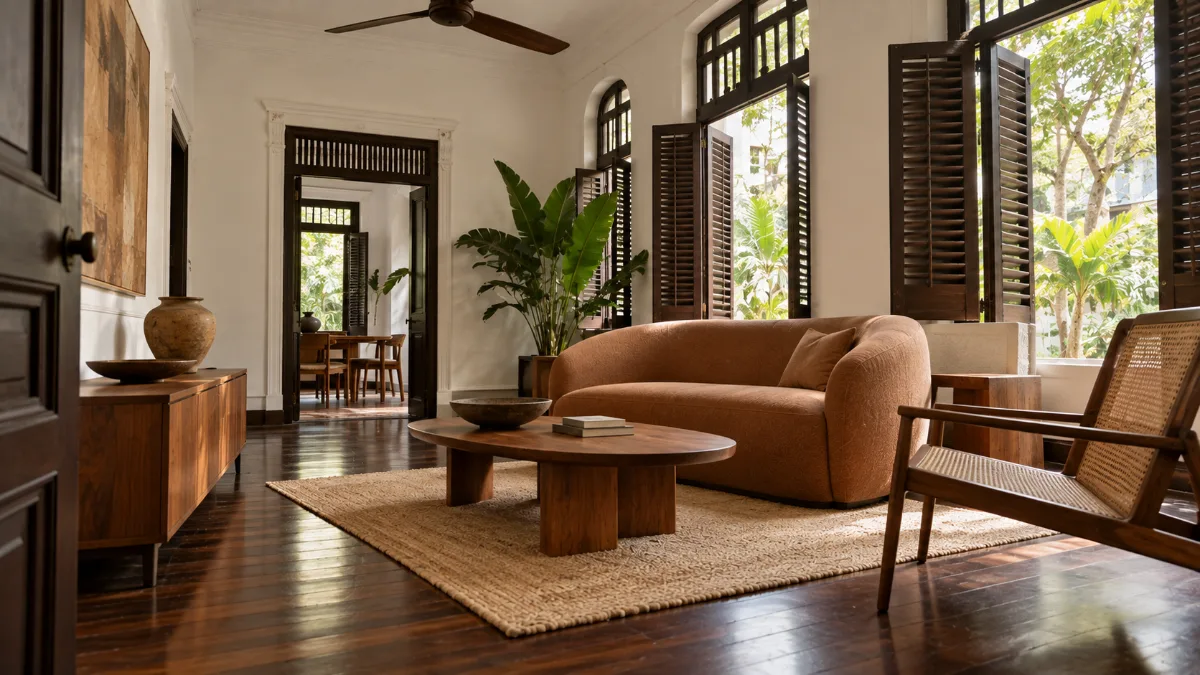
In homes with long humid summers, like those in Florida or along the Gulf Coast, linen and cotton covers feel cooler than wool. Teak, rattan and cane suit the style well. Keep air moving around sofas and chairs to help prevent mold. The humid climate furniture guide explains which woods and fabrics last best.
10. Change the Room Slowly
Most people aren't starting with an empty room. You probably already have a sofa, a table and a rug. That's fine. You don't need to replace everything.
Start with the biggest pieces. If your sofa is already a neutral color, keep it. Add a curved chair, or swap a square coffee table for a round or oval one. Replace a shiny side table with wood or stone. Add one large wool or jute rug.
Then add a few handmade pieces and stop.
If the room feels cold, try changing the fabrics before you repaint. Cushions and throws in ivory, oatmeal, camel or soft brown can change how the room feels for much less money.
Organic Modern vs Modern Cozy: What's the Difference?
The two styles are close, but they work in different ways. Organic modern changes the shapes and materials in the room. Modern cozy keeps the modern furniture and adds softness around it.
A modern cozy room might still have a straight charcoal sofa and square shelves, made warmer with blankets, rugs and warm lighting. An organic modern room is more likely to swap those pieces for a curved sofa, an oval wood table and stone or plaster.
So if your room already feels modern but a bit cold, the modern cozy guide may be all you need. If you want the room itself to look more natural, organic modern is the better fit.
Final Thoughts
Organic modern works when the curved pieces and natural materials sit in a plain, simple room. Add too many eye-catching pieces and it stops feeling calm.
Start with one big piece. If your coffee table is a hard-edged rectangle, try a round or oval wood table in its place. Live with it for a week before changing anything else.