
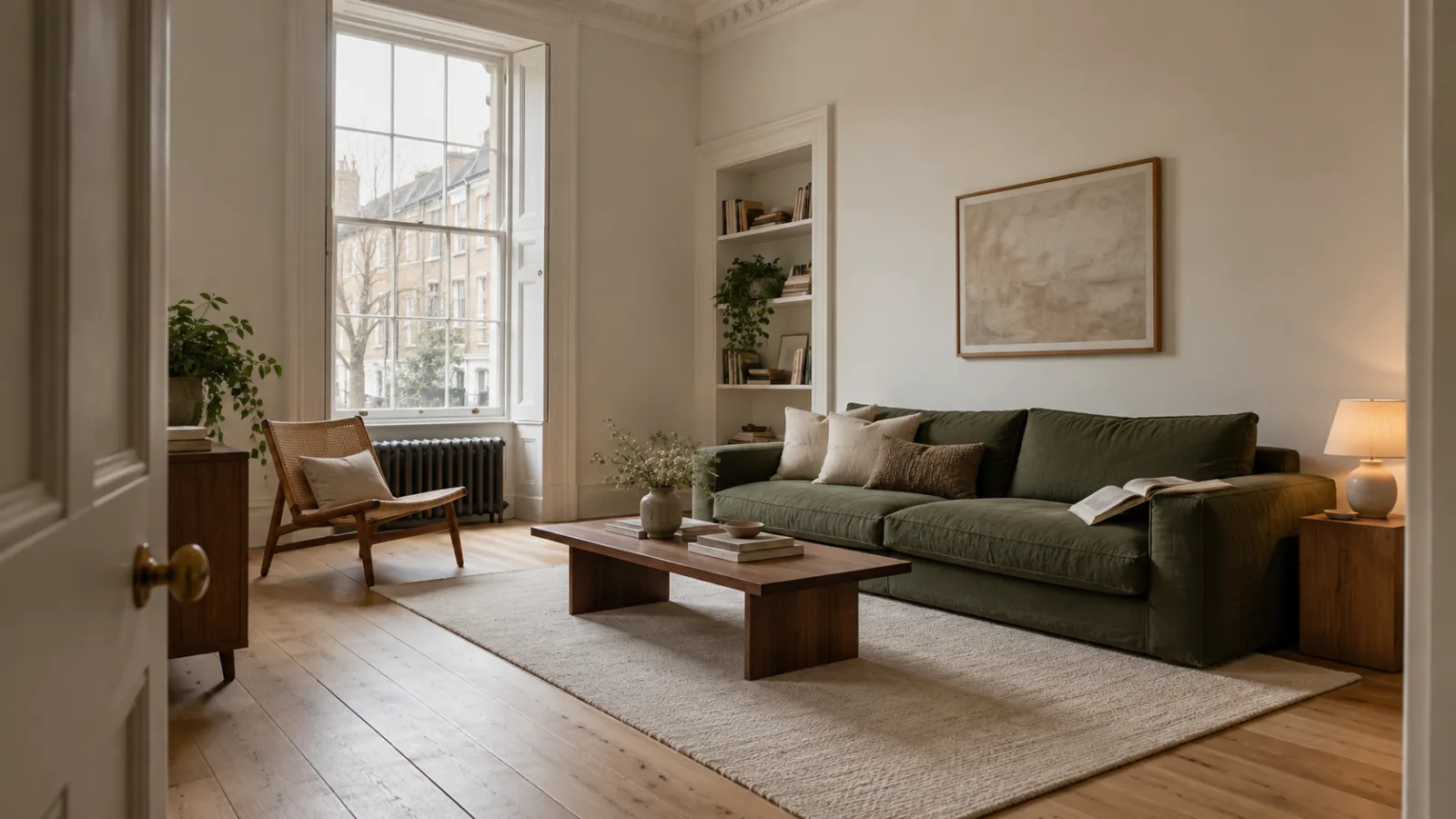
Most modern living rooms look great in photos and feel a little strange to actually sit in. Clean lines, bare surfaces, a cool gray sofa, one ceiling light doing all the work. It's tidy, but it's not where you'd want to spend a rainy Sunday.
A modern cozy living room fixes that without giving up the simple look. You don't need more stuff. You need the right few things: a sofa you sink into, light that isn't harsh, materials that feel good to touch, and enough space to breathe. This guide is about doing that in a modern room. For the basics that work in any style, start with our cozy living room ideas.
The ideas below come with a few extra tips if your living room is on the small side. You don't have to do them all at once. Pick the two or three things that bother you most about your room right now and start there.
In this article
- 1. Start With a Sofa You Actually Want to Sit On
- 2. Keep the Color Palette Warm (and Short)
- 3. Mix in Wood, Stone and Natural Fibers
- 4. Layer Your Lighting
- 5. Get the Rug Size and Layout Right
- 6. Add Texture Instead of More Decorations
- 7. Soften the Windows
- 8. Add Plants and Personal Pieces, Then Edit
- 9. Leave Some Breathing Room
- Tips for a Small Modern Cozy Living Room
- Where to Start
- Frequently Asked Questions
1. Start With a Sofa You Actually Want to Sit On
The sofa is the biggest thing in the room and the first thing your eye lands on, so it sets the tone for everything else.
For a cozy modern look, go for clean lines with soft proportions: a deep seat, slightly padded arms, and cushions that give a little when you sit down. A seat depth of around 22–24 in (55–60 cm) is comfortable for curling up without feeling like a bed. Seat height matters too. Around 17–18 in (42–45 cm) from the floor suits most people, and anything much lower can be hard to get out of. Our guide on how to choose a sofa goes deeper into seat depth, frames and fabrics.
Neutrals are the safe choice, and they're safe for a reason. Oatmeal, warm gray and cream go with nearly everything. But if the rest of your room is quite plain, a sofa in an earthy color can do a lot of the work for you. Deep green, rust, olive or chocolate brown all feel warm and still look modern. If you go brown, our living room ideas with a brown sofa cover the colors and materials that suit it.
Think about fabric as much as color. Linen and linen blends look relaxed and get softer over time, but they crease. Wool blends feel warm and hold their shape well. Leather is easy to wipe clean and gets better with age, though it can feel cold in winter and sticky in hot weather. If you have kids or pets, a performance fabric in a slightly textured weave will hide a lot.
One thing to skip: the very upright, very firm sofa. It looks sharp in the showroom, but nobody lingers on it. If you can, sit on a sofa for a good five minutes before buying, the way you'd actually sit at home, with your feet up.
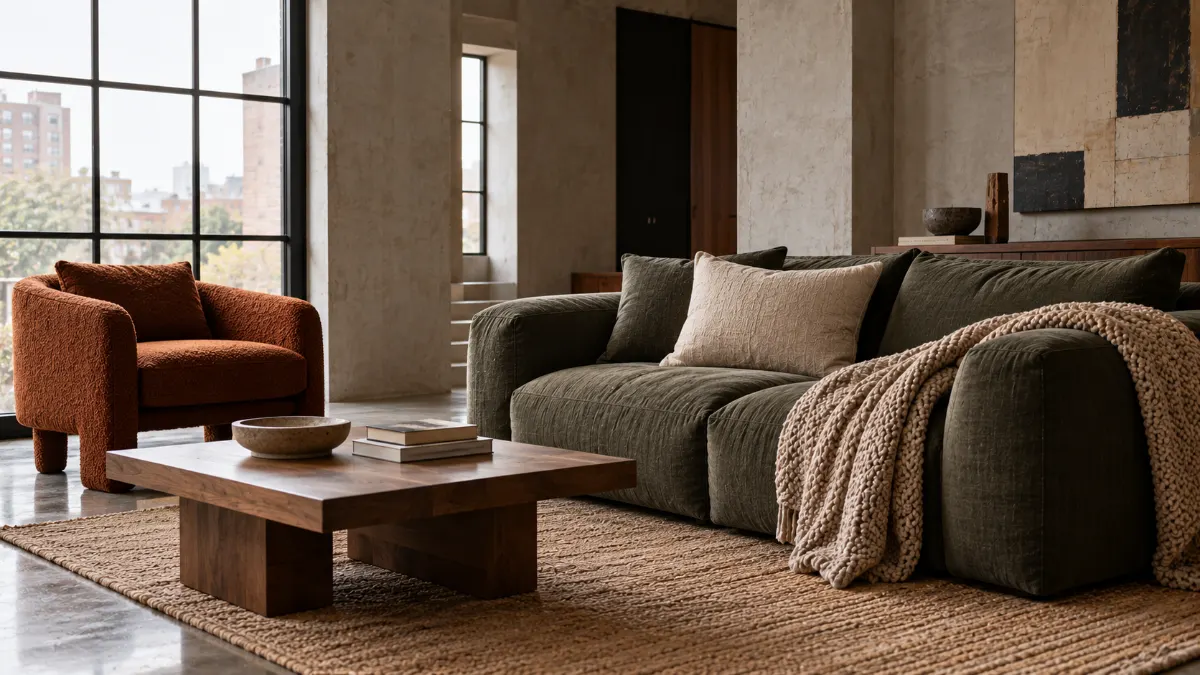
2. Keep the Color Palette Warm (and Short)
Modern rooms usually stick to a small palette, and that's part of why they feel calm. The trick is making sure those few colors lean warm rather than cold.
Swap stark white walls for a soft off-white with a hint of yellow or pink in it. Pair it with wood tones, then let one or two deeper colors carry the room.
A few combinations that work well:
- Warm white, light oak and sage green
- Cream, walnut and rust
- Soft gray, black accents and cognac leather
- Charcoal walls, warm wood and brass, for a darker, moodier room
If you're not sure how much of each color to use, the 60-30-10 idea is a handy starting point: about 60% main color, 30% supporting color and 10% accent. It's not a strict rule, but it stops a room from feeling either flat or chaotic. Our living room color schemes guide explains how to apply it, with more palettes to try.
Always test paint on the wall before committing. A color that looks warm in the store can turn gray or green in a north-facing room. Paint a large sample, then look at it in the morning, at midday and in the evening with the lamps on.
Don't be afraid of dark colors. Dark rooms can be the coziest of all. Just give them plenty of soft lamp light and natural texture so they don't feel like a cave.
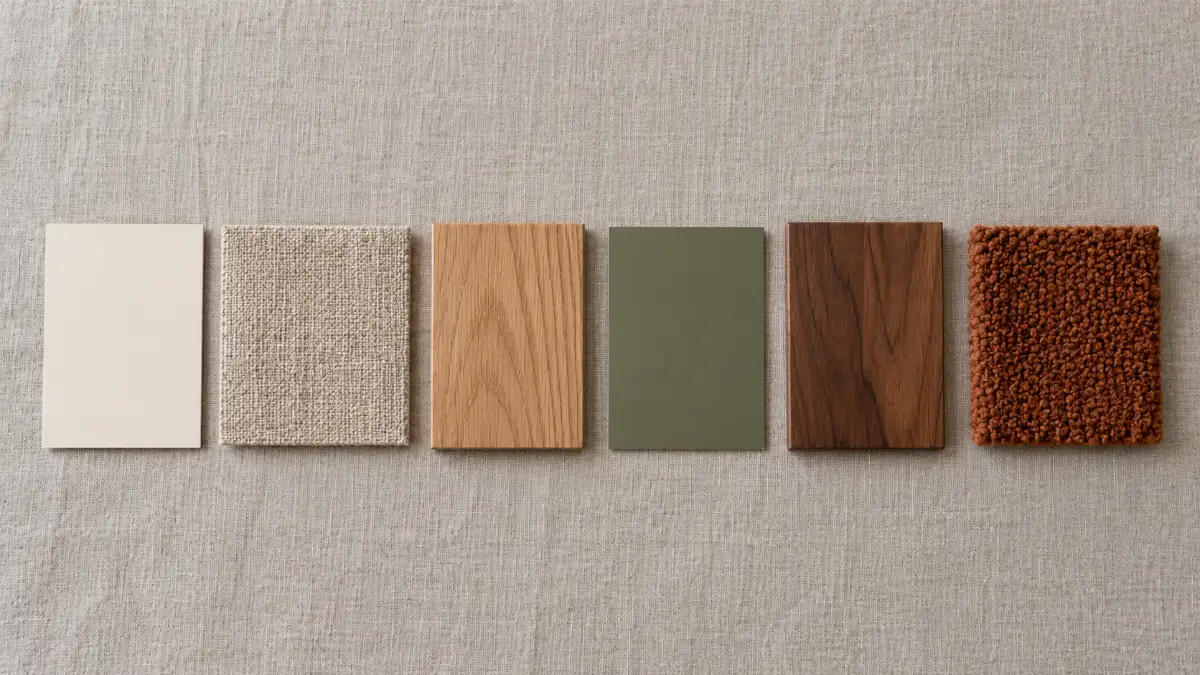
3. Mix in Wood, Stone and Natural Fibers
Wood is the quickest way to take the chill off a modern living room. A walnut coffee table, an oak shelf, a wooden side table next to the sofa, even a couple of wooden bowls. Any of these add warmth without changing the room's clean look.
Other natural materials help too:
- Linen and cotton for curtains, cushions and throws
- Wool and jute for rugs
- Rattan or cane for a chair or a pendant shade
- Stone or travertine for a side table or lamp base (see our travertine coffee table guide for the care it needs)
You don't need every piece of wood to match. In fact, a room where everything is the same shade of oak can look like it came out of one box. Aim for two or three wood tones that share a similar undertone, such as a light oak floor with a mid-brown walnut table, rather than mixing orange pine with gray-washed wood. If you like this mix of wood, stone and soft neutrals, organic modern living room article take it further.
Natural materials also age well. A wooden table picks up small marks, a linen cover softens with every wash, and slowly the room starts to look lived in. That's a good thing.
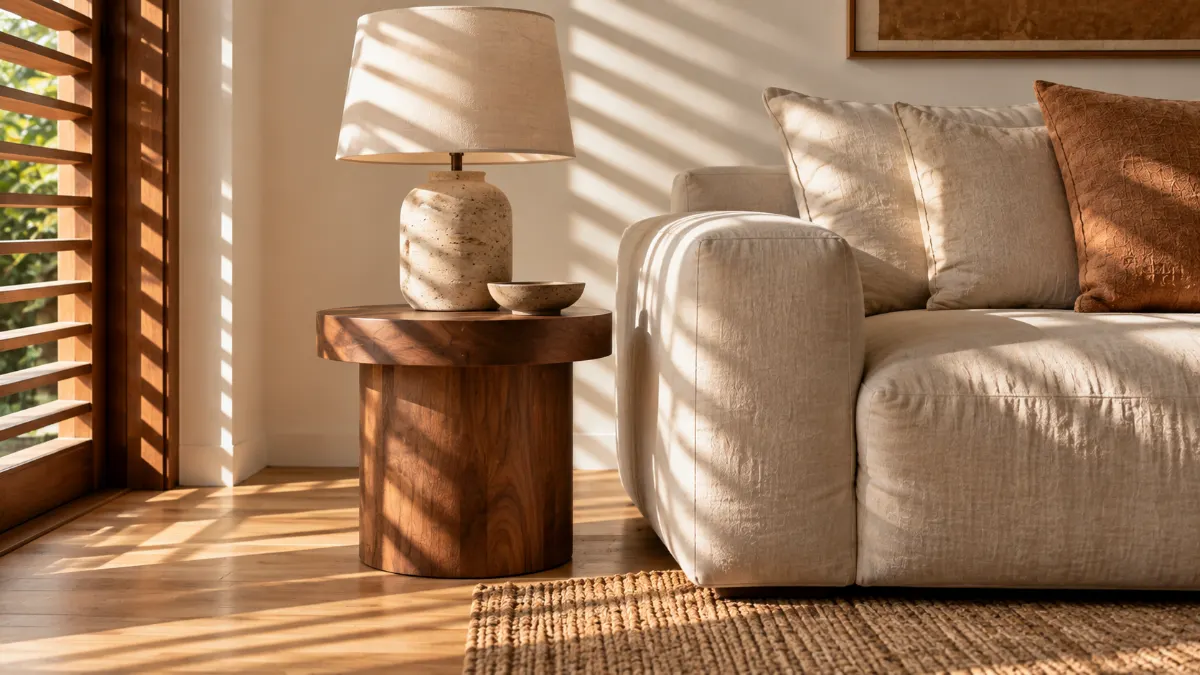
4. Layer Your Lighting
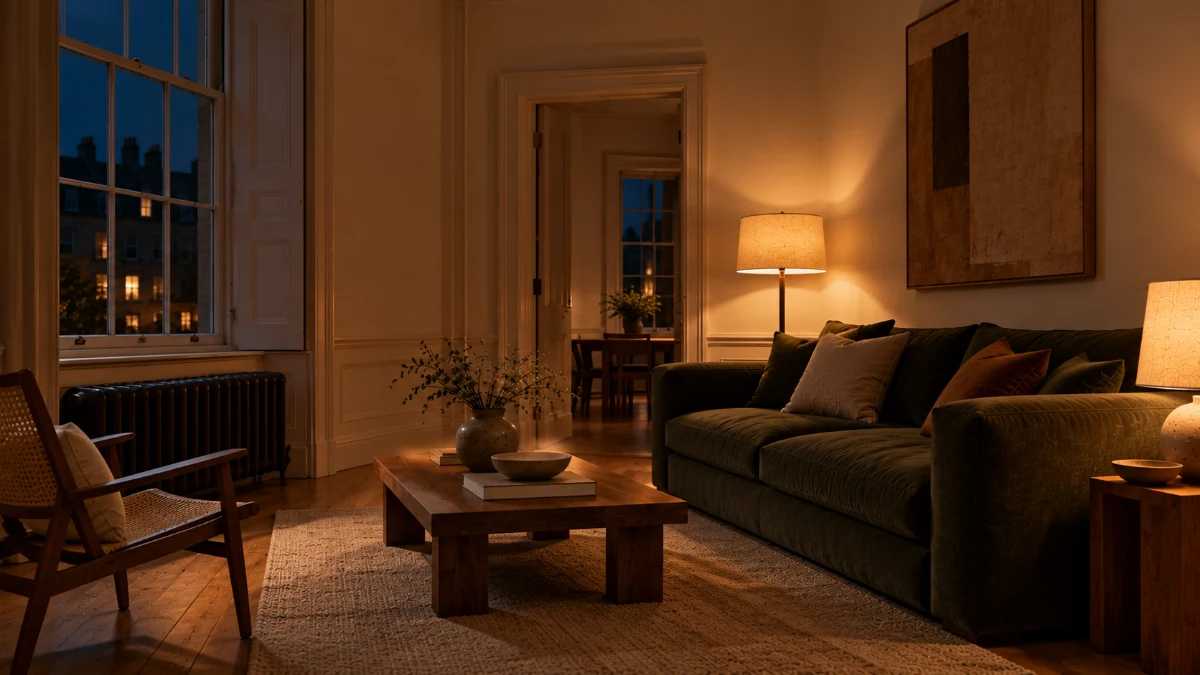
If you only change one thing, change the lighting. A single bright ceiling light makes almost any room feel flat, especially in the evening.
Aim for at least three light sources at different heights:
- A floor lamp beside the sofa or reading chair
- A table lamp on a side table or console
- Something low or indirect, like a small lamp on a shelf or an LED strip behind the TV console
Use warm white bulbs, around 2700K–3000K. Cool white (4000K and up) is fine for a home office, but in a living room it tends to feel like a waiting room. If you can, put the main light on a dimmer. You'll use it more than you expect.
In a modern room, the lamp itself is part of the look. A slim arc lamp, a sculptural floor lamp or a matte ceramic table lamp keeps the clean lines while the light stays warm. Just pick a shade that hides the bulb, in fabric, paper or frosted glass, so the light spreads softly. For bulb color, CRI and how many lamps a room needs, see our living room lighting ideas.
5. Get the Rug Size and Layout Right
A rug that's too small is one of the most common reasons a living room feels unfinished. It floats in the middle of the floor and makes the furniture look disconnected.
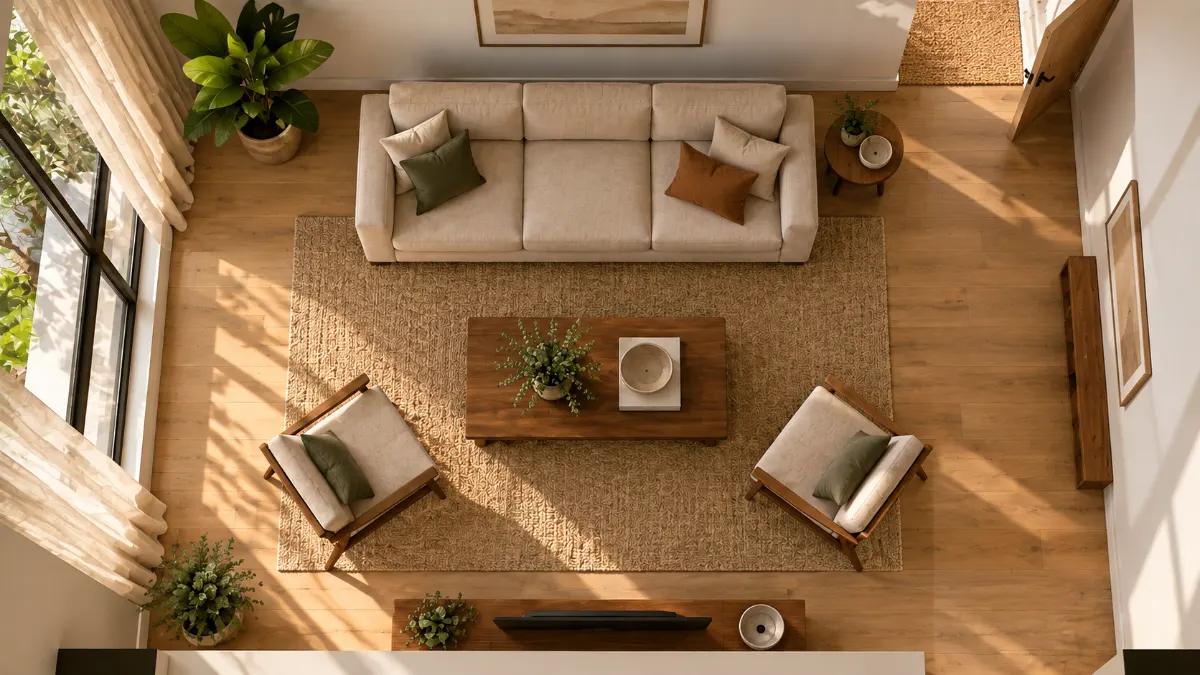
As a rule, pick a rug big enough that at least the front legs of the sofa and any armchairs sit on it. In many living rooms, that means an 8 × 10 ft rug (about 240 × 300 cm). A 6 × 9 ft rug (about 180 × 270 cm) can work for a compact seating group. In Europe, rugs are usually sold in metric sizes: 200 × 300 cm (about 6.5 × 10 ft) is a common choice for a full seating area, while 160 × 230 cm (about 5 × 7.5 ft) suits only a small one. Our living room rug size guide has the sizes for different layouts. Put a rug pad underneath, too. It stops slipping and makes even a thin rug feel softer underfoot.
A few layout numbers worth knowing:
- Leave about 16–18 in (40–45 cm) between the sofa and the coffee table. There's room for your legs, and your coffee is still within reach.
- Keep the main walkways about 36 in (90 cm) wide.
- Pull the furniture slightly off the walls if the room allows. Even a few inches can make the seating area feel more deliberate.
Arrange seats so people can talk to each other, not just face the TV. A sofa with one or two chairs angled toward it, with facing seats roughly 6–8 ft (1.8–2.4 m) apart, feels much friendlier than a single long row. If your room is open plan, the rug and seating can do the job of walls, marking out the living area from the dining or kitchen space. For more on spacing and walkways, see how to arrange living room furniture.
6. Add Texture Instead of More Decorations
When a room feels bare, the instinct is to buy more accessories. Usually, it just needs more texture.
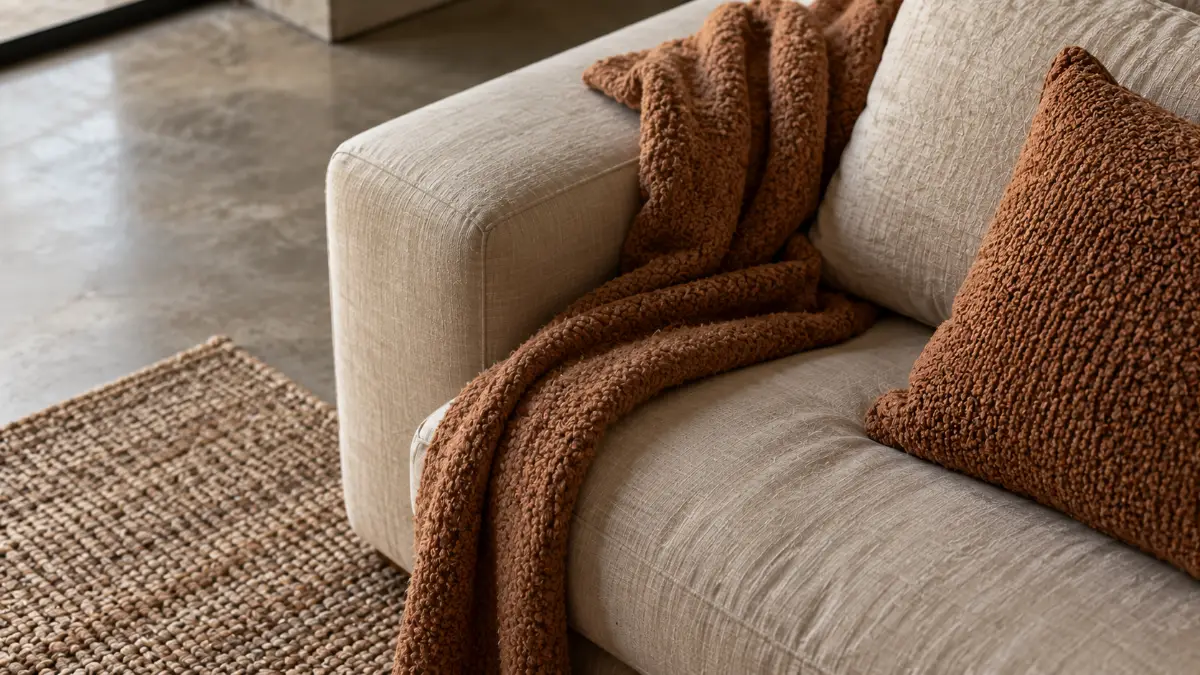
A chunky knit throw, a bouclé cushion, a wool rug, linen curtains or a woven basket each add depth without adding clutter. Try mixing different textures in the same color family: a smooth leather chair next to a nubby wool throw, or a linen sofa on a flat-weave rug. The contrast is what keeps it interesting. If you're weighing up a bouclé chair or sofa, our guide to bouclé furniture pros and cons article covers how it wears.
Texture can also change with the seasons, or with your climate. In cooler months, bring out wool throws, velvet cushions and a thicker rug. In summer, or if you live somewhere warm all year, swap to linen, cotton, rattan and a flat-weave jute rug. The room still feels cozy, just lighter and cooler to sit in.
This works especially well in modern rooms, where keeping things simple is the whole point.
7. Soften the Windows
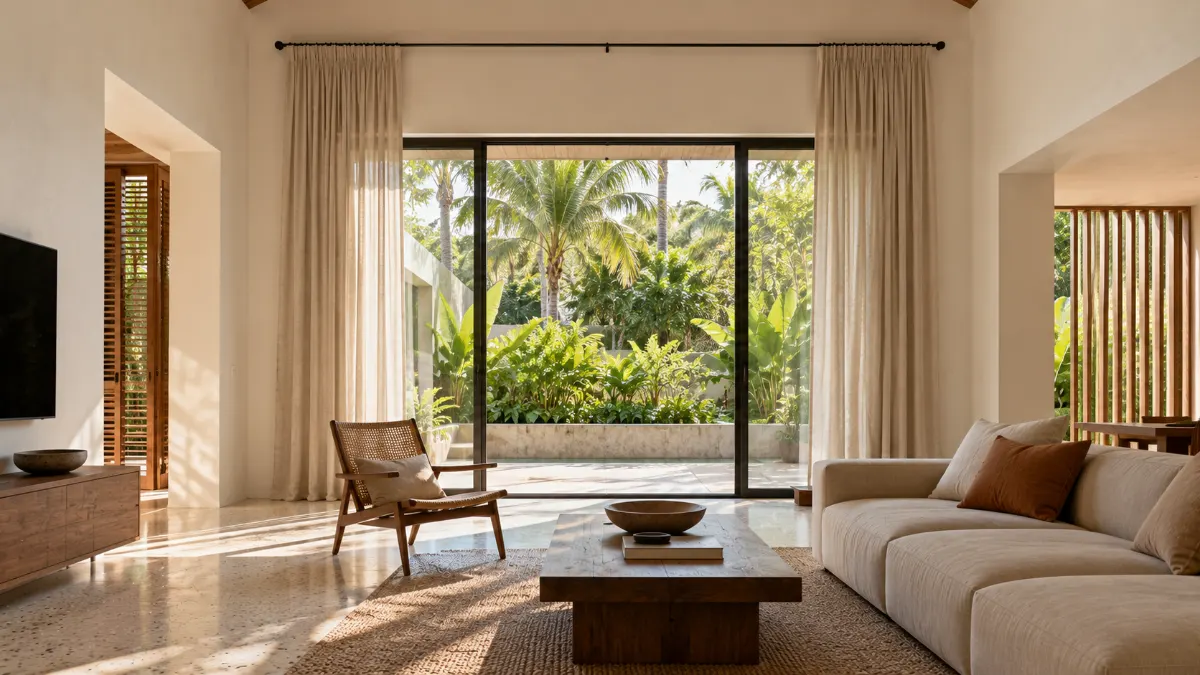
Bare windows or stiff blinds make a room feel half-done. Floor-length curtains in linen or cotton soften the edges of the room straight away, and they help a little with warmth and noise too.
Hang the curtain rod higher than the window frame. One curtain guide suggests at least 4–6 in (10–15 cm) above the frame, or closer to the ceiling if you have room (Taskrabbit). Let the curtains just brush the floor. The ceiling looks taller and the room looks finished. Sheer or semi-sheer fabric is a good choice if you want privacy during the day without losing the light.
Width matters as much as length. The same guide suggests curtains about 2 to 2.5 times the width of the window, so they look full when closed, with the brackets about 4–6 in (10–15 cm) past each side of the frame. When the curtains are open, they sit against the wall instead of covering the glass, and the window looks bigger.
8. Add Plants and Personal Pieces, Then Edit
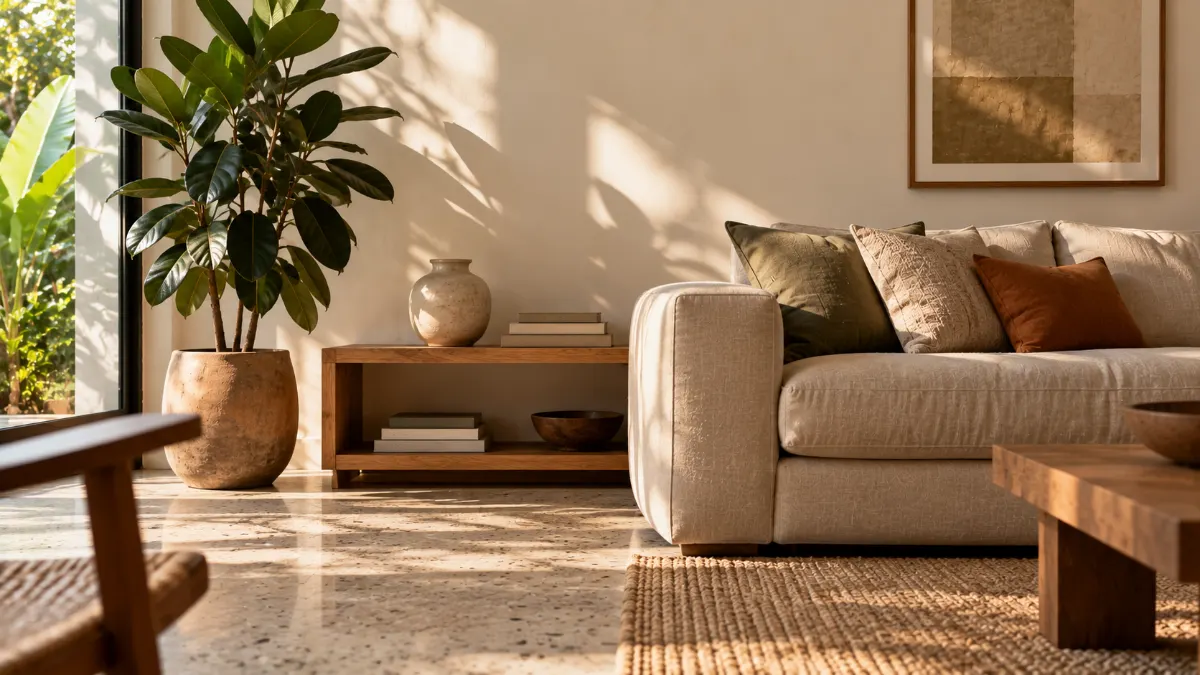
Plants bring color and life into a room in a way nothing else quite does. One larger plant, like a rubber plant, fiddle leaf fig or monstera, usually looks better than lots of small pots scattered around.
Be honest about your light before you buy. If your living room doesn't get much sun, go for plants that cope with it, like a ZZ plant, snake plant or pothos. A healthy easy plant looks far better than a struggling fussy one.
The same editing applies to personal things. Books you've actually read, a print you love, a ceramic piece from a trip. These are what make the room feel like yours. Just pick a few favorites and rotate the rest instead of putting everything out at once.
When you hang art, one common guideline is to put the center of the piece about 57 in (145 cm) from the floor. Above a sofa, leave about 8–10 in (20–25 cm) between the top of the sofa and the bottom of the frame, and choose a piece (or group) that's around two-thirds the width of the sofa (The Home Depot).
9. Leave Some Breathing Room
It's tempting to fill every empty corner and shelf. Hold off for a while.
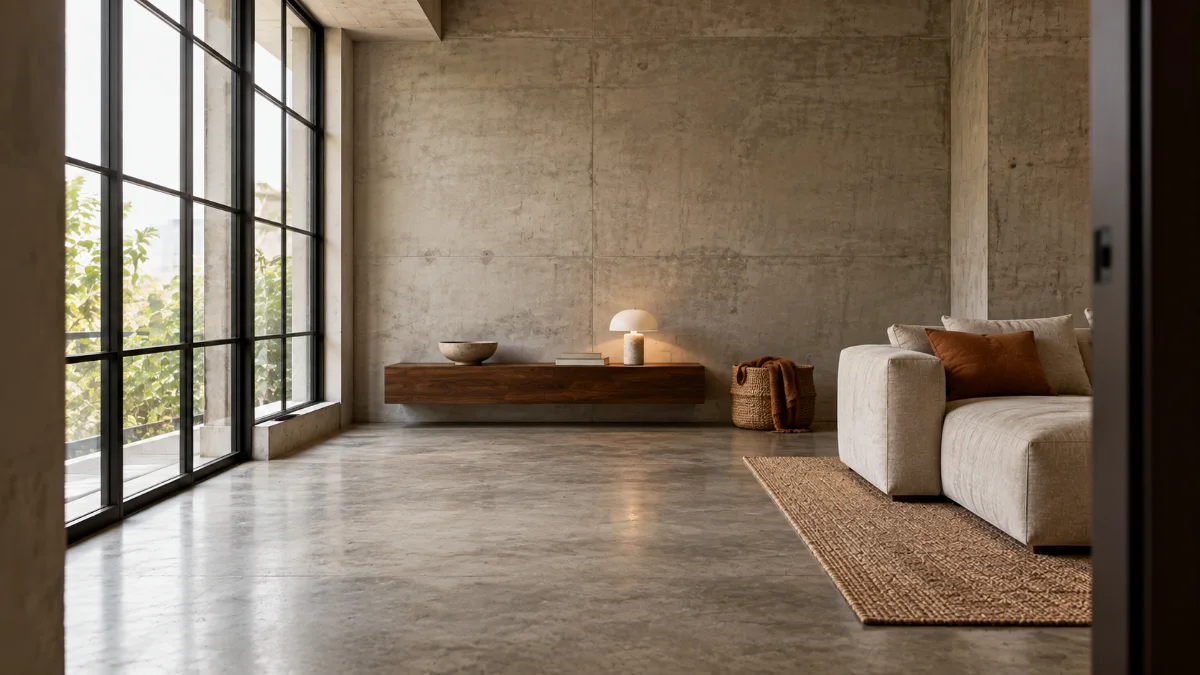
Cozy modern living rooms work partly because of the empty space: a clear stretch of floor, a shelf with only three things on it, a wall left bare. That space gives your eye a rest and makes the pieces you did choose stand out.
A simple test: if you wouldn't miss something after a week without it, it probably doesn't need to come back. Once the room feels right, a "one in, one out" habit helps keep it that way. When something new comes in, something else leaves.
Keep it practical, too. The things you use every day, like the remote, a reading lamp and a blanket, should be within reach of where you sit. A basket beside the sofa, or a side table with a drawer, gives them a home so they don't end up spread across every surface. A room that looks beautiful but is annoying to use won't feel cozy for long. For a pared-back version of this look, see our cozy minimalist living room guide.
Tips for a Small Modern Cozy Living Room
If your living room is small, the same ideas apply, just scaled down:
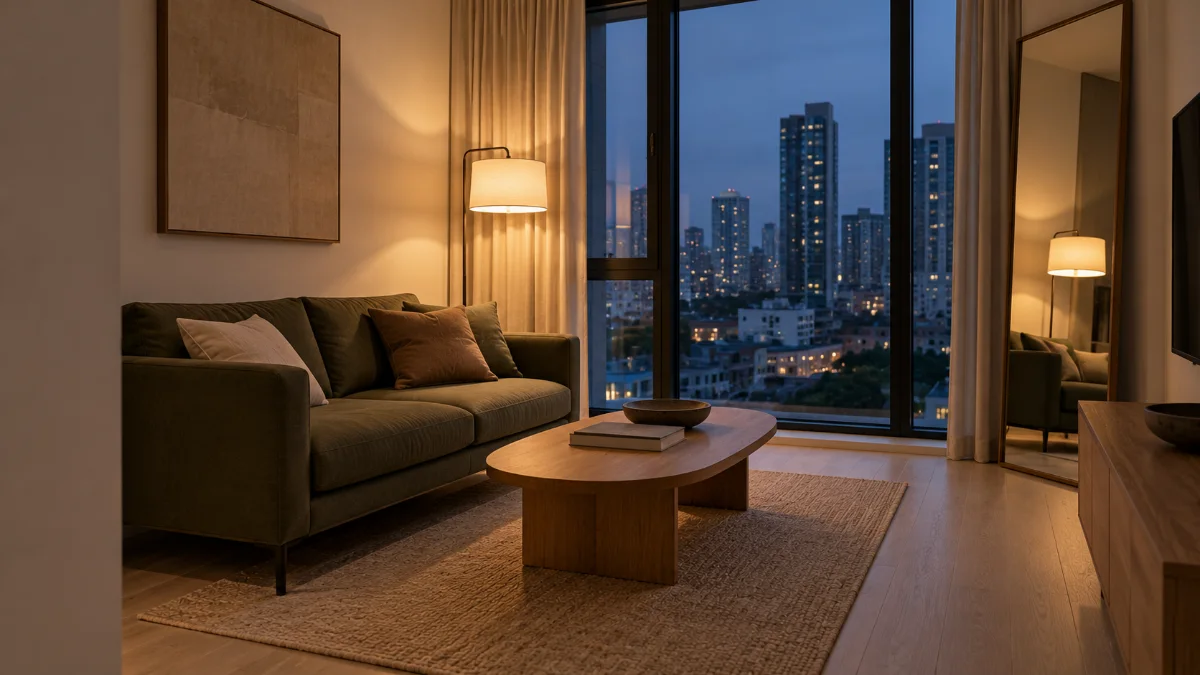
- Choose a sofa with visible legs. Seeing floor underneath makes the room feel bigger.
- Go for an oval or rounded coffee table, so there are no sharp corners to bump into.
- Use wall lights or a slim floor lamp to save surface space.
- Keep the walls light, and add warmth through wood and texture instead of color.
- Put a mirror opposite or beside a window to bounce the light around.
- Choose storage with doors, so everyday clutter stays out of sight.
For apartment-size furniture and layouts, see our small condo living room ideas.
Where to Start
The coziest modern living rooms usually have fewer things, not more. What they do have is chosen well: a sofa you want to sit on, light that's easy on the eyes, materials you want to touch, and enough space for the room to breathe.
If you're not sure where to start, look at the hardest surface in the room: a glass coffee table, a glossy TV console or a bare floor. Soften that one thing with wood, a textured rug or a fabric throw, and keep the clean lines everywhere else. That balance is what makes a modern room feel cozy rather than cold.