
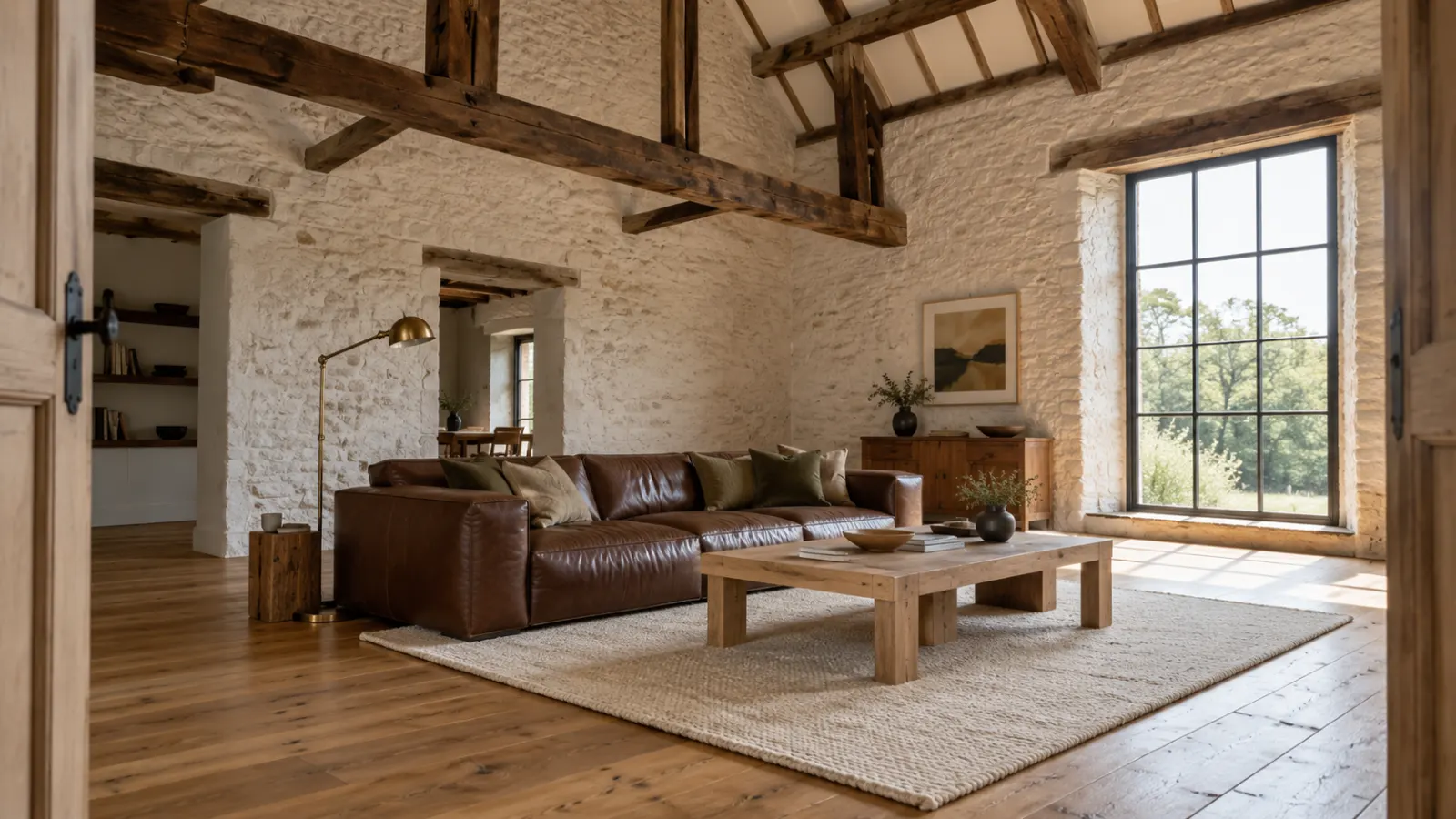
The best living room ideas with a brown sofa start with one question. Which brown? A chocolate leather sofa, a cognac velvet one and a pale caramel weave are all "brown", but each needs different walls, rugs and cushions around it.
Brown sofas are often paired with beige, tan and cream because those colors feel easy to work with. But brown also pairs well with green, blue, terracotta and charcoal, as long as the undertones line up.
If you're short on time, read section 1 to name your sofa's shade, then jump to the section for that shade.
In this article
- 1. Start With the Shade: Chocolate, Cognac, Caramel or Taupe
- 2. What Color Walls Go With a Brown Sofa?
- 3. Chocolate Brown Sofa: Keep the Room Around It Light
- 4. Cognac Sofa: Let It Be the Warmest Thing in the Room
- 5. Caramel and Taupe Sofas: More Room for Color
- 6. What Color Rug Goes With a Brown Sofa?
- 7. Cushions and Throws: One Accent, Several Textures
- 8. Brown Leather Sofa Living Room Ideas
- 9. Brown Fabric and Velvet Sofas Change With the Light
- 10. Brown Couch Living Room Ideas: Three Complete Rooms
- Final Thoughts
- Frequently Asked Questions
1. Start With the Shade: Chocolate, Cognac, Caramel or Taupe
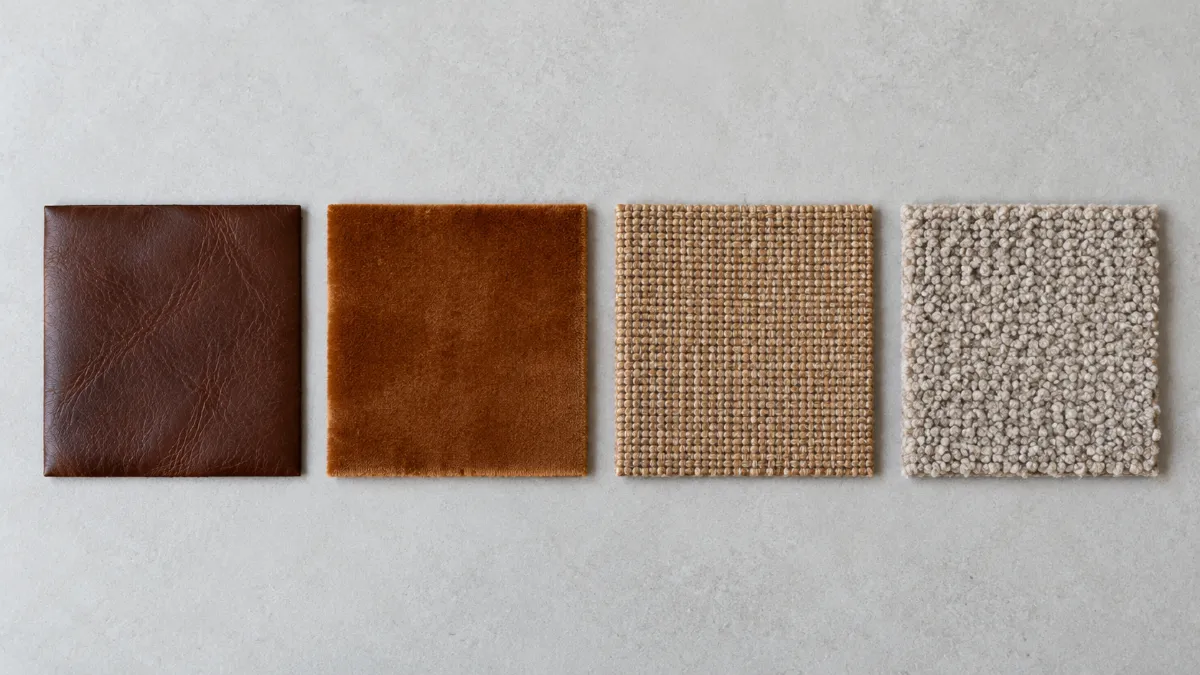
Brown sofas fall roughly into four families: chocolate, cognac, caramel and taupe. Look at yours in daylight, away from lamps. Decide which one it's closest to before you choose a single paint color.
Chocolate is dark, close to espresso. Cognac leans orange and glows when sun hits it. Caramel is lighter and more golden. Taupe sits between brown and gray and changes all day. It looks brownish at noon and grayish on a cloudy afternoon. If yours shifts between brown and gray like this, it may be closer to taupe.
| Sofa shade | How it looks | Wall colors | Accent colors | Woods and metals |
|---|---|---|---|---|
| Chocolate | Deep, close to espresso | Warm white, muted olive, dusty blue | Olive, rust, cream | Light oak, aged brass |
| Cognac | Warm, orange-brown | Off-white, sage, dusty blue | Sage, charcoal, cream | Walnut, blackened metal |
| Caramel | Light and golden | Warm white, olive, soft blue | Terracotta, olive | Light oak, cane |
| Taupe | Brown-gray, muted | Warm greige, warm white, blue-gray | Sage, blue-gray, black | Oak, stone, brushed metal |
Treat the table as a starting point, not a matching chart. A room usually looks more considered when a few things contrast with the sofa rather than repeating its exact brown.
2. What Color Walls Go With a Brown Sofa?
Warm white is one of the most versatile wall colors for a brown sofa, and muted olive, sage, dusty blue and warm greige work well too. If you're wondering what color walls go with a brown couch, the answer depends on how warm the brown is.
Against chocolate, pick a white with a little depth, slightly creamy rather than bright. A stark white makes dark upholstery look heavier. Against cognac or caramel, a creamier white echoes their warmth.
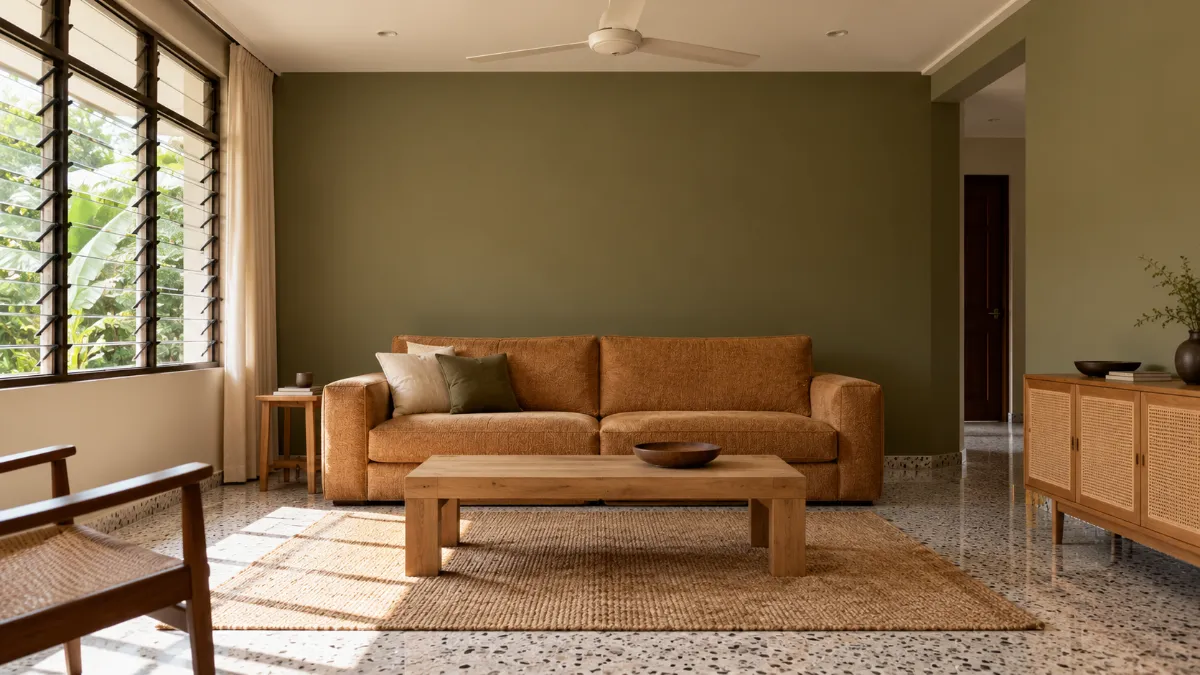
Green and brown sit together naturally, the way bark sits against leaves. A muted olive wall makes chocolate or cognac look richer, and a soft sage keeps caramel and taupe light. For more on olive, see our olive-green living room ideas article. Blue gives more contrast. Dusty blue softens a dark sofa, and blue-gray suits taupe. Keep it muted, since a saturated blue tends to take over the room.
Greige needs more care. A warm greige bridges taupe and brown nicely, but a cool gray with blue undertones can make a warm brown look orange or muddy. Paint a large sample next to the sofa and check it morning and evening. Reading undertones and testing paint is covered in our guide to living room color schemes.
Strong summer sun washes colors out at midday, so in a bright, south-facing room a slightly deeper wall shade often holds up better. In a dim room in a cooler climate, a warm white keeps a chocolate sofa from looking like a dark hole.
3. Chocolate Brown Sofa: Keep the Room Around It Light
A chocolate sofa against a dark wall, on a dark floor, with a walnut coffee table in front of it, can look like one big shadow once the lamps go on. It's the heaviest of the four shades, so it needs some lightness around it.
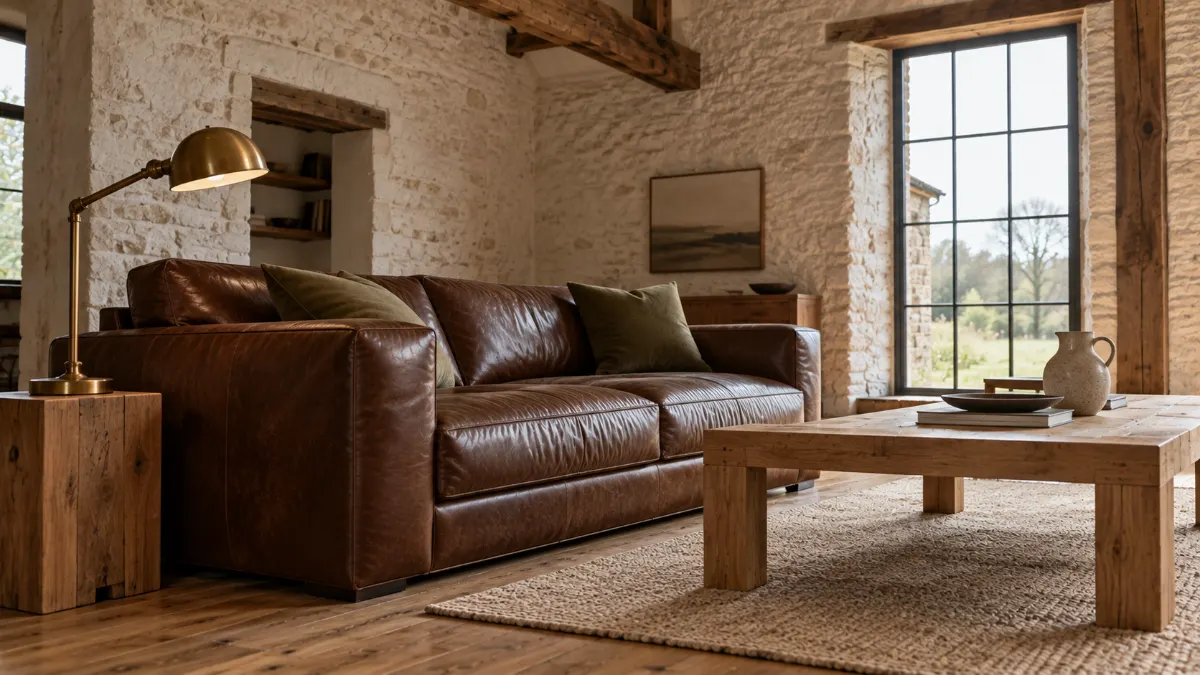
Warm white walls with olive cushions, light oak and aged brass give a relaxed, natural room. Swap the olive for dusty blue and you get something cooler. Keep medium-toned wood nearby so the blue doesn't feel cold against the leather. For a warmer room, rust or terracotta cushions pick up the red in the brown. Make cream the largest light element so the palette doesn't sink.
In each case, one accent color is enough. A pair of cushions and one piece of art usually does the job.
4. Cognac Sofa: Let It Be the Warmest Thing in the Room
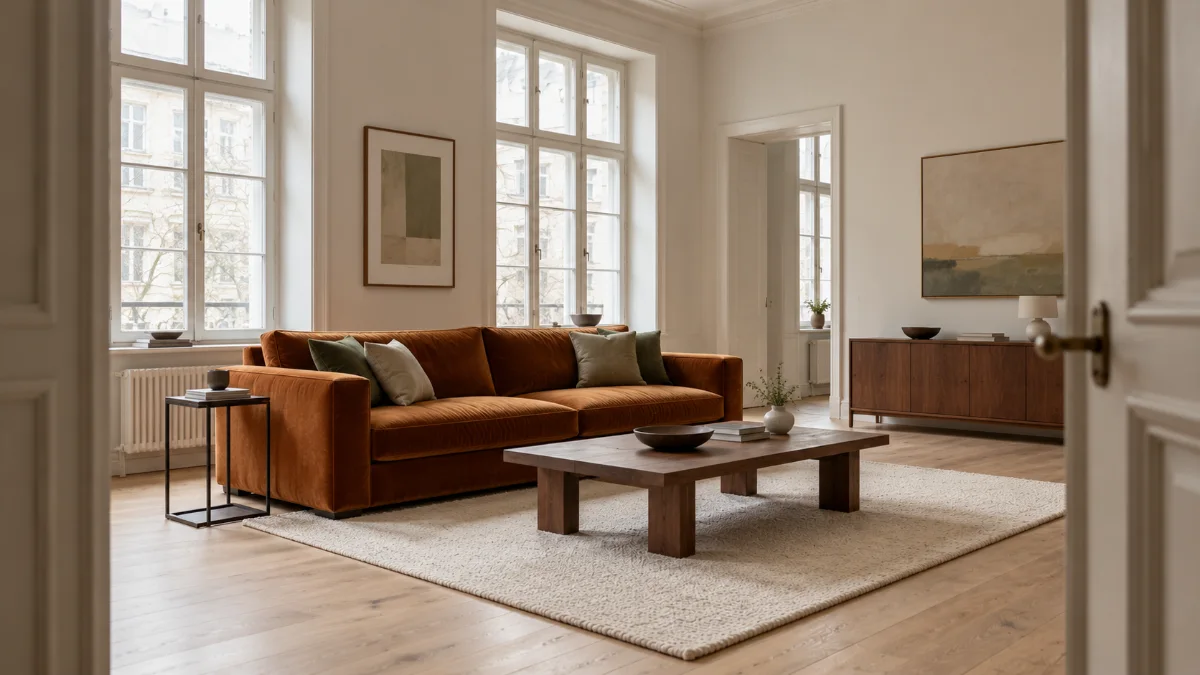
Cognac is already doing a lot. It has an orange glow that catches sunlight, so the best rooms around it stay fairly calm and let the sofa carry the warmth.
Sage green takes the edge off cognac while keeping the room warm. Dusty blue is the stronger pairing, because blue sits opposite orange on the color wheel. Keep it muted if your sofa leans very orange. Charcoal makes cognac look sharper. Use it in a few places, like a side table, a lamp or a picture frame, rather than on every piece.
The mistake to avoid is collecting orange-toned extras. Think of a honey pine floor, a tan rug, terracotta pots and a caramel throw. Each looks fine alone, but together they turn the room into one color. Walnut can be a useful wood partner, because its darker, cooler brown sits behind the sofa instead of competing with it.
5. Caramel and Taupe Sofas: More Room for Color
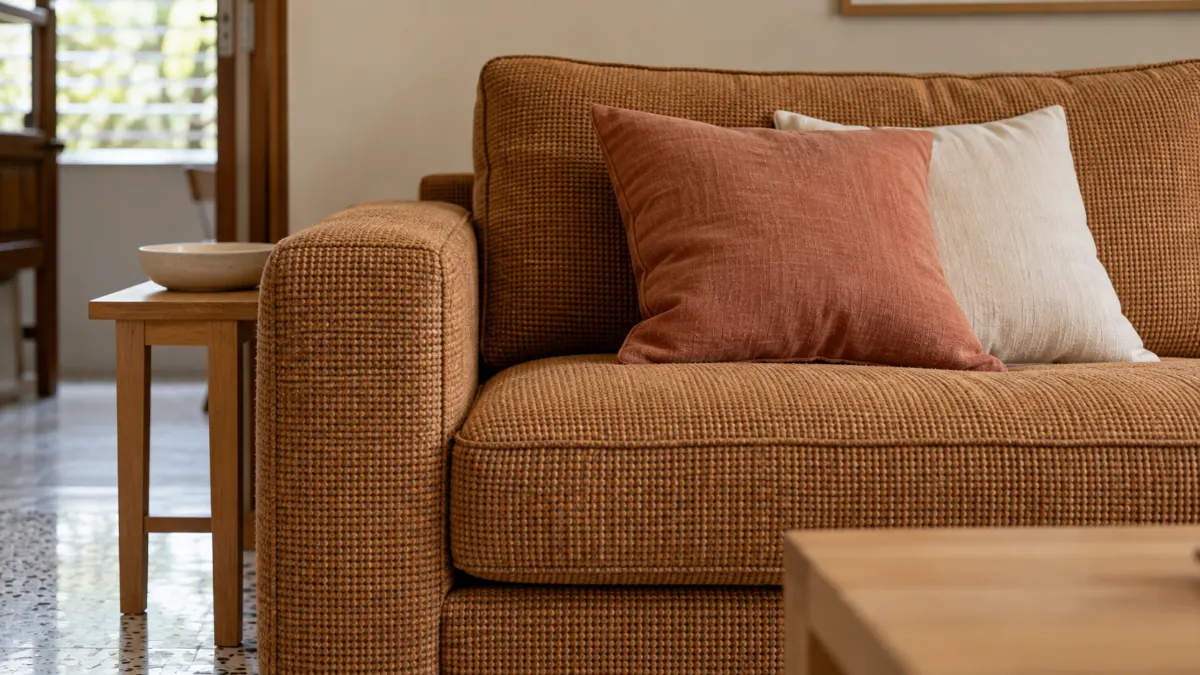
Lighter browns give you more freedom. A caramel or taupe sofa leaves space for deeper colors on the walls, rug and cushions.
Caramel is golden and warm. Warm white walls, light oak and a few black details keep it fresh, close to a Scandinavian look. Olive grounds it, and muted terracotta adds depth without making the sofa look darker. Avoid bright orange, or the sofa and accessories merge into one tone.
Taupe is the flexible one. Because it sits so close to gray, it takes both warm and cool colors. Try warm white and sage for a soft room, or blue-gray for a quieter one. Black and wood give a modern look without much color.
In bright homes with tiled or terrazzo floors, a caramel or taupe sofa looks light and easy. In cooler, grayer climates, caramel brings in warmth a gray sofa wouldn't.
6. What Color Rug Goes With a Brown Sofa?
Pick a rug that either contrasts with the sofa or quietly blends with it. When people ask what color rug goes with a brown couch, cream, natural jute tones, muted green, dusty blue and terracotta all work if their undertones suit the brown.
A cream or off-white rug gives the strongest contrast under chocolate and cognac, and it lifts a dark sofa off a dark floor. Natural tan and straw tones suit caramel and lighter browns. A muted green rug brings color in without fighting the sofa, and dusty blue gives cooler contrast. Terracotta looks good with caramel and chocolate, but think twice with cognac, which already has plenty of orange.
Color is only half the decision. Size, placement and materials are covered in our living room rug size guide, including how natural fibers cope in humid homes.
7. Cushions and Throws: One Accent, Several Textures
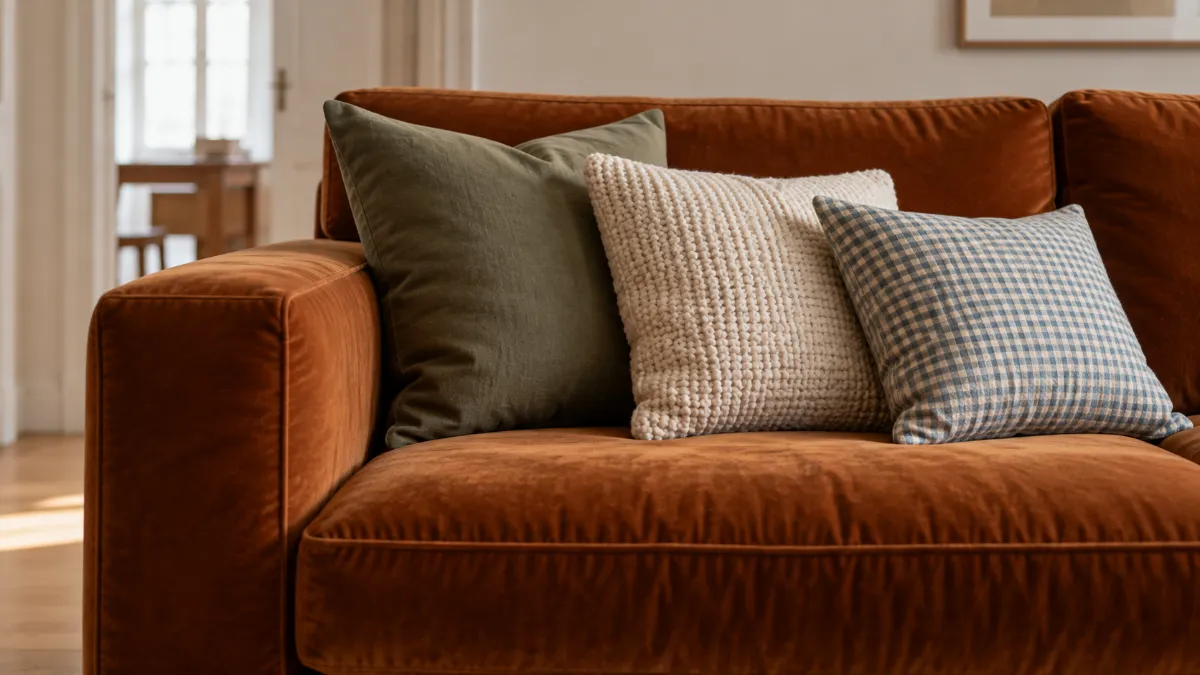
A brown sofa with six cushions in six unrelated colors looks like a sale bin. Cushions work better when they repeat a color already in the room, or bring in one deliberate contrast.
Easy starting trios by shade:
- Chocolate: warm white, olive, rust
- Cognac: cream, sage, dusty blue
- Caramel: warm white, olive, terracotta
- Taupe: cream, blue-gray, sage
Then vary texture as much as color. Plain linen, a small pattern and a chunky knit look layered even in a narrow palette. Three near-identical fabrics look flat. On leather, a throw over one arm also makes the sofa nicer to sit on in an air-conditioned room, where leather can feel cool against bare arms.
8. Brown Leather Sofa Living Room Ideas
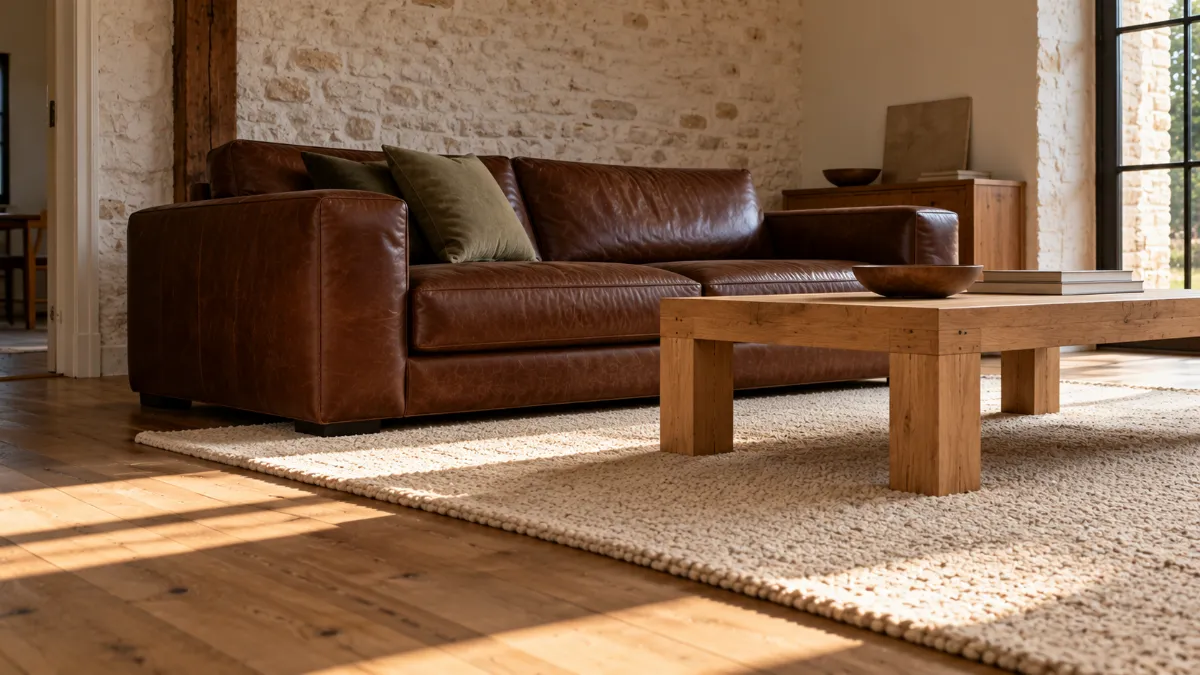
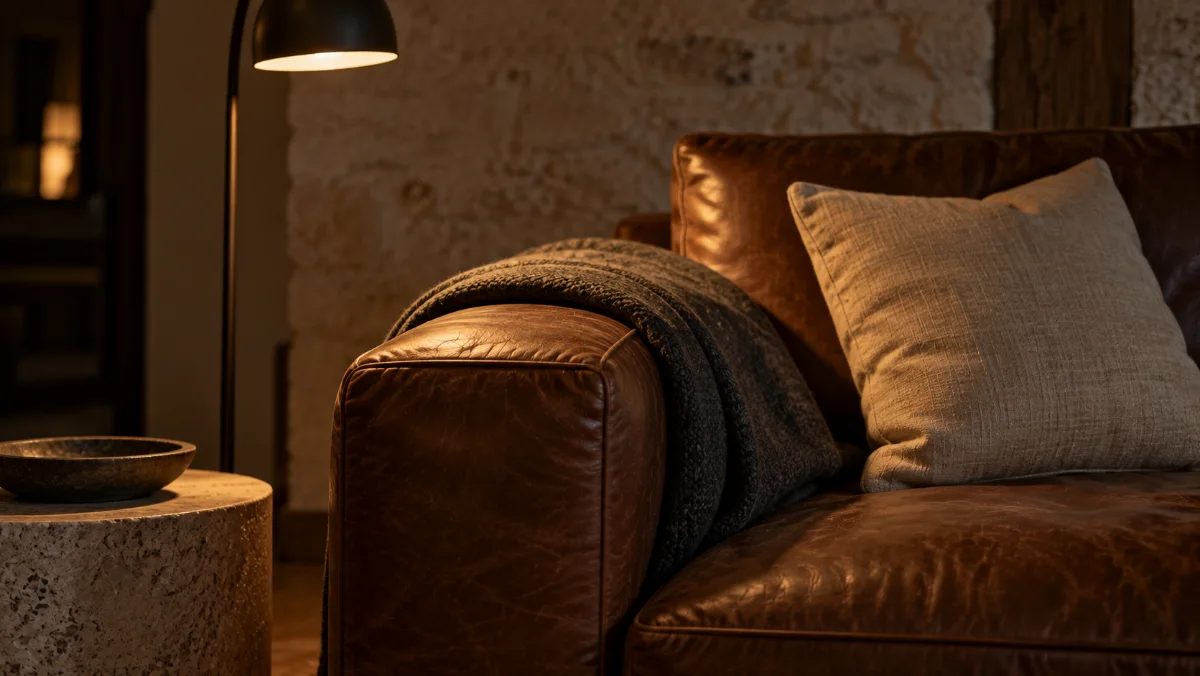
Brown leather brings color and a strong texture at once, so soft textiles and lighter-looking furniture around it help balance it. The finish matters as much as the shade.
Aniline leather has no pigmented finish, so the natural grain shows through (Leather Research Laboratory, University of Cincinnati). Without a protective surface layer, it soaks up spills more easily and can fade with time, though it develops a patina many people like (Geist leather care guide). So a cognac aniline sofa by a sunny window may not stay the same color for long. Pigmented leather has an opaque, colored finish, so its color looks more even and spills sit on the surface rather than soaking in. Semi-aniline sits in between, with a small amount of pigment. Fuller buying advice is in our guide on how to choose a sofa.
When styling, layer linen, cotton and wool around the leather, and don't match every wood to it. For contrast, try black metal, stone, olive or dusty blue rather than more shades of brown.
In hot, humid homes, poor ventilation can raise the risk of mold and moisture problems around leather furniture, so keep it off damp walls and out of strong sun. Care for humid climates is covered in our guide to furniture for a humid climate.
9. Brown Fabric and Velvet Sofas Change With the Light
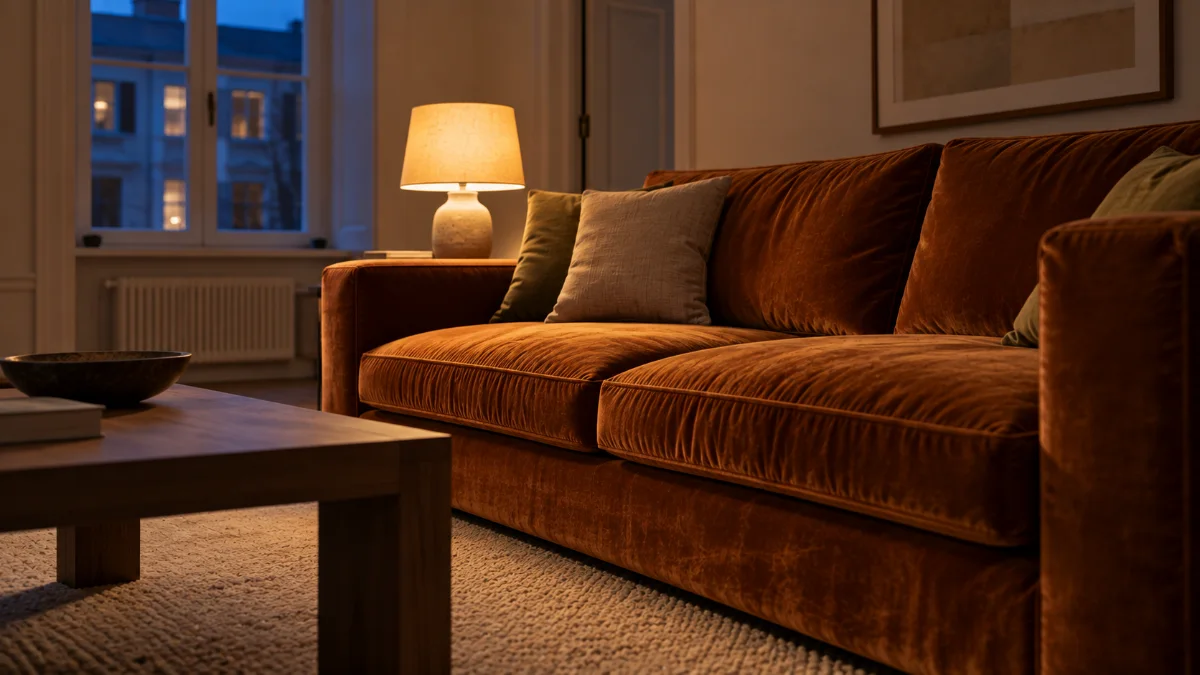
Two sofas labeled "brown" in the same store can look like different colors once they're home. The fabric is usually the reason.
Velvet has a pile that catches light, so a cognac velvet sofa can look golden on the seat and nearly chocolate in the folds, especially under lamps at night. Linen and cotton look flatter and more matte. Bouclé's loops cast tiny shadows, so it tends to look slightly darker than a flat swatch of the same color.
Fabric has a softer presence than leather, so it takes more pattern around it. Keep patterns restrained if the upholstery itself is heavily textured. The modern cozy living room guide covers mixing bouclé, linen and knit. Before buying, look at a swatch where the sofa will stand, at different times of day.
10. Brown Couch Living Room Ideas: Three Complete Rooms
If choosing piece by piece feels like a puzzle, start from a whole room instead.
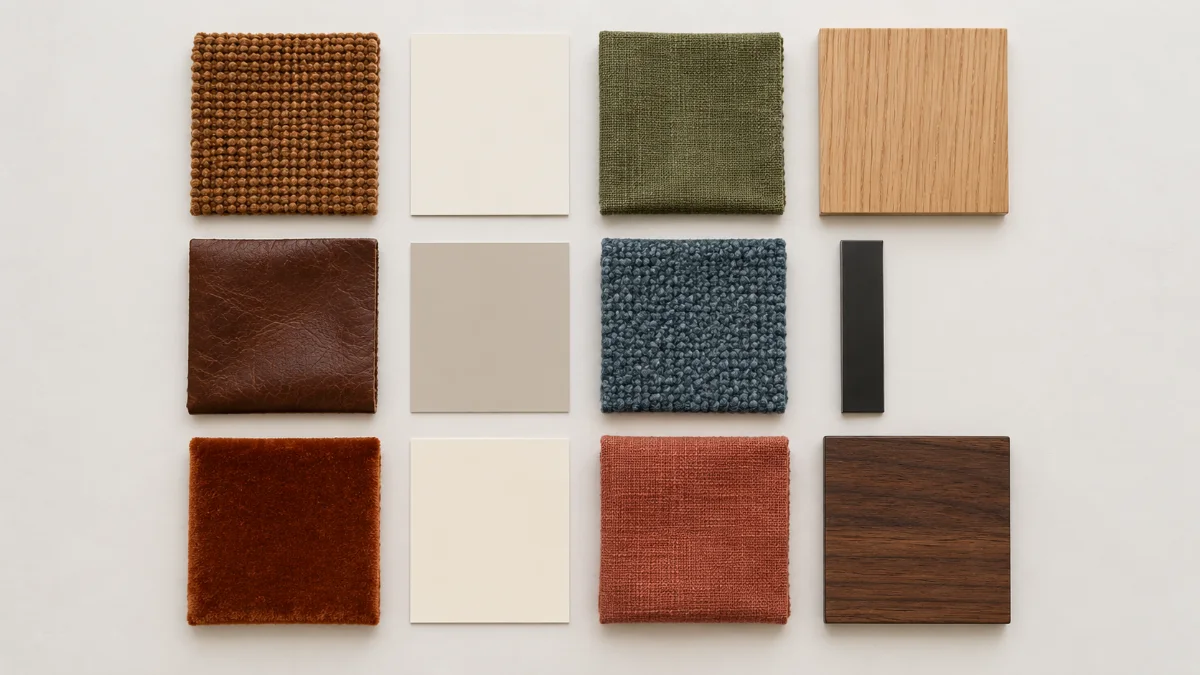
- Warm and natural suits chocolate, cognac or caramel. Use warm white walls, olive cushions, a cream rug, light oak, aged brass and linen curtains.
- Soft and contemporary suits taupe or chocolate. Use warm greige walls, dusty blue textiles, a blue-gray rug, medium oak and black metal, with the wood stopping it from feeling cold.
- Earthy suits caramel or chocolate. Use warm white walls, terracotta cushions, one olive piece, a natural rug, dark wood and handmade ceramics.
The most common mistake across all three is too many warm neutrals. Brown, beige, tan and cream can work together, but only with clear differences in texture and lightness. If your room feels flat, swap one beige thing, usually the cushions or the rug, for olive, blue or charcoal. How much of each color to use is covered in our guide to living room color schemes.
Final Thoughts
A brown sofa isn't a limit on color. It's a strong, warm anchor, and most rooms only go wrong when everything else tries to match it.
Start here. Take a photo of your sofa in daylight next to a sheet of white paper. Decide whether it's chocolate, cognac, caramel or taupe. Then pick one wall color and one accent color from that row of the table in section 1.