
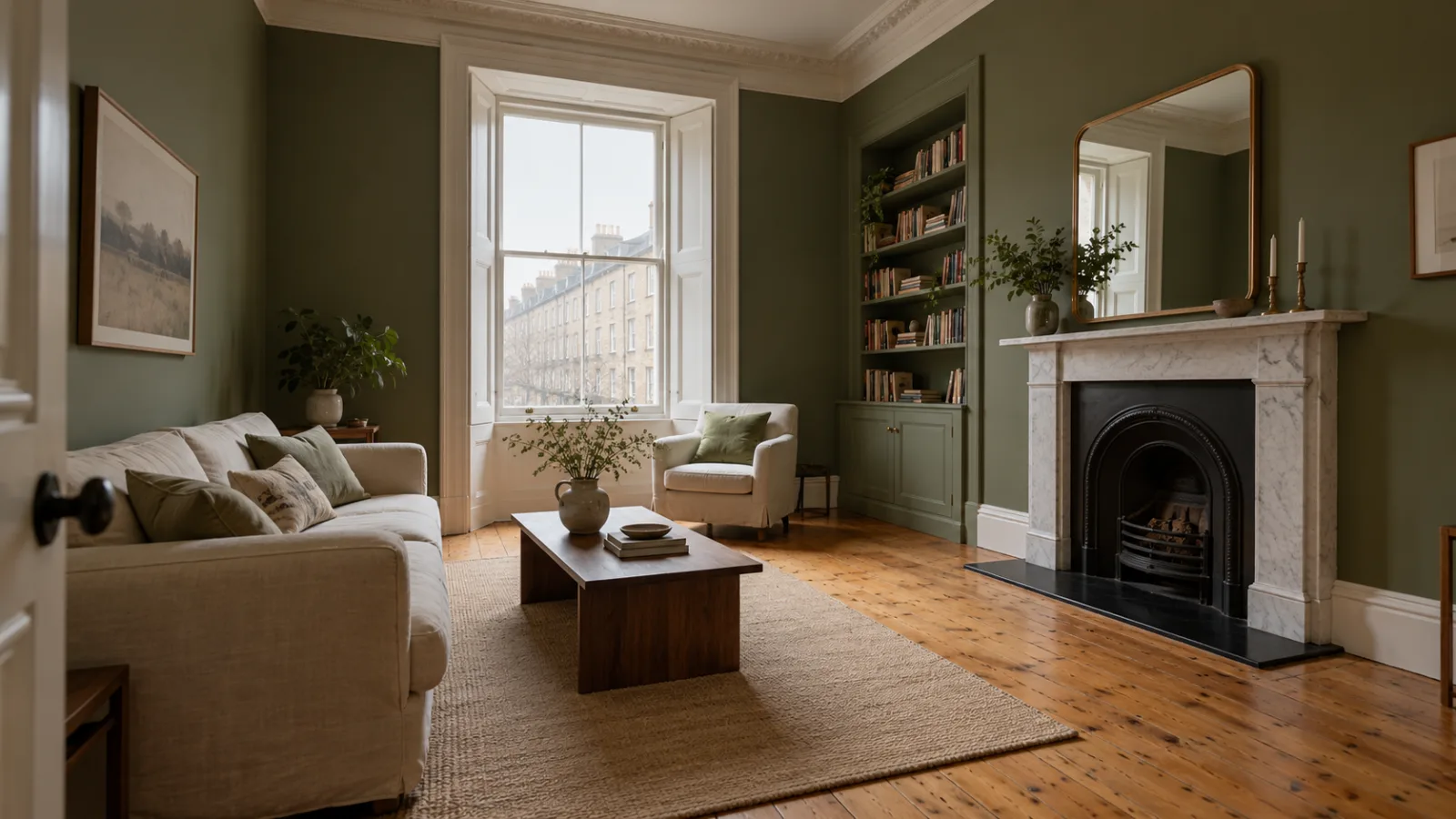
Olive green living room ideas are a good fit if your room feels a little flat, but bright colors feel like too much. Olive is a muted green with some yellow and brown in it. That mix makes it feel earthy and calm.
The tricky part is everything around it. Olive can look rich next to walnut and cream. Next to the wrong gray or a very orange floor, it can look muddy. The same paint can also look quite different in a sunny room and a shady one.
If you're still deciding where the olive should go, start with section 1. If you already own an olive sofa or have paint picked out, jump to the colors that go with olive green in section 4.
In this article
- What Is Olive Green?
- 1. Olive Green Walls or an Olive Sofa?
- 2. Olive Green Walls Living Room Ideas
- 3. Olive Green Sofa Living Room Ideas
- 4. Colors That Go With Olive Green
- 5. Olive Green and Brown Living Room Ideas
- 6. Wood Tones That Suit Olive Green
- 7. Rugs and Curtains for an Olive Green Living Room
- 8. How Light Changes Olive Green
- 9. Olive Green in a Small Living Room
- Final Thoughts
- Frequently Asked Questions
What Is Olive Green?
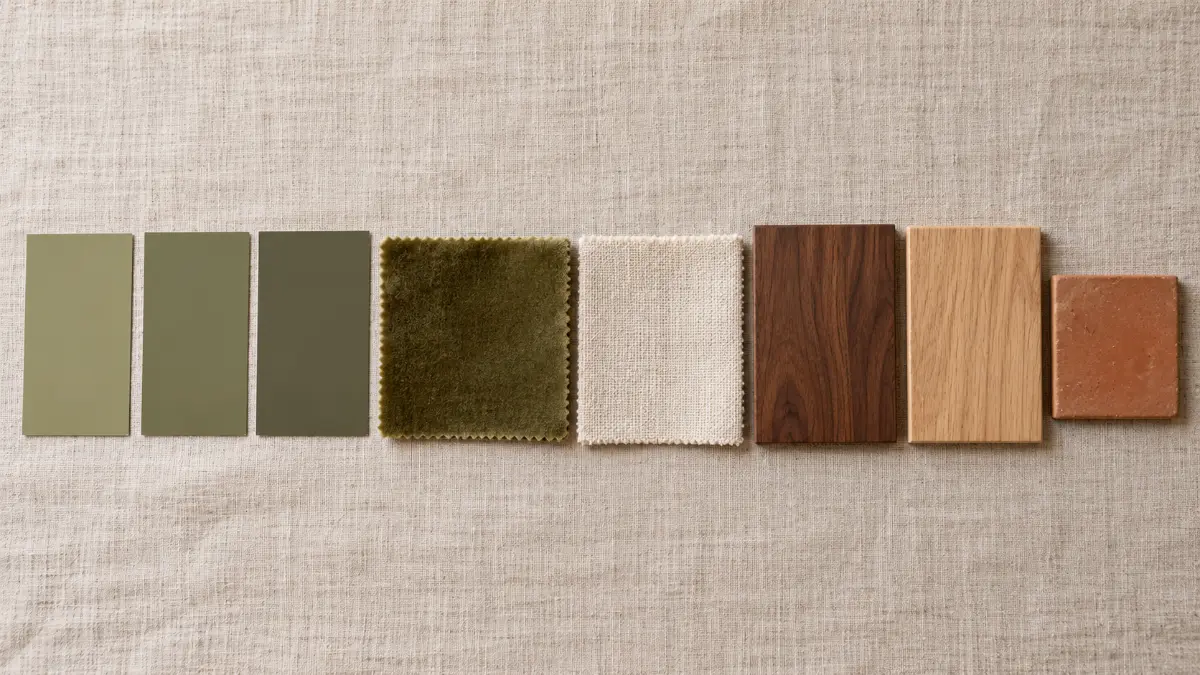
Olive green is a dark, muted yellow-green, named after the color of unripe olives. It sits somewhere between green, yellow and brown. Some olives lean yellow and look brighter. Others lean brown and look deeper.
That in-between quality is why olive goes so easily with wood, leather and clay. It's also why olive is fussy about light. Warm light brings out the yellow in it. Shade and gray daylight bring out the brown.
1. Olive Green Walls or an Olive Sofa?
Choose olive walls if you want the color all around you. Choose an olive sofa if you want one strong piece of color and more freedom to change things later.
Olive walls wrap the seating area in color, so the room tends to feel snug. But it's the bigger commitment. Changing your mind means repainting.
An olive sofa puts the green in one spot. The walls and floor can stay light, so the sofa stands out. It's also easier if you rent, because the sofa moves with you. Our renter-friendly living room ideas cover other ways to add color without painting.
You can use both. If you do, make one clearly lighter or darker than the other. A pale, yellow-leaning olive on the walls behind a deep, brown-leaning olive sofa looks planned. Two shades that are almost the same can look like a near-miss.
2. Olive Green Walls Living Room Ideas
Painting all four walls olive is where most people hesitate. A deep olive in a small, dim room can feel like sitting inside a closed box.
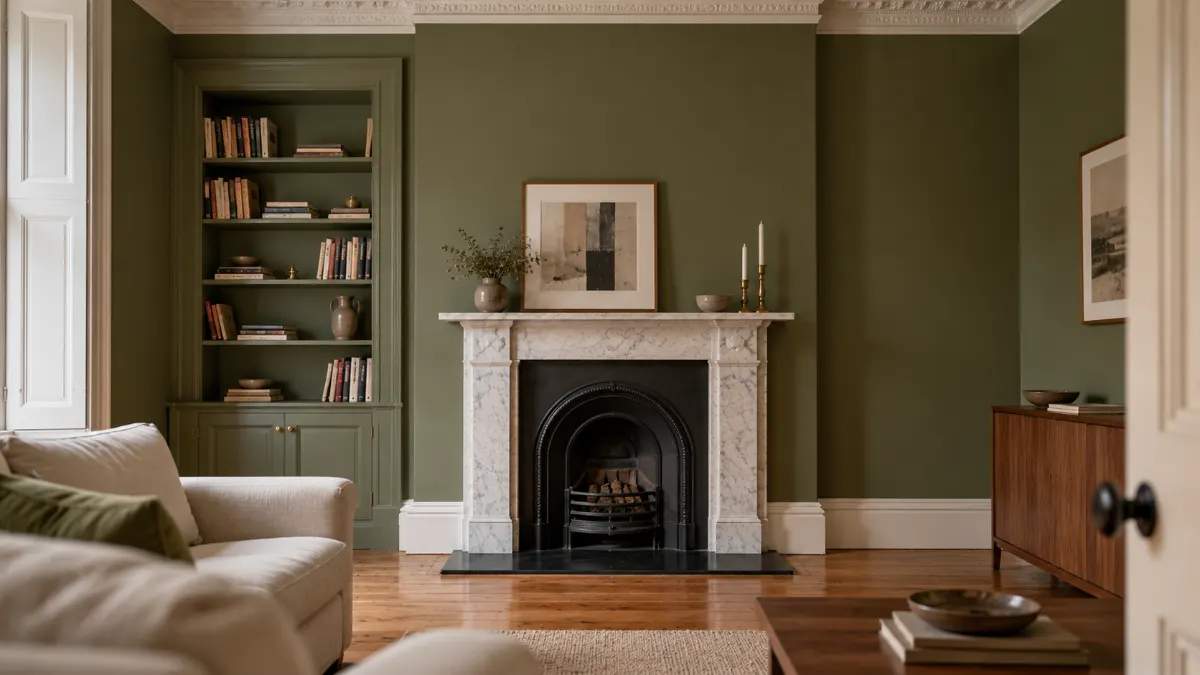
The fix is to give the walls some contrast. Keep the ceiling a warm white. Paint the trim and door frames warm white or soft cream too. Then pick a lighter sofa in cream, oatmeal or pale tan. Your eye has somewhere to rest, so the green looks rich, not heavy.
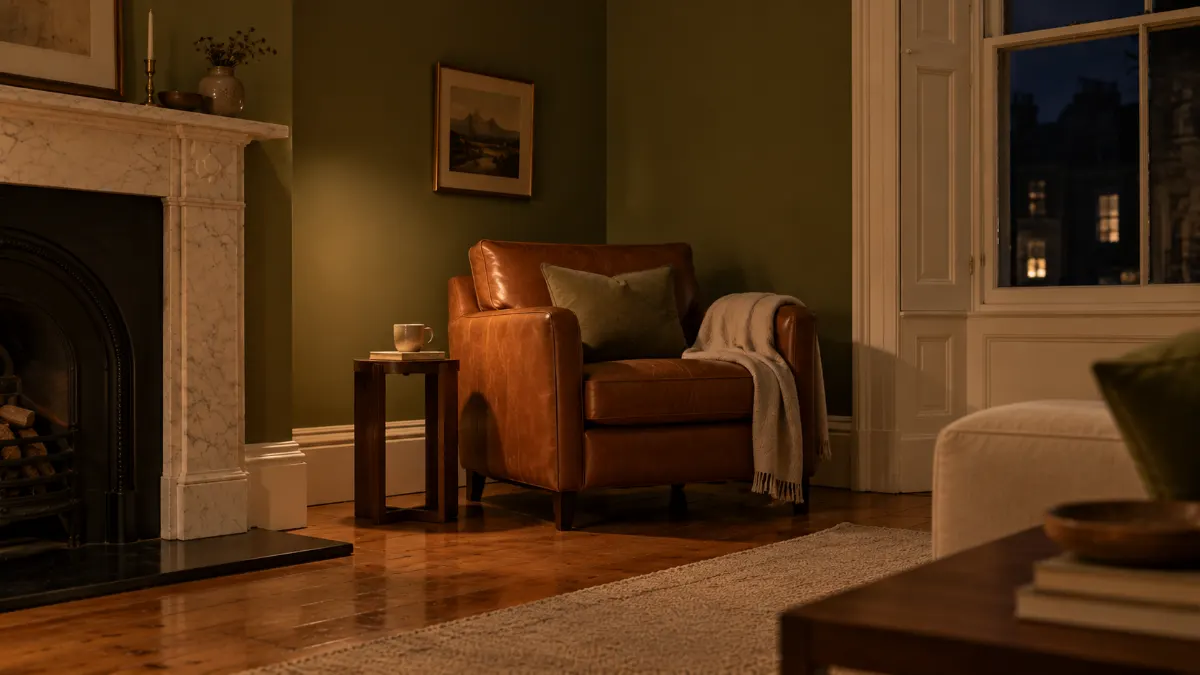
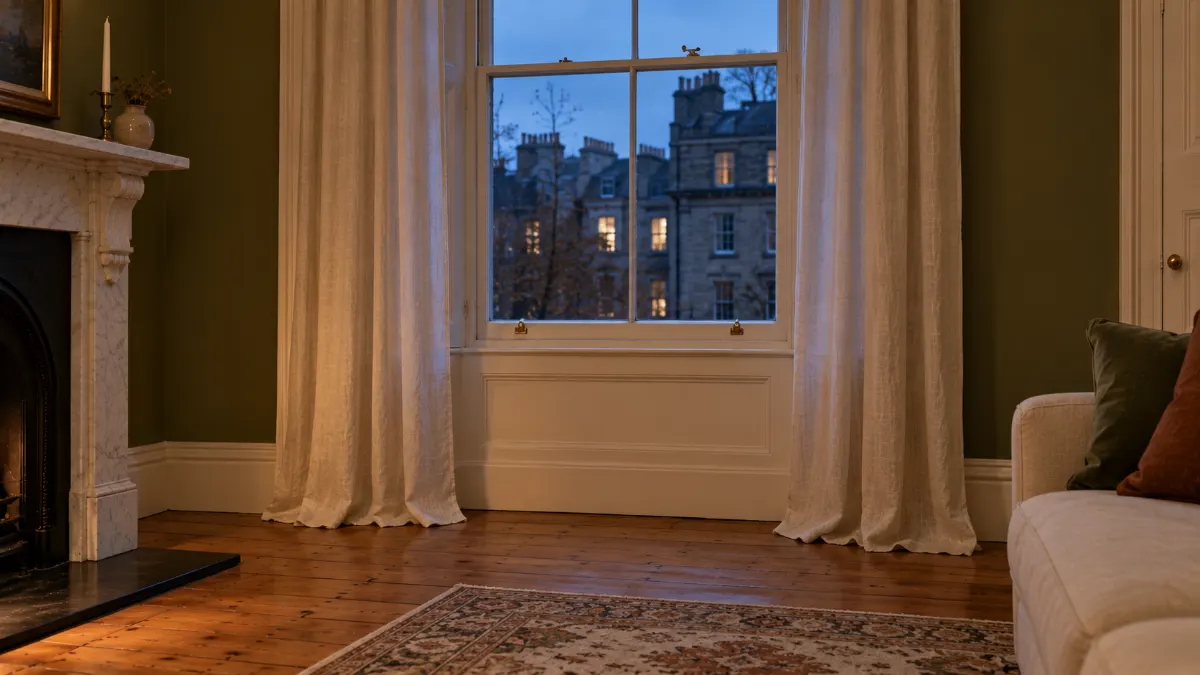
Olive walls suit older homes well. An Edinburgh tenement flat might have tall sash windows, a fireplace and old pine floorboards. Olive around a white marble fireplace helps the fireplace stand out. It also sits nicely next to cornices, which are the decorative moldings where the wall meets the ceiling. Keep those white so the details show.
Think about your daylight before you choose the shade. A room facing north, or a window blocked by the building next door, gets softer, grayer light. In that light, olive tends to look darker and browner than on the paint card. A shade one step lighter is often safer.
3. Olive Green Sofa Living Room Ideas
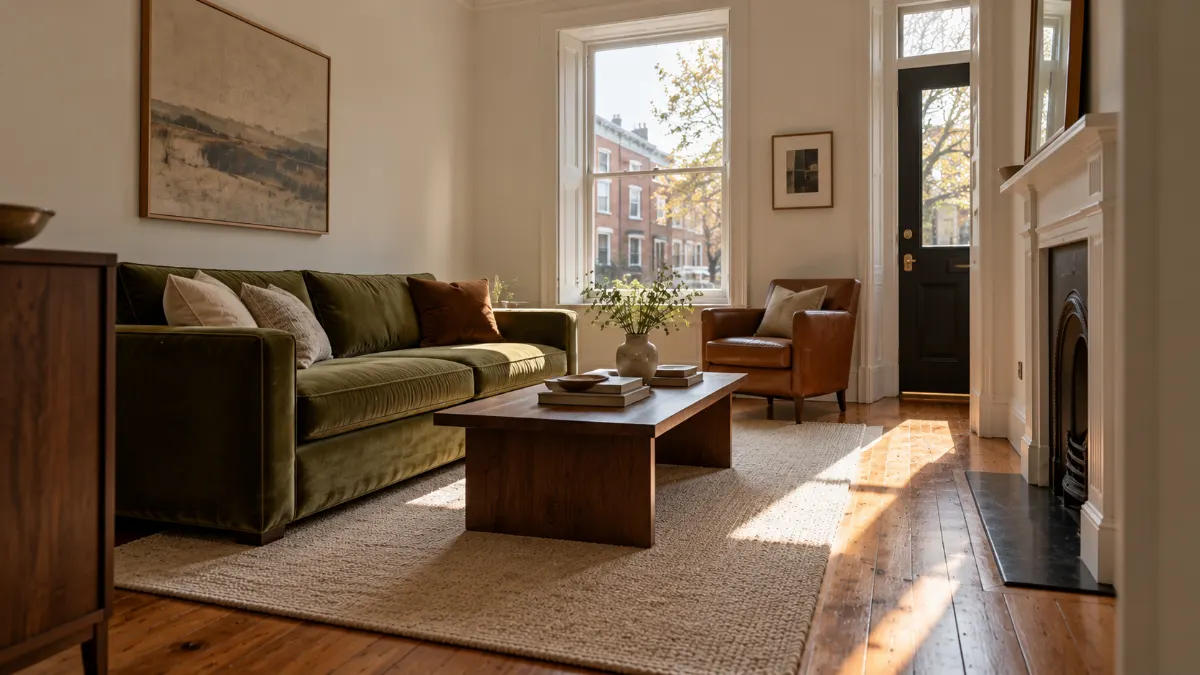
An olive sofa looks best against walls that are lighter and warmer than the sofa. Warm white, cream and pale beige are the easiest choices.
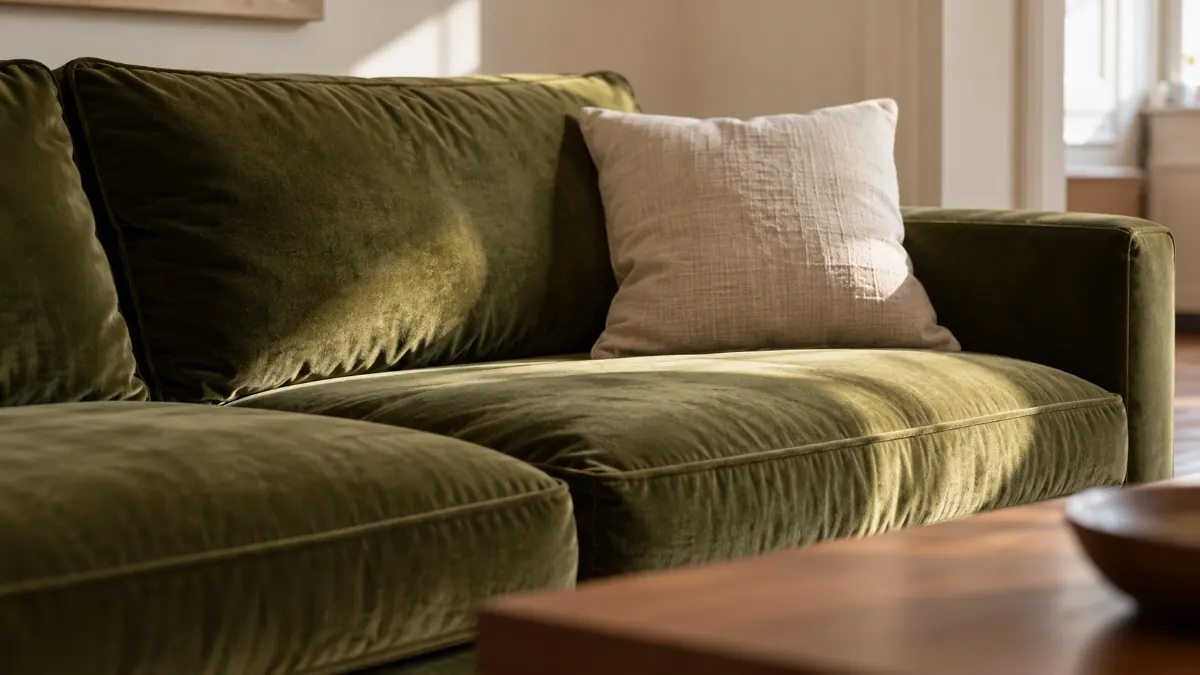
The fabric changes how the green looks. Olive velvet tends to look deep and rich. Velvet has short, dense fibers that catch the light. As you move around the room, the color shifts, so one sofa shows several shades of olive. The trade-off is that velvet can show pressure marks where people sit.
A linen-look or woven fabric feels more relaxed. The olive looks flatter and calmer, which suits simple wood furniture and a casual room. Fabric durability and cleaning are covered in our guide on how to choose a sofa.
Picture a narrow Philadelphia row house. An olive velvet sofa sits against a warm white wall. In front of it are a walnut coffee table and a cream rug. One cognac leather armchair sits to the side. The sofa does the work, so nothing else needs to compete with it.
In hot, humid homes, velvet can feel warm to sit on, so a linen-look weave may be more comfortable. Our guide to furniture for a humid climate covers fabrics for those homes.
4. Colors That Go With Olive Green
Warm neutrals, browns and soft earthy colors go most easily with olive green. You don't need all of them. Two or three supporting colors are usually enough.
| Color | What it does next to olive | Where to use it |
|---|---|---|
| Warm white | Brightens the room and separates surfaces | Walls, ceiling, trim |
| Cream and oatmeal | Softens the green and looks calm | Sofa, curtains, rug |
| Chocolate and cognac brown | Adds depth | Leather chair, wood tables, shelves |
| Terracotta and rust | Adds a warm contrast | Cushions, plant pots, a print |
| Dusty pink | Softens the earthy look | One or two cushions, artwork |
| Mustard | Brings out the yellow in olive | Small accents only |
| Charcoal and black | Gives a sharp outline | Lamp bases, frames, a side table |
| Muted blue | Adds a cooler contrast | Ceramics, artwork |
Cream is the safe partner. Olive with cream looks calm rather than dramatic.
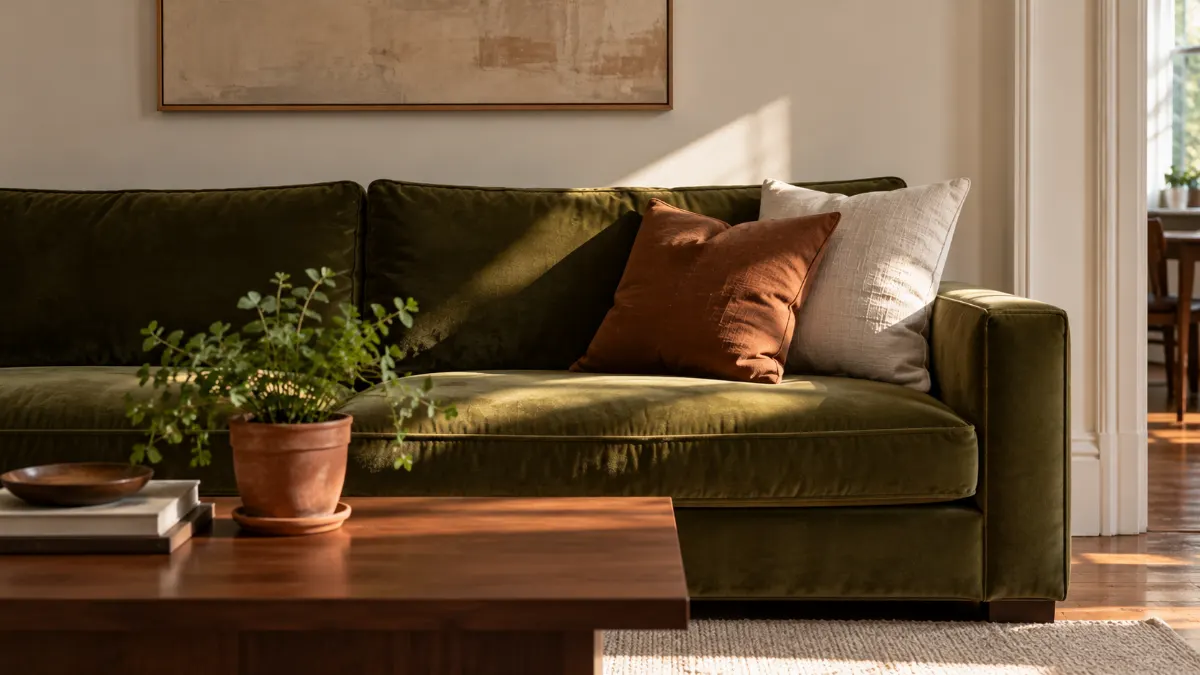
Terracotta goes a long way in small amounts. An olive sofa with a cream rug might only need one rust cushion and a clay pot. Spread terracotta across every surface and the green stops being the main color.
Dusty pink works when the pink is grayed down. Bright candy pink tends to fight with olive.
Gray needs care. A warm greige, which is a mix of gray and beige, usually sits well with olive. A cool blue-gray can make olive look more yellow by comparison. Undertones in general are explained in our living room color schemes guide.
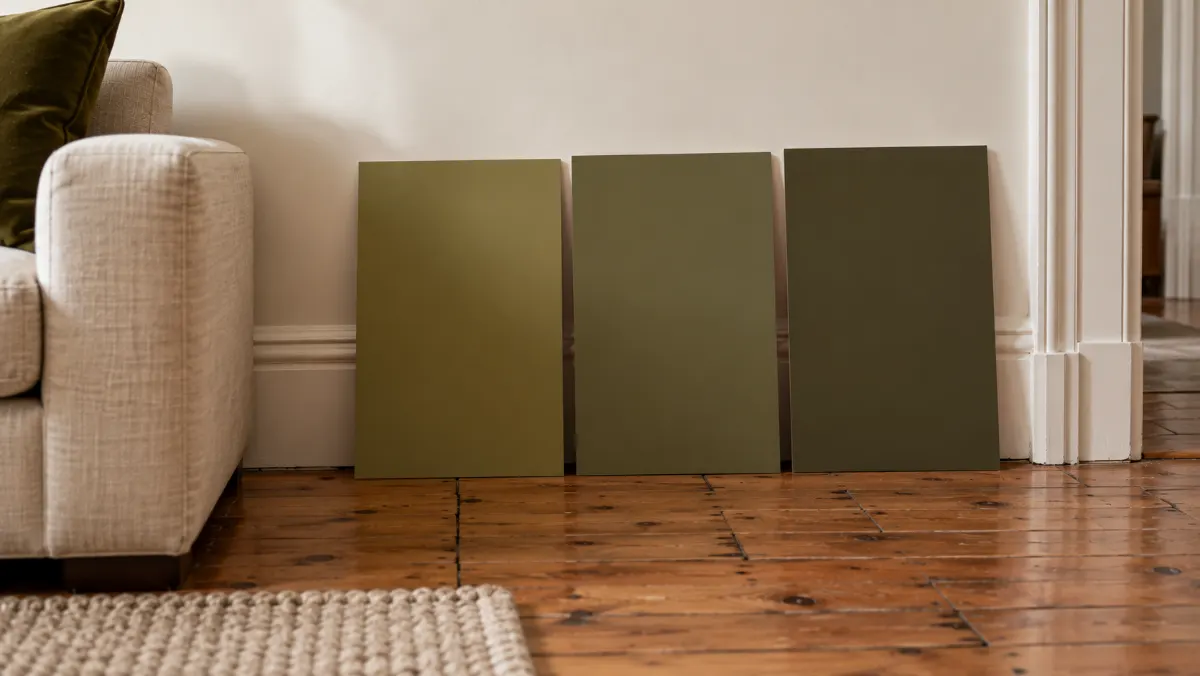
Here's a simple test. Lay your samples next to each other on the floor in daylight. If one color makes the olive look muddy or too yellow, drop it.
5. Olive Green and Brown Living Room Ideas
Olive and brown show up together all over nature. Think of moss on a tree trunk. That's why an olive green and brown living room tends to look easy and natural.
There are two simple ways to do it. The first is an olive sofa with brown wood or leather around it, such as a walnut table and a cognac leather chair. The second is the reverse. You paint the walls olive and choose a brown leather sofa. That version is darker and richer, so pale curtains and a light rug help balance it.
The common mistake is making everything dark. Dark olive walls, a dark brown sofa and a dark wood floor can blend into one heavy block. One large light piece usually fixes it. A cream rug, light curtains or a pale sofa all work.
Mixing textures helps too, like matte paint next to wood grain and leather. If your sofa is already brown, our article on living room ideas with a brown sofa matches wall colors and rugs to each brown shade.
6. Wood Tones That Suit Olive Green
Light oak keeps olive feeling fresh. Walnut makes it richer. Dark wood makes it more dramatic and traditional.
Light oak suits a bright, relaxed room. Next to pale wood, the green has room to stand out.
Walnut is a warm, mid-to-dark brown wood. Next to olive, it adds depth, especially when the sofa or rug is cream.
Dark wood suits deeper olives and older homes. It needs some lighter pieces nearby, though. Otherwise the dark wood and dark green can blend together.
The wood in a room doesn't have to match. Oak floors and a walnut table can sit together fine, as long as both feel warm. Our bedroom ideas with wood furniture explain how to mix wood tones, and the same method works in a living room.
Watch out for very orange or red floors, like some older pine or cherry. A yellow-leaning olive next to an orange floor can look sharp. Before you buy, put the fabric or paint sample directly on the floor and look at them together.
7. Rugs and Curtains for an Olive Green Living Room
Cream, beige and warm patterned rugs are the simplest choices under olive. For curtains, warm white, cream and oatmeal work in most olive rooms.
A light rug separates an olive sofa from a dark floor. A patterned rug that repeats olive, rust and cream can tie the sofa, the wood and the accessories together. A very dark rug under an olive sofa often makes the whole seating area look heavy.
Size matters more than color. A rug that fits at least the front legs of the main seats helps the group look like one area. Sizes for every layout are in our living room rug size guide.
Light curtains frame the windows against olive walls without competing with them. If you want green curtains, go clearly lighter or darker than the walls. A near-match tends to look like a mistake.
Dark brown or charcoal curtains can feel snug, but they need light. In a dim room, they can make the windows look smaller.
8. How Light Changes Olive Green
The paint card looked perfect in the store. On your wall, it's suddenly yellow. Or brown. Olive holds green, yellow and brown at once, so it shifts more than many colors.
Shady and north-facing rooms push olive toward brown and gray. Long gray winters can add to this, but the window's direction and anything blocking it matter too. Strong sun does the opposite. It makes olive look brighter and more yellow.
In sunny places like Arizona or southern Spain, bright sun through big windows can make a pale olive look washed out at midday. A slightly deeper shade may hold its color better there.
Evening light changes it again. Warm bulbs bring out the yellow and brown. Bulb color is covered in our living room lighting ideas.
The best test is a large sample, not a small chip. Move a big sample board around the room and check it morning, afternoon and night, next to your sofa and floor. The full paint-testing method is in our color schemes guide.
9. Olive Green in a Small Living Room
An olive sofa or a lighter olive on the walls usually suits a small room better than a deep olive on every surface.
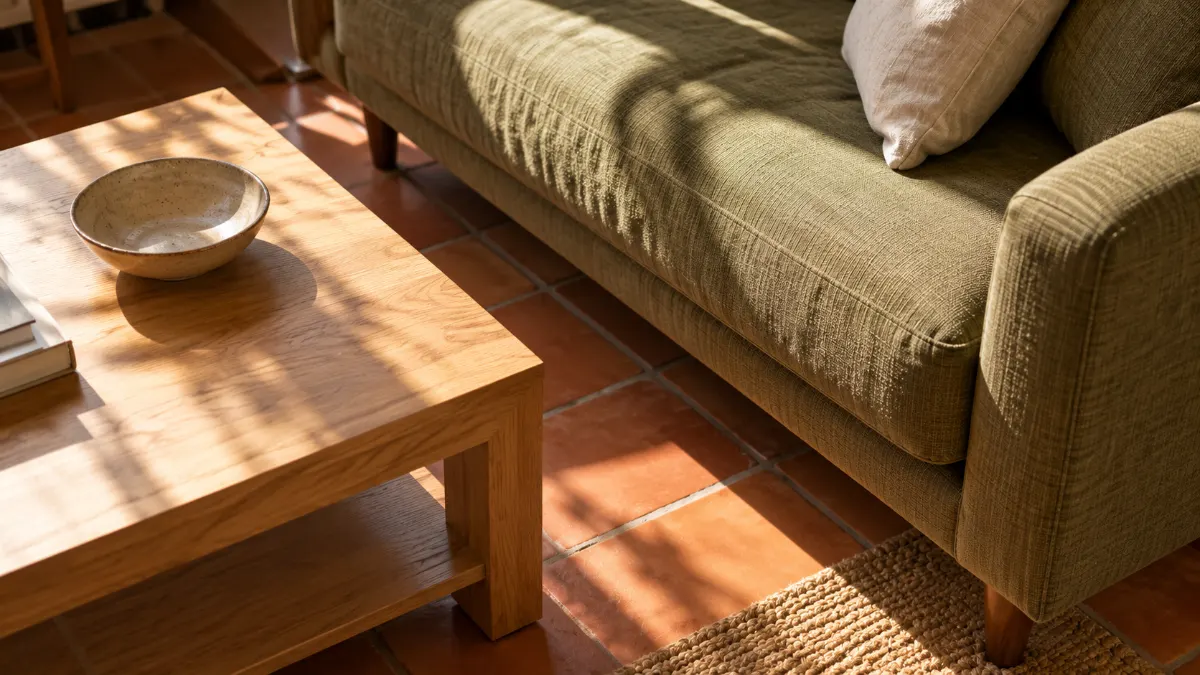
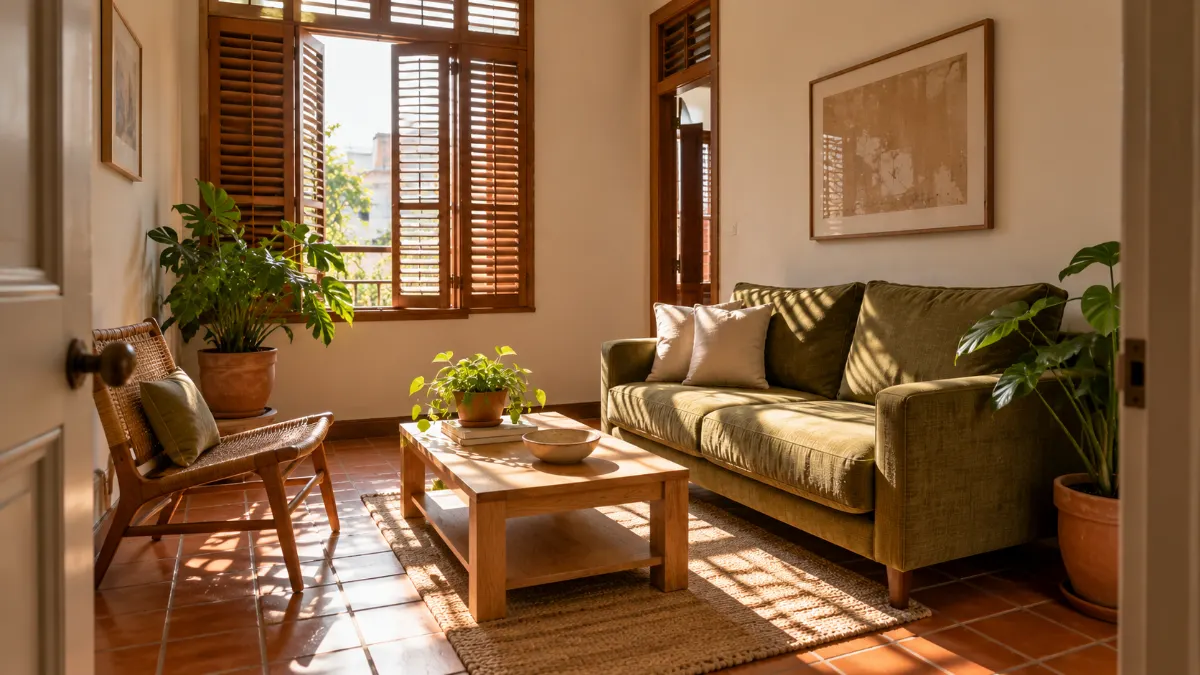
Picture a compact living room in a Los Angeles apartment. The walls are warm white, and the floor is terracotta tile. An olive linen-look loveseat sits along one wall. A light oak coffee table, a rattan side chair and a couple of clay pots finish it. Olive is the only strong color, so the room doesn't feel crowded.
If you'd rather paint, try a lighter olive across the whole room with pale furniture. Don't count on one accent wall to make a small room look bigger. It depends on the light and the contrast.
On a budget, start with olive cushions or a throw. Live with them for a few weeks before you buy a sofa or paint.
Final Thoughts
Olive is easy to live with once it has a clear job. Either the walls carry the green, or the sofa does. After that, warm neutrals, wood and one small accent color are usually all you need.
Start here. Put a piece of olive fabric or a large paint sample next to your floor and your current sofa. Look at it in daylight and at night. That test tells you more than any photo online.