
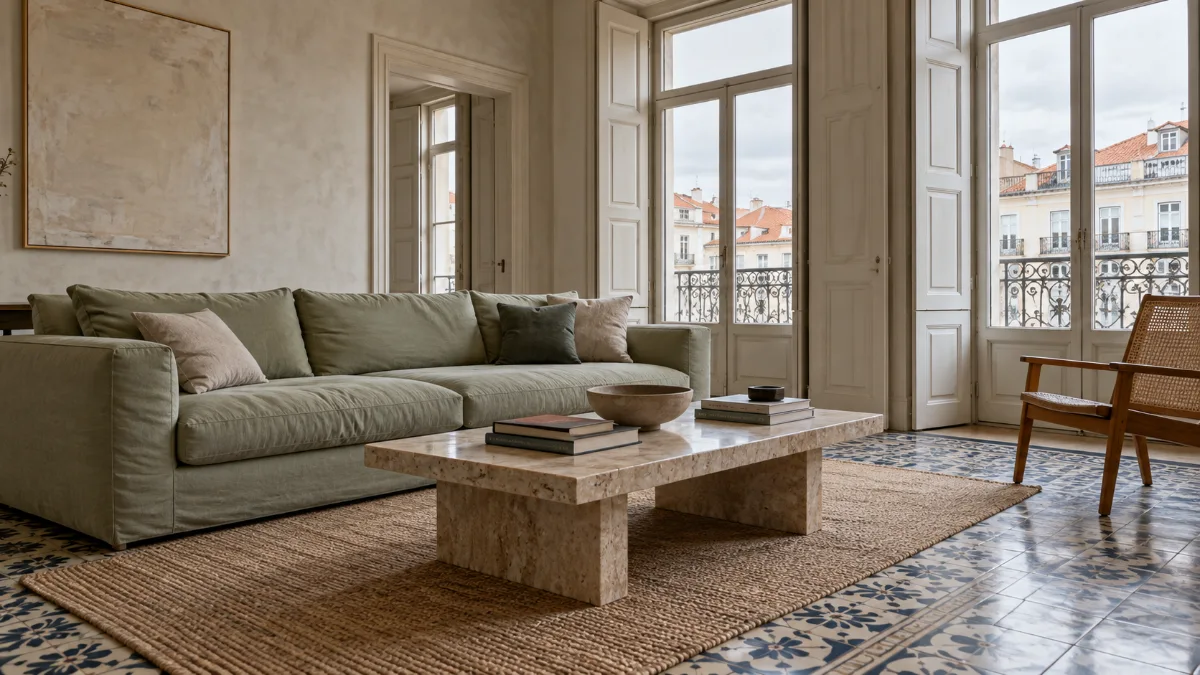
Knowing how to choose a coffee table starts with the sofa, not the table. Most of the decision comes down to three measurements. You need the length of the sofa, the height of its seat, and the floor space in front of it.
Coffee tables are often bought from a photo, with the dimensions in small print further down the page. Then the table arrives. Sometimes it looks like a small island in front of a big sectional. Sometimes it's a slab that everyone has to edge around on the way to the balcony door.
If you only read two sections, start with length in section 1 and depth in section 3. Those are the two measurements that most often decide whether a table fits.
In this article
- 1. What Size Coffee Table for My Sofa?
- 2. Coffee Table Height vs Sofa Height
- 3. Check the Depth Before You Buy
- 4. Round vs Rectangle Coffee Table
- 5. Coffee Tables for Sectionals and L-Shaped Sofas
- 6. Coffee Table Ideas for a Small Living Room
- 7. Coffee Table Materials Compared
- 8. Match the Table to How You Use It
- 9. Mistakes to Avoid When Buying a Coffee Table Online
- Final Thoughts
- Frequently Asked Questions
1. What Size Coffee Table for My Sofa?
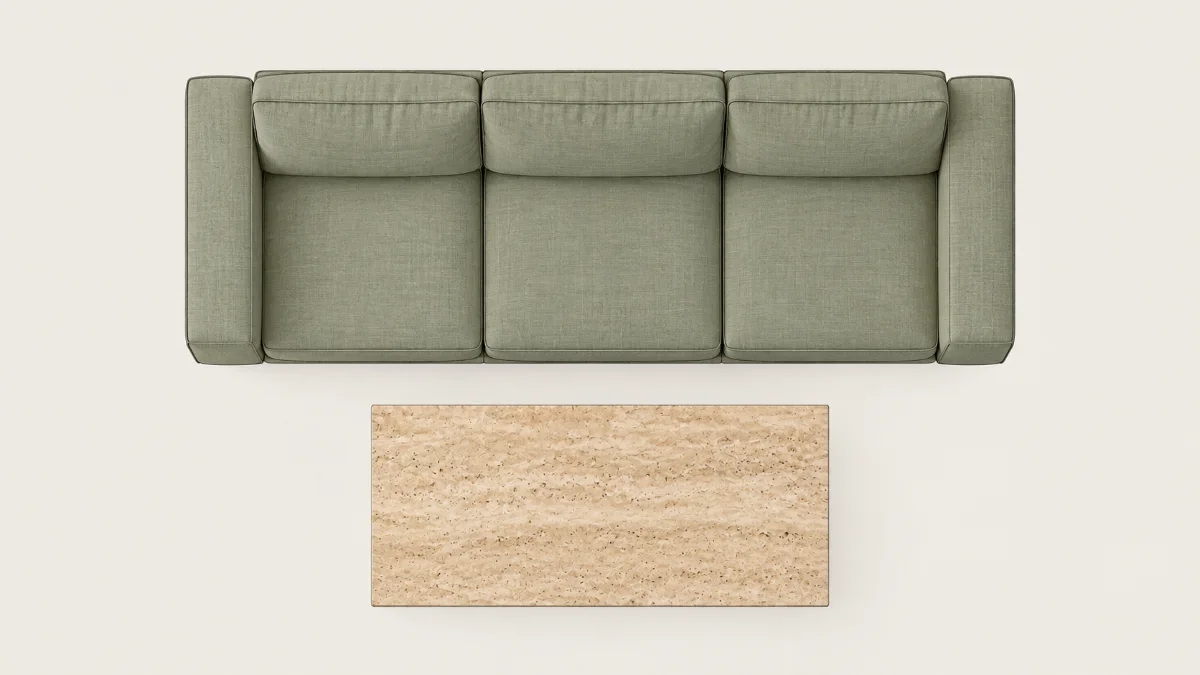
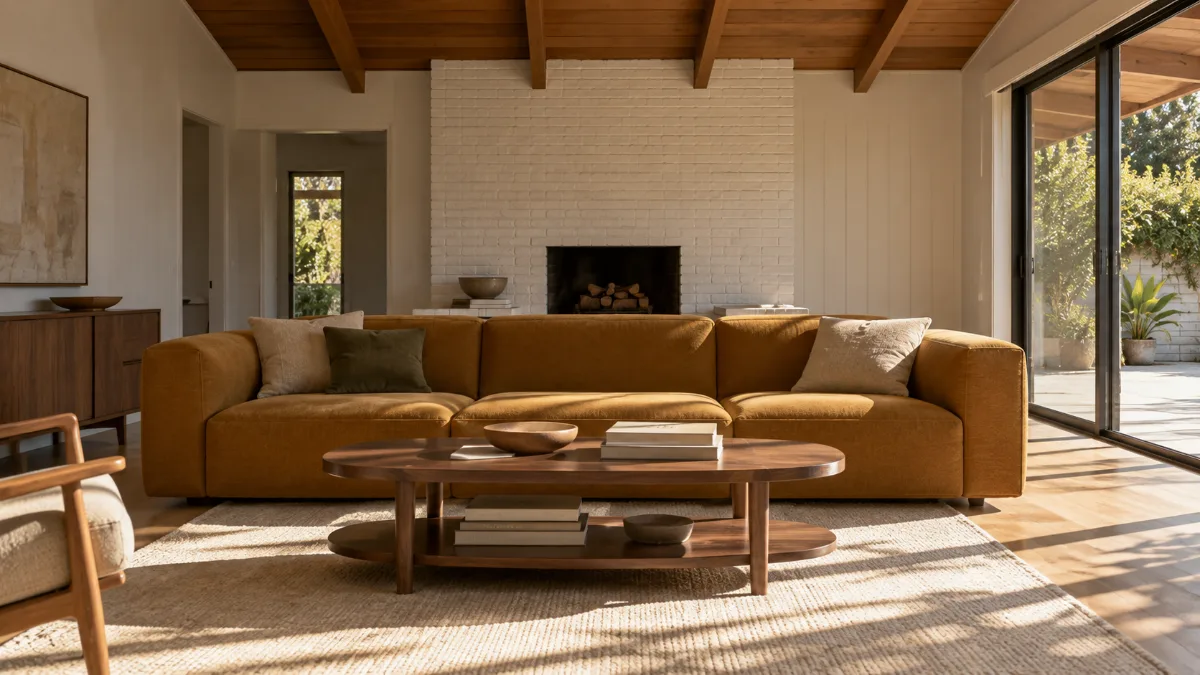
A coffee table about two-thirds the length of your sofa is a useful starting point. For a 210 cm (83 in) sofa, that's a table around 140 cm (55 in) long.
To find your number, measure the sofa from the outside of one arm to the outside of the other. Then multiply by 0.67. At that length, people at both ends of the sofa can usually reach the table.
| Sofa length | Starting coffee table length |
|---|---|
| 150 cm (59 in) | About 100 cm (39 in) |
| 180 cm (71 in) | About 120 cm (47 in) |
| 200 cm (79 in) | About 130–135 cm (51–53 in) |
| 210 cm (83 in) | About 140 cm (55 in) |
| 240 cm (94 in) | About 160 cm (63 in) |
| 270 cm (106 in), sectional run | About 180 cm (71 in) |
Treat these numbers as a starting point, not a rule. Say one end of the table sits on a path people use all day. Going a little shorter than the ratio suggests is often the better choice. A table that's slightly small is easy to live with. One that blocks the way to the kitchen isn't. If you're still choosing the sofa itself, our guide on how to choose a sofa covers sofa sizes.
2. Coffee Table Height vs Sofa Height
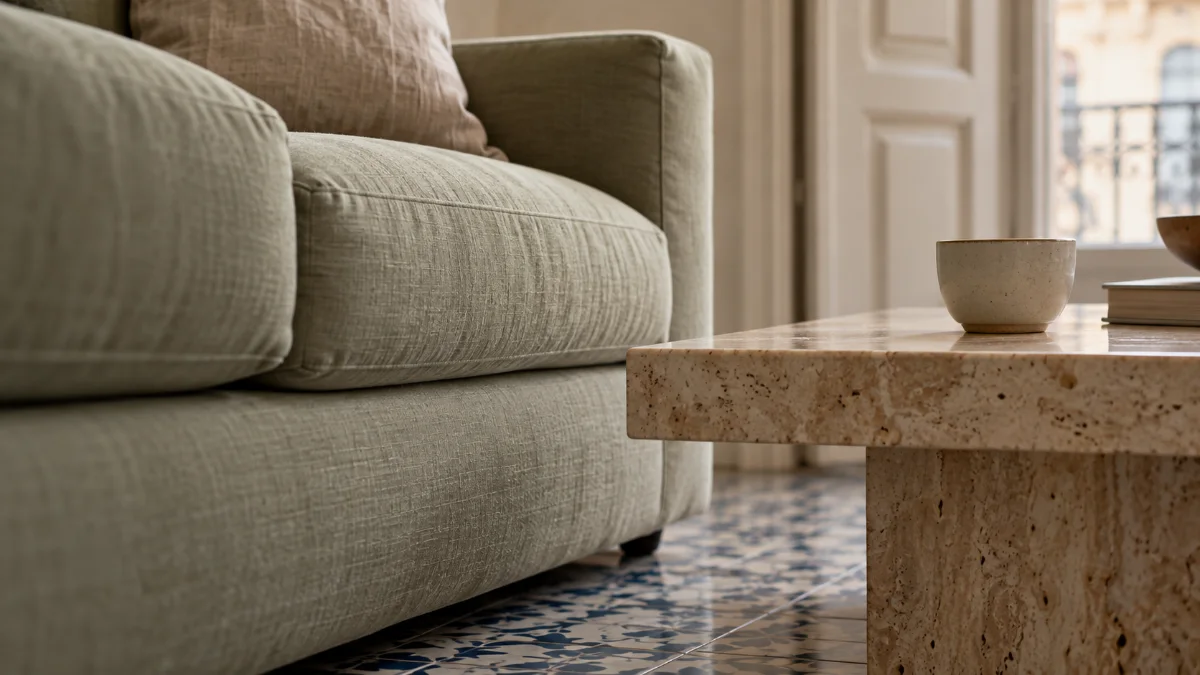
Choose a coffee table that sits level with your sofa seat or up to about 5 cm (2 in) lower. Many coffee tables are around 40–46 cm (16–18 in) tall. Your own sofa is still the better guide.
Measure from the floor to the top of the seat cushion. Some low sofas sit at only 38–40 cm (15–16 in). Low seating, like the kind in our Japandi living room ideas, usually needs a lower table too.
A table taller than the seat feels like a barrier you reach up and over. A table far below the seat means leaning forward for every mug.
Try a quick test before you buy. Stack books in front of the sofa to the height you're considering. Put a mug on top and reach for it a few times.
If you often eat or work on a laptop from the sofa, a lift-top coffee table may suit you better.
3. Check the Depth Before You Buy
It's easy to check a coffee table's length and forget its depth. In many living rooms, depth is what causes the problem.
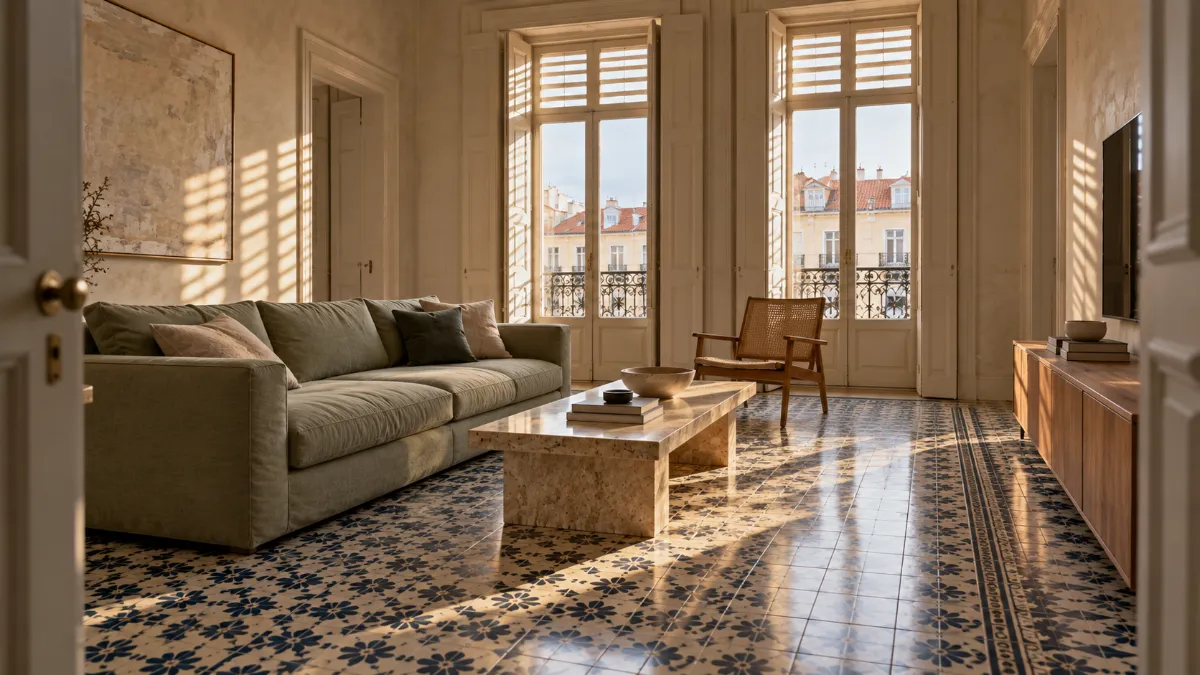
The table has to fit between two gaps. In front of the sofa, you need room for your knees. About 40–45 cm (16–18 in) is the usual range, as our guide on how to arrange living room furniture explains. On the far side, people may walk between the table and the TV unit. That path needs about 90 cm (35 in) if it's a main route, or around 75 cm (30 in) in a tight room. The space left between those two gaps is the depth you can use.
Here's an example. Say there's 180 cm (71 in) between the front of your sofa and the TV unit. Take off 45 cm (18 in) for legroom and 75 cm (30 in) for the walkway. That leaves about 60 cm (23 in) for the table.
Before ordering, cut newspaper or cardboard to the table's exact size. Leave it on the floor for a day. It's much easier to spot a sizing mistake with cardboard than after a heavy table arrives.
4. Round vs Rectangle Coffee Table
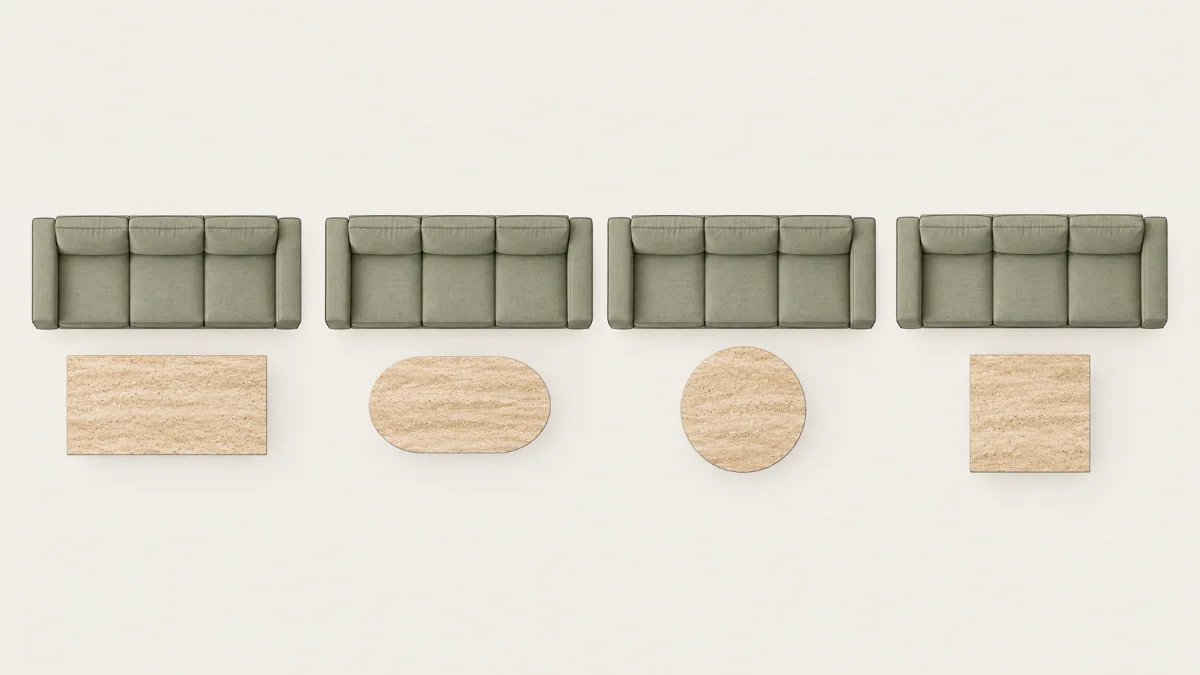
Many people choose a shape by looks. That's fine, as long as you also think about how people move around the room. As a quick answer, rectangles and ovals suit a long sofa. Round and square tables suit compact seating, or seating that wraps around the table.
Rectangular coffee tables
A rectangle is the natural partner for a straight sofa. It gives you the most usable surface for the floor space it takes up. The downside is the corners. On a narrow path, they catch shins and bags.
Oval coffee tables
An oval keeps most of a rectangle's useful length but rounds off the corners. It can suit a long sofa in a narrow room. It's also a good fit for homes with small children, or rooms full of straight lines.
Round coffee tables
Round tables are easy to walk around. They suit small sofas, chairs set up for conversation, and the inside corner of an L-shaped sectional. The trade-off is surface. A round table has less usable top than a square table of the same width. So measure the diameter, even if it looks small in photos.
Square coffee tables
A square table works when people sit on two or three sides of it. That might be a sectional, or a sofa facing two chairs. In a small room, though, a square table can take over the floor faster than a round one.
5. Coffee Tables for Sectionals and L-Shaped Sofas
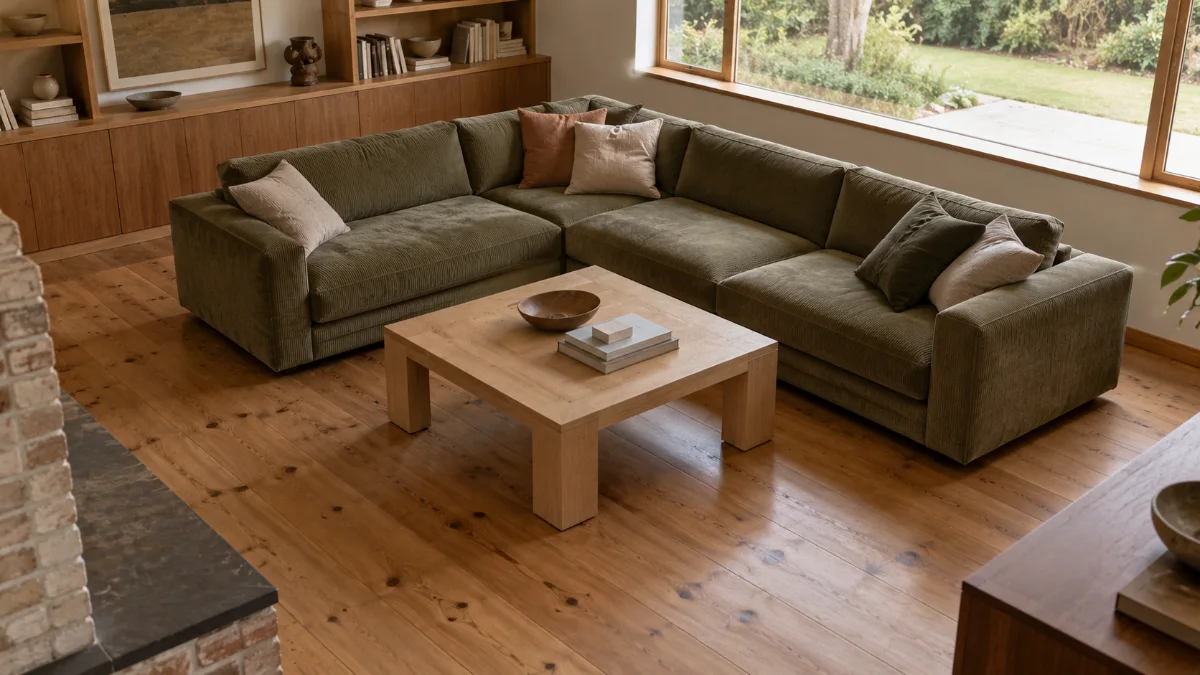
With a sectional, use the two-thirds rule on the longest run of seating that faces the table. Don't measure the whole L. Then choose a shape that people on both sides can reach.
This is why square and round tables often suit sectionals. A long rectangle in front of the main run can leave the person on the short side stretching for their cup. A square or round table inside the corner of the L is within reach of both sides.
If your sectional has a chaise, keep the table in front of the main run. That way it won't block stretched-out feet. Two smaller tables, or a set of nesting tables, are another option.
6. Coffee Table Ideas for a Small Living Room
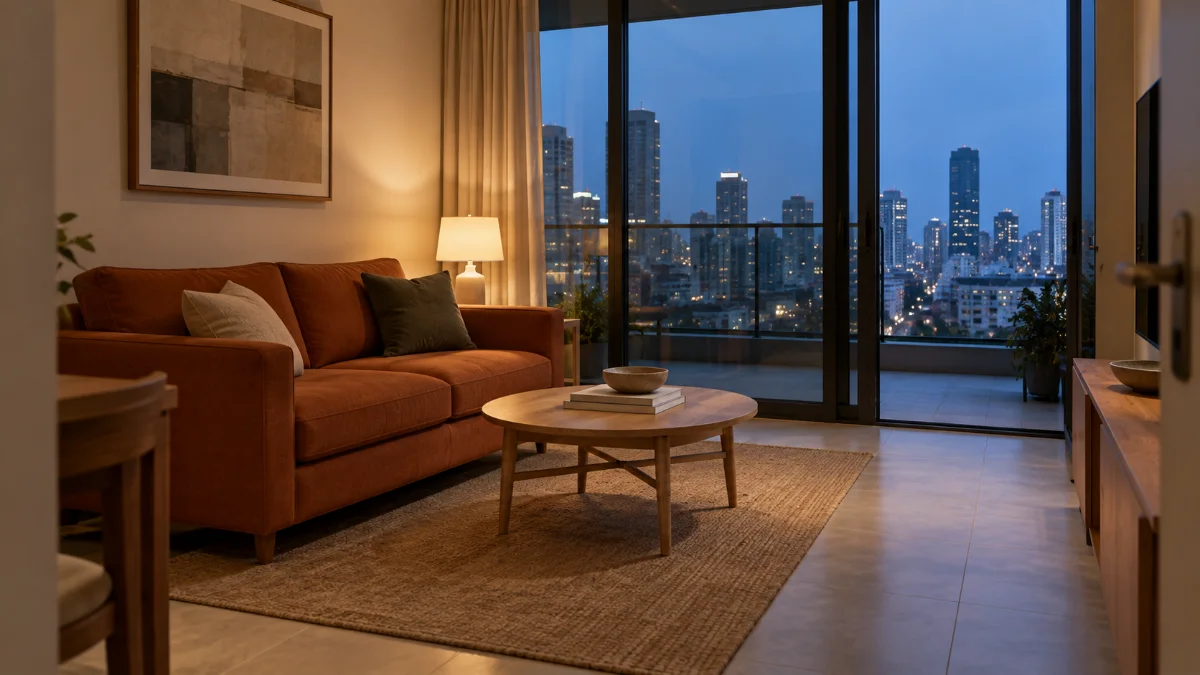
In a small living room, reduce the table's depth first. Then look for a shape that leaves more floor in view.
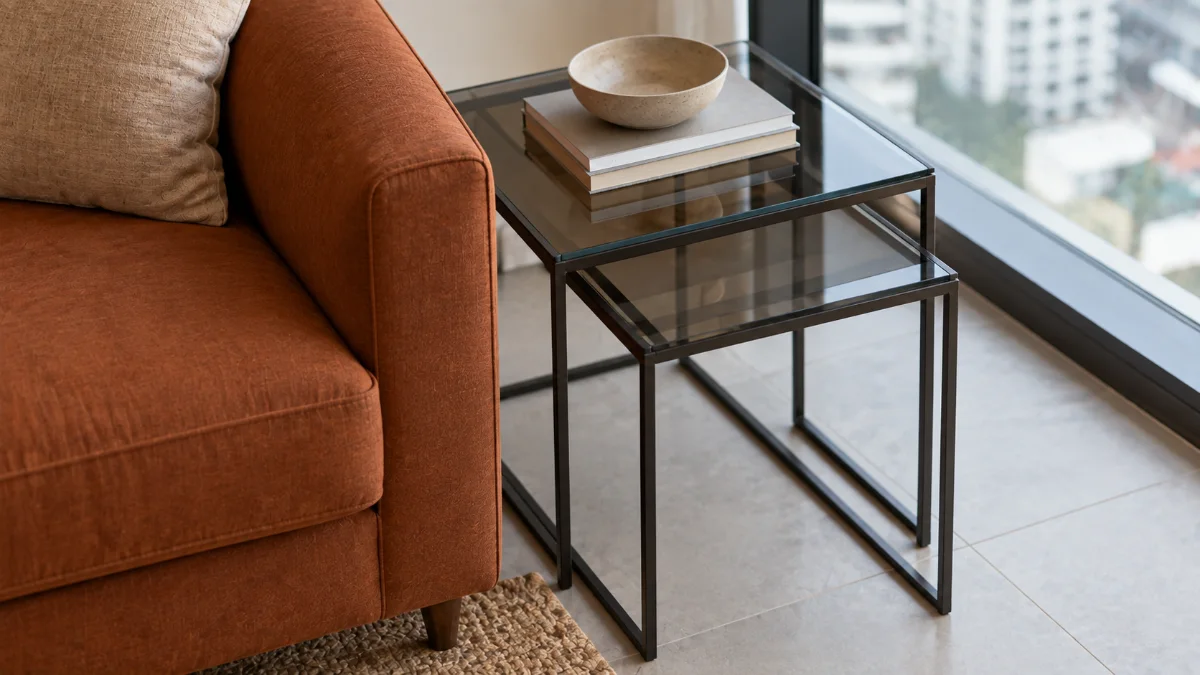
A narrow rectangle or a slim oval still lines up with the sofa, but gives you back some floor. A round table has no corners, so a tight seating area can be easier to move through. Tables on legs show more floor underneath, and so do glass tops on a slim base. Both can make the table look lighter.
Nesting tables are one of the more flexible coffee table ideas for a small living room. Keep them stacked as one table day to day. Pull the smaller one out when friends come over. A storage ottoman can also do more than one job. It works as a table with a tray on top, an extra seat, and a place to keep blankets.
It's tempting to push the table closer to the sofa to free up space. Try not to give up the legroom or the walkway. If something has to shrink, make it the table.
In city condos from Toronto to Miami, the living room is often the route to the balcony door. Keep that path clear first, then size the table to what's left. Our small condo living room ideas cover more ways to fit furniture into compact rooms.
7. Coffee Table Materials Compared
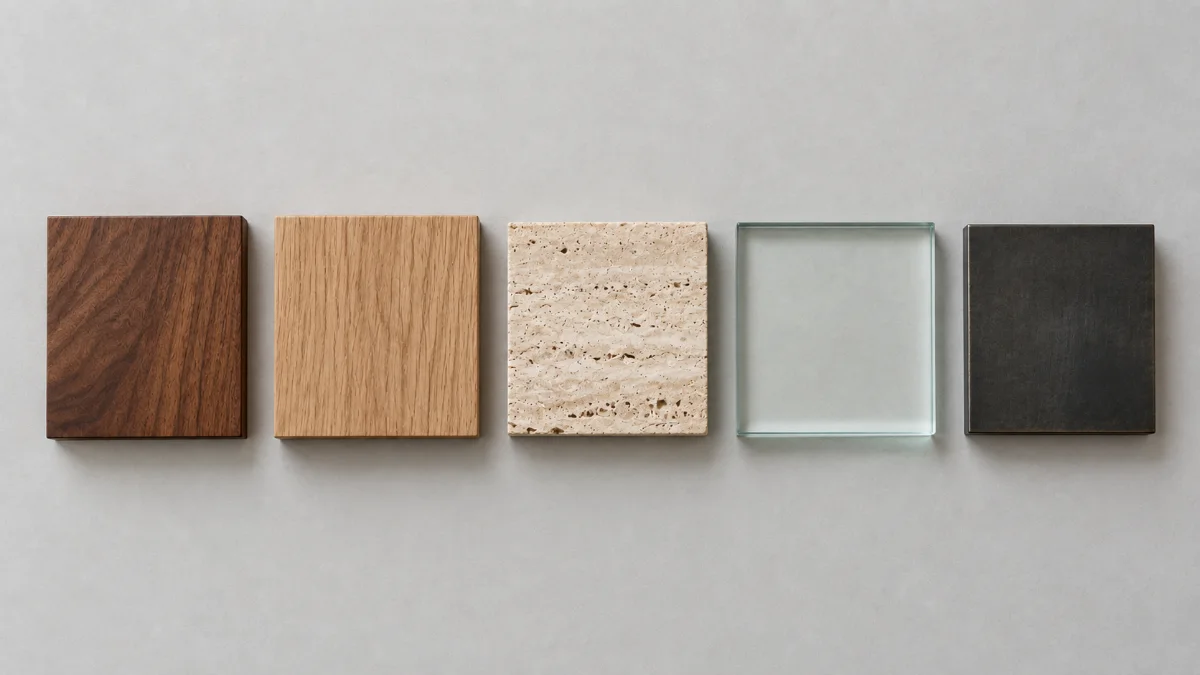
Once you've settled the size and shape, choose a material for how you'll use the table. Wood is versatile. Stone can need more care, depending on the type. Glass makes the table look lighter.
Wood
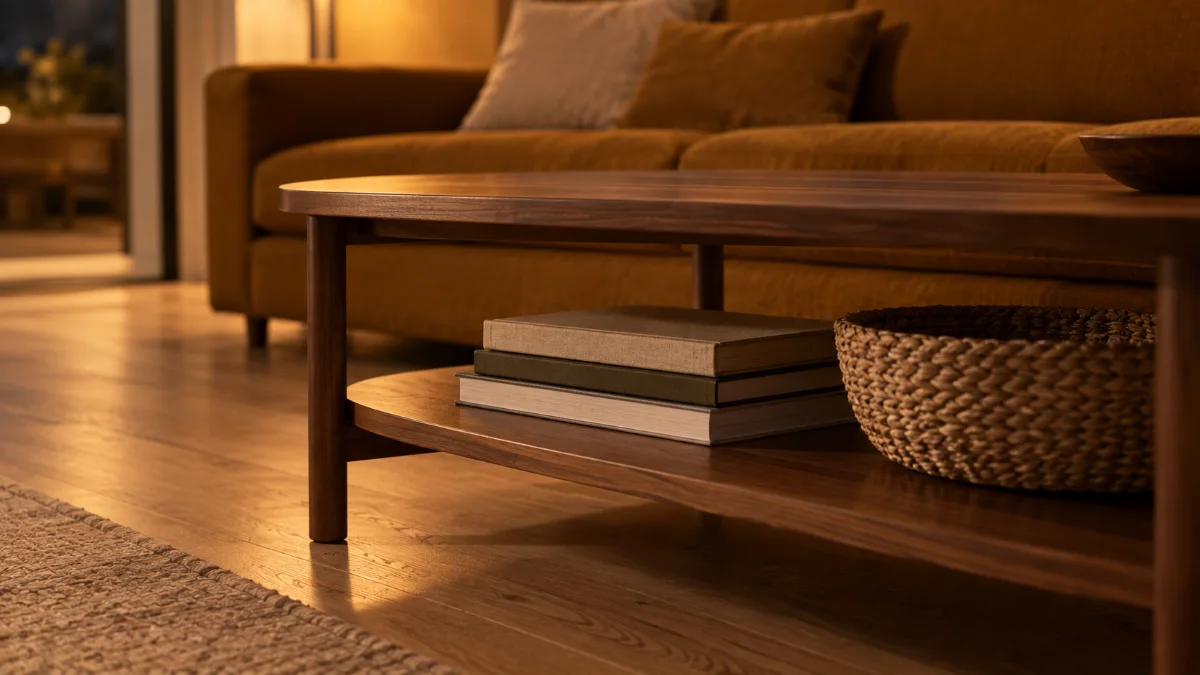
Wood feels warm and suits most rooms. Some solid-wood tops can be sanded and refinished if they get scratched. Wood also reacts to changes in humidity, so the way a table is built and finished matters in damp homes.
Wood veneer over MDF is common in lower-priced tables. MDF is a board made from pressed wood fibers. It can swell at the edges if water sits on it. Our guide to furniture for a humid climate covers this in detail.
Stone
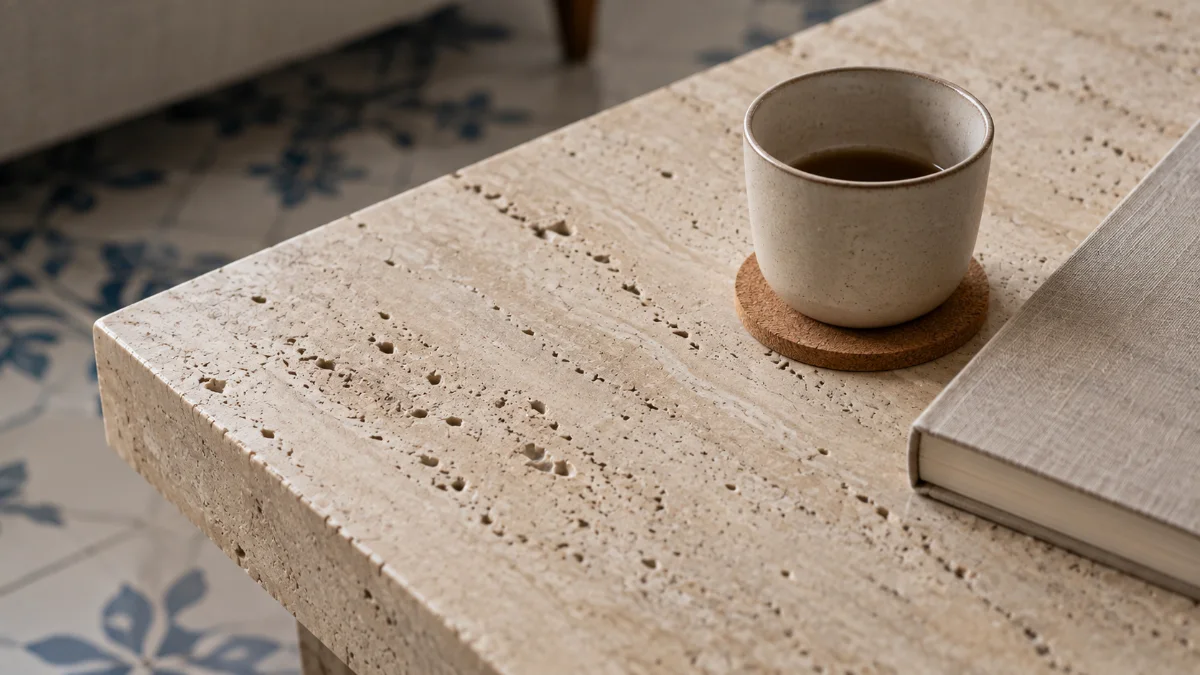
Stone makes a coffee table look solid and heavy. It can pair well with soft fabrics like linen and bouclé, a fabric with a soft, looped texture. Our modern cozy living room ideas cover mixing textures like these.
Before you buy, check what kind of stone it is. The Natural Stone Institute explains that calcareous stone, which is mostly calcium carbonate, is sensitive to acids. Siliceous stone resists most acids found in a kitchen. Marble, travertine and limestone are calcareous stones, and granite is siliceous. So coffee, juice and citrus can leave dull marks on marble or travertine. These marks are called etching. Sealing makes stone more stain-resistant, but not stain-proof, so coasters and trays are worth using. Our travertine coffee table guide covers sealing and care for that stone.
Glass
Glass makes a table look lighter because you can see the floor through it. That can help in small rooms. Glass shows fingerprints, dust and water marks quickly, so expect to wipe it often.
Check that the top is tempered glass. The National Glass Association describes it as a general rule of thumb that fully tempered glass has roughly four times the breakage strength of ordinary annealed glass. If it does break, it breaks into small pieces rather than large, sharp shards.
Metal
Metal usually appears as a base or frame. Powder-coated steel is practical and slim. Brass slowly darkens over time.
| Material | Good for | Watch out for |
|---|---|---|
| Solid wood | Daily use, families, warm rooms | Moves with humidity, and the finish affects water resistance |
| Wood veneer / MDF | Lower budgets, consistent look | Edges can swell if water sits on them |
| Marble, travertine, limestone | Strong visual centerpiece | Acid etching, and heavy |
| Granite, engineered stone | Harder-wearing stone look | Heavy, so check care instructions |
| Tempered glass | Small rooms, light look | Fingerprints, so check the glass type |
| Metal | Slim bases and frames | Can feel hard, and brass tarnishes |
8. Match the Table to How You Use It
A coffee table does different jobs in different homes. In one, it holds a vase and two books. In another, it's where dinner is eaten, homework gets done and the dog rests its chin.
So think about the job first. If you eat from the sofa, a lift-top table brings the surface up toward you. If the living room is also a playroom, round or oval shapes avoid sharp table corners. That can be useful around young children. Wood or engineered stone also tends to cope with spills better than marble. Engineered stone is made from crushed stone bound with resin.
If remotes and chargers pile up, a lower shelf or drawers give them somewhere to go. And if the table mostly holds books and a vase, you can choose almost purely for looks, delicate materials included.
9. Mistakes to Avoid When Buying a Coffee Table Online
Many coffee table regrets come from details that were in the listing all along. Before you order a coffee table online, check these.
- All three dimensions. Check the length, depth and height, not just the photo.
- Weight and delivery. Stone and solid-wood tables can be very heavy. Think about walk-up stairs in a Brooklyn brownstone or a London apartment. Condo buildings may also have rules on freight elevators and move-in times.
- Glass type. Look for "tempered" or "toughened" glass in the description.
- Useful search terms. Try "oval coffee table", "lift-top coffee table", "nesting coffee tables", "storage ottoman coffee table" or "tempered glass coffee table". These narrow the results faster than browsing by style.
Final Thoughts
A coffee table is rarely the most important piece in a living room. But it's often the one you use most, and getting the size right tends to matter more than the material.
Start with one small step. Measure your sofa's length and seat height, and save both numbers in your phone. Keep them open while you browse. They'll help you rule out the wrong tables before you fall for one.