
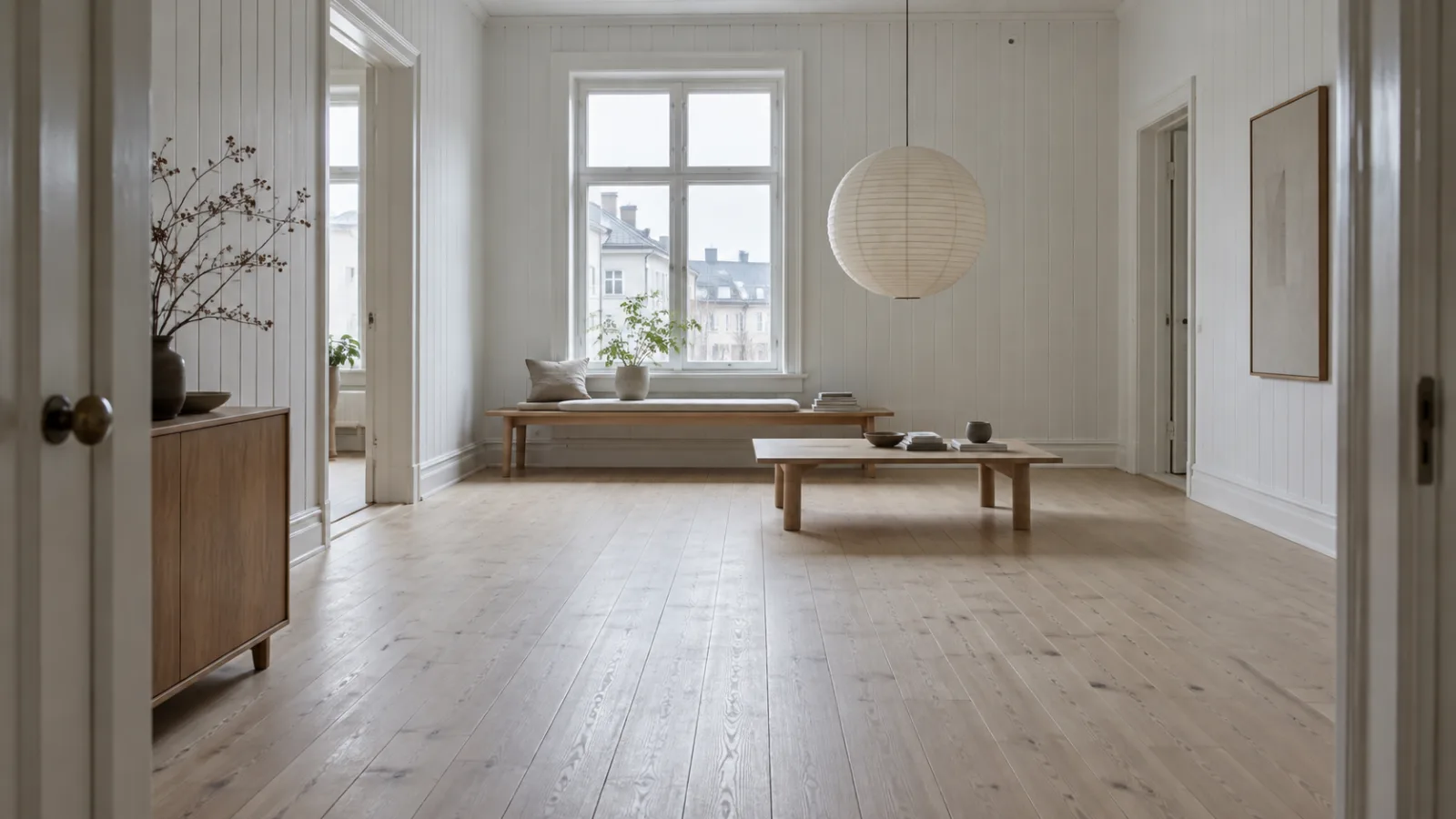
What is Japandi style? It's a way of decorating that mixes the calm, simple look of Japanese homes with the warmth and comfort of Scandinavian ones. Think natural wood, soft colors, simple furniture and more empty space than most rooms have. The name is just the two words joined together, Japanese plus Scandi.
The trouble is that the word gets used for almost anything. Search online and you'll see lots of beige rooms with a paper lamp and dried grass. Many are just neutral rooms. Once you know where the style comes from and how it differs from Scandinavian and minimalist design, it's much easier to tell them apart.
For the short version, read the definition in section 1 and the comparison table in section 7.
In this article
- 1. What Is Japandi Style?
- 2. Where Japandi Style Comes From
- 3. Key Elements of Japandi Style
- 4. The Japandi Color Palette
- 5. Japandi vs Scandinavian: The Main Differences
- 6. Japandi vs Minimalist Design
- 7. Japandi, Scandinavian and Minimalist Side by Side
- 8. What Makes a Room Feel Japandi, Not Just Neutral
- 9. Japandi Interior Design in Warm and Cold Climates
- 10. Is Japandi Style Still a Trend?
- Final Thoughts
- Frequently Asked Questions
1. What Is Japandi Style?
Japandi style is a blend of Japanese and Scandinavian interior design. It uses natural materials, soft muted colors, simple useful furniture and empty space left on purpose. The result can feel calm without feeling cold.
The Japanese side brings simplicity, a love of natural flaws, and the idea that empty space has value of its own. The Scandinavian side brings comfort and furniture made to be used every day, not just looked at.
The two sides also balance each other. Scandinavian warmth stops the room from feeling bare and cold. Japanese simplicity stops it from filling up with throws and candles. In short, keep what's useful, choose it with care, and give it room.
2. Where Japandi Style Comes From
Japandi isn't an ancient tradition or a design movement with a start date. It's a modern name for an overlap designers noticed long ago.
On the Japanese side, two old ideas come up often. Wabi-sabi is a way of seeing beauty in things that are simple, worn or a little imperfect. Ma roughly means the space or pause between things. In a room, that empty space counts as part of the design, not as leftover space.
A third idea came later. In 1925, the philosopher Yanagi Sōetsu and the potters Kawai Kanjirō and Hamada Shōji came up with the word mingei. It means folk crafts, or crafts for ordinary people (Japan Folk Crafts Museum). The mingei movement praised everyday objects made by unknown craftspeople.
Scandinavian design grew out of long winters and modest homes. Designers believed ordinary families should be able to own well-made furniture. Comfort mattered as much as looks. Many Americans and Canadians first saw this style through an exhibition called Design in Scandinavia. It was shown at the Brooklyn Museum in the spring of 1954 and then toured museums in the US and Canada for about three years (Brooklyn Museum).
Both traditions value good craft, natural materials and objects made for daily use. The word "Japandi" is much newer. Google searches for it jumped in the winter of 2020, when many people were redecorating during lockdowns (CNN).
3. Key Elements of Japandi Style
Most Japandi rooms share five things. A room doesn't need all of them, but it needs some.
Natural materials you can see and feel
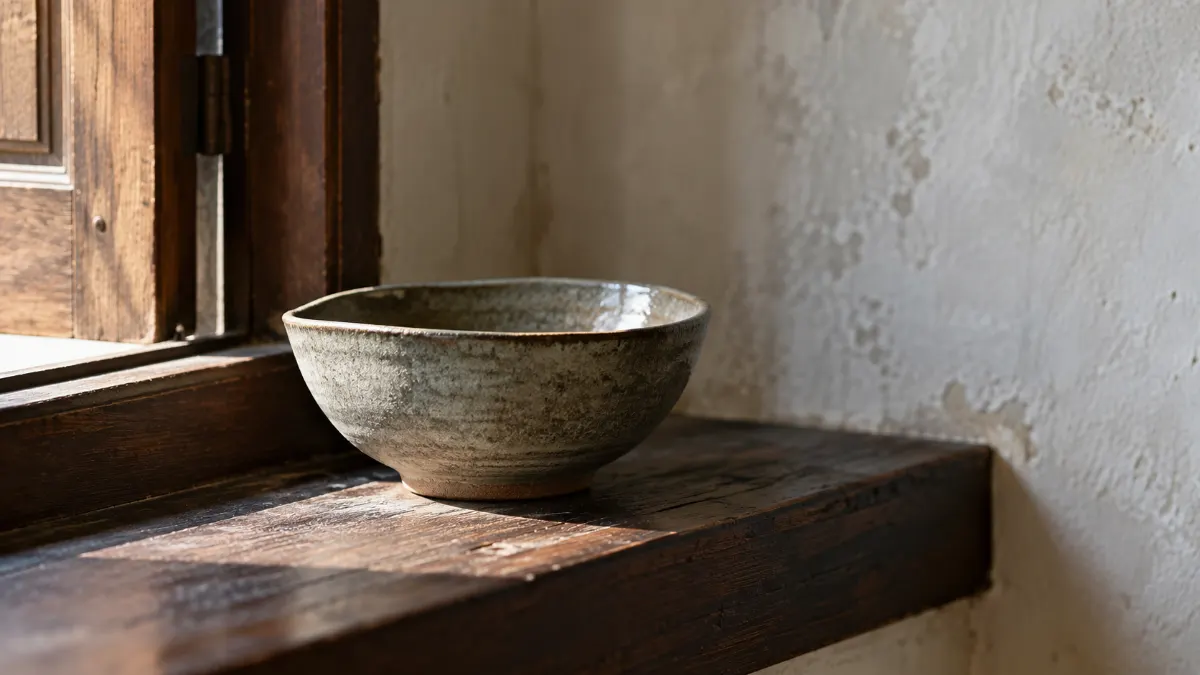
Wood comes first. Pale ash, oak, birch and pine are common in Scandinavian homes. Japanese-style rooms may use cedar, cypress or wood stained a darker color. Around the wood, you'll often find linen, cotton, wool, paper, rattan, bamboo, stone and clay.
Texture matters most. You want to see the wood grain, the small bumps in linen and the weave of a rattan seat. The colors in a Japandi room are quiet, so texture is what stops the room from looking flat.
Simple, low Japandi furniture
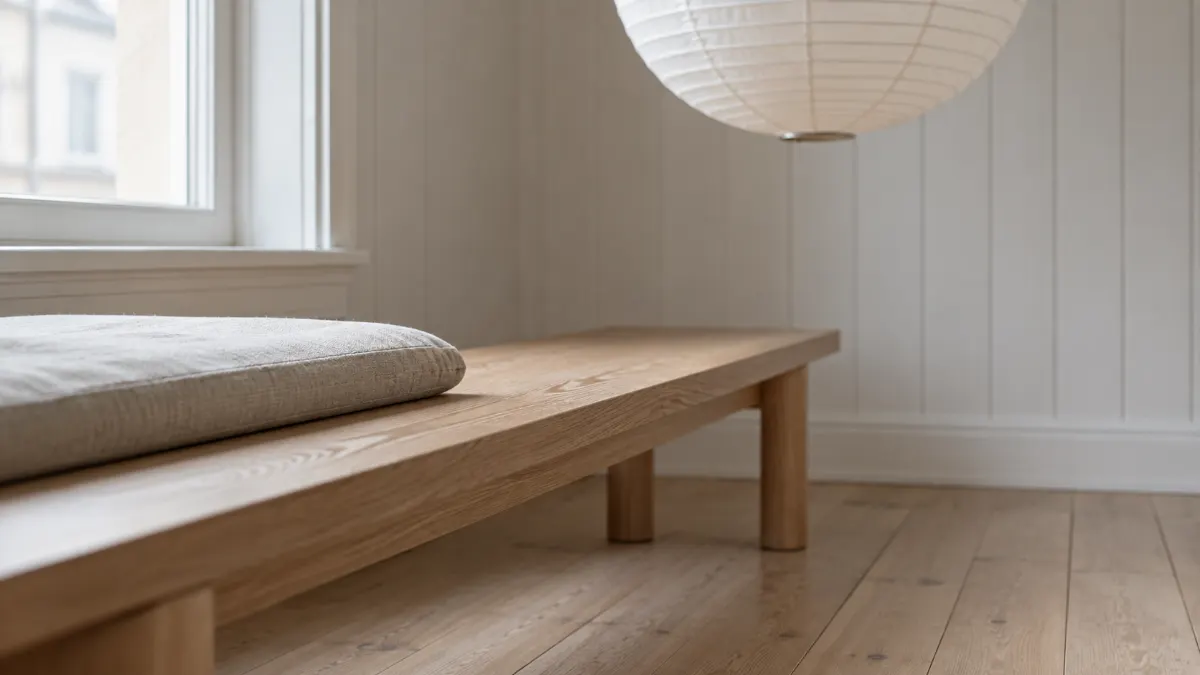
Japandi furniture has simple shapes and very little decoration. The Japanese influence shows in pieces that sit low to the ground. Think benches, platform beds, floor cushions and low coffee tables. The Scandinavian influence shows in tapered legs and chairs shaped to fit the body. You'll also often see the joints where the wood pieces meet.
A quick test for any piece is whether you can say what it's for in one short sentence. If the answer is "it looks interesting," it probably belongs to another style. For furniture ideas room by room, see the Japandi living room guide and our Japandi bedroom ideas.
Empty space
Empty space doesn't mean owning almost nothing. It means leaving some floor, wall and shelf space bare on purpose. That way, the pieces you keep can stand out. One good cabinet next to a bare wall often looks better than the same wall covered in frames.
The most common mistake is filling a shelf or table just because it's empty.
Natural flaws
Japandi rooms welcome knots in the wood, an uneven glaze on a bowl and linen that never lies quite flat. These aren't problems to hide. They're part of what makes natural materials look real.
Craft over decoration
The style favors fewer objects. Each one is kept because it's useful, long-lasting or meaningful to you. That doesn't mean expensive. A plain wooden stool with good proportions can look more Japandi than a costly designer piece that's all show.
4. The Japandi Color Palette
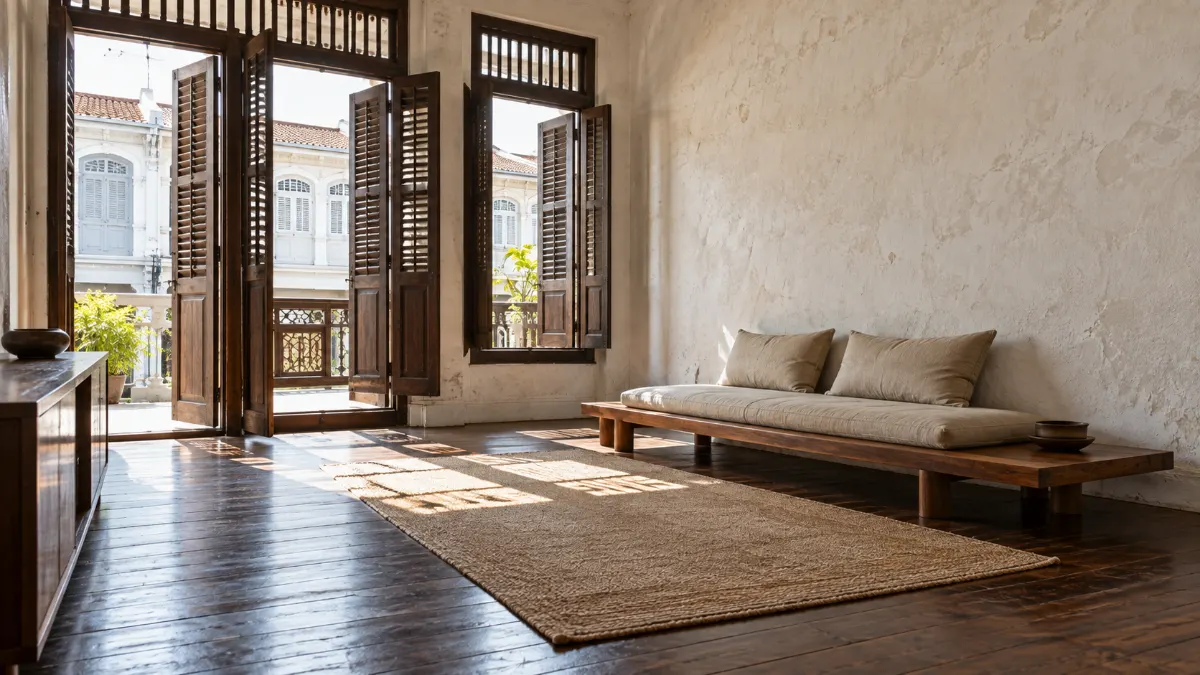
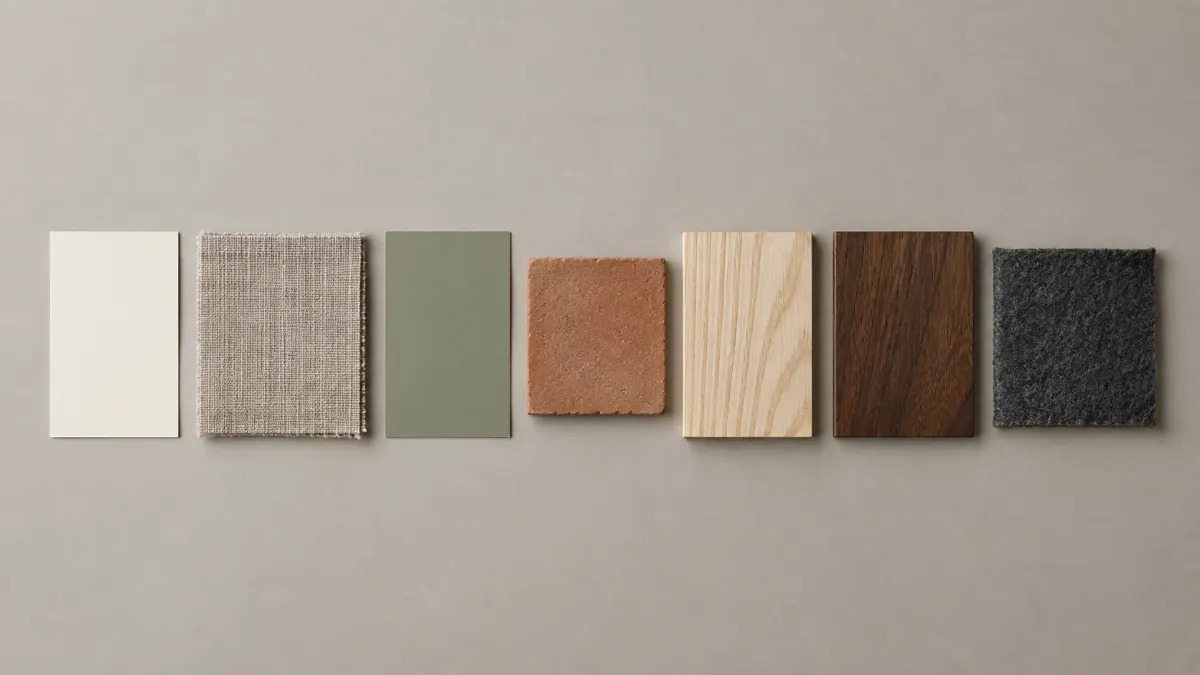
The Japandi color palette is made of warm, soft neutrals, natural wood tones and one or two earthy accent colors. Even the greens and browns look a little faded.
| Color family | Where it usually goes |
|---|---|
| Warm white and cream | Walls, ceilings, large fabrics |
| Beige, taupe and greige (gray-beige) | Sofas, rugs, curtains |
| Pale wood (ash, oak, birch) | Furniture, floors, shelves |
| Mid to dark wood (walnut, smoked oak, stained cedar) | Accent pieces, contrast |
| Muted green (sage, moss, olive) | Cushions, ceramics, plants |
| Clay and terracotta | Pots, small fabrics |
| Charcoal and black | Lamp bases, frames, thin dark lines |
There's no official Japandi color chart, so treat this as a guide.
Wood counts as part of the palette too. A room with white walls and pale ash furniture leans Scandinavian. The same white walls with dark walnut furniture lean Japanese.
A simple way to start is one soft neutral, one main wood and one or two muted accents. If you want help with undertones and testing paint, see the living room color schemes guide.
5. Japandi vs Scandinavian: The Main Differences
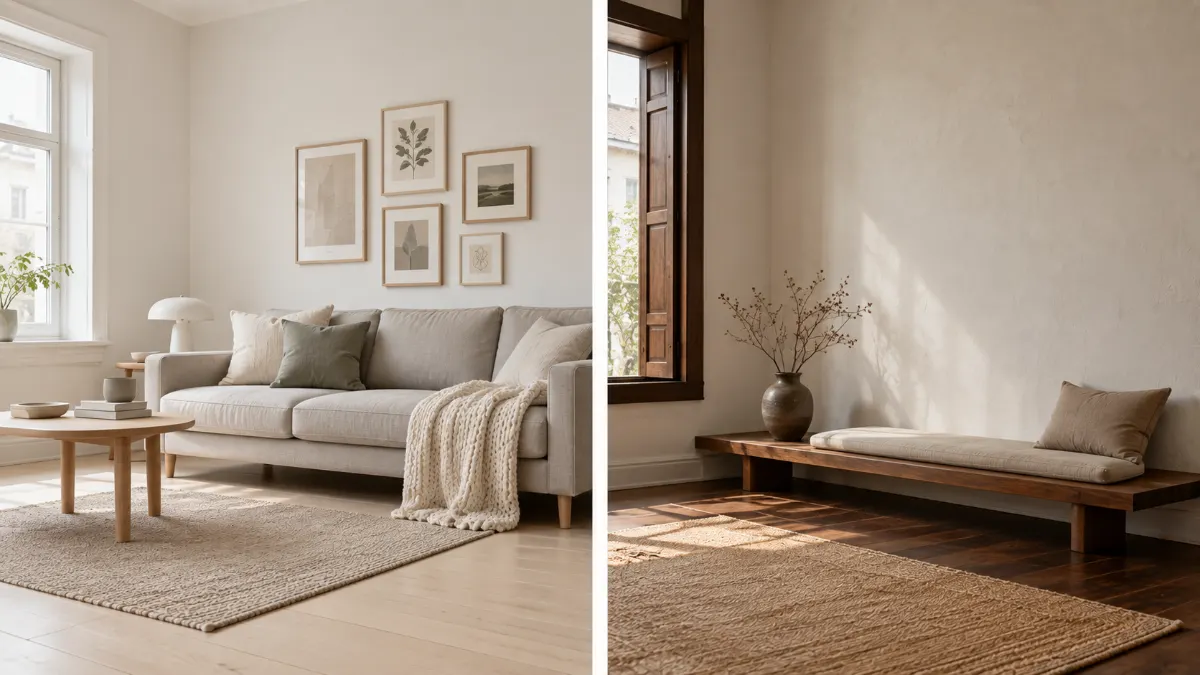
Japandi and Scandinavian design have a lot in common. In general, Japandi rooms are quieter, lower, darker and emptier. Scandinavian rooms tend to be brighter, softer and more obviously cozy.
Daylight explains a lot of this. Winter days in Scandinavia are short, so homes there are often designed to make the most of the light. That's why so many have white walls and pale floors. Japandi is happier using darker wood and charcoal for contrast.
Height is another clue. Most Scandinavian furniture sits at standard heights. Japandi borrows lower seats and tables from Japan.
Decoration is different too. A Scandinavian room often layers cushions, throws, candles and a wall of framed pictures. This is part of the Danish idea of hygge, a cozy, comfortable feeling at home. A Japandi room usually keeps fewer things out at once.
The biggest difference is the way each style thinks. Scandinavian design asks how a room can be useful, comfortable and nice to look at. Japandi asks one more question. What can you take away so the important things stand out?
6. Japandi vs Minimalist Design
Japandi and minimalism aren't the same thing. Minimalism is a broad way of removing things you don't need. Japandi is one specific look. It combines that simplicity with warm, natural materials.
A minimalist room can be all white cabinets, polished concrete and hidden storage, with almost no texture. It just wouldn't be Japandi.
It works the other way too. A Japandi room can hold more objects than a strict minimalist would allow. That's fine as long as each one is useful, made from natural materials and has some space around it.
Japandi often feels warmer. The calm comes from keeping fewer things, and the warmth comes from wood grain, linen, wool and handmade ceramics. If clearing a room is your main goal, the warm minimalist living room guide is a good place to start. If the room already feels too bare, our cozy minimalist living room guide covers adding comfort back.
8. What Makes a Room Feel Japandi, Not Just Neutral
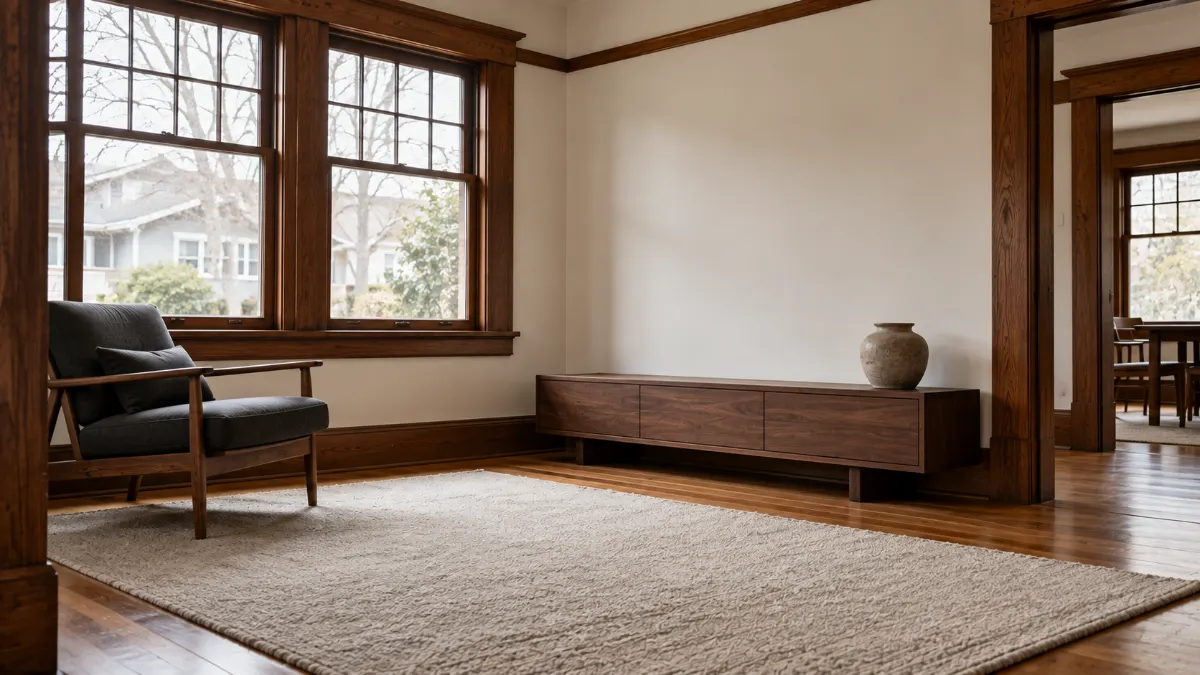
A beige sofa, an oak coffee table and a paper lamp don't make a room Japandi on their own.
Usually, one of three things is missing. The first is texture. If every surface is smooth and the same color, the room looks flat. The second is contrast. One darker piece gives your eye somewhere to rest. That could be a charcoal lamp base, a walnut stool or a black window frame. The third is space. Japandi pieces look chosen because other things aren't crowding them.
Here's a simple test. Take a photo of the room and switch it to black and white. If it turns into one gray blur, add some texture or one darker piece. If it looks busy, clear a surface.
The mistake to avoid is buying "Japandi" products and keeping everything else. A new paper lamp in a cluttered room is still a cluttered room.
9. Japandi Interior Design in Warm and Cold Climates
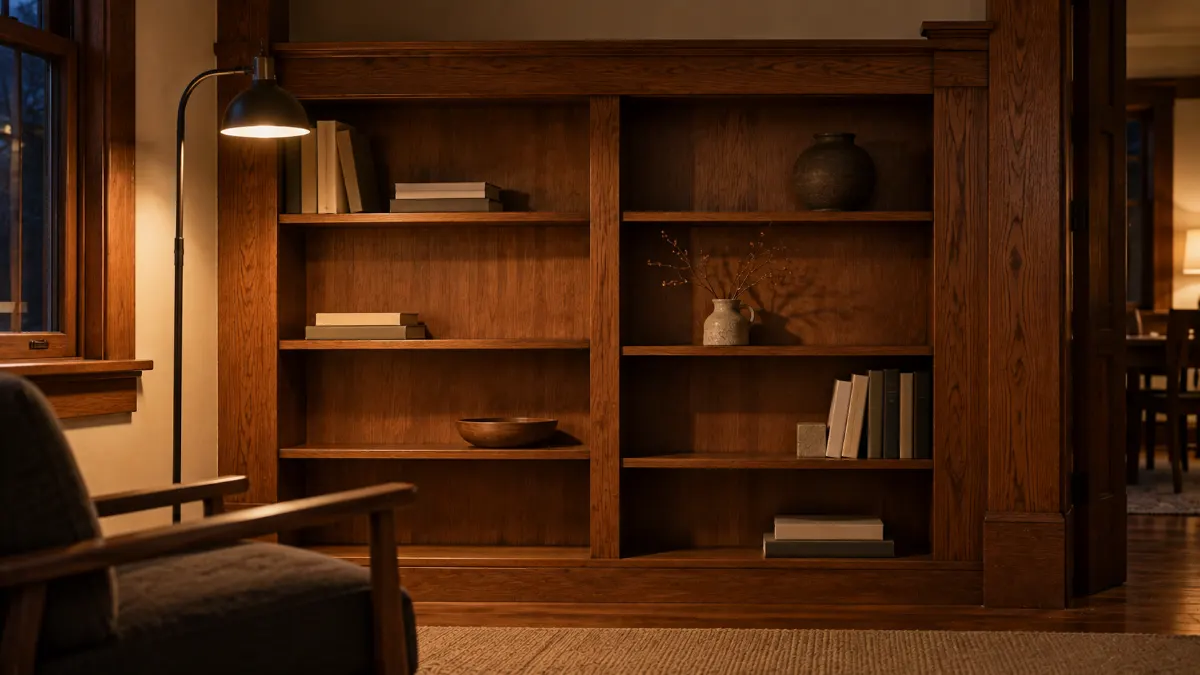
Japandi works in many climates. The materials just change with the weather.
In hot, humid places, like Miami condos or houses on the US Gulf Coast, lighter materials are easier to live with. Linen, cotton, rattan and bamboo stay more comfortable than heavy wool. Furniture raised on legs lets air move underneath, which can help prevent mold. Teak also handles damp air better than many woods. The guide to furniture for a humid climate covers wood and fabric choices in more detail.
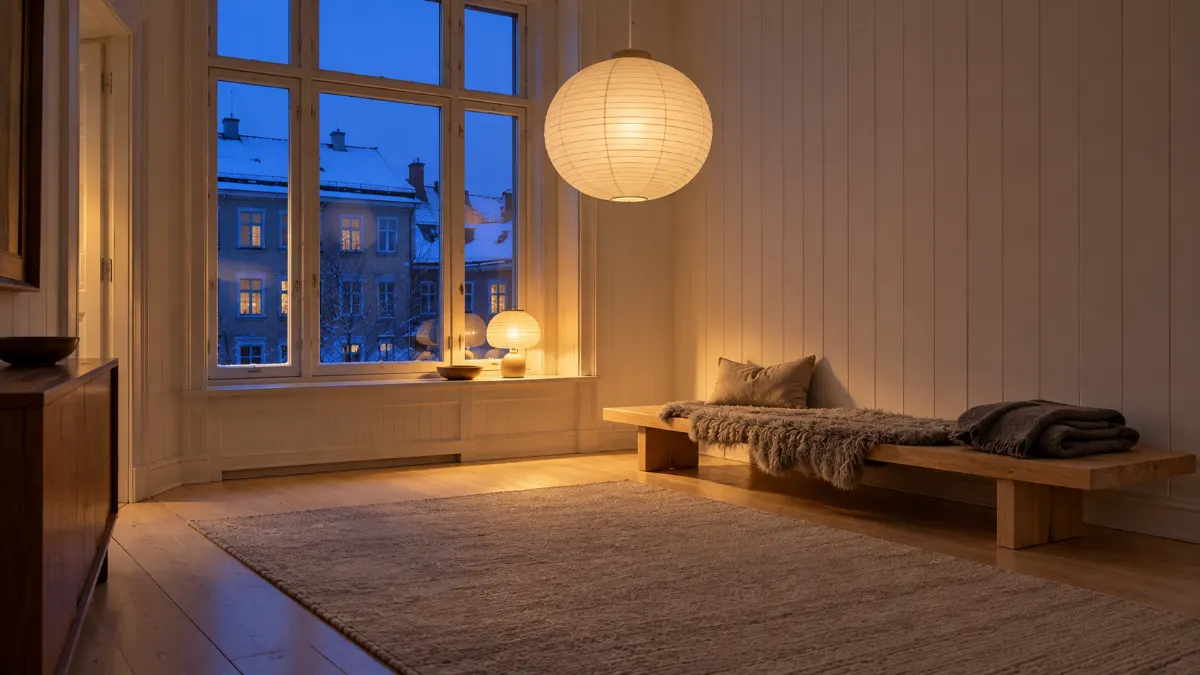
In cold places like Oslo, Toronto or Minneapolis, the Scandinavian side often takes the lead. You might add a wool throw, a sheepskin on a bench and a few more lamps for long winter evenings. For lamp types and bulb colors, see the living room lighting guide.
10. Is Japandi Style Still a Trend?
People often call Japandi a trend, and the name itself may fade one day. But the ideas behind it are much older. Natural materials, useful furniture and tidy rooms have stayed popular for decades because they work in ordinary homes.
What tends to date faster is the shopping-list version of the style. That means all-beige rooms with no contrast, mass-produced "wabi-sabi" decor and new furniture made to look old and worn. To see what's showing up in new collections this year, read Living Room Trends 2027.
Final Thoughts
Japandi is less about buying certain products and more about how you edit a room. Keep fewer things, choose better materials, and leave enough space for each piece to matter.
Start with one surface in your living room, like a shelf or a side table. Clear it completely. Put back only what's useful or made from natural materials. Then leave the rest empty for a week.