
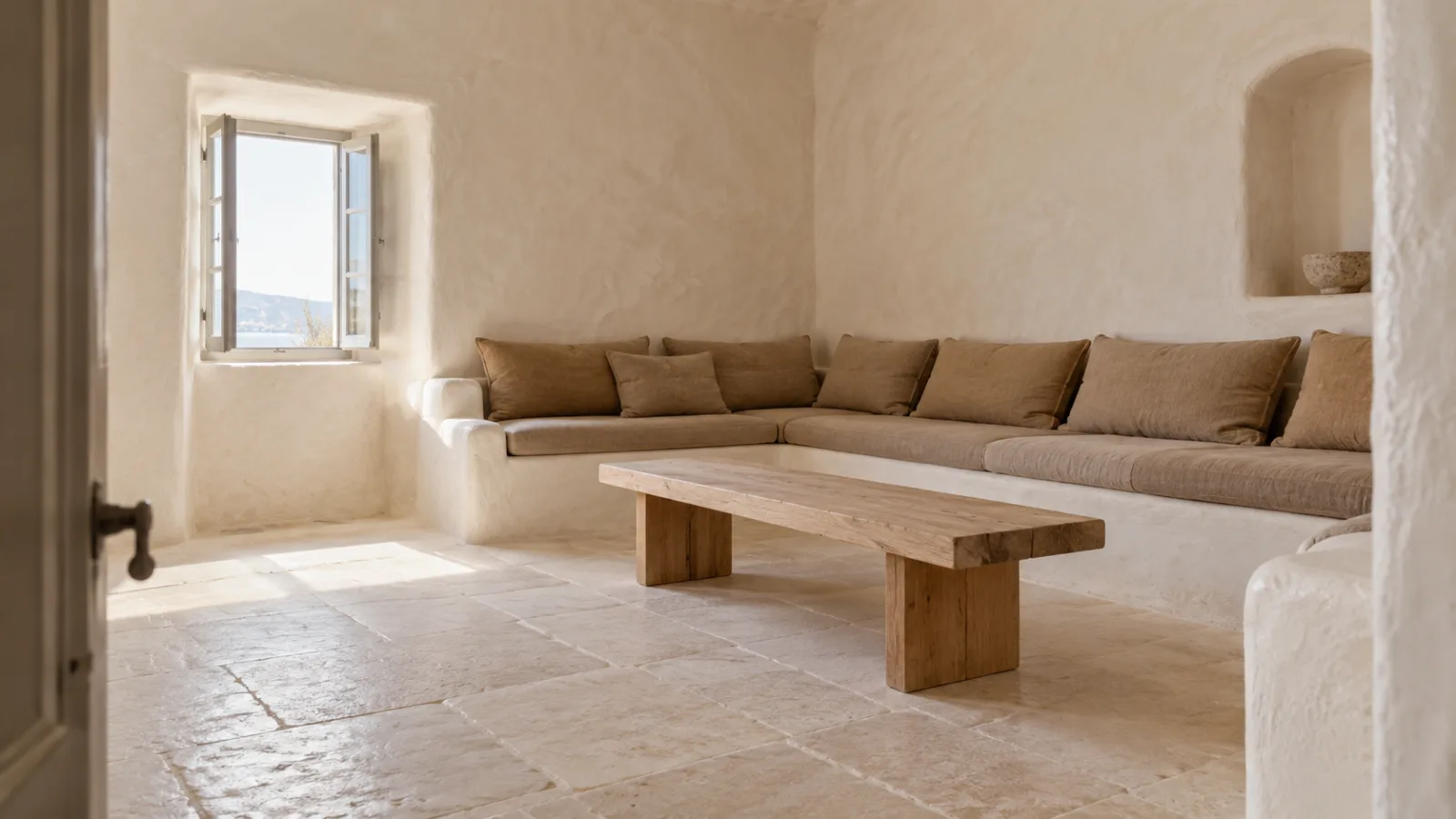
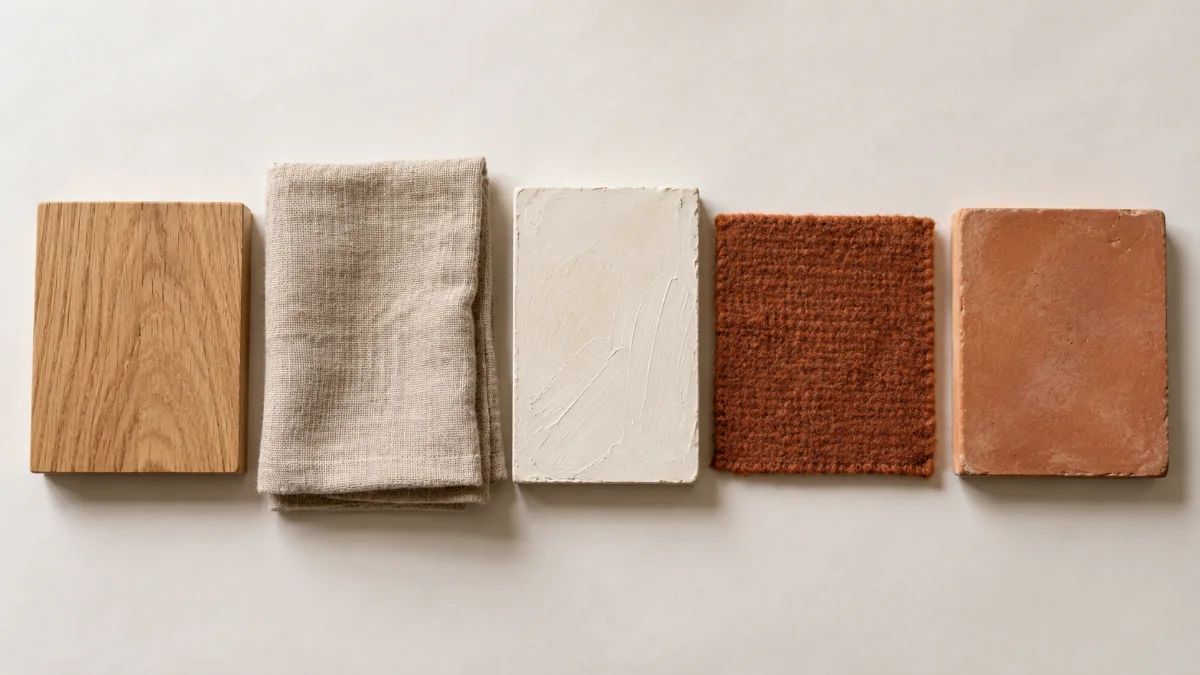
A warm minimalist living room has fewer things in it, but it still feels comfortable. The warmth comes from the materials, like wood, linen, wool and plaster. It also comes from keeping only the things you use or really like.
Most people start the wrong way. They buy a new linen sofa but keep everything else, so the room still feels busy. Warm minimalism works differently. You keep fewer things, choose better materials, and leave some space empty on purpose.
If you're short on time, read section 1 on how to clear the room and section 8 on how to keep it clear.
In this article
- What Is a Warm Minimalist Living Room?
- 1. Clear Everything Off, Then Put Back Only What Earns Its Place
- 2. Minimalist Living Room Furniture: What to Keep and What to Let Go
- 3. Choose Better Materials, Not More Things
- 4. A Minimalist Living Room With Wood: Pick One Main Tone
- 5. A Limewash Living Room: Let the Walls Add Texture
- 6. Leave Some Space Empty
- 7. Give Everyday Clutter a Closed Home
- 8. Keep the Room Clear: One In, One Out
- 9. Warm Minimalism in a Small Living Room or on a Budget
- Final Thoughts
- Frequently Asked Questions
What Is a Warm Minimalist Living Room?
A warm minimalist living room is a simple, uncluttered room that uses natural materials to feel cozy. It has only a few pieces of furniture and clear surfaces. But instead of glossy white furniture and chrome, it uses wood, linen, wool, stone and plaster.
Warm minimalism is not about buying more decorations. It is about choosing what stays in the room.
The colors usually come from the materials. Think warm white, sand, clay and the brown of oak or walnut. You don't have to use only beige. An olive chair or a rust-colored throw can add some depth. For help picking colors, see our living room color schemes guide.
Warm minimalism is similar to cozy minimalism. Our cozy minimalist living room guide focuses on comfort. This article focuses on clearing the room. It covers what to remove, what to keep, and how to stop clutter from coming back. For ways to warm up any living room, minimalist or not, see our cozy living room ideas.
1. Clear Everything Off, Then Put Back Only What Earns Its Place
Living rooms don't get messy in one day. It happens slowly. A few books stay on the coffee table. A basket appears next to the sofa. A chair becomes the place where you drop your jacket.
So try the opposite. Take everything off the coffee table, the shelves, the console and the windowsills. Put it all in a box in another room. Leave the furniture where it is for now.
Then use the room normally for a few days.
When you need something, bring it back. If you miss a photo, put it back on the shelf. If you keep looking for a book, it should stay within reach. But if a few days pass and you don't think about something at all, it probably doesn't need to come back.
This doesn't mean you can only keep useful things. A handmade bowl or an old wooden stool can stay because you love it. The point is that you choose what stays.
2. Minimalist Living Room Furniture: What to Keep and What to Let Go
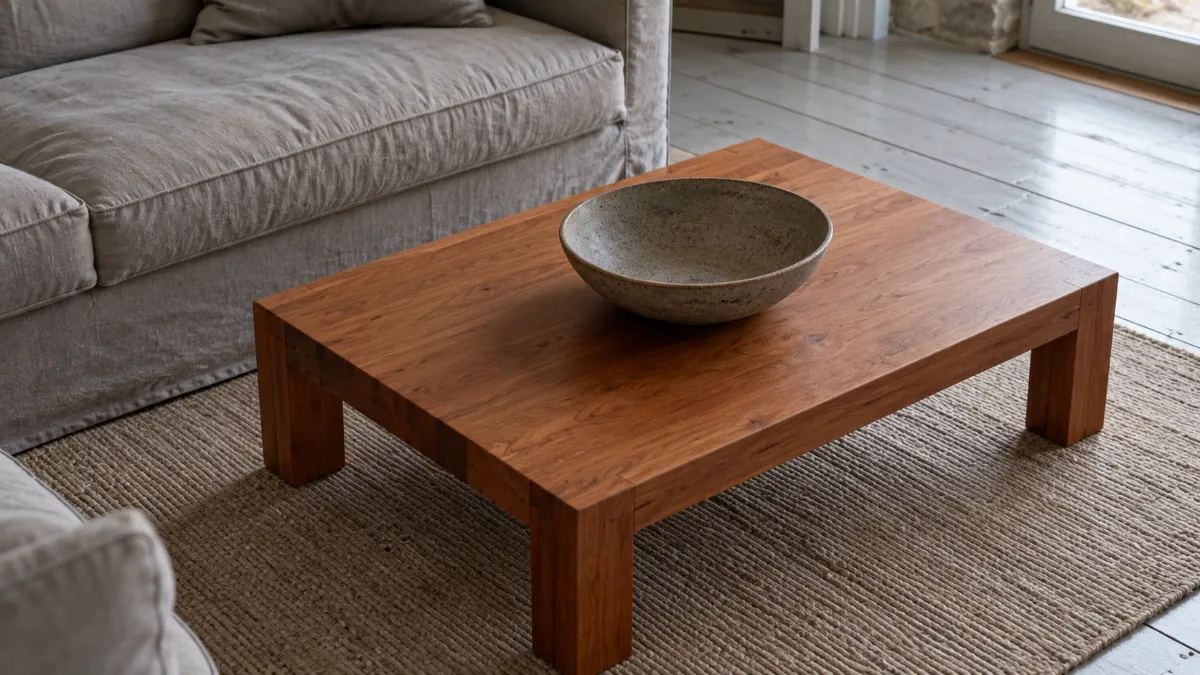
Start with the furniture you use every day. Most living rooms need a sofa, a place to put down a drink, and some storage. Many rooms also have one or two pieces with real character. Most other pieces can go.
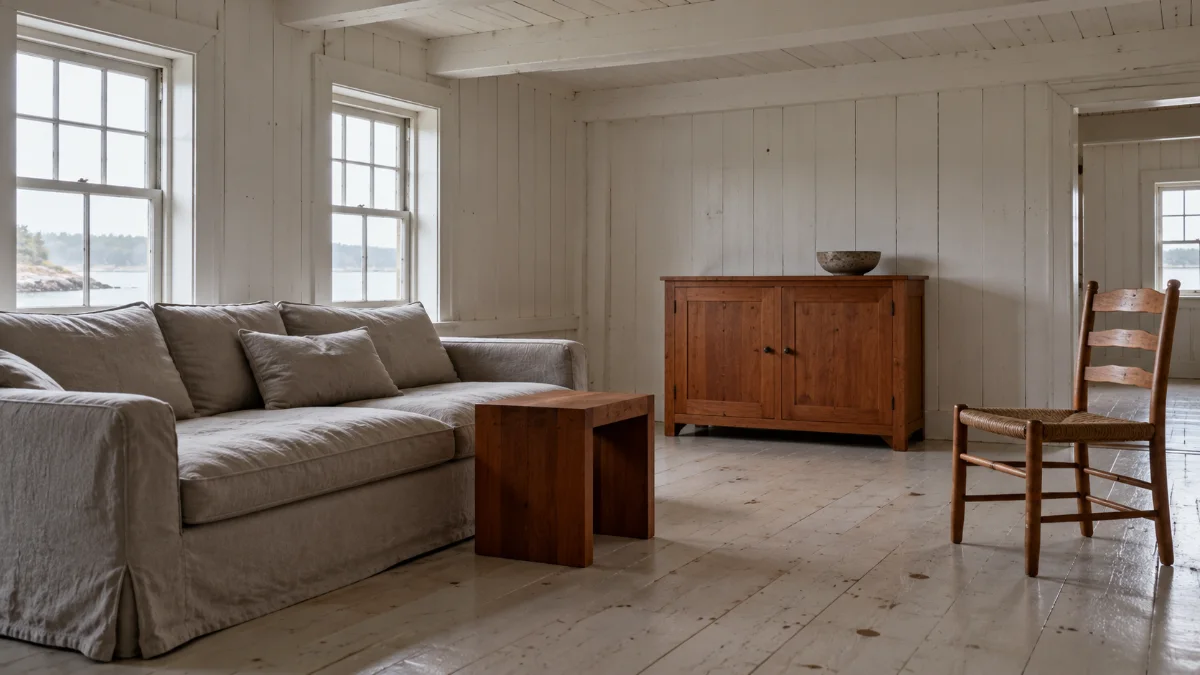
For example, a crowded room might have a sofa, two armchairs nobody uses, three side tables and a pouf. A warm minimalist version might have the sofa, one bench, one side table and a cabinet.
| Piece | Keep it if… | Let it go if… |
|---|---|---|
| Extra armchair | Someone sits in it most weeks | It mostly holds coats or laundry |
| Side tables | Each seat has one table nearby | Two tables sit next to the same seat |
| Console or sideboard | It hides clutter behind doors | It only holds decorations |
| Stools or poufs | You use them when guests come | You keep moving them out of the way |
| Open shelves | They hold books you read | You have to keep rearranging them |
| Coffee table | You put things on it every day | A bench or side table does the same job |
When you remove furniture, you also get more room to walk around. Our furniture layout guide shows how much space to leave between pieces.
3. Choose Better Materials, Not More Things
When a room has only five or six pieces, people notice each one more. A cheap table might go unnoticed in a full room. In an empty room, it stands out.
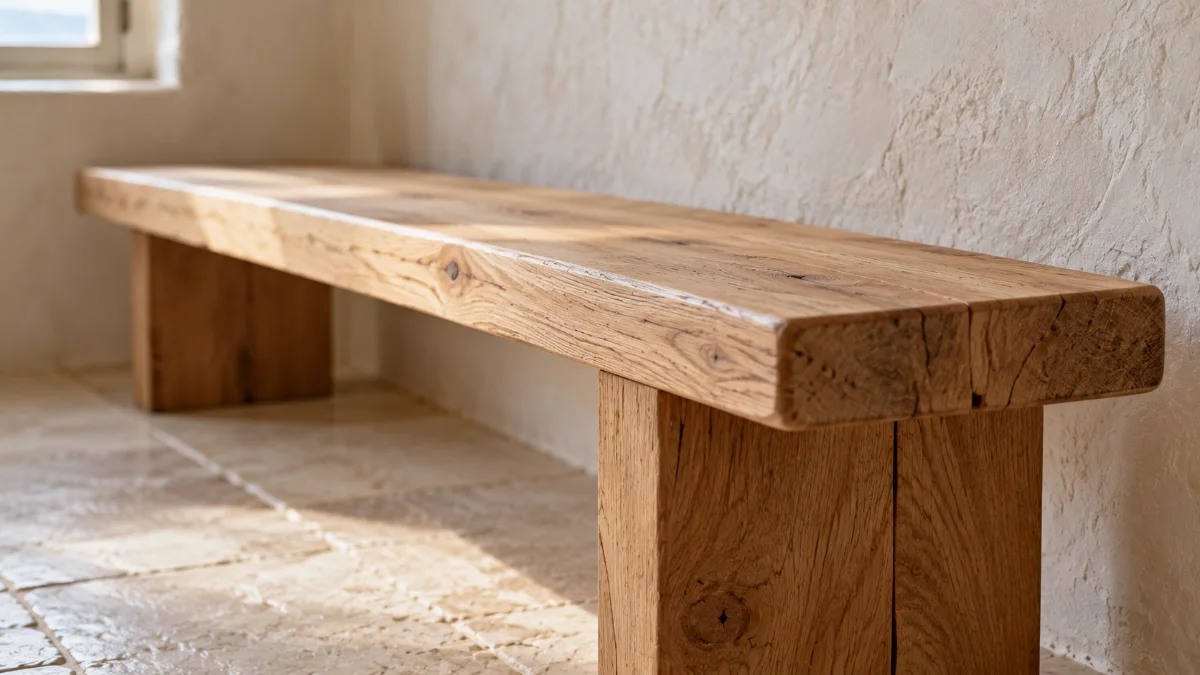
That's why warm minimalism spends money on better materials instead of more pieces. A solid oak bench with visible wood grain can make a room feel finished on its own. You don't need a tray, candles and a stack of books on top of it.
Look for these things when you shop.
- Real wood surfaces. Solid wood or good wood veneer both work. Avoid furniture covered in printed plastic that only looks like wood. Check the edges and the underside.
- Matte or oiled finishes. They show the wood grain, and small scratches are less visible than on shiny finishes.
- Natural fabrics. Linen, cotton and wool feel warmer than shiny synthetic fabrics. Our guide on how to choose a sofa explains which fabrics last longest.
Natural materials change over time. Linen wrinkles and oak can dent. If you have young kids or pets, a performance fabric may be more practical.
You don't need expensive furniture. Just spend more on the two or three biggest pieces and keep the rest simple.
4. A Minimalist Living Room With Wood: Pick One Main Tone
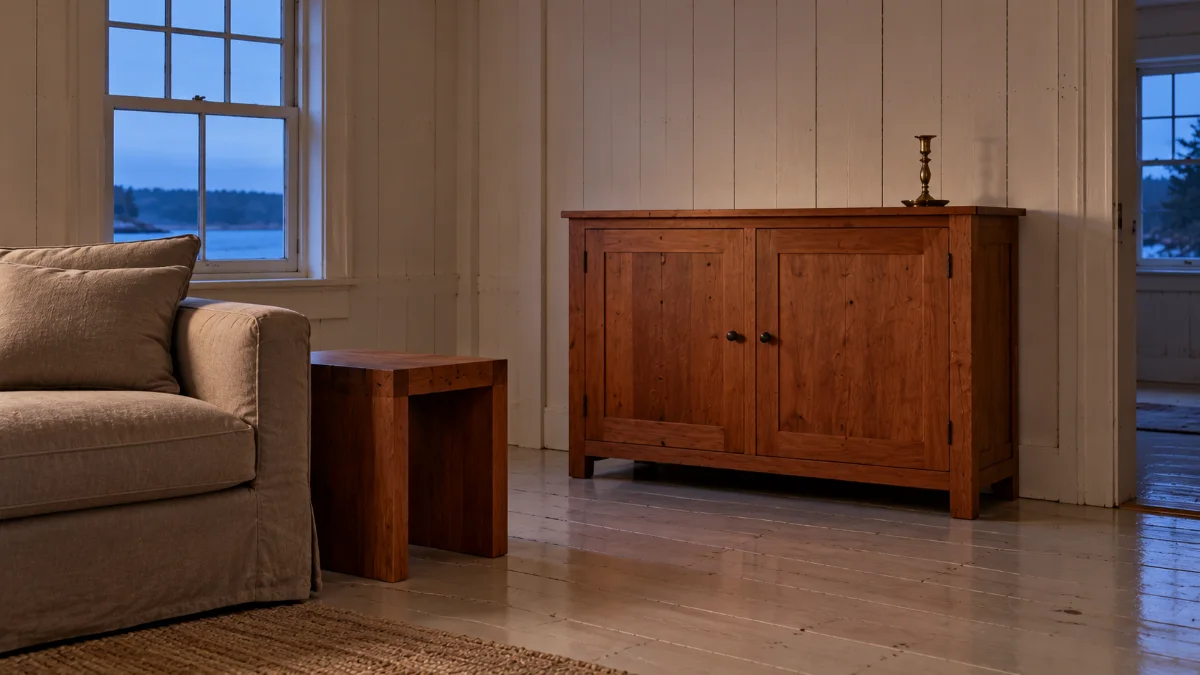
For a minimalist living room with wood, pick one main wood color. Use it for the biggest pieces, like the floor, a cabinet or a bench. Then you can add a second wood color in one or two smaller places.
Wood is an easy way to warm up a simple room. The grain already adds pattern, so you don't need extra decorations. One long wooden bench looks calm. Four small wooden objects in different colors look messy.
The most common mistake is using too many wood colors. Pale ash, orange teak and dark walnut in one small room can look like they don't belong together. Two colors that work well together usually look better. Try to use each one at least twice in the room. Our bedroom ideas with wood furniture explain how to read wood undertones, and the same method works in a living room.
If you live in a hot, humid place, some woods and finishes hold up better than others. Our furniture guide for humid climates explains which ones to choose.
5. A Limewash Living Room: Let the Walls Add Texture
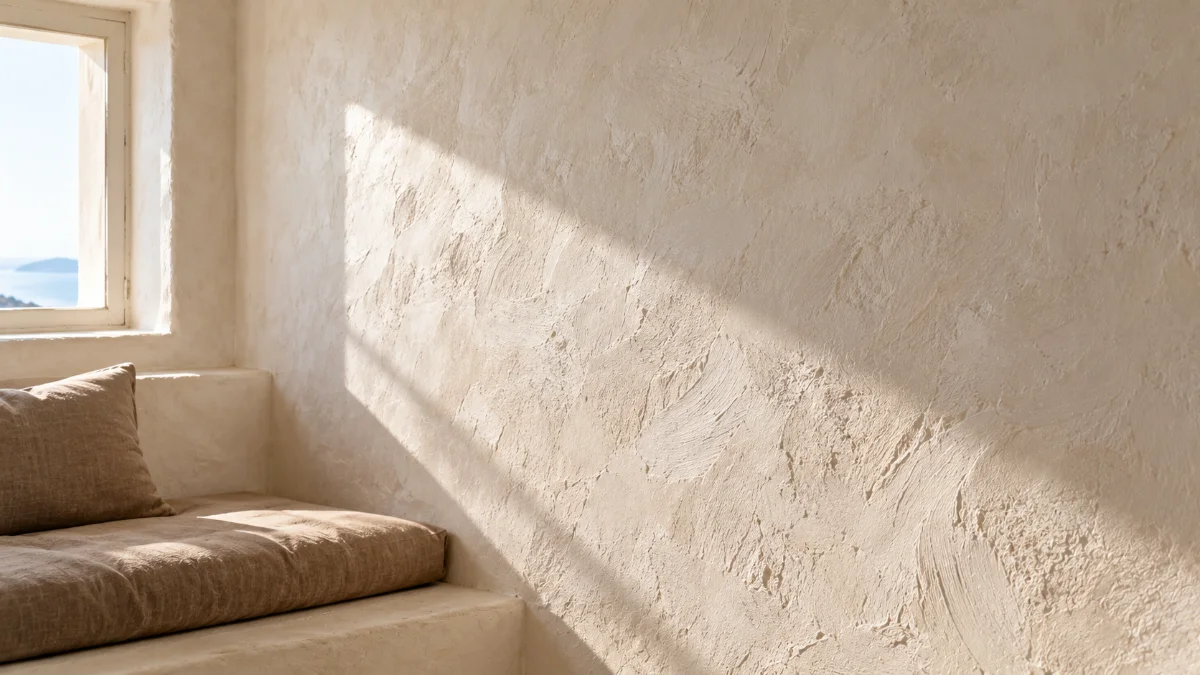
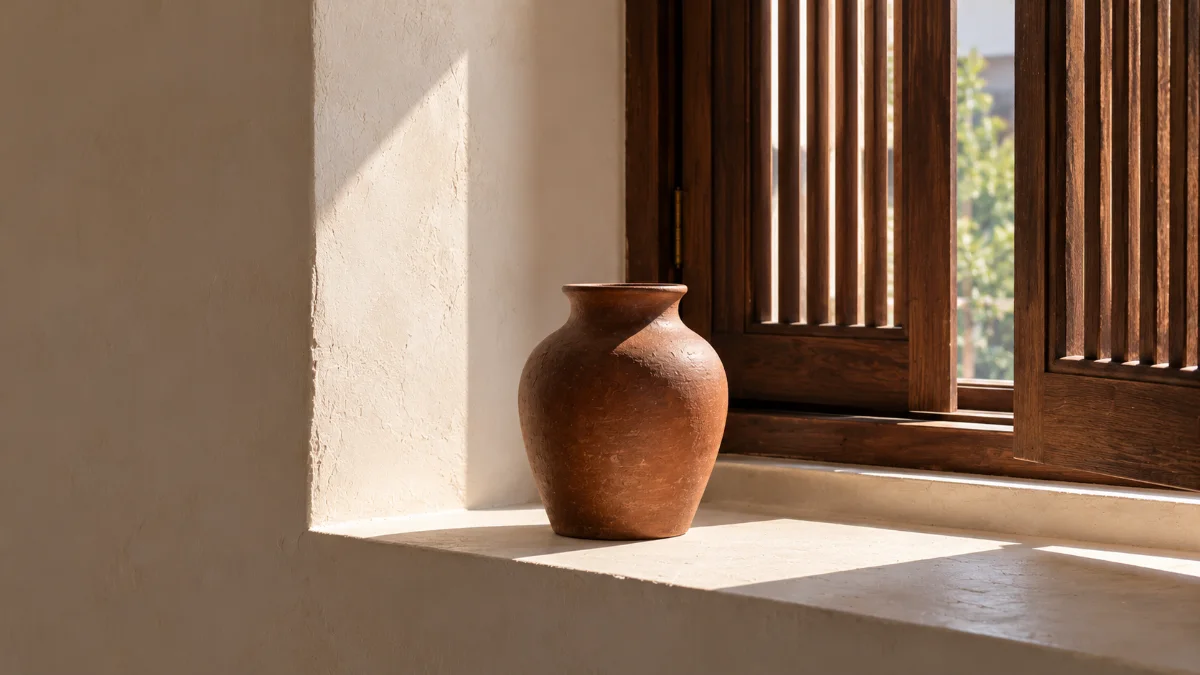
A limewash wall gives a simple room texture without adding art or objects. The surface looks soft and a little cloudy. As the light changes during the day, the wall looks slightly different.
Limewash is a paint made from lime and natural color. You brush it on in thin coats with a wide brush. The brush marks stay visible, and that's part of the look.
Most limewash brands say you need a special primer on painted walls or drywall. For example, James Alexander Limewash suggests one coat of primer and two coats of limewash for most rooms. They also say porous brick, stone and plaster usually don't need primer. Every product is different, so follow the instructions on the one you buy.
Pros
- Soft, matte texture that normal paint can't easily copy
- Small touch-ups blend in, because the finish is uneven anyway
Cons
- It can feel chalky in places people touch often. Some brands sell a sealer for this.
- Painted walls and drywall usually need a special primer
- The color is uneven on purpose, so it's not for people who like a perfectly flat wall
Other options
If limewash doesn't suit your home, clay plaster and lime plaster look similar. But they usually need a professional to apply them. A matte mineral paint in warm white is the easiest option.
You don't need to limewash every wall. One wall is often enough, especially in a small room. Keep the rest of the room simple so the wall can stand out. If you're renting, removable plaster-look wallpaper can create a similar effect without permanently changing the walls.
6. Leave Some Space Empty
Empty space is hard to leave alone. You see an empty corner and think it needs a plant. Then a basket. Then a small stool. A week later, the corner is full again.
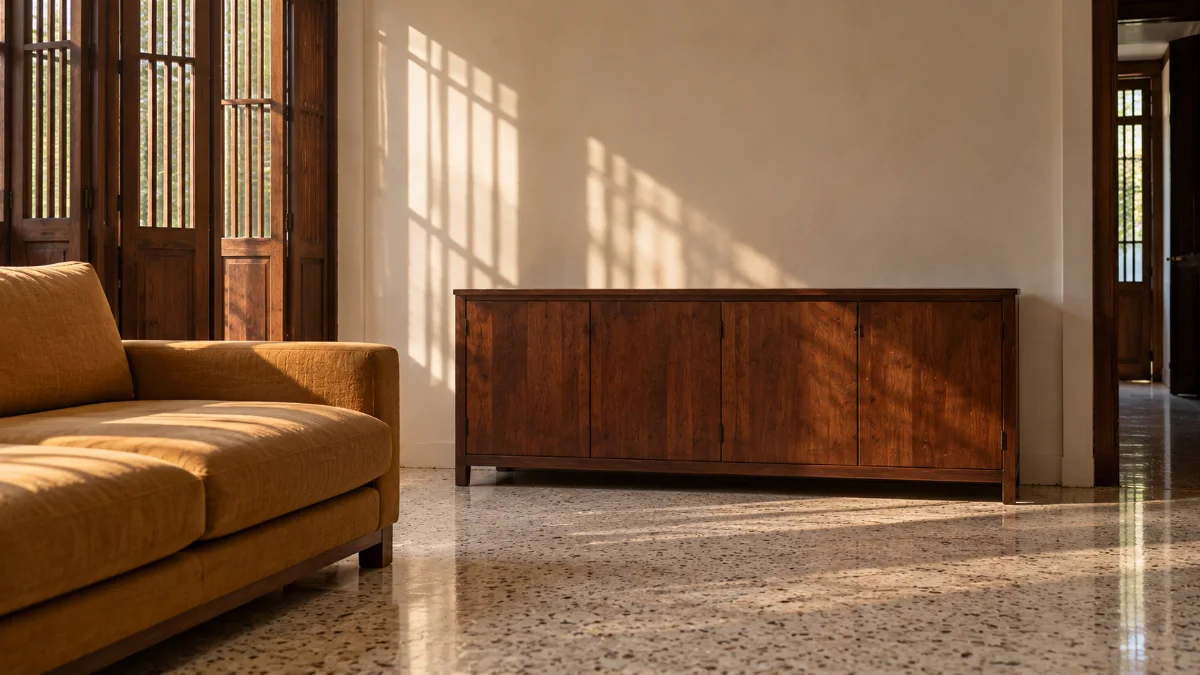
In a minimalist room, empty space has a purpose. It helps your best pieces stand out. A nice wooden cabinet looks special when there's space around it. Put baskets and plants next to it, and people stop noticing it.
Size matters here. A few large pieces, like a full-size sofa or a long bench, still look good with lots of open space around them. A room with only small pieces can look half-empty. So if your room feels too bare, add one bigger piece instead of several small ones.
Try leaving these spaces empty on purpose.
- One wall with nothing on it
- At least one corner
- Most of the coffee table
- Part of each shelf
7. Give Everyday Clutter a Closed Home
Minimalist homes will still get messy if there are remotes on the sofa, chargers on the floor, mail on the table, and toys everywhere.
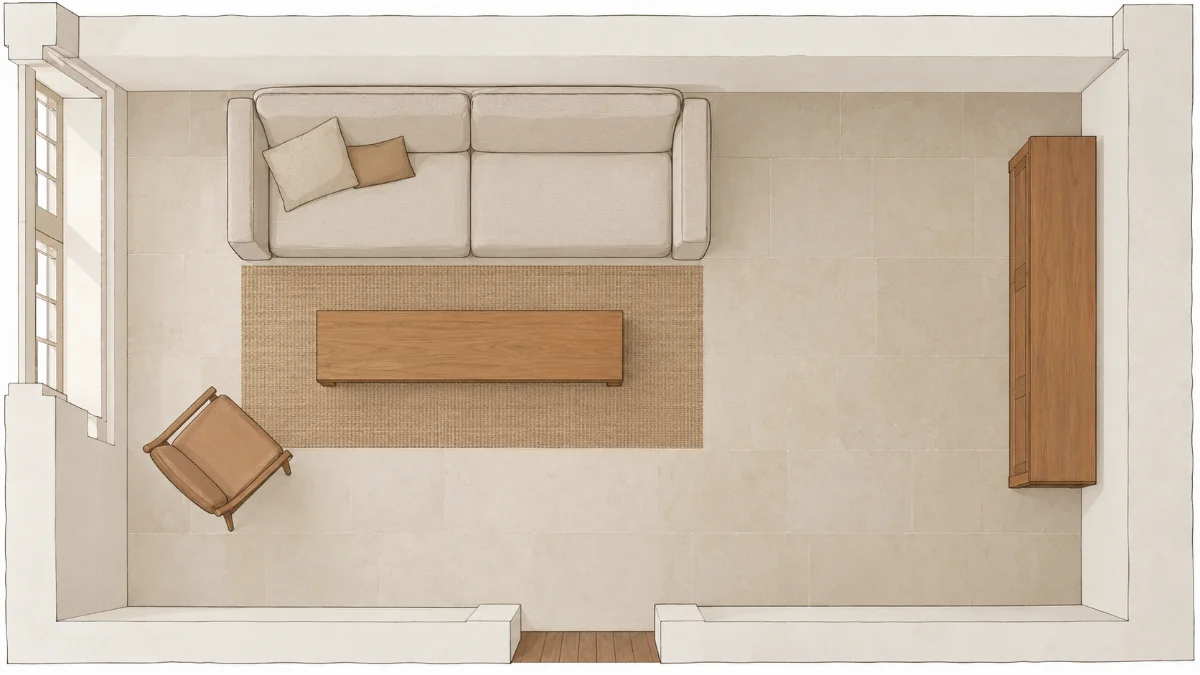
The answer is closed storage. A cabinet or sideboard with doors lets you put things away quickly. You don't have to arrange anything nicely, because nobody can see inside.
Open shelves are harder to keep tidy, because everything on them is on show.
Give small daily items one fixed place. Keep chargers and remotes in a drawer. Keep keys in a bowl by the door. When everything has a home, tidying the room takes just a few minutes. For more ideas, see our living room storage ideas.
8. Keep the Room Clear: One In, One Out
Clearing the room once is the easy part. Keeping it clear is harder, because new things come into your home every week.
A one-in, one-out rule helps. When something new comes in, something similar goes out. If you buy a new side table, sell or donate the old one. If you buy a new cushion, remove an old one.
You can also use a "maybe" box. Put anything you're unsure about in the box and store it out of sight. If nobody misses those things after a few weeks, you can let them go.
You can also change things with the seasons. Put heavy wool throws away in summer and bring out lighter linen ones.
9. Warm Minimalism in a Small Living Room or on a Budget
In a small living room, choose a few medium or large pieces instead of many small ones. A full-size sofa and one bench can look calmer than a small sofa, two chairs and three little tables.
Low furniture helps too, because you can see over it. For more tips on tight spaces, see our small condo living room guide.
If money is tight, start with what you already have. Clearing the room is free. You can also sell extra chairs and side tables, and use that money for one better piece. Secondhand solid wood furniture is often better made than new flat-pack furniture at the same price.
Here's how to make a minimalist living room feel warm without spending much.
- Swap synthetic cushion covers for linen ones.
- Change cool white bulbs to warm white ones (2700K to 3000K). ENERGY STAR's bulb checklist notes that lower Kelvin numbers look more yellow, and our living room lighting guide covers bulb color in more detail.
- Replace a small rug with one big enough to reach the sofa and chairs. Our rug size guide can help.
Final Thoughts
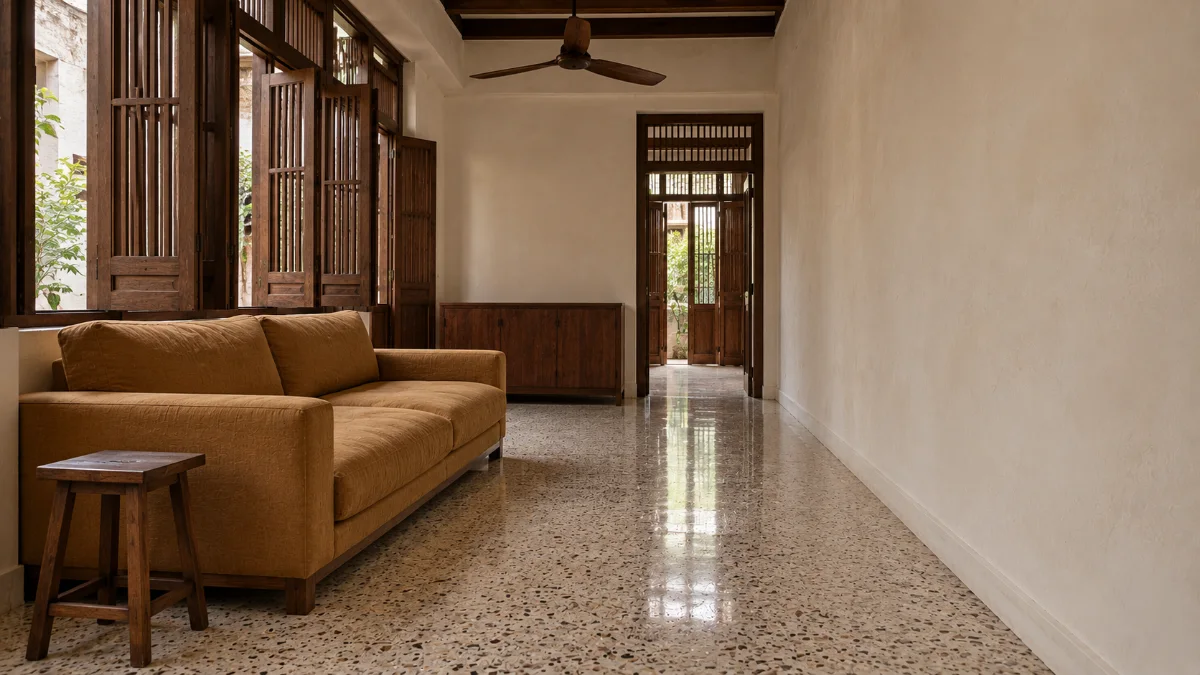
A warm minimalist living room is less about shopping and more about choosing what stays. Good materials matter, but only when they have some space around them.
Here's an easy way to start. Clear your coffee table and one shelf completely. Leave them empty for a week. Then put back only the things you actually reach for.