
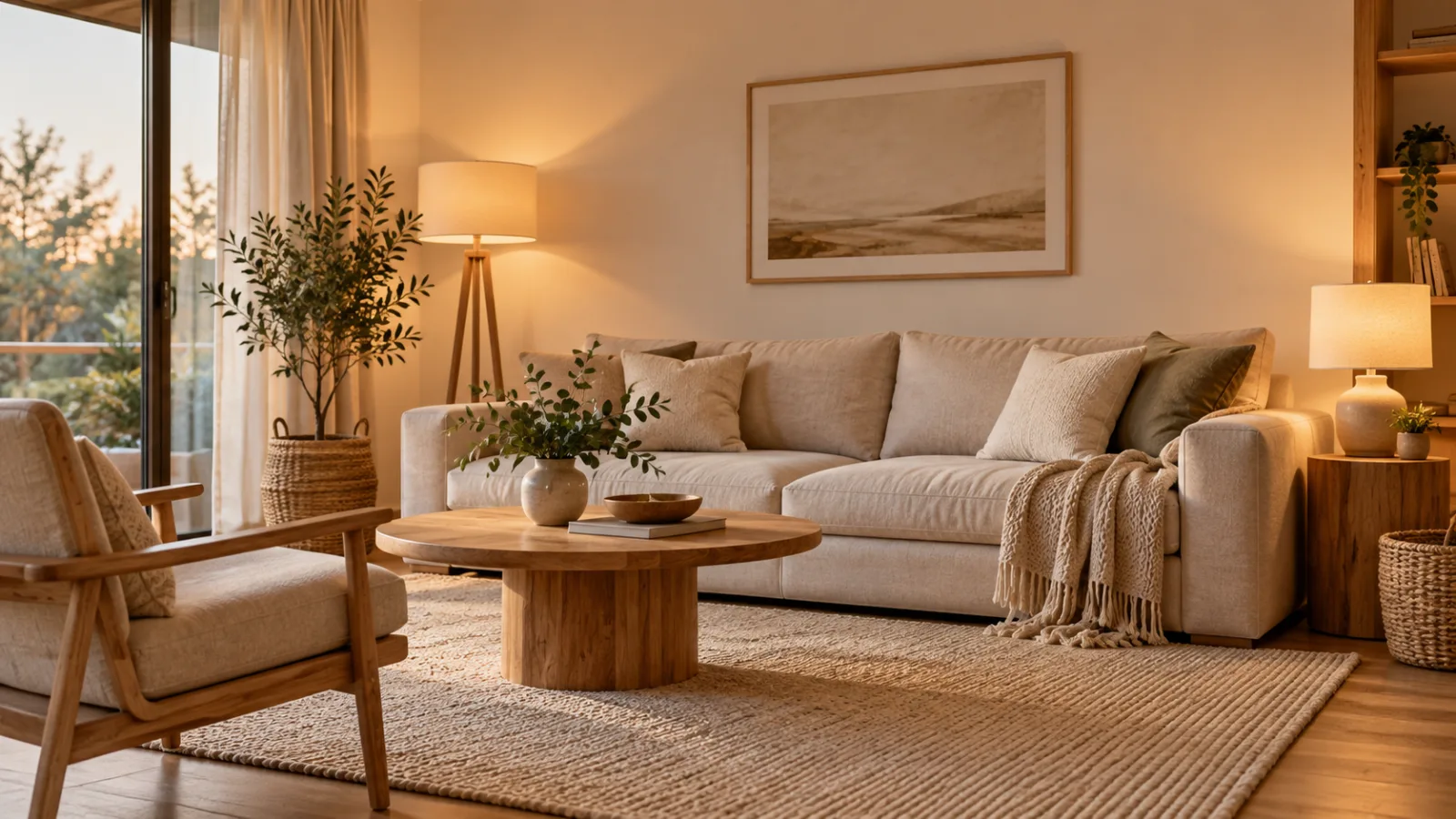
A cozy minimalist living room keeps the clear surfaces and quiet of minimalism, but it still feels like a place you want to sit down in. Getting both at once is harder than it sounds.
There's a point where a tidy living room stops feeling calm and starts feeling empty. The surfaces are clear. The furniture is nice. Nothing is out of place. And yet nobody really wants to sit there in the evening.
That's the common trap with minimalism. You take away enough things, and the room loses what made it comfortable. The fix isn't to fill it back up. These cozy minimalist living room ideas add warmth without adding clutter. If your room feels cold at night, start with lamps in section 1 and textures in section 2.
In this article
- What Is Cozy Minimalism?
- 1. Let Lamps Do the Decorating
- 2. Choose Fewer Textures, and Make Them Count
- 3. Swap Hard Surfaces for Natural Materials
- 4. Pull the Seating Closer Together
- 5. Build a Warm Neutral Palette with One Accent
- 6. Pick Seating That's Comfortable, Not Just Neat
- 7. Leave Some Space Empty, and Hide the Everyday Stuff
- 8. Keep It Cozy All Year Round
- A Small Cozy Minimalist Living Room, and Doing It on a Budget
- Final Thoughts
- Frequently Asked Questions
What Is Cozy Minimalism?
A cozy minimalist living room is a minimalist room with comfort added back in. You still keep fewer things and clear surfaces. But you choose warm light, soft fabrics and natural materials, so the room feels lived-in rather than bare.
Cozy minimalism isn't the same as just decorating less. Plain minimalism asks what you can remove. Cozy minimalism also asks whether the room is nice to sit in at nine o'clock at night. Both questions matter, and the ideas below try to answer the second one without undoing the first. If you're not aiming for a minimalist room, our general cozy living room ideas cover the same goal with fewer limits.
1. Let Lamps Do the Decorating
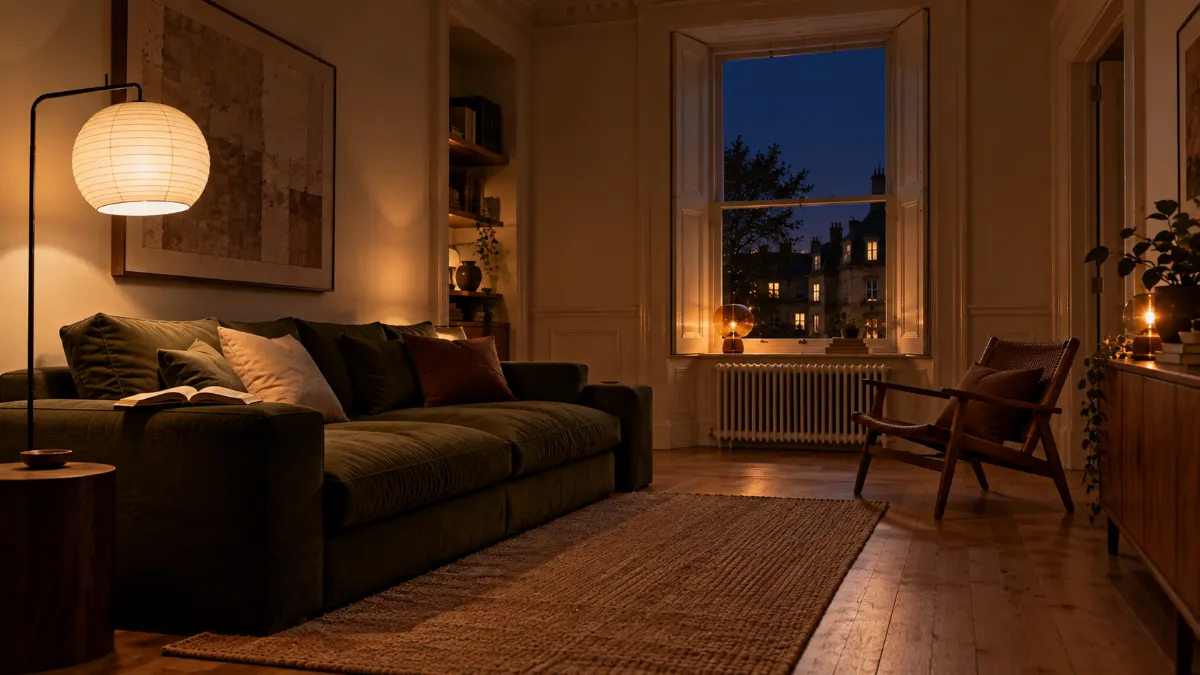
In a room with only a few objects, light does more of the work. A minimalist living room lit only from the ceiling often looks flat at night. The light comes from one place, evenly. Nothing in the room looks soft, and the white walls can start to feel like an office.
Two or three lamps at different heights can do what extra decor would otherwise try to do. Put a floor lamp beside the sofa. Add a small table lamp on a side table. If you have a shelf, a low lamp there can add a soft glow closer to eye level. A dimmer on the main lamp lets you lower the light as the evening goes on.
Bulb color matters too. Warm white bulbs, around 2700K–3000K, tend to suit a pale, minimal room at night. ENERGY STAR's light bulb checklist notes that lower Kelvin numbers look more yellow. Cooler bulbs can make white walls look slightly blue. Bulb color, brightness and where to put each lamp are covered in our living room lighting ideas.
Here's a simple test. One evening, turn off the ceiling light and use only lamps. If the room looks better straight away, you know where to spend your money first.
2. Choose Fewer Textures, and Make Them Count
Minimalist rooms often lean on smooth surfaces. Painted walls, flat cabinet doors and a thin rug are each fine on their own. Together, they can make a room feel cold before you even touch anything.
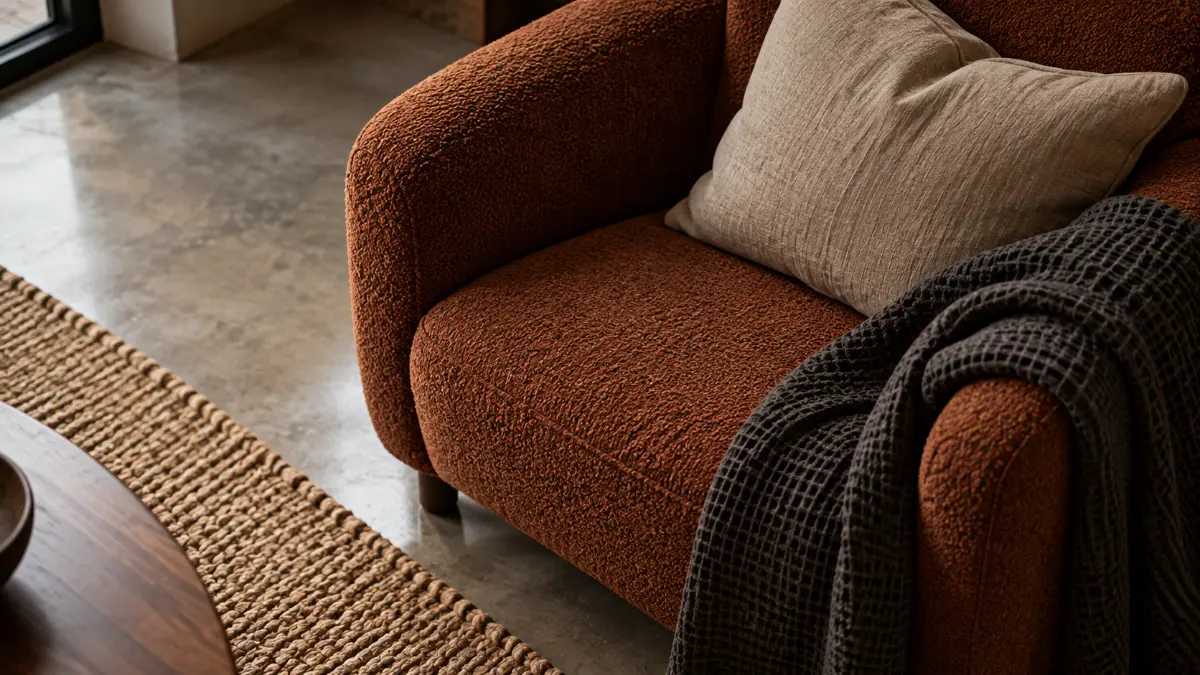
You don't need a pile of cushions to fix it. Two or three textures that feel different from each other are often enough. A chunky knit throw, linen cushion covers and a rug with some depth make a good starting set. Keep them in related colors, so the room stays calm. The texture adds interest, so you don't need busy patterns.
The mistake to avoid is choosing everything in the same smooth fabric. If the sofa, cushions and throw are all plain cotton, the room still looks flat. It's the difference between textures that you notice. For more on mixing fabrics like linen, knit and bouclé, see our modern cozy living room ideas.
The rug matters more than it seems. A small rug floating in the middle of the floor can make the seating look disconnected. A common guideline is that at least the front legs of the sofa and chairs rest on it. Sizes for different rooms are in our living room rug size guide.
3. Swap Hard Surfaces for Natural Materials
If a minimal room still feels cold after you fix the lighting, look at what the furniture is made of. Glass, chrome and high-gloss finishes reflect light. They also hide any sign of age or use. That's what makes them look clean, and it's also what makes them feel distant.
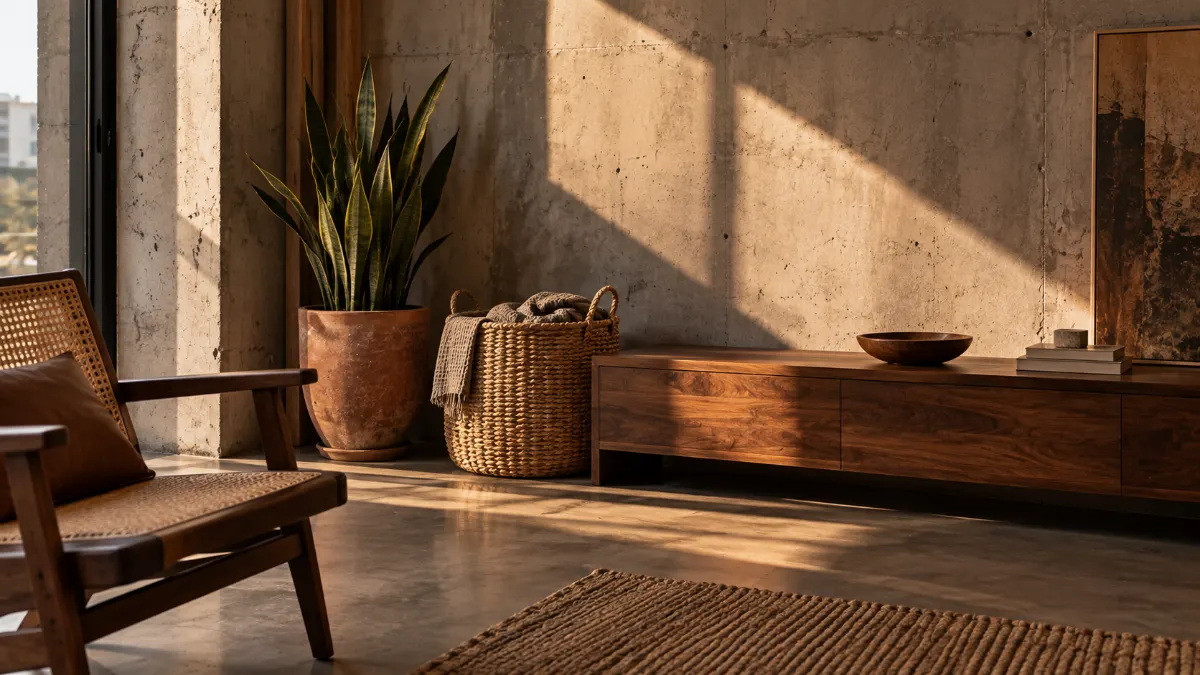
Natural materials work the other way. Wood grain, rattan, linen, cotton and jute all have small irregularities. Rattan is a woven material made from the stems of a climbing palm. Jute is a rough plant fiber often used for rugs and baskets. Those small differences make a room look more lived-in, without adding extra objects.
You don't need to replace everything. One wooden side table, a woven basket for throws, or linen curtains instead of plastic blinds can make a noticeable difference. When you shop for wood furniture, solid wood and a good wood veneer both work well. Printed-plastic "wood-look" finishes tend to look flat up close. If you like low furniture and pale wood, our Japandi living room ideas take this idea further.
Plants count here too. One healthy plant often looks calmer than a group of small ones. Snake plants, pothos and ZZ plants are all listed for low light by the University of Maryland Extension, and they don't need much care.
4. Pull the Seating Closer Together
Minimal rooms often have lots of open floor, and it's tempting to spread the furniture out to fill it. You end up with a sofa on one wall and a chair on the opposite wall. Between them is a big empty gap, and conversation feels like it's happening across a hallway.
Seating that sits closer together tends to feel friendlier. Angle a chair slightly toward the sofa instead of lining everything up along the walls. If the room allows it, pull the sofa a little away from the wall. The group then feels gathered in the middle of the room.
Don't squeeze the walkways to do it, though. Our furniture layout guide suggests about 90 cm (35 in) for the main path through a room. It also covers seating distances and long, narrow or awkward room shapes.
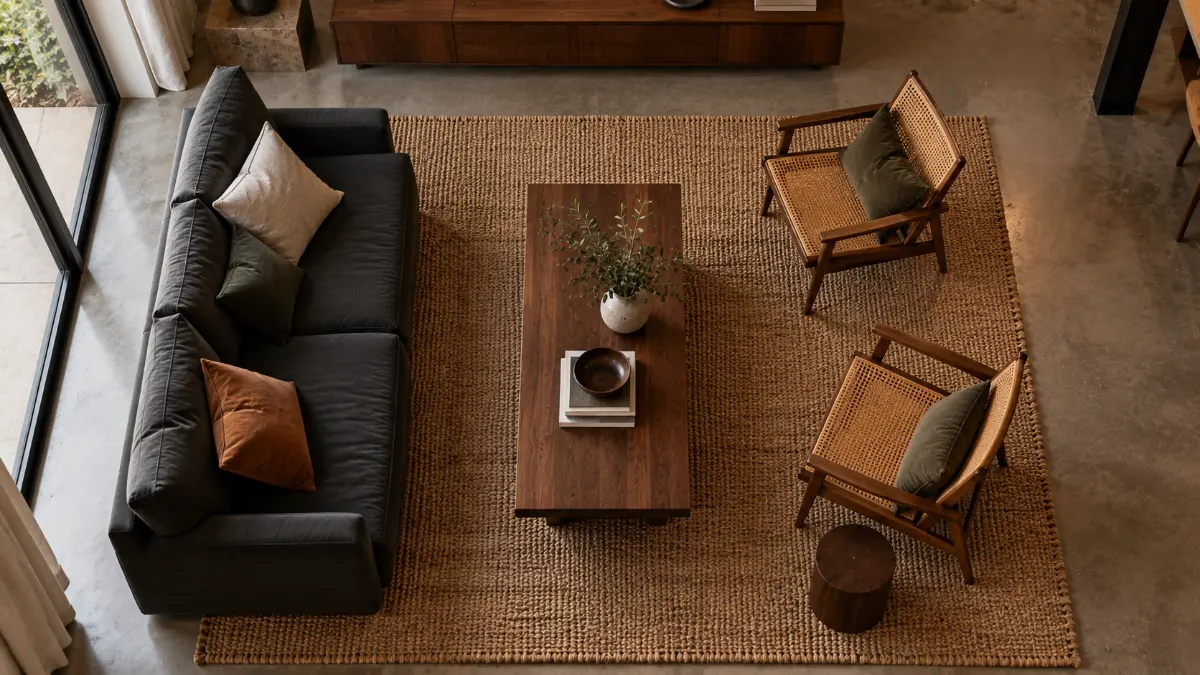
5. Build a Warm Neutral Palette with One Accent
White walls and minimalism go together for a reason. But bright white under cool light is part of what makes these rooms feel clinical. You don't need to give up neutrals to fix it. You just shift them warmer.
Warm white, cream, greige and taupe make a calm base. Greige is a mix of gray and beige. If you want a minimalist living room that doesn't feel cold, these colors are a good base. They still look quiet and simple.
Then add one deeper, earthy color through a cushion, a throw or a piece of art. Rust, olive, caramel and clay brown all sit well next to warm neutrals. Try to repeat the accent two or three times. A rust cushion on the sofa, a rust-brown vase on a shelf and a print with some rust in it look connected. Three different accent colors in a small room can start to look busy.
If you'd like a simple way to plan proportions, the 60-30-10 rule is a common starting point. It's explained in our living room color schemes guide, along with how daylight changes the way paint looks.
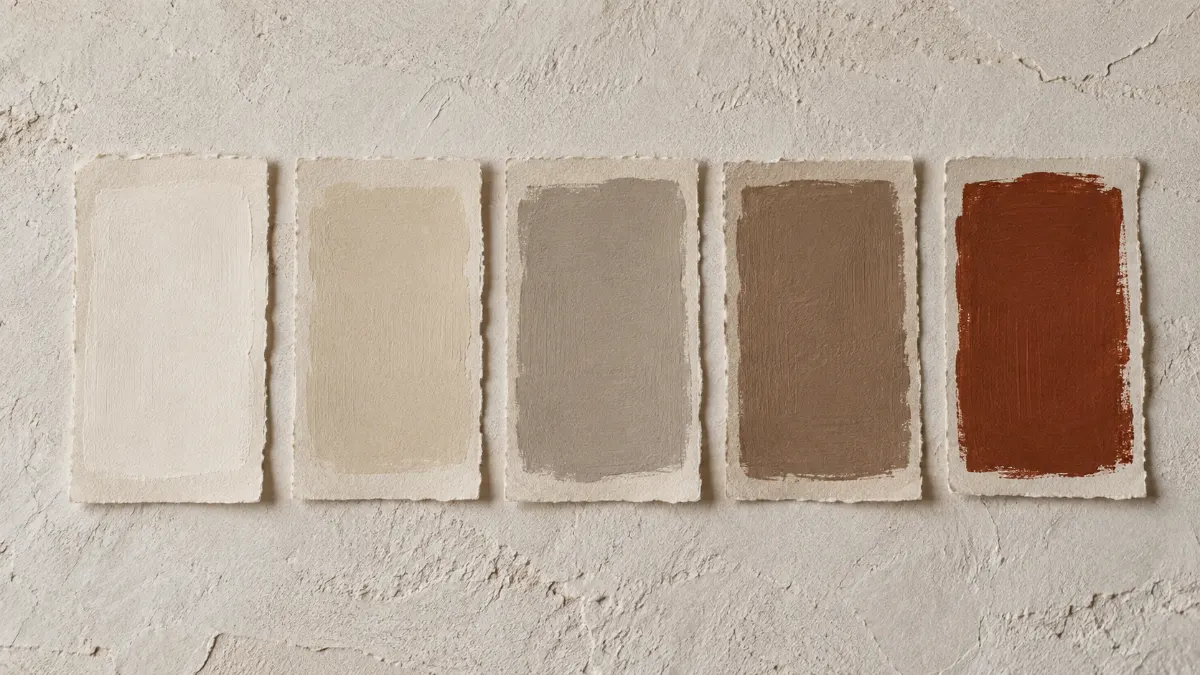
6. Pick Seating That's Comfortable, Not Just Neat
Many minimalist sofas look great in photos and feel hard to sit on. Thin cushions, upright backs and shallow seats keep the shape tidy. They also make people perch on the edge rather than settle in.
In a cozy minimalist room, the sofa matters a lot. It's often the largest piece, so it sets the mood for everything else. Look for a simple shape with softer cushions and a seat deep enough to lean back in. A loose-cushion back or slightly rounded arms can look relaxed without looking messy. A fabric that feels soft to the touch, like a wool blend or a textured weave, tends to feel more inviting than tight, shiny upholstery. Linen and cotton feel cooler, which can suit a hot climate.
Before you buy, sit on it the way you'd actually use it. Lean back, tuck your feet up, and stay for a few minutes. If you're shopping online, check the seat depth and cushion fill in the product details. Our guide on how to choose a sofa explains seat depth, fill and fabric durability.
One comfortable chair can matter as much as the sofa. A padded armchair with a throw and a lamp beside it gives the room an obvious place to sit with a book. That one corner often does more for comfort than any decor would.
7. Leave Some Space Empty, and Hide the Everyday Stuff
Empty space helps a minimalist room look calm. In a cozy room, though, it should look restful, not unfinished. Leave at least one surface clear, like a side table or part of a shelf. Then give the few things you really like some room around them.
Closed storage keeps it that way on a busy weekday. A lidded storage ottoman or a cabinet with doors can hold remotes, chargers and kids' toys. Our living room storage ideas compare open and closed storage. If the room needs a full clear-out first, our warm minimalist living room guide walks through deciding what to keep.
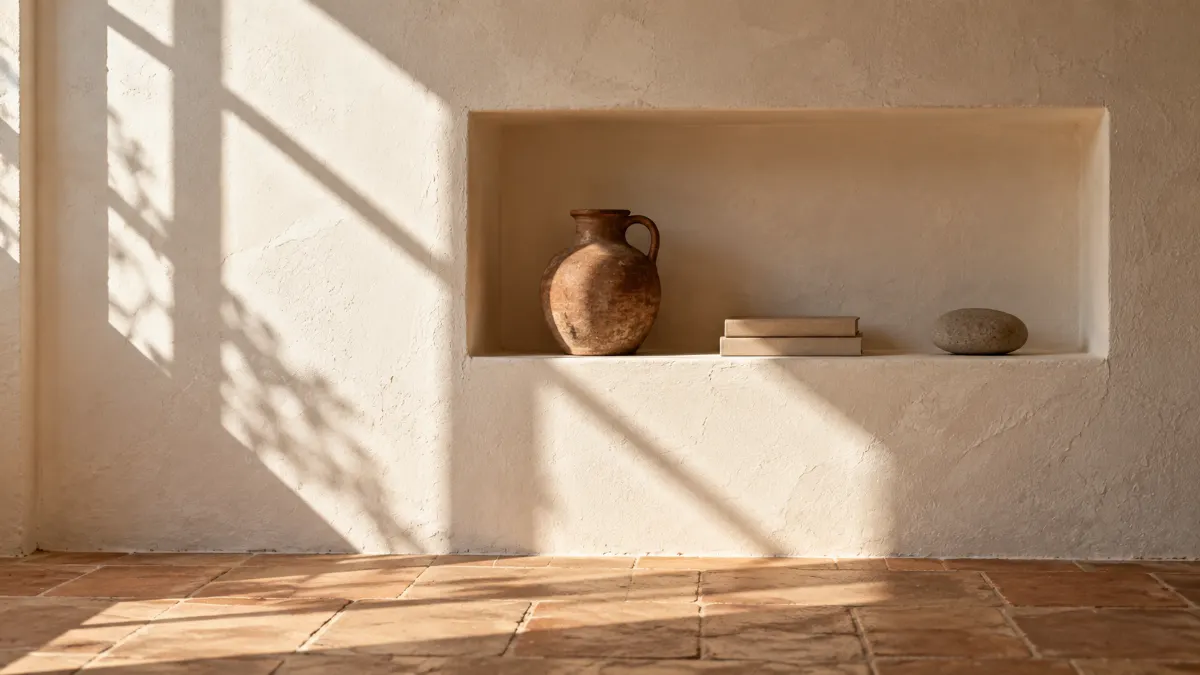
8. Keep It Cozy All Year Round
Most cozy advice assumes a cold winter. Wool throws, heavy curtains and sheepskin rugs make sense in a Toronto or Berlin December. In a Miami summer or a Mediterranean apartment in August, the same pieces can make a room feel stuffy.
The good news is that a room only needs to look warm. It doesn't need to feel hot. Lighter swaps can keep the cozy look in warm months or warm climates. And because a minimalist room has so few pieces, a seasonal swap takes minutes.
| Item | Cooler months | Hot months or humid climates |
|---|---|---|
| Throw | Wool or chunky knit | Light linen or cotton |
| Curtains | Lined or heavier linen | Sheer linen that lets air through |
| Rug | Wool or a thicker pile | A flatweave that dries quickly |
| Accent chair | Upholstered armchair | Rattan, cane or teak |
| Lamps | On from late afternoon | On in the evening, once the heat eases |
In humid homes, natural materials need airflow to avoid mold. Jute rugs can mildew if they stay damp, so a quick-drying flatweave is the safer choice there. Our living room rug size guide compares rug materials, and our guide to furniture for a humid climate covers which woods, rattan and fabrics cope best, plus simple care.
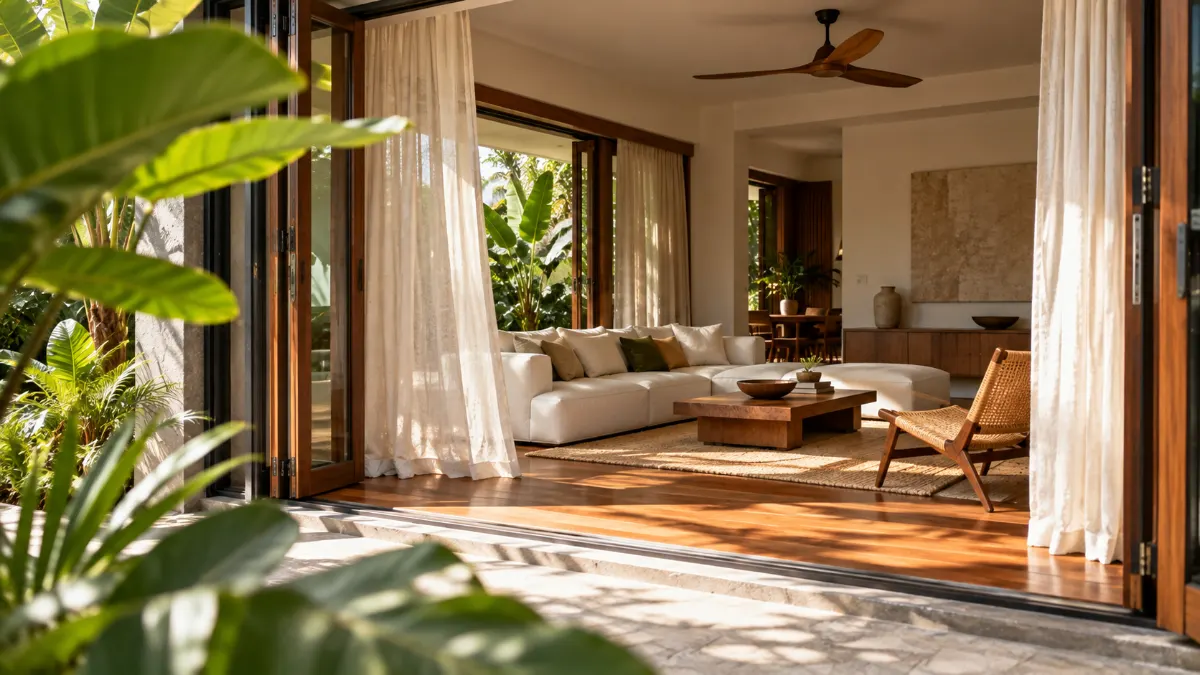
A Small Cozy Minimalist Living Room, and Doing It on a Budget
A small room often has the opposite problem. There's no space to spread out at all, so every piece has to be useful. One sofa and one chair often work better than a large sectional. Keep the main walkway clear, and let the chair be the piece that moves. Our small condo living room ideas cover furniture that fits tight spaces.
You also don't need to buy much. Warm bulbs and one extra lamp are often the cheapest change with the biggest effect. After that, a throw and a pair of linen cushion covers cost far less than new furniture.
Final Thoughts
A cozy minimalist living room isn't about owning less or owning more. It's about a room that still feels good to sit in at the end of a long day. Often that comes down to light, a few soft things and one good seat.
Here's an easy place to start. Pick one surface, like the coffee table, a shelf or the sideboard, and clear it completely. Put back only one or two things you use or love. If the room feels calmer but not colder, that's cozy minimalism working, and you can repeat it one surface at a time.