
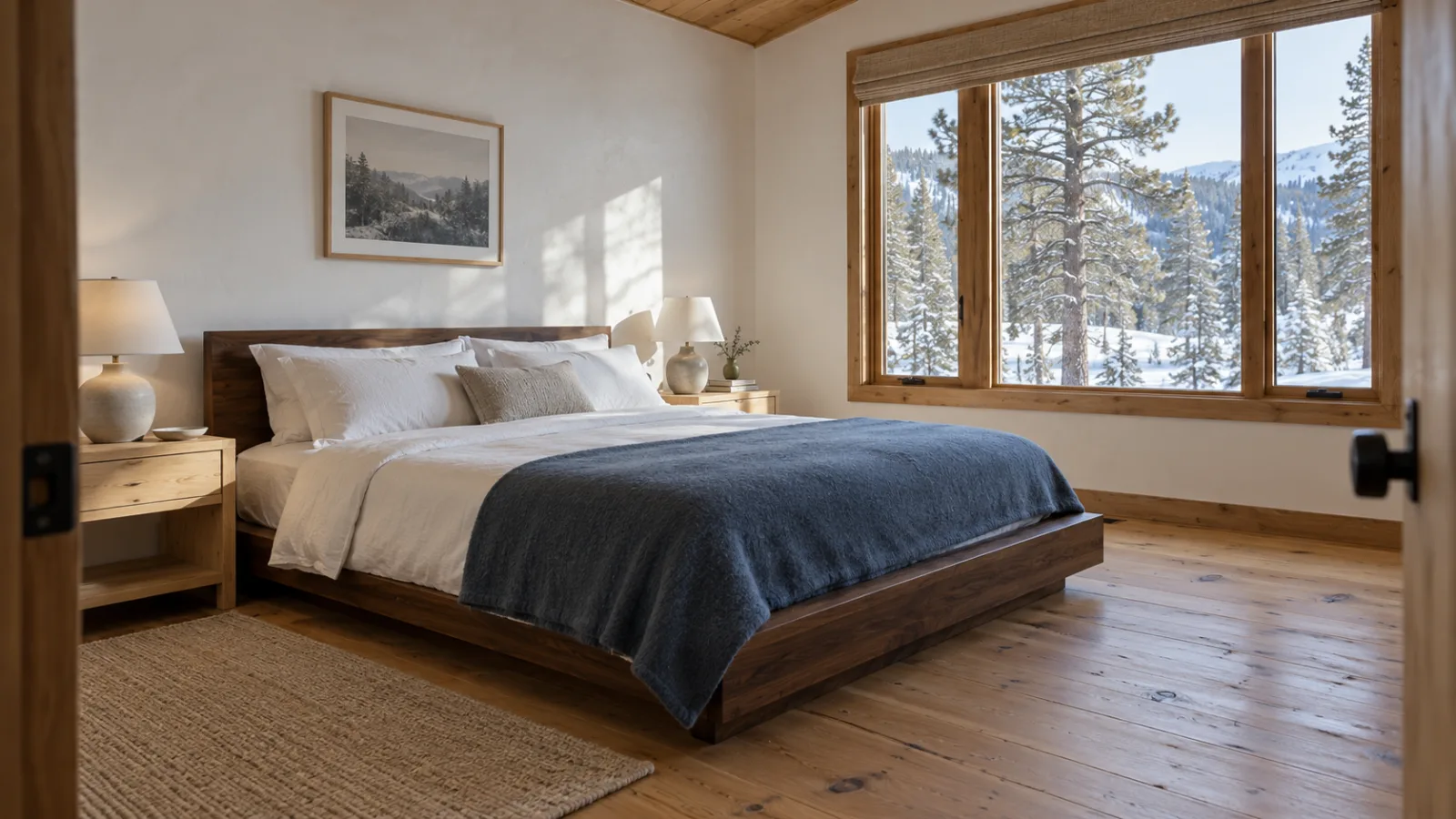
Most bedroom ideas with wood furniture assume you're buying a matching set all at once. Real bedrooms rarely work that way. You might have a dresser from your parents' house, a bed from your last apartment and nightstands that just fit the gap. Suddenly the room has three or four woods that don't go together.
Mixed wood can look chosen instead of accidental. It mostly comes down to three things. Check the hidden color in each wood. Let one wood lead. Then repeat the other woods so they look planned.
If you're keeping a piece you already own, start with the undertones in section 1 and the wood ranking in section 2.
In this article
- 1. Read the Undertone Before the Color
- 2. Let One Wood Lead
- 3. Repeat Each Wood Tone at Least Twice
- 4. Matching vs Mixed Bedroom Furniture
- 5. Walnut Bedroom Furniture Ideas
- 6. Light Wood Bedroom Furniture
- 7. Dark Wood Bedroom Furniture Ideas
- 8. Connect Woods Through Grain, Shape and Sheen
- 9. Caring for Mixed Wood Finishes
- Final Thoughts
- Frequently Asked Questions
1. Read the Undertone Before the Color
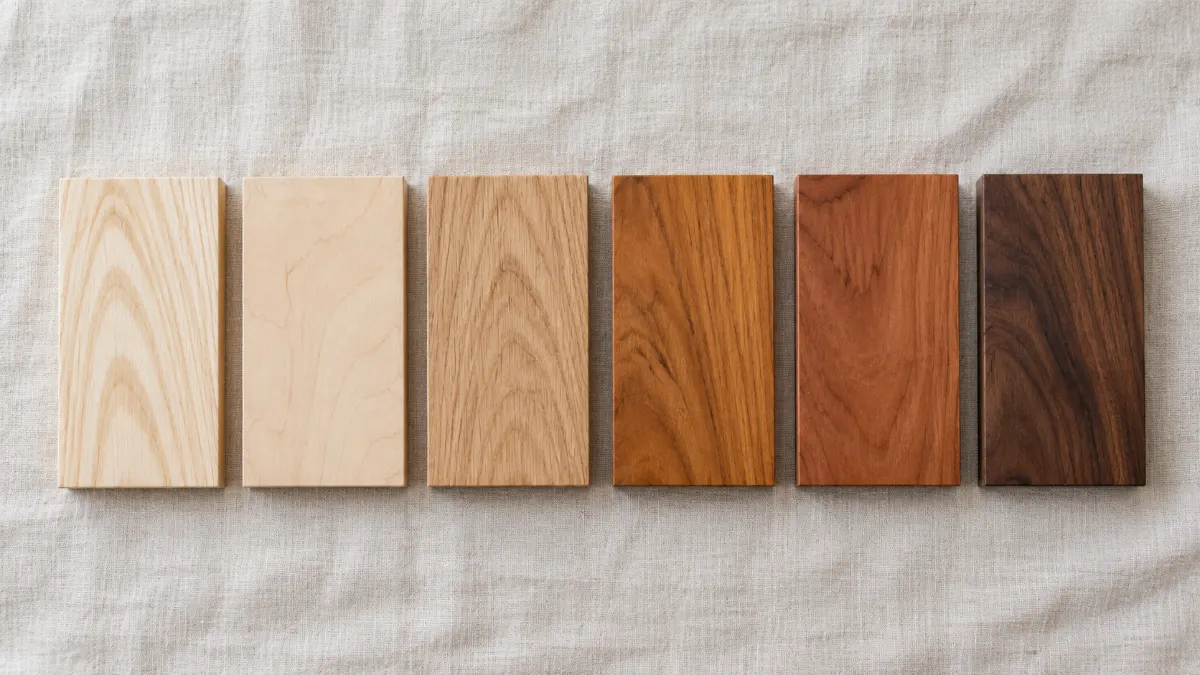
When you mix wood tones in a bedroom, the undertone matters more than how light or dark the wood is. An undertone is the color hiding under the brown. It might be yellow, orange, red or a cooler gray.
This is why two pale woods can clash. One might lean yellow while the other leans gray. Meanwhile, a light wood and a dark wood with the same warmth often look fine together.
The table below gives you a rough starting point. These are typical tendencies, not fixed facts. Individual boards vary, and stains, finishes and age can change any of them.
| Wood | Typical depth | Typical undertone |
|---|---|---|
| White oak | Light to medium | Neutral to slightly yellow |
| Red oak | Light to medium | Pink to orange |
| Maple and birch | Light | Creamy yellow |
| Ash | Light | Neutral, sometimes slightly gray |
| Pine | Light | Yellow, turning orange with age |
| Cherry | Medium | Red, darkening over time |
| Teak | Medium | Golden to orange-brown |
| Walnut | Medium to dark | Warm brown, sometimes slightly purple-gray |
| Mahogany | Medium to dark | Red-brown |
Gray-washed and weathered finishes tend to look cool, whatever wood is underneath. Unstained wood usually looks warm. Room & Board's guide to mixing woods makes the same point about its own range. It says its unstained woods have a warm undertone, while many of its stained woods lean cool.
The easiest test is to compare samples in the bedroom itself. Hold an offcut or a printed photo of the new piece next to your existing furniture. Look in daylight, then again at night under your bedside lamp. Product photos are often edited, and warm bulbs make everything look more orange. (Bulb color is covered in living room lighting ideas.)
Different undertones aren't always a mistake. Warm walnut next to a cooler oak can look sharp. Problems start when three woods each pull a different way, with nothing linking them.
2. Let One Wood Lead
Picture a bedroom where the bed, dresser, nightstands and shelves are all different woods. Your eye doesn't know where to settle. Each piece looks fine alone, but together they compete.
The fix is to give the woods a ranking. Pick one main wood and use it on your biggest piece. That's usually the bed. Then add a second wood on smaller furniture. You can add a third wood as a small accent.
| Role | Typical pieces | How much of the room's wood |
|---|---|---|
| Main | Bed, wardrobe or large dresser | Most of it |
| Second | Nightstands, bench, shelf | A clear but smaller share |
| Accent | Picture frames, a stool, a lamp base | Small touches |
Some furniture retailers put rough percentages on this, such as 70/20/10. Treat those as a loose guide, not a measurement. What counts is that one wood clearly leads.
The main wood doesn't have to be the darkest one. A pale oak bed can lead while a walnut dresser plays a supporting role. Size and position decide which wood leads, not color.
So how many wood tones is too many? Two is the easiest place to start, and three can work when one clearly leads. Wood floors count too. If you have them, they're already one of your tones.

3. Repeat Each Wood Tone at Least Twice
A wood that shows up only once can look like a leftover. When it shows up twice, it often looks chosen.
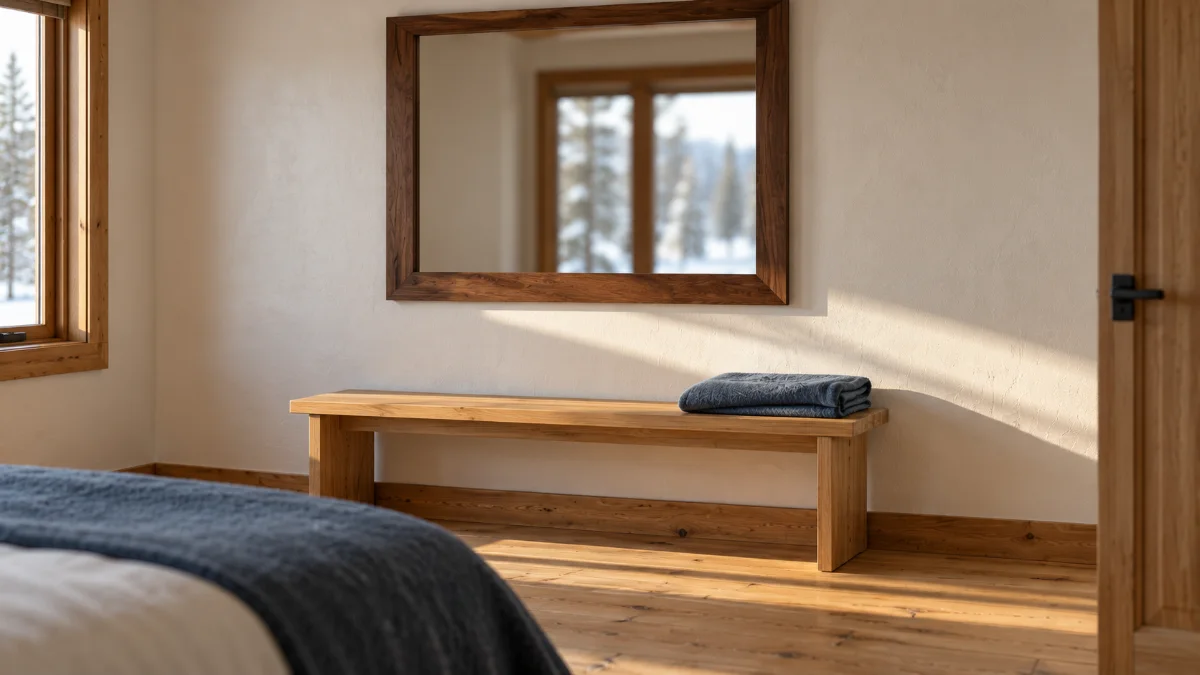
The repeat doesn't need to be another piece of furniture. A walnut bed can be echoed by a walnut-framed mirror. Oak nightstands can be matched by an oak bench at the foot of the bed.
Repeat the wood, but don't copy the piece. The two pieces can have different shapes and grain. They just need to belong to the same wood family. Two identical pieces start to look like a showroom set again.
Spread the repeats around the room, too. If both walnut pieces sit on the same wall, the room can feel lopsided. Put one near the bed and one across the room. Your eye then moves between them.
4. Matching vs Mixed Bedroom Furniture
Both approaches can work. A matching bed, dresser and nightstands give a calm, even look. Mixed pieces tend to feel more collected over time. The right choice depends on your room and how you like to buy furniture.
Matching furniture: pros
- Easy to get right, because the tones already agree
- Can look calm in small bedrooms
- Suits even layouts with a nightstand on each side
Matching furniture: cons
- Can look like a catalog page
- Leaves little room for pieces you already own
Mixed furniture: pros
- Lets you keep a dresser or chest you love
- You can buy pieces one at a time, as your budget allows
Mixed furniture: cons
- Takes more care with undertones and repeats
- Too many tones can look busy
There's also a middle path. Match the two nightstands to each other. Then let the bed or dresser contrast with them. In a tight room, our small bedroom layout ideas help you decide which pieces fit at all.
And if you already own a good wooden dresser, you usually don't need to replace it. It's fine if it differs from a new bed. Look for a bed that shares something with it instead. That might be a similar undertone, the same shine or a similar leg shape. For a calmer, low-profile take on wood bedroom furniture, see our Japandi bedroom ideas.
5. Walnut Bedroom Furniture Ideas
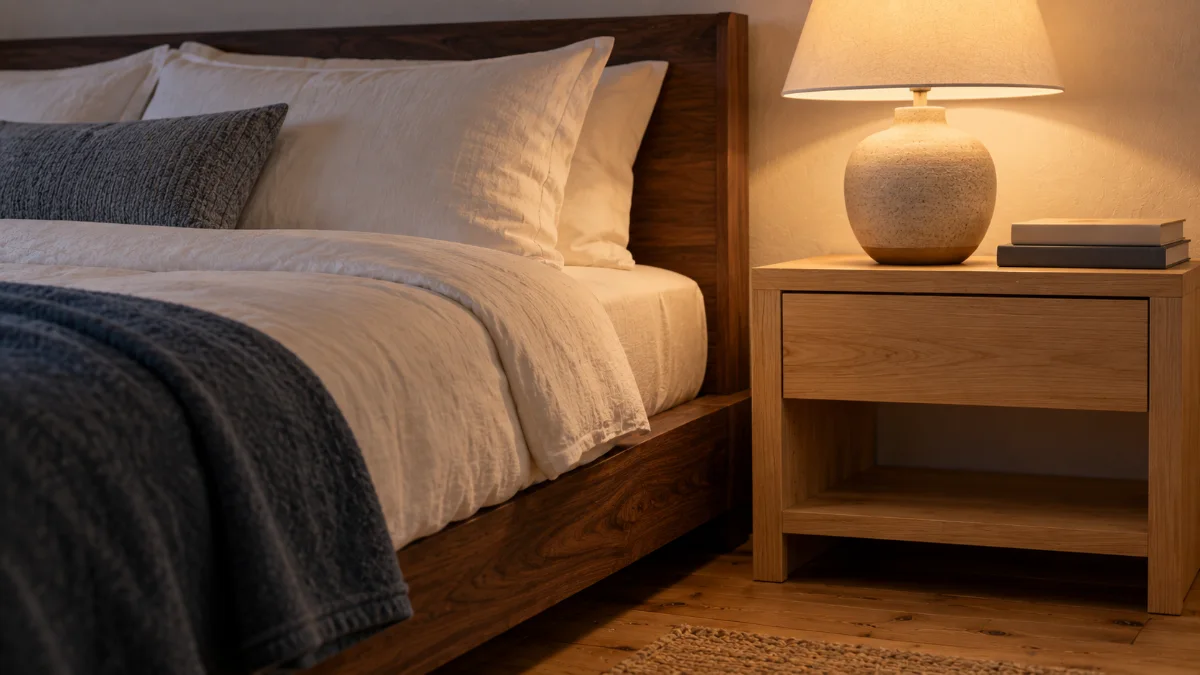
Walnut is a deep, warm brown with a fairly straight grain. It pairs easily with lighter woods. The classic combination is a walnut bed with oak nightstands. The contrast is clear, but both woods lean warm.
A walnut bed with white-oak nightstands keeps the room light. White or oatmeal bedding helps, and the bed still stands out as the main piece. Walnut with cream and rust fabrics feels warmer. That suits a bedroom in a cold climate. Walnut with pale gray walls and white linen looks cooler and crisper. Wall colors and undertones are covered in more detail in living room color schemes.
In a small room, try a walnut dresser instead of a walnut bed. That keeps the biggest piece light.
Walnut also changes slowly over the years. It tends to lighten a little with long exposure to light. That's the opposite of cherry, which darkens. So a walnut piece by a sunny window may turn a softer, more golden brown over time.
6. Light Wood Bedroom Furniture
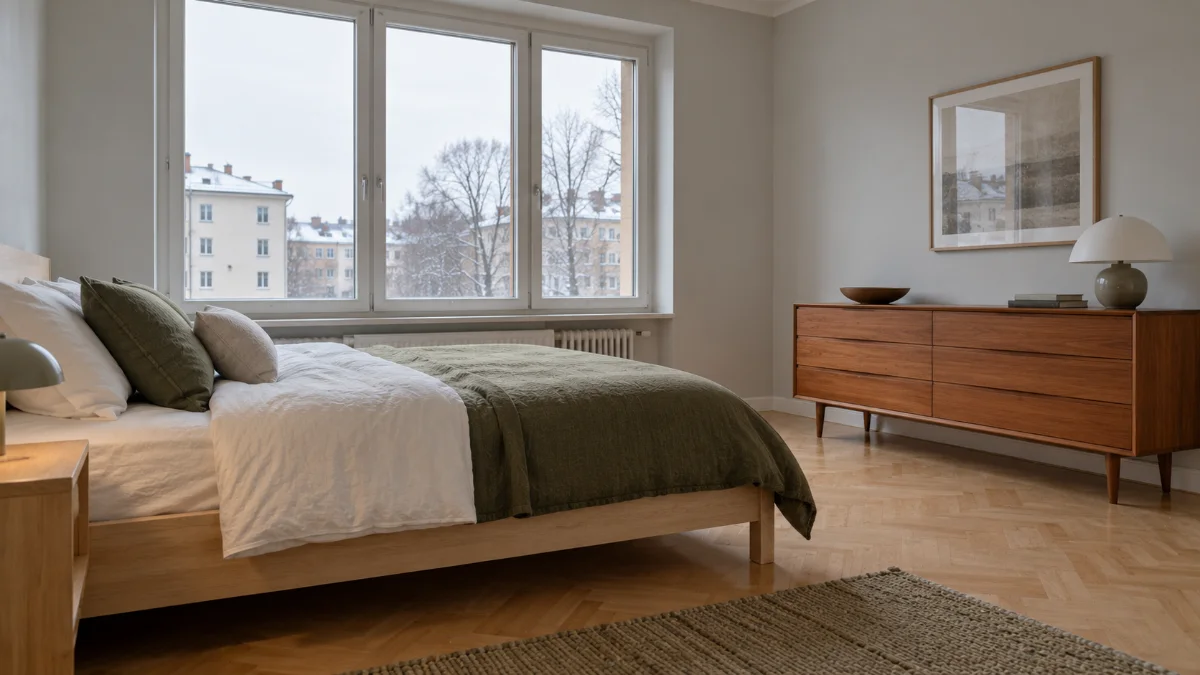
Light wood bedroom furniture, like birch, ash, maple and pale oak, can look airy and calm. But it can also look flat. When the floor, bed and walls are all pale, nothing stands out. The whole room starts to look like one big beige surface.
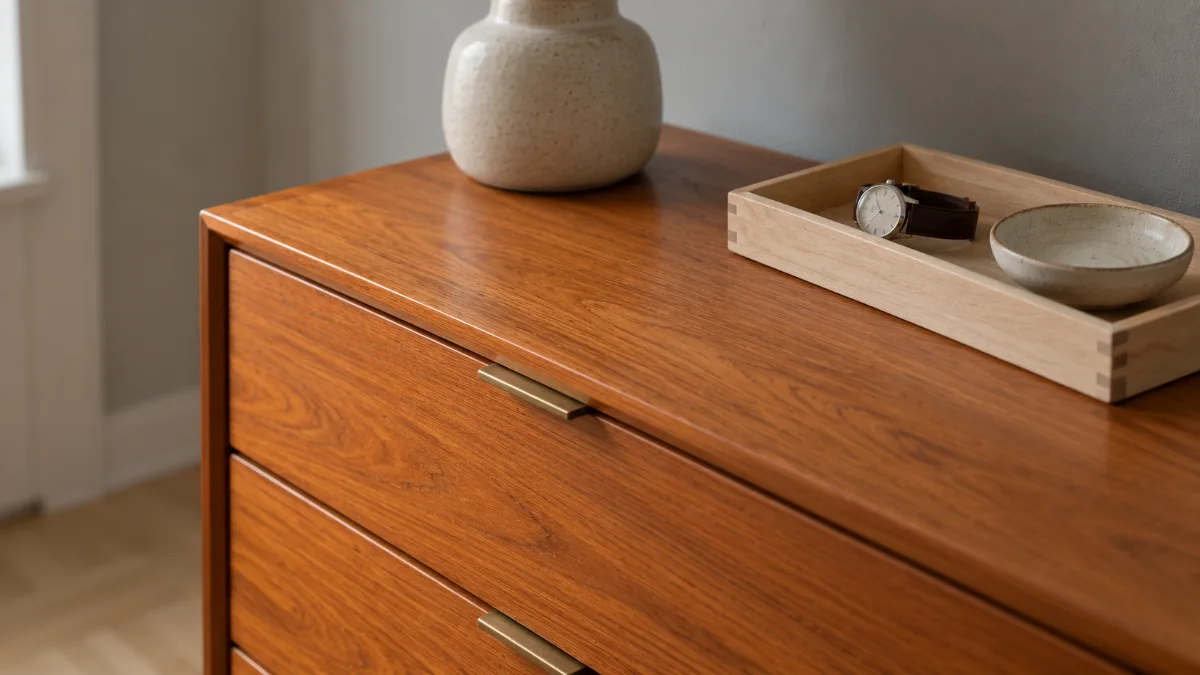
The usual fix is one darker piece, like a teak dresser or a walnut lamp. It gives the eye somewhere to land. Many mid-century designs do this already, pairing pale birch or beech with teak, and both woods lean warm. The mid-century modern living room guide shows the same idea in a living room.
Watch out for yellow tones. Pine and some maple finishes turn more yellow or orange with age. That can clash with a cooler, whitewashed oak.
Wood floors need some thought, too. If your floors are pale, pick furniture that's clearly lighter or darker than the floor. A near-match tends to look like a mistake. A clear difference looks planned. A rug under the bed also helps separate the floor from the furniture. Rug sizes are covered in the living room rug size guide.
In gray northern winters, from Scandinavia to Canada, warm pale woods tend to look less cold than gray-washed ones.
7. Dark Wood Bedroom Furniture Ideas
Dark wood often gets blamed for making bedrooms feel heavy. Usually the real problem is that everything around it is dark too. Think brown floors, deep wall colors and heavy curtains.
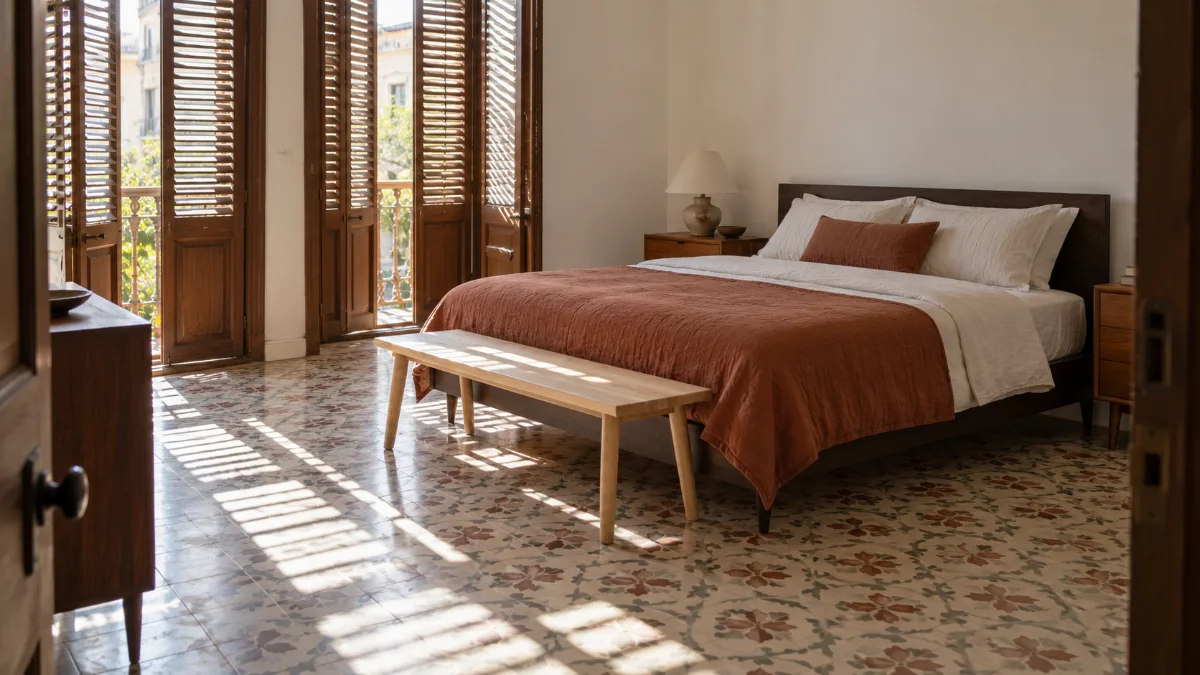
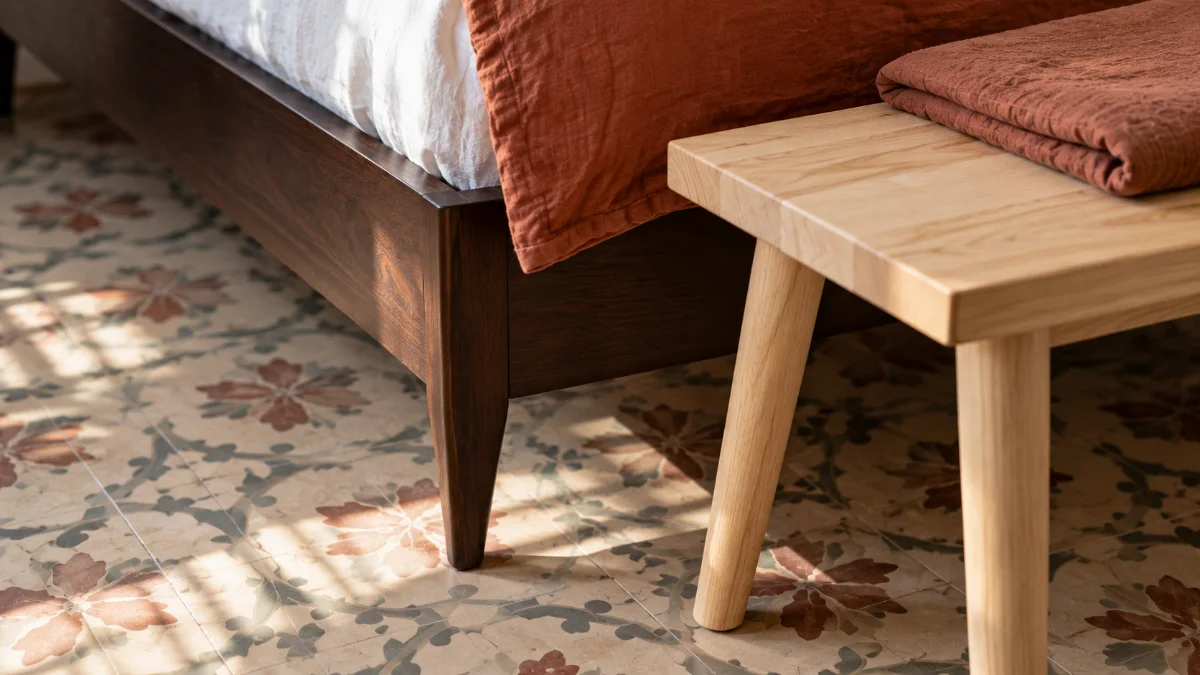
Contrast is what tends to make dark wood work. Put a dark espresso or walnut bed against light walls and pale bedding. Add a lighter wood bench. The bed then stands out as a strong shape instead of a dark block. Furniture on legs also helps, because you can see more floor underneath.
Try pairing a dark bed with a pale ash or oak bench at its foot. Then repeat the pale wood once more on a shelf or frame.
Or keep the dark wood to the dresser and nightstands. Choose an upholstered bed or a lighter wood bed. The darkest wood then sits around the edges of the room.
In hot, humid climates like Florida or the Gulf Coast, a dark wood bed with light linen bedding can keep the room feeling crisp. Beds on legs also let air move underneath. How different woods handle humidity is covered in furniture for a humid climate.
8. Connect Woods Through Grain, Shape and Sheen
Color isn't the only thing that links two pieces. A glossy, carved cherry dresser and a plain, matte oak nightstand can look unrelated, even in similar colors. But a slim walnut bed and a slim oak nightstand with the same tapered legs can look like a pair.
Grain. Let one piece have the busy grain. Keep the others quieter. Two strongly patterned woods side by side tend to compete. A swirly burl wood next to a bold oak grain is one example.
Shape. Similar legs, edges or corners do a lot of work. Rounded edges on both pieces can tie very different woods together. So can the same tapered leg.
Sheen. Sheen means how shiny the finish is. A high-gloss finish next to a flat, oiled one is easy to notice. This matters most on pieces that touch. When the colors differ a lot, keeping the shine roughly similar can help.
Hardware. Repeat one metal for the handles and pulls, such as black, brass or bronze. That adds another quiet link between pieces. It doesn't have to match exactly. Just avoid a new metal on every piece.
Fabric can help too. A rug or a throw in two of your wood colors can bridge the gap.
9. Caring for Mixed Wood Finishes
Mixed furniture usually means mixed finishes and they don't all need the same care. Find out whether each piece is oiled, waxed or lacquered. Lacquer is a hard, clear coating that seals the wood. Then follow the maker's instructions for each piece.
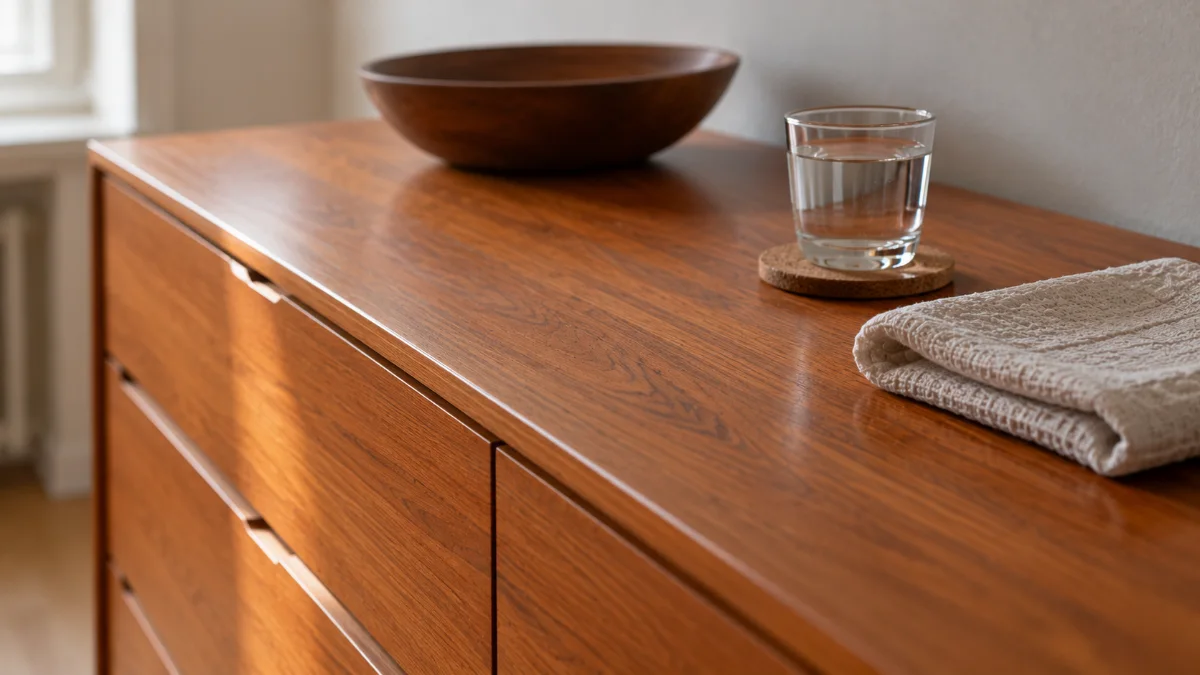
A few habits suit most wood furniture. Dust with a soft, dry cloth, or one that's only slightly damp. Dry the surface afterward. Wipe up spills quickly. Use coasters on nightstands, where a glass of water sits every night.
Oiled and lacquered wood need different care. Oiled wood may need fresh oil from time to time. But oil on a lacquered surface can leave it sticky or cloudy.
Light changes wood, and not always in the same direction. Cherry darkens a lot with exposure to light. Walnut tends to lighten slightly. So two pieces that look close today can drift apart if one sits in direct sun. Move objects on a dresser top now and then. This can help avoid pale "shadows" where a lamp or tray has stood for years.
Solid wood also swells and shrinks as the air changes, so keep it away from heaters and air conditioning vents.
Final Thoughts
A bedroom with mixed wood doesn't need perfect matches. It needs one wood that leads and a few links between the rest.
Start here. Pick the wood piece you're keeping no matter what, usually the bed or the dresser. Before you buy anything new, hold a sample right next to it in daylight. If you'd rather pare the room back first, start with our warm minimalist bedroom ideas article.