
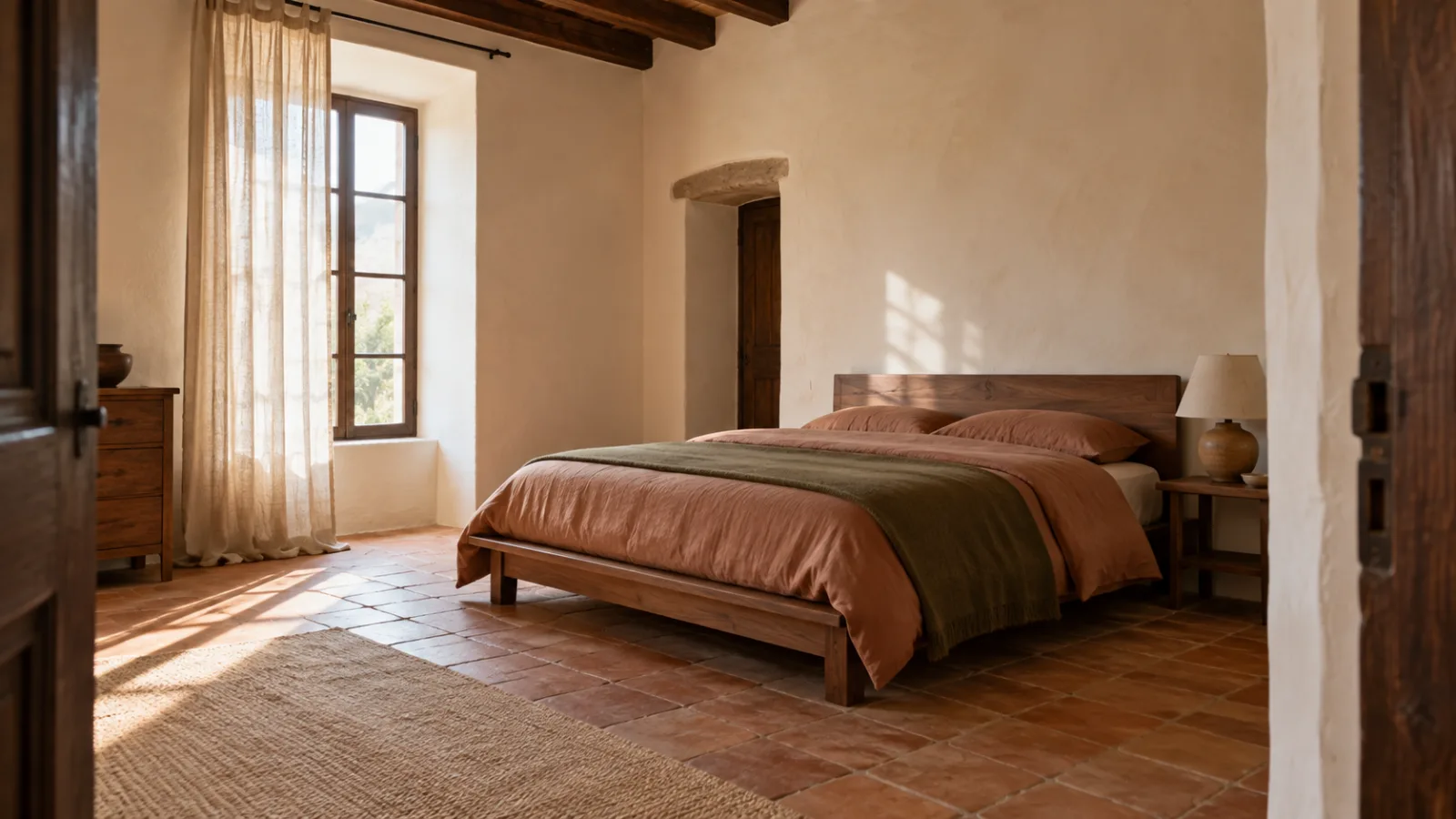
Warm minimalist bedroom ideas all start from the same problem. A bedroom with very little in it can feel peaceful. Or it can feel like a hotel room nobody has checked into yet. The difference usually isn't how much you own.
It comes down to the colors, materials, light and sizes of the few things you keep. That means the undertone of the walls, the grain on the wood, the height of the lamps and how much floor you leave empty. Get those right and the room can feel settled rather than bare. If you want the same approach for the rest of the home, see warm minimalist living room ideas.
Below are 9 ideas, then notes for hot and cool climates, small bedrooms and tighter budgets. Lighting (idea 6) and the space around the bed (idea 2) are good places to begin, because they change how the room feels at night more than anything else.
In this article
- 1. Build a Warm Palette With One Earthy Color, Not All Beige
- 2. Give the Bed Room to Breathe
- 3. Choose Furniture That Looks Lighter
- 4. Add Warmth Through Different Textures, Not More Objects
- 5. Plan the Bedside for Night-Time Use
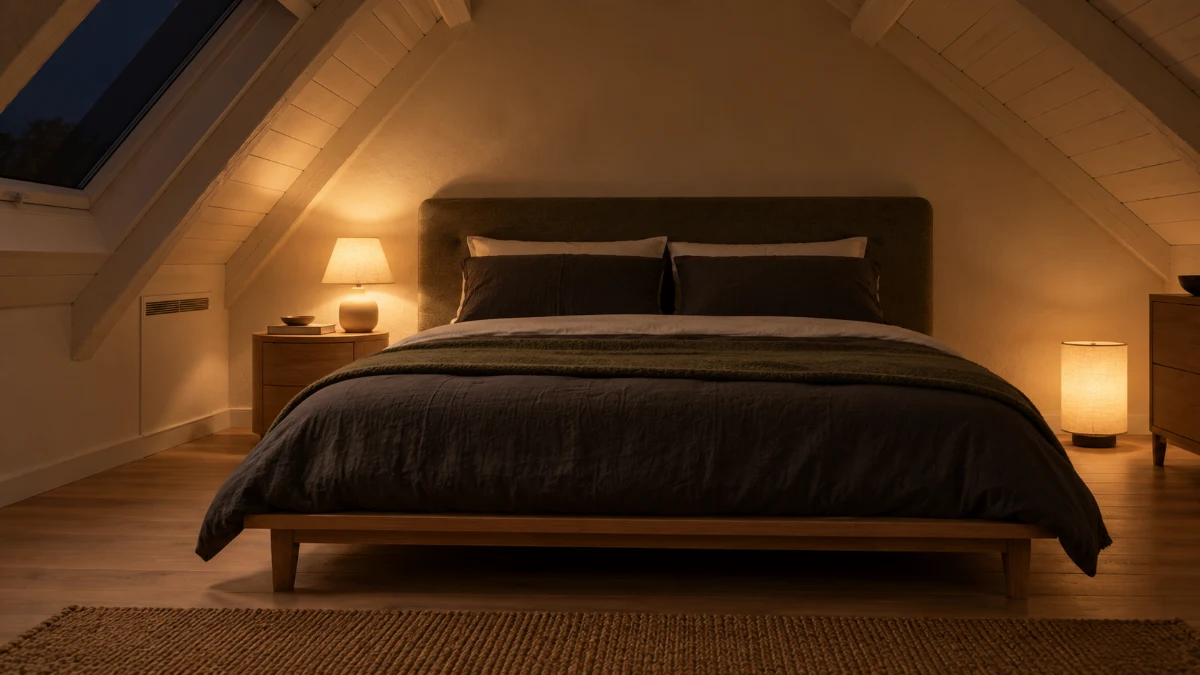
- 6. Layer Minimalist Bedroom Lighting for the Evening
- 7. Keep Storage on One Wall
- 8. Make the Window Part of the Room
- 9. Keep One or Two Personal Pieces
- Warm Minimalist Bedrooms in Hot and Cool Climates
- Small Warm Minimalist Bedroom and Budget Tips
- Final Thoughts
- Frequently Asked Questions
1. Build a Warm Palette With One Earthy Color, Not All Beige
Warm minimalism is often shown as beige on beige. It can work, but a single flat shade tends to look washed out, especially in rooms with little daylight. A better base is a few related neutrals plus one earthy color that does the real work.
The part that matters most is undertone. Warm whites with creamy, beige or slightly pink undertones sit comfortably beside wood and natural fabrics. Stark blue-whites can look chilly next to them. A cool gray beside a yellowish beige can look like two rooms stitched together.
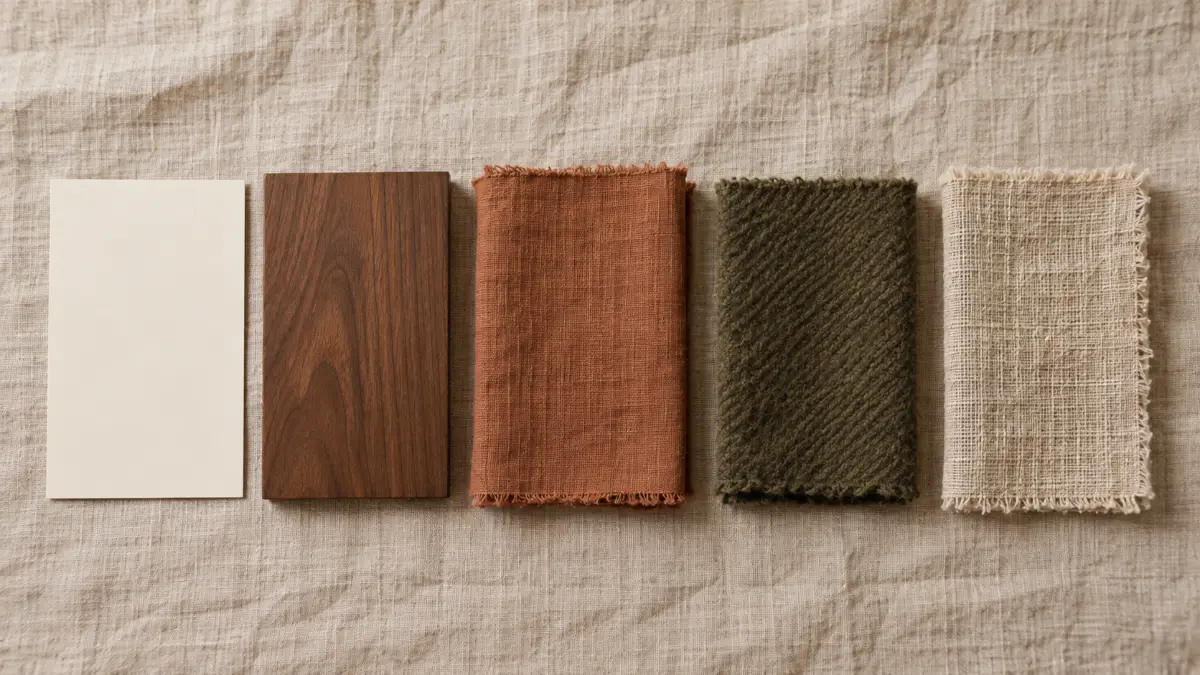
A simple set of warm minimalist bedroom colors to start from:
- Walls: warm white or soft limewash
- Main wood: walnut or mid-brown oak
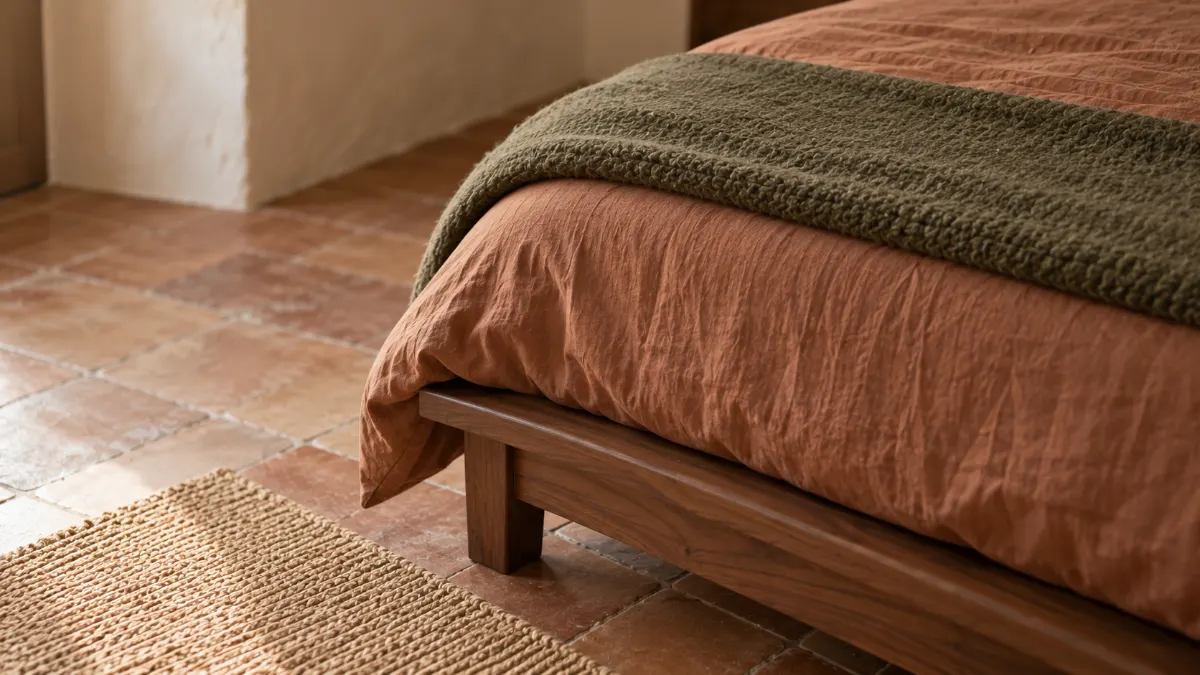
- Bedding: clay, terracotta or rust linen
- Throw or cushion: olive or moss green
- Curtains: flax or undyed linen, close to the wall color
You don't need all of these. Warm white walls, one wood tone and bedding in one earthy color are enough to set the palette.
A test worth doing: paint a large sample board and hold it against your floor and bedding twice, once in daylight and once at night under your bedside lamp. A white that looks right at noon can turn yellow under warm bulbs. The guide to living room color schemes explains undertones and paint testing in more detail, and the same steps work in a bedroom.
Light direction matters too. North-facing rooms in the Northern Hemisphere get cooler, bluer light, so a slightly warmer white can help. In very bright, sunny rooms, a strong yellow-white can look heavy, and a softer off-white often sits better.
2. Give the Bed Room to Breathe
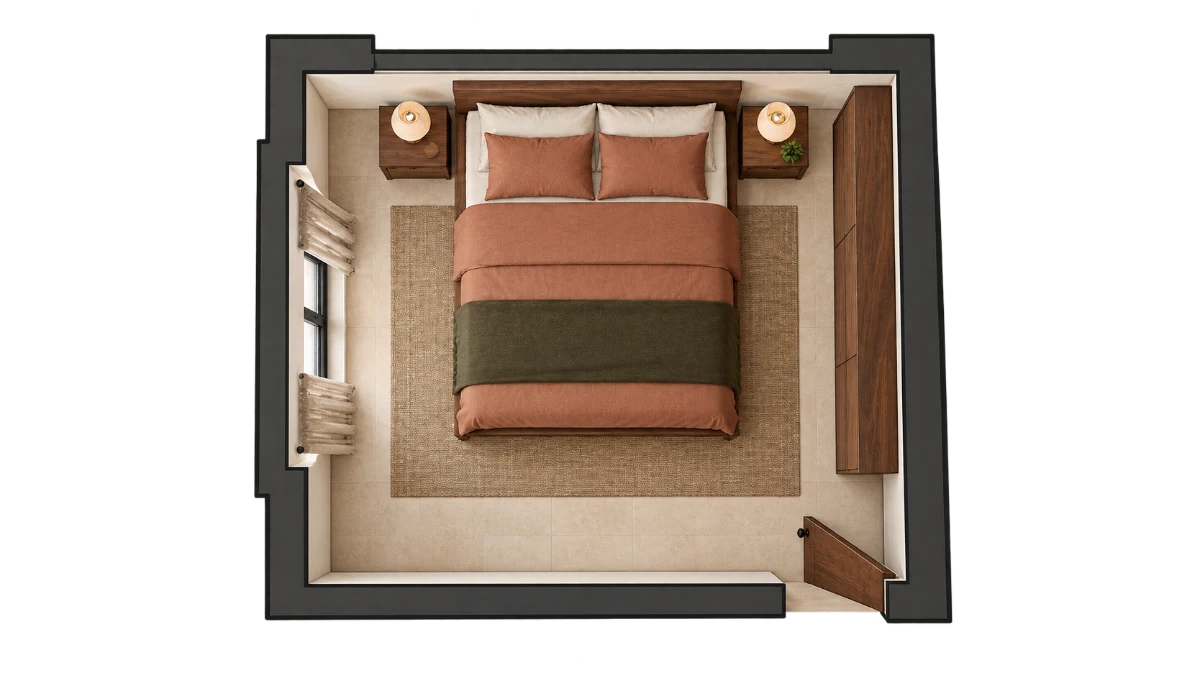
In a minimalist bedroom the bed is by far the largest object, so the space around it shapes the whole room. Clear floor can make a bedroom feel calmer, even when the room is small.
One commonly used reference, Dimensions.com, suggests leaving at least 76 cm (30 in) around the sides and foot of a bed, with about 91 cm (36 in) as a comfortable amount (Dimensions.com). That gives you room to walk past and make the bed without squeezing.
Here's a quick check. A US queen bed is 152 cm (60 in) wide. Centered on one wall of a 3 × 3 m (10 × 10 ft) room, it leaves about 74 cm (29 in) on each side, before you add bedside tables. That's a little under the minimum. Door position and wardrobe placement will decide whether the path is really clear.
The trade-off: pushing the bed into a corner frees floor space, but one side becomes hard to reach and changing sheets gets awkward. It suits a single bed or a very narrow room. For more on where the bed goes, see our small bedroom layout ideas. For a double or queen, centering the bed on a wall usually works better day to day.
3. Choose Furniture That Looks Lighter
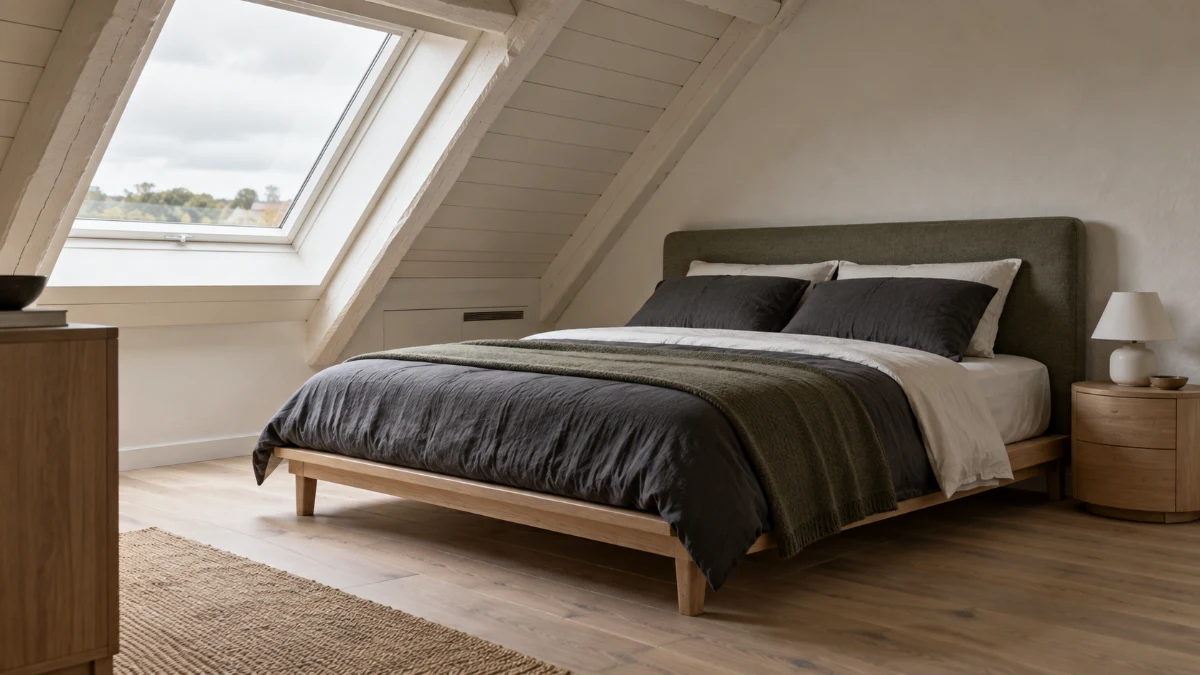
Warm minimalist bedroom furniture has simple lines, but simple doesn't have to mean hard. A few details can make a piece look less bulky:
- Legs that lift the bed or bedside table off the floor, so you can see floor underneath
- Rounded corners on bedside tables and headboards
- An upholstered or wood-slat headboard instead of a solid block
- Visible wood grain rather than flat laminate
One or two of these is plenty. A plain wooden bed next to a rounded bedside table already feels softer than a room of sharp boxes. For mixing wood tones, see bedroom ideas with wood furniture.
The trade-off: a raised bed looks lighter but gathers dust underneath and gives up under-bed storage. A storage bed looks heavier but can replace a chest of drawers. If your wardrobe is already full, the storage bed is often the more sensible choice.
If you like very low, grounded furniture, Japandi bedrooms are a natural direction to explore. See Japandi bedroom ideas.
4. Add Warmth Through Different Textures, Not More Objects
When a room feels flat, the reflex is to add another cushion or vase. Often it needs a different surface instead.
Picture a smooth plaster wall, a bed with open wood grain, washed linen bedding, a wool or jute rug and one ceramic lamp. There's hardly any decoration. But each surface looks and feels different, so the eye has something to rest on. Swap one smooth surface for something woven, brushed, ribbed or grained, and the room can feel warmer without gaining a single object.
Bedding choices come with trade-offs:
- Linen breathes well and softens with washing, but it wrinkles and usually costs more.
- Cotton percale feels crisp and breathable, so it's often suggested for hot sleepers (Sleep Foundation).
- Cotton sateen is smoother and holds more heat, but it can pill or snag as it ages.
- A wool throw adds weight and texture in cool months, but is too much in a hot climate.
For the rug, a common guide is to leave about 45–60 cm (18–24 in) of rug showing on each side and at the foot of the bed (Ruggable). Placing it under the lower two-thirds of the bed is a popular layout. Your feet land on something soft in the morning, and the bed looks anchored rather than floating. For rug materials and sizes in more detail, see the rug size guide.
5. Plan the Bedside for Night-Time Use
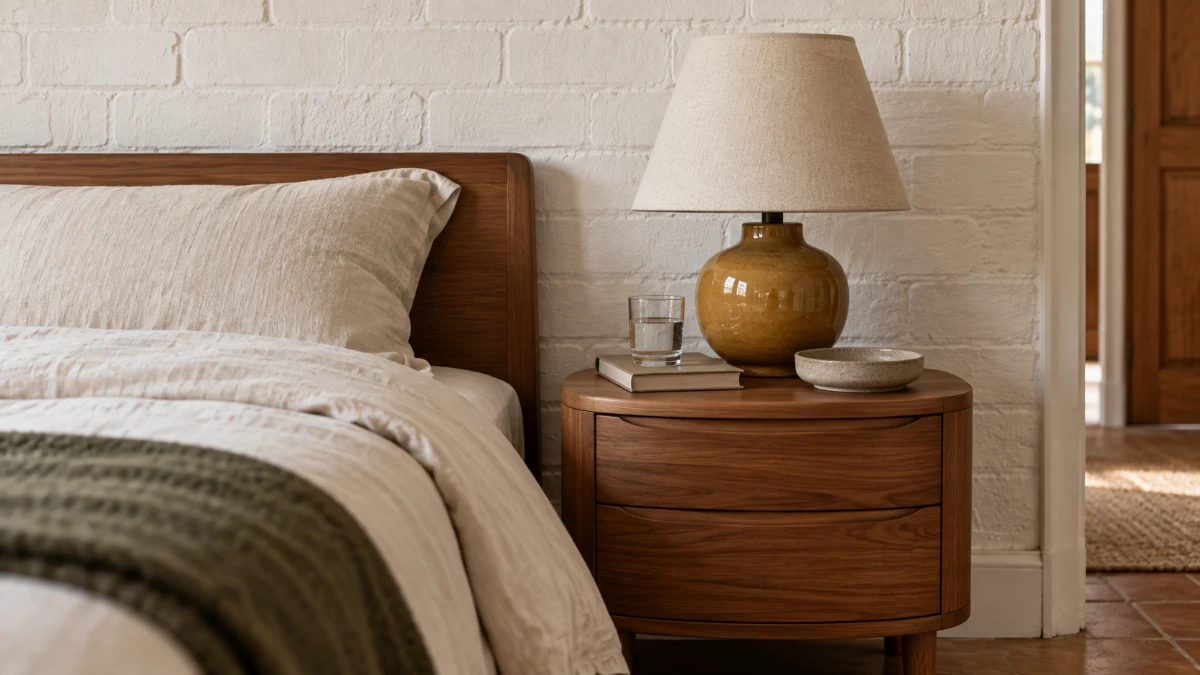
The bedside table is where a minimalist bedroom most often goes wrong, because it slowly becomes a storage shelf. Keep the surface for what you actually reach for at night. That's usually a lamp, water, the book you're reading and a small tray for glasses or a watch.
Chargers, medicine and cables go in a drawer. A drawer with a small notch at the back lets the phone charge inside, out of sight.
Size matters more than people expect. Wayfair's guide suggests a bedside table top that is level with the top of the mattress or up to about 10 cm (4 in) above it, with standard widths of about 53–71 cm (21–28 in) (Wayfair). That way, reaching for water doesn't mean stretching up or down.
In tight rooms, wall lights free up the surface entirely. One lighting retailer suggests mounting bedside wall lights about 76–91 cm (30–36 in) above the top of the mattress (Montreal Lighting & Hardware). Check the height against where your shoulders are when you sit up in bed, and make sure you can reach the switch.
6. Layer Minimalist Bedroom Lighting for the Evening
A single bright ceiling light can make a warm minimalist bedroom feel clinical. It lights everything evenly, flattens texture and gives you no way to wind down.
Give different lights different jobs:
- General light: a ceiling fixture for cleaning and getting dressed.
- Task light: a bedside lamp or wall light for reading.
- Mood light: a small lamp on a dresser or the floor for a low glow in the evening.
IKEA's bedroom lighting guide sets the room up in a similar way, with general, reading and mood lights.
For bulbs, warm white around 2700K is a good default in a bedroom. Some bulbs go warmer still, which can suit lamps you only use at night. A CRI of 90 or higher helps wood and linen keep their true color. Dimmers, or dimmable smart bulbs, let one lamp do two jobs. The living room lighting guide explains color temperature and CRI in more detail.
Keep evening light low in the room, below eye level. The Sleep Foundation notes that lighting with a lower color temperature and brightness can make it easier to feel drowsy. It also recommends a dark, quiet and fairly cool bedroom, around 15.6–22 °C (60–71 °F) (Sleep Foundation).
A simple test: one evening, switch the ceiling light off entirely. Can you read, find clothes and walk to the door safely? If not, you're missing a layer. Often it's a low plug-in night light or a small motion-sensor light under the bed.
7. Keep Storage on One Wall
Minimalism is much easier when everything has a home. The useful move isn't hiding things all over the room. It's putting most of your storage in one place.
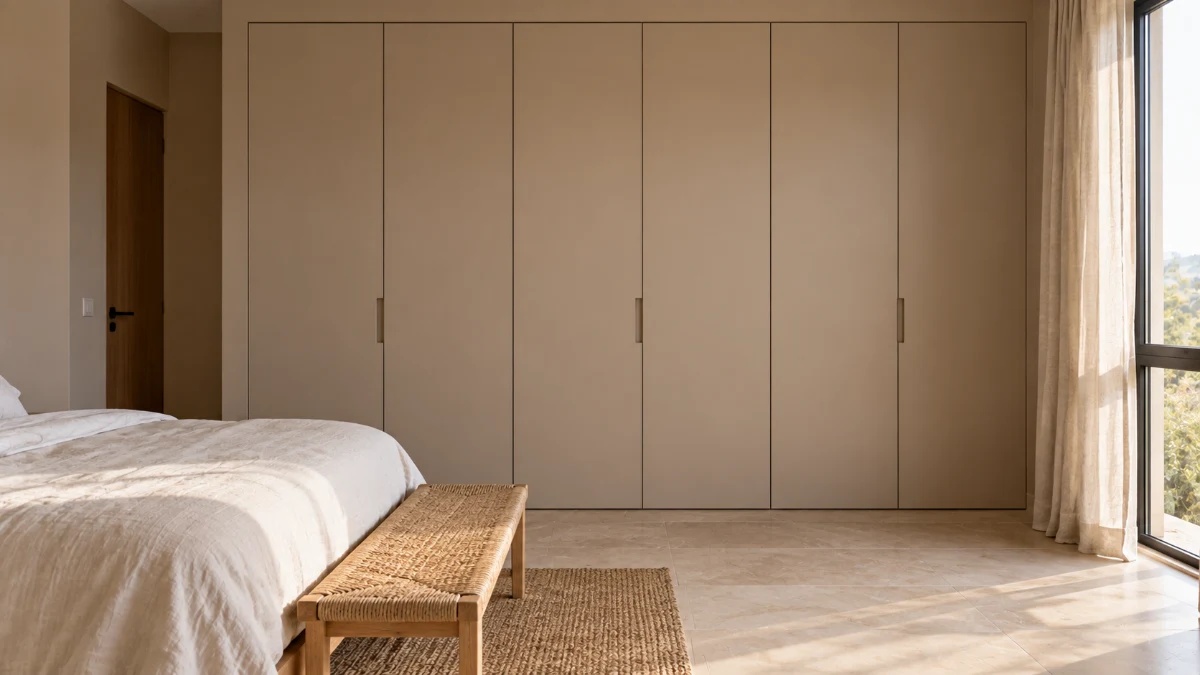
One tall wardrobe along a single wall can look quieter than three smaller units spread around, because the eye sees it as one surface. A few details help:
- Take it close to the ceiling, which also leaves no dusty gap on top.
- Choose or paint doors close to the wall color.
- Use simple recessed pulls instead of large handles.
- Allow enough depth for hangers. A standard reach-in closet is about 61 cm (24 in) deep (Closet World).
Clothes, spare bedding, cables and bags don't need to be part of how the room looks. Keep display for the few things you actually want to see.
If built-ins aren't in the budget, an open clothes rail behind a floor-length curtain in the wall color costs far less and softens the room at the same time.
In humid climates, closed wardrobes can trap moisture. Louvered or cane-panel doors, some airflow and keeping damp clothing out of the wardrobe can help. The guide to furniture for a humid climate covers humidity levels and drying in more detail.
8. Make the Window Part of the Room
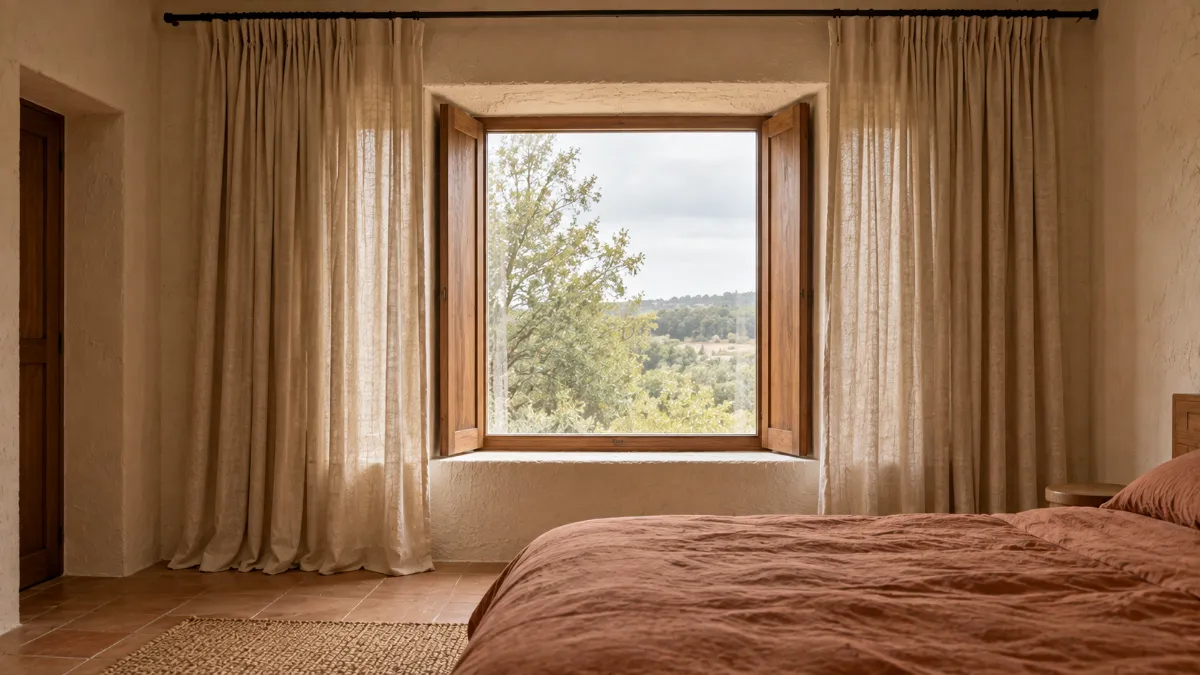
Windows are often dressed last, after the furniture. In a minimalist bedroom, curtains are one of the largest soft surfaces you have, so they're worth planning.
Here are typical measurements from one curtain guide (Taskrabbit):
- Height: at least 10–15 cm (4–6 in) above the window frame, or higher, closer to the ceiling, if you have room.
- Width: brackets about 10–15 cm (4–6 in) past each side of the frame, so open curtains don't cover much of the glass.
- Fullness: curtains about 2–2.5 times the width of the window, so they fall in soft folds.
- Length: floor-length, with the hem about 1 cm (½ in) off the floor for a neat finish.
Choose a color close to the wall, such as flax on warm white, oatmeal on taupe or cream on clay. Then the curtain adds softness rather than a new focal point.
Layering gives you control through the day. Pair a linen curtain with a blackout lining, or keep a blackout roller blind behind it. This matters wherever you live. In northern cities, summer sunrise can come very early, and the Sleep Foundation suggests keeping the bedroom as dark as possible at bedtime.
9. Keep One or Two Personal Pieces
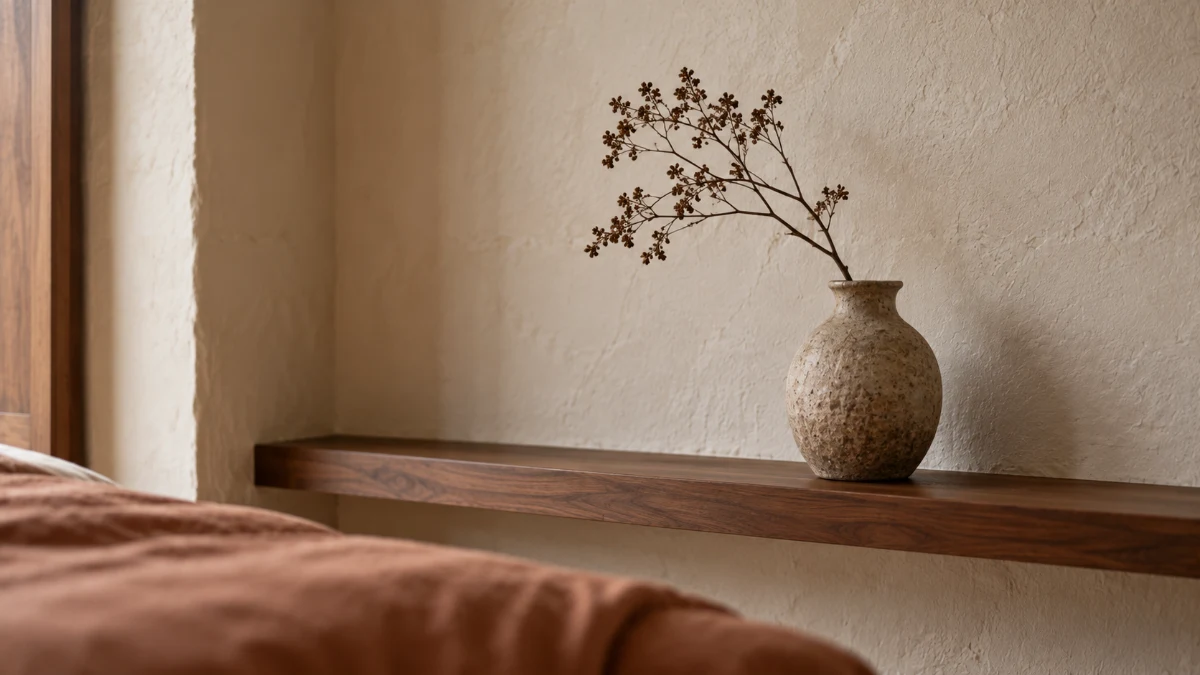
A bedroom is private, and it should look like someone lives there. That doesn't mean a full shelf. It means a small number of things that belong to you, like a piece of art, a handmade ceramic, a woven textile or a family photo. One object with space around it often stands out more than ten competing for attention.
If you hang art above the bed, one common guide is to keep the bottom edge about 15–20 cm (6–8 in) above the headboard. Choose a piece at least two-thirds of the headboard's width, or a pair that adds up to that (Spoak). If you want greenery, one plant that suits the light in the room is enough.
A mistake to avoid: rows of small objects along a dresser. They make the eye jump from item to item and can look like clutter, even in an otherwise bare room. If you own more pieces you love, rotate them every few months.
Warm Minimalist Bedrooms in Hot and Cool Climates
The same ideas apply everywhere, but the materials change.
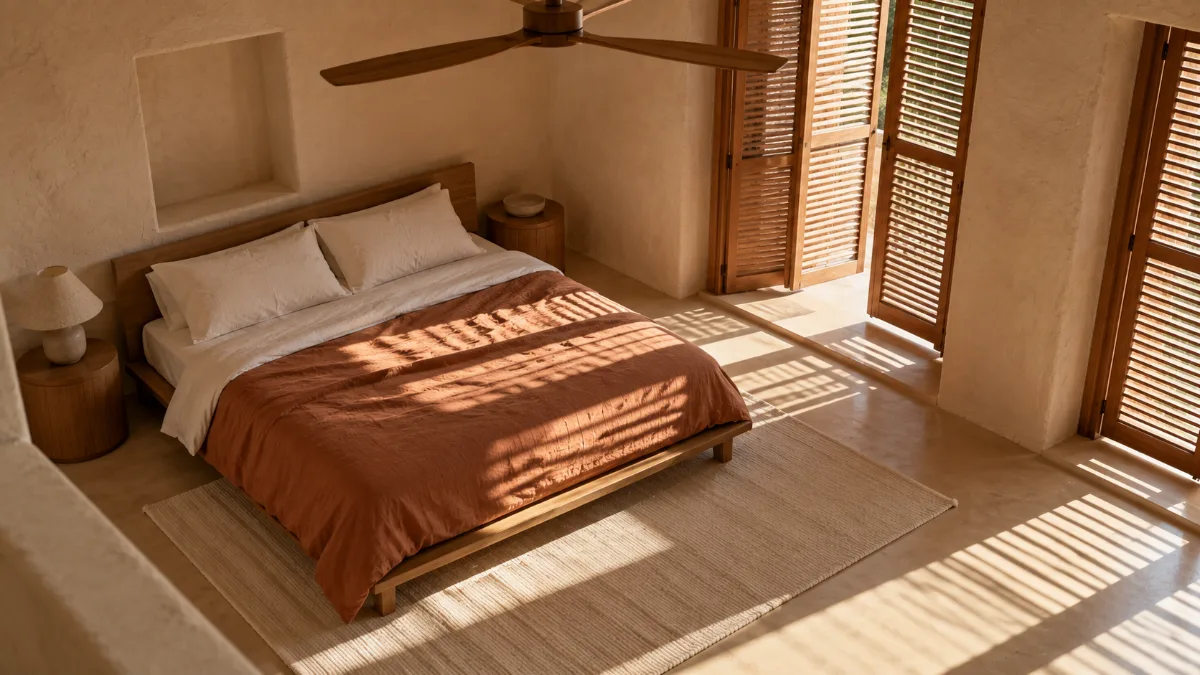
In hot or humid climates, warmth can come from wood tones and lamp light rather than heavy layers.
- Choose cotton percale or linen sheets with a light coverlet instead of a thick duvet.
- Choose a washable rug that's easy to dry, such as flatweave cotton.
- A bed raised on legs lets air move underneath.
- A quiet ceiling fan in wood or matte white blends in better than a bulky standing fan.
- Keep colors on the lighter side of earthy, like clay, sand or soft olive, so the room doesn't feel heavy in the heat.
In cool climates, layers become part of the design. Add a wool throw, a larger wool rug and lined curtains that hold heat at night. Deeper colors such as olive, walnut brown or rust work well on bedding or one painted wall, and they can make the room feel snug.
Small Warm Minimalist Bedroom and Budget Tips
For a small warm minimalist bedroom:
- Use wall lights instead of table lamps, and a narrow floating shelf instead of a full bedside table.
- Choose a storage bed if the wardrobe is tight.
- Keep curtains and wardrobe doors close to the wall color, so they blend in.
- Leave at least one corner empty.
On a budget, spend in this order:
- Warm bulbs and one good lamp. The cheapest change, and often the most noticeable.
- Bedding in one earthy color.
- Paint.
- Curtains hung higher and wider.
- Furniture, last.
Before buying anything, clear the bedside table and dresser top. It costs nothing and shows you what the room actually needs. Secondhand solid-wood furniture can be worth a look when you find a piece with the right size and sturdy joints.
Final Thoughts
A warm minimalist bedroom comes from a few choices made well: the undertone of the walls, the wood, the curtains, the light and the space around the bed. You don't need a large room or expensive furniture to get there.
Start with the lighting. If your bedside lamp uses a cool white bulb, try a warmer 2700K one and switch off the ceiling light for an evening. See how the room changes before you make any bigger changes.