
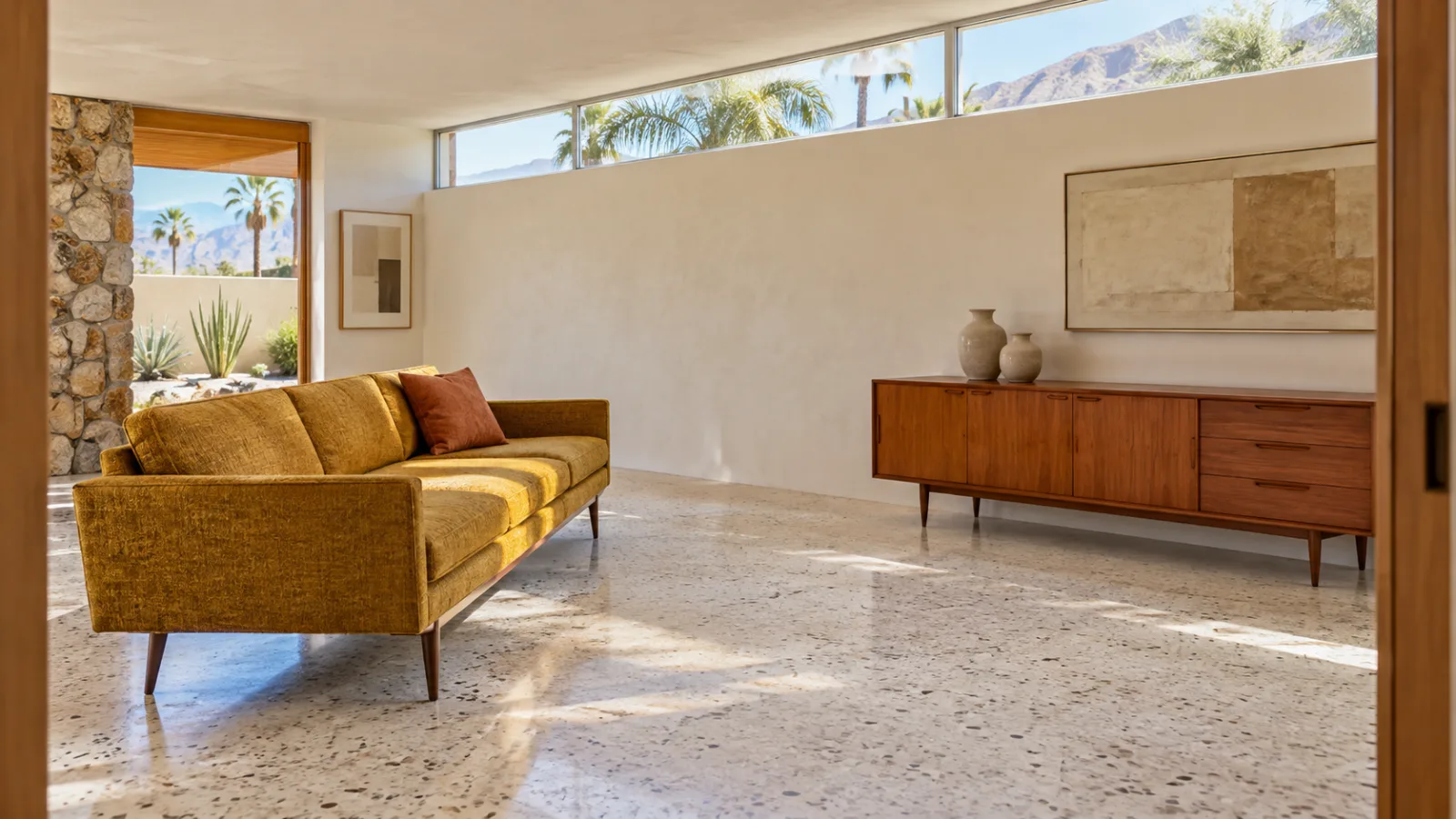
Mid-century modern living room ideas tend to go wrong in one of two ways. Some rooms get one tapered-leg side table and stop there. Others get so many teak cabinets, starburst clocks and orange cushions that they look like a movie set from 1962.
The rooms that last sit somewhere in between. They have a few pieces with clear mid-century shapes, some warm wood and a little bold color.
If you're starting from scratch, read section 2 on what to look for in the furniture and section 6 on mixing old and new pieces first.
In this article
- What Is a Mid-Century Modern Living Room?
- 1. Start With One Signature Piece
- 2. Mid-Century Modern Furniture: What to Look For
- 3. Choose a Mid-Century Modern Sofa That Looks Light
- 4. Teak, Walnut and How Much Wood Is Enough
- 5. Mid-Century Modern Living Room Colors
- 6. Mix Vintage-Style and New Pieces
- 7. Keep the Layout Low and Open
- 8. Three Regional Versions of the Style
- 9. Add Curves, Lamps and a Few Favorite Objects
- 10. Small Mid-Century Modern Living Room Ideas
- Final Thoughts
- Frequently Asked Questions
What Is a Mid-Century Modern Living Room?
A mid-century modern living room uses furniture and ideas from roughly the mid-1940s to the late 1960s. Think low, simple pieces on slim legs, warm woods like teak and walnut, and a few bold colors. The furniture gets its charm from its shape and wood, not from carving or trim.
The name came later than the furniture. It's usually credited to writer Cara Greenberg's 1984 book Mid-Century Modern: Furniture of the 1950s (Wikipedia). The exact years vary by source. Some writers stretch the period from the 1930s to the mid-1960s. Others limit it to about a decade after the Second World War (Curbed, via Nordic Design).
Most rooms today mix two versions of the style. American pieces often use walnut, molded plywood and fiberglass. Danish and Swedish pieces lean on teak, oak and woven seats.
1. Start With One Signature Piece
Most mid-century rooms that look like a theme started with a shopping list. It's easier to start with one piece that clearly says "mid-century" and build around it.
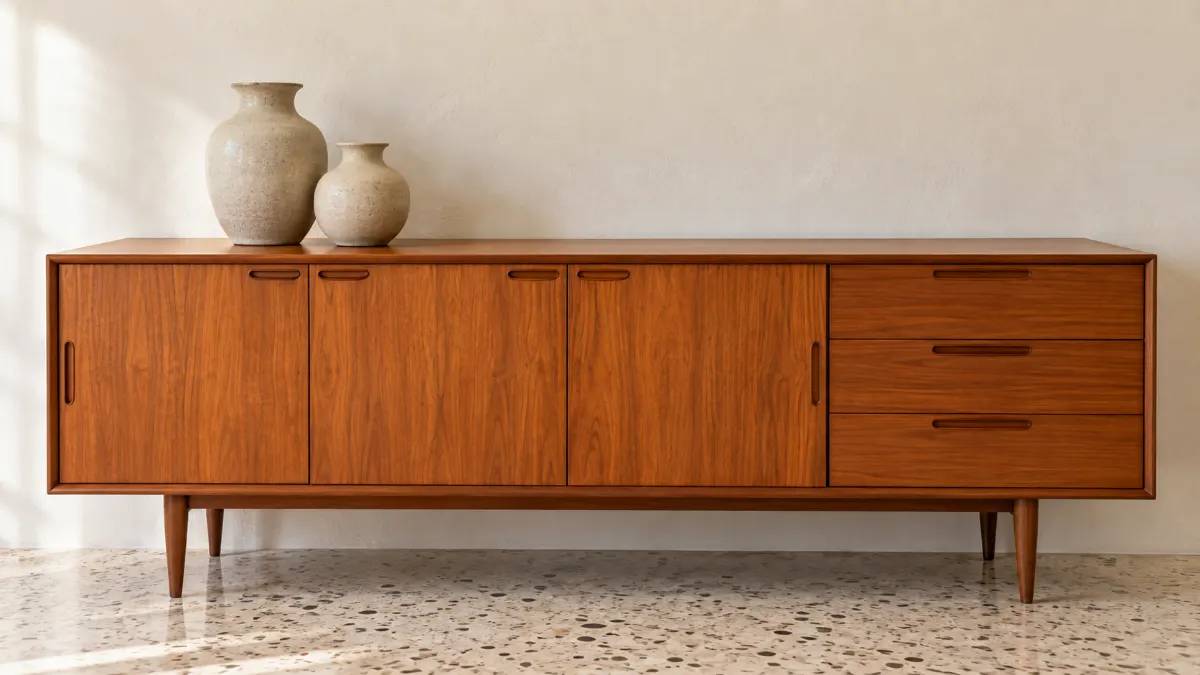
A teak credenza is the classic choice. A credenza is a long, low cabinet, often with sliding doors. It sits well under a piece of art or a TV. A wooden lounge chair, a low sofa on tapered legs or an oval walnut coffee table can do the same job.
Once you have that piece, don't try to match it. A plain new sofa often looks more natural next to a vintage-style credenza than a full matching set. It's also easier to change later.
If the credenza will hold a TV, check its depth before you buy. Many vintage designs are fairly shallow. Media unit widths are covered in the TV wall ideas guide.
2. Mid-Century Modern Furniture: What to Look For
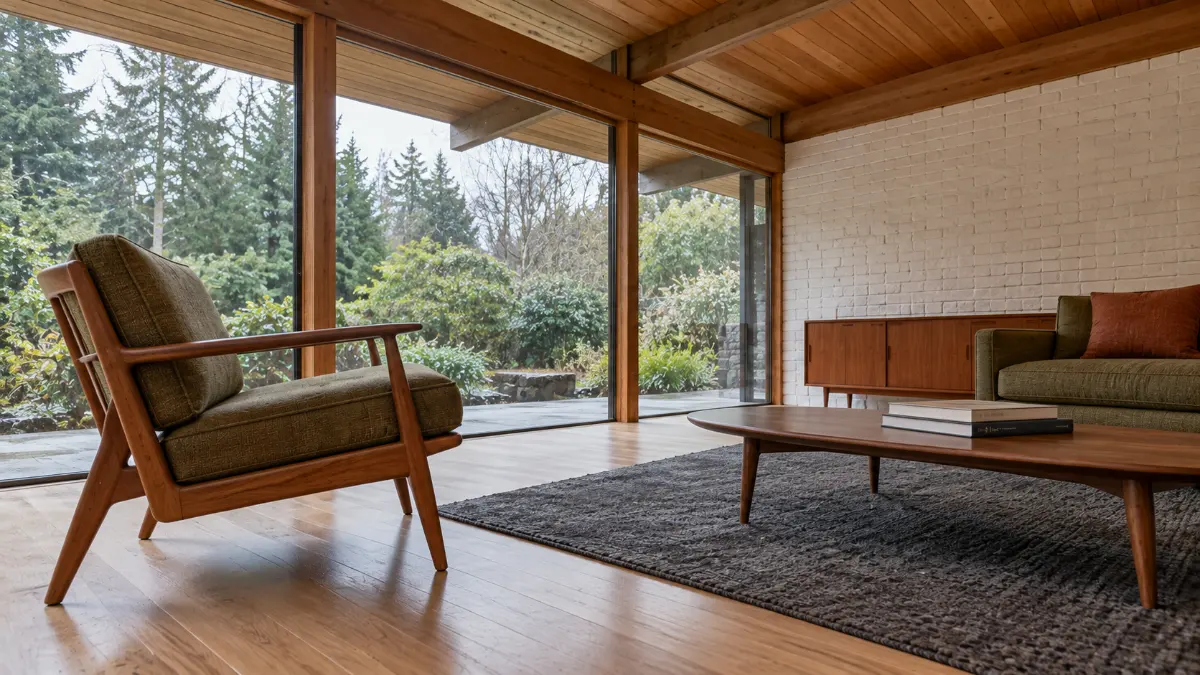
Mid-century modern furniture sits low and looks light. You can usually see how it's made, from the legs to the wooden frame. These details matter more than whether a piece is actually old.
| Feature | What to look for | What to watch |
|---|---|---|
| Tapered legs | Legs that get thinner toward the floor, often angled outward | Angled legs take up more floor than the top suggests |
| Low height | Pieces that sit lower than most modern furniture | Very low seats are harder to get out of |
| Visible wood frame | Wooden arms, rails or chair shells you can see | Wooden arms feel firm to lean on |
| Teak or walnut | Warm wood with visible grain, solid or veneered | Veneer edges can chip and are hard to refinish |
| Fitted back cushions | A firm back instead of loose pillows | Sits more upright than a pillow-back sofa |
| Simple handles | Cut-out finger pulls, small knobs, sliding doors | Cut-out pulls can be awkward for stiff hands |
Veneer is a thin layer of real wood glued over a core. It's common in mid-century pieces and isn't a flaw.
When you shop online, plain search terms tend to work better than the style name. Try "tapered leg sofa", "teak sideboard" or "walnut credenza". Seat height and depth are covered in how to choose a sofa.
3. Choose a Mid-Century Modern Sofa That Looks Light
The sofa is where many mid-century rooms quietly lose the plot. A deep, puffy sectional can hide every other piece in the room.
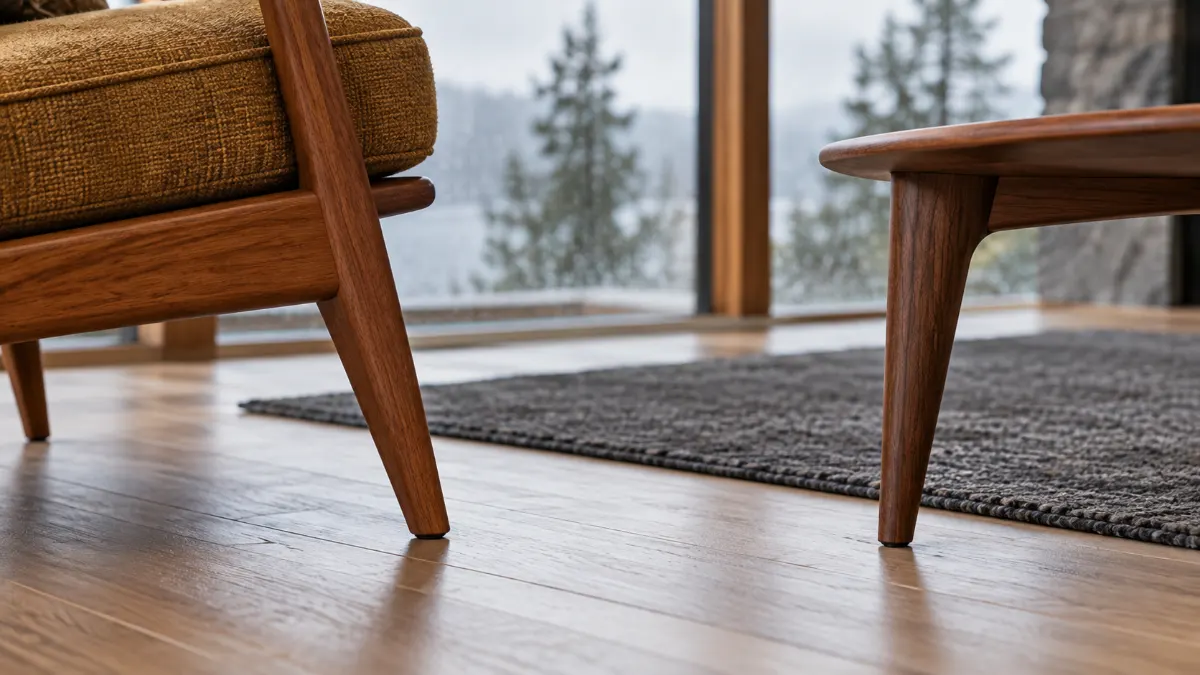
A mid-century modern sofa usually has a lowish back and slim arms. The back cushions are fitted, and you can see the legs. From the side, it should look like a frame with cushions, not a block of foam.
A mustard tweed sofa can be the main color in the room. Tweed is a textured wool-style weave, and it tends to hide marks better than flat fabric. For a quieter room, choose oatmeal, warm gray or soft brown, and add color somewhere else. Cognac leather is another classic, covered in living room ideas with a brown sofa.
The trade-off is comfort. Classic mid-century sofas sit upright and are often less deep. If your family likes to stretch out, a deeper sofa can still fit the style if it has slim arms and visible legs. And instead of a second big sofa, try a single lounge or accent chair with slim arms and tapered legs.
4. Teak, Walnut and How Much Wood Is Enough
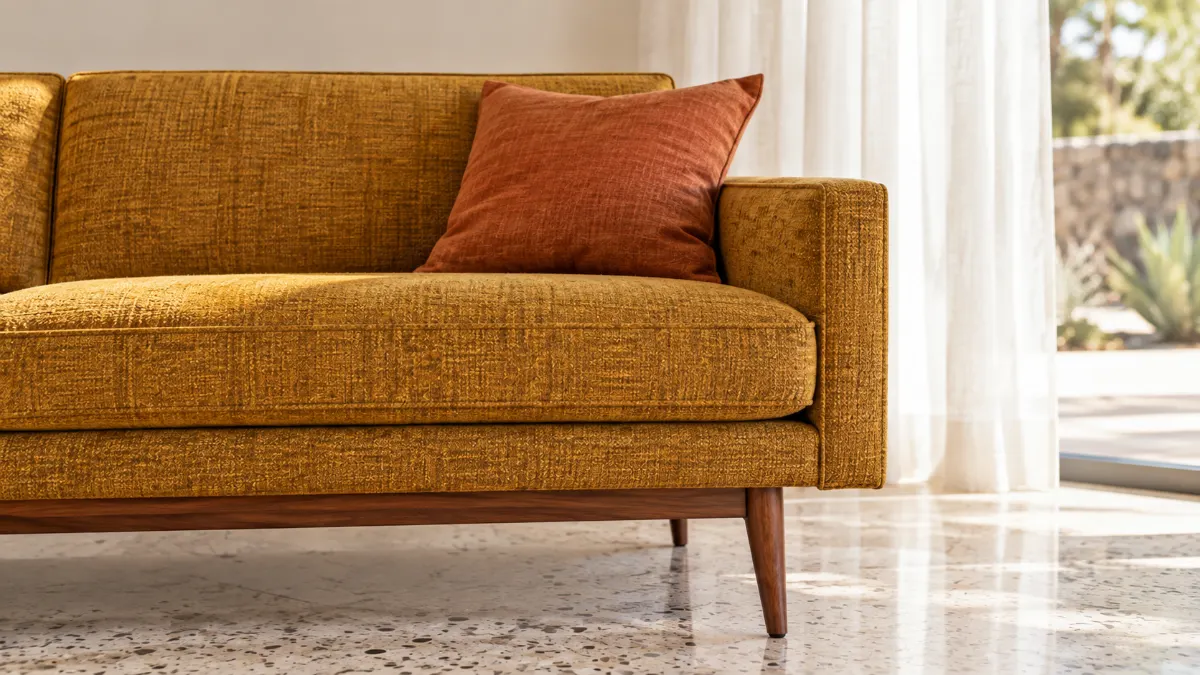
Teak and walnut are the two woods most linked with this style. Teak looks more golden. Walnut is darker and browner.
You don't need a matching set. A walnut coffee table can sit beside a teak credenza if both woods are warm and one clearly leads. The problem starts when everything is wood. Then the room can feel like an office from 1965. A fabric sofa, a painted wall or a metal lamp helps break it up.
If you're buying vintage, check the wood. Some Scandinavian pieces are Brazilian rosewood, not teak. Brazilian rosewood has been on CITES Appendix I since 1992. CITES is the international agreement on trade in endangered species. Selling this wood, especially across borders, can require documents (TRAFFIC, Lyon & Turnbull). If a listing says "rosewood", ask the seller which kind it is and whether there's paperwork.
Climate matters too. In cold-winter homes, keep veneered pieces away from radiators, because dry heat can loosen old veneer. In humid homes, solid teak copes well, and care tips are in furniture for a humid climate.
5. Mid-Century Modern Living Room Colors
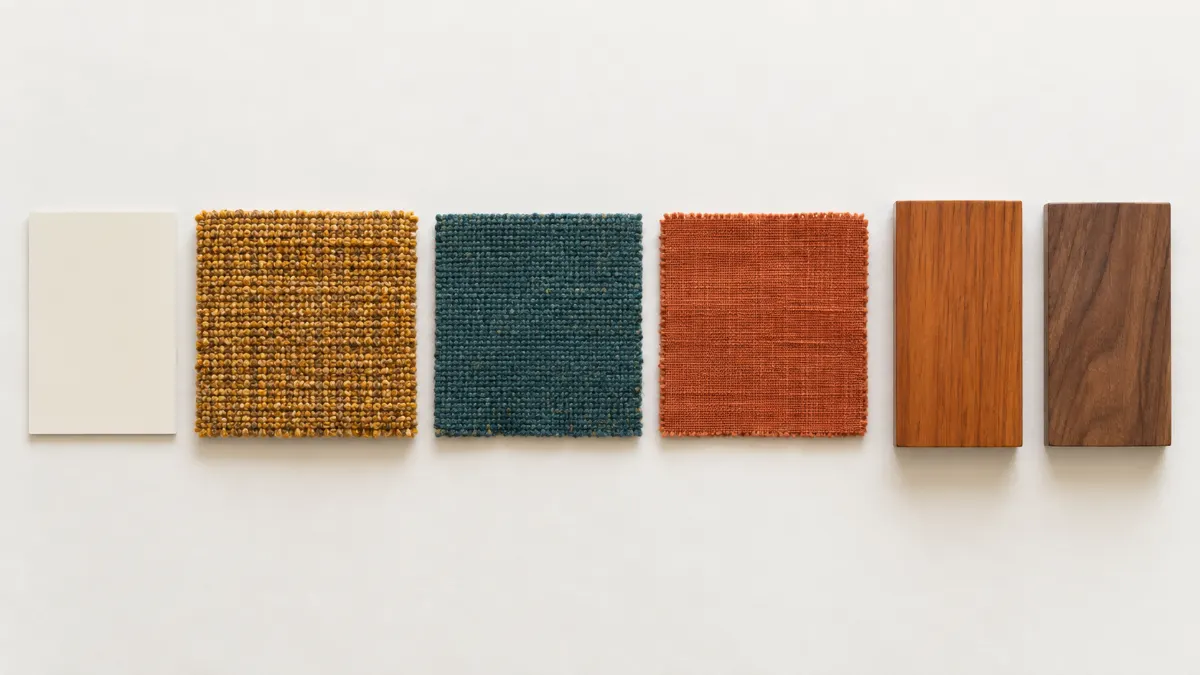
Mid-century modern living room colors usually include mustard, teal, olive, rust, burnt orange and warm brown. They sit against warm white or pale neutral walls. The wood acts like a third color.
| Walls | Main accent | Second accent | Wood |
|---|---|---|---|
| Warm white | Mustard | Rust | Teak |
| Soft greige | Teal | Mustard | Walnut |
| Pale olive | Burnt orange | Cream | Walnut |
| Warm white | Deep green | Brown leather | Teak |
| Cream | Rust | Teal | Mixed warm woods |
Pick one row. Then decide where the main accent goes. It could be the sofa, a lounge chair or one painted wall.
The mistake is using mustard, teal and orange all at full strength. That's what makes a room look like a retro theme. Try repeating each accent at least twice instead. A rust cushion on the sofa and a rust vase on the credenza look chosen on purpose.
How daylight changes paint colors is covered in living room color schemes. Olive can pair well with teak and walnut furniture. Our olive-green living room ideas article covers more pairings.
6. Mix Vintage-Style and New Pieces
A room where everything came from the same "mid-century collection" tends to look like the showroom it came from. Mixing old and new pieces usually feels more relaxed.
Mix by shape and material, not by age. A new low sofa works with an older teak credenza because both are long and low. New artwork keeps older furniture from looking dated. Let the new pieces look new. Fake "aged" finishes tend to clash with the clean lines.
Some listings use a famous designer's name. Check whether the piece is a licensed reissue or just "inspired by" the original. The two can differ a lot in materials and price.
Before buying a vintage piece, check these things.
- Legs and joints. Tapered legs often screw into metal plates that loosen. Press on each corner and feel for wobble.
- Veneer and finish. Look for lifting edges and white water rings.
- Drawers and sliding doors. They should open and close smoothly.
- Smell. Closed cabinets can hold smoke or a musty smell.
- The way in. Long pieces need to fit up the stairs or into the elevator. Measuring is covered in how to choose a sofa.
7. Keep the Layout Low and Open
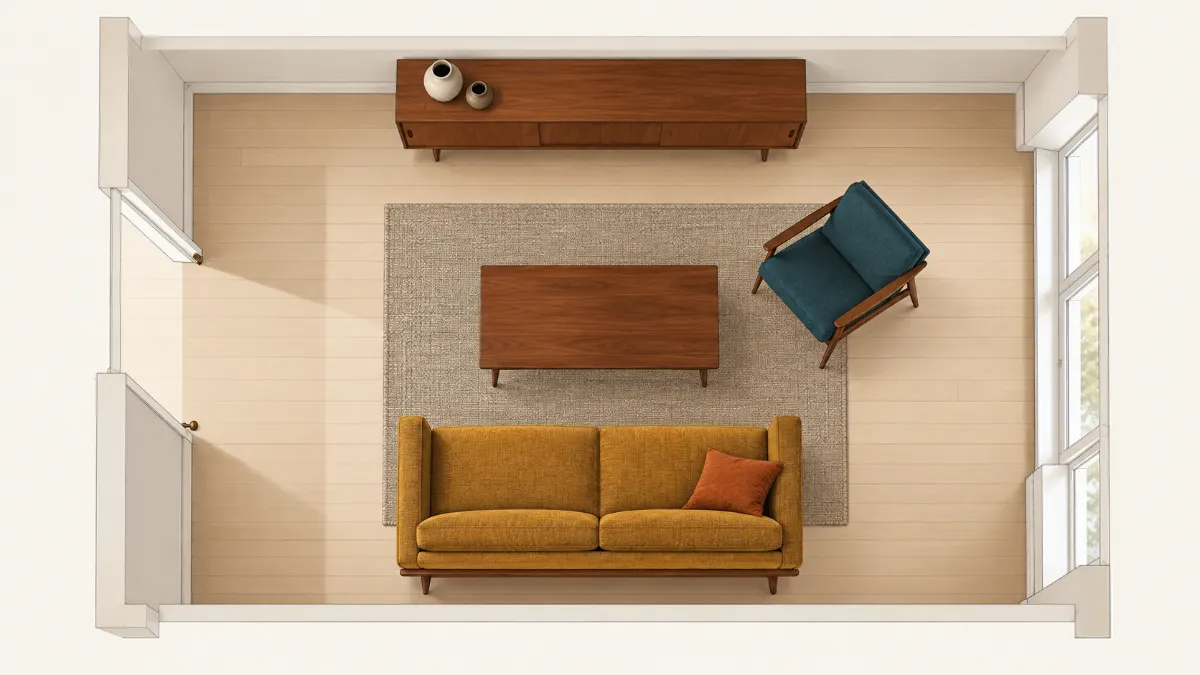
Arrange the room so you can see the floor around and under the furniture. One simple setup is a sofa facing a low coffee table, with one lounge chair angled toward it. The credenza goes along one wall with its legs in clear view.
The room doesn't need to be symmetrical. The furniture already has strong shapes, so one lounge chair often looks better than a matching pair. Walkway widths and the gap between sofa and coffee table are covered in how to arrange living room furniture.
Low furniture leaves a lot of empty wall above it. A tall, bulky bookcase there breaks up the low look. One piece of art above the credenza, or a low wall shelf, keeps it calm. More storage ideas are in our living room storage ideas.
8. Three Regional Versions of the Style
Picking one regional version can give your room a clearer look than a general "retro" mix.
Palm Springs and California Modern
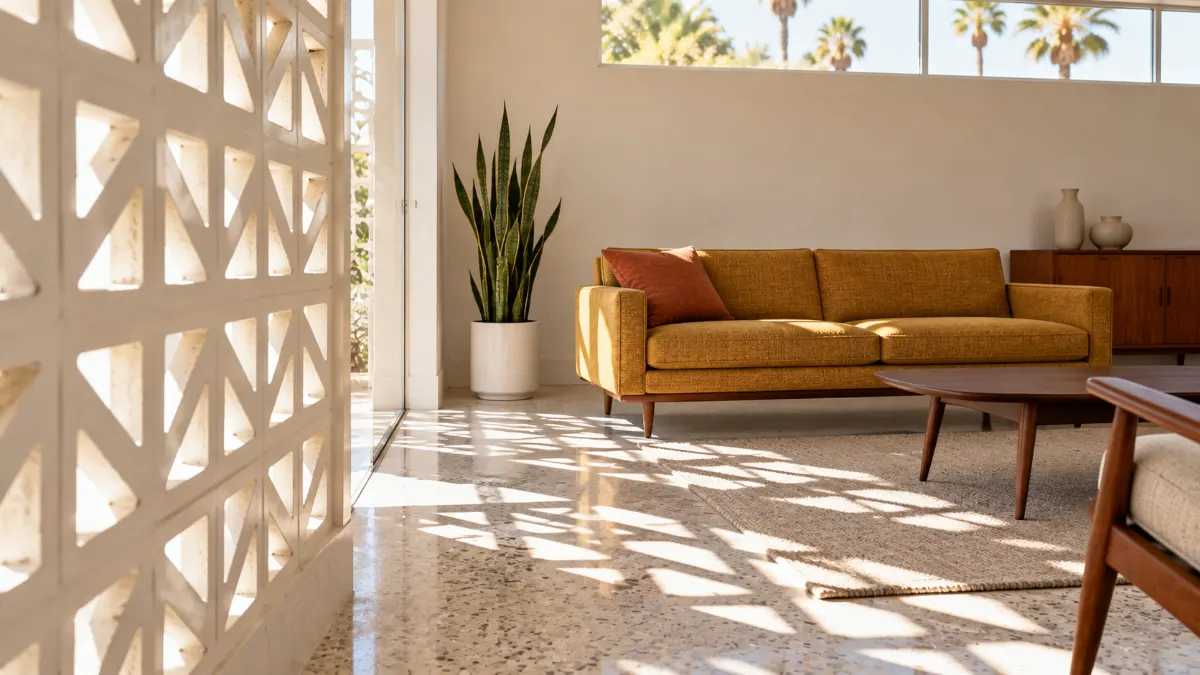
Palm Springs has been described as having the largest concentration of mid-century modern architecture per person in the US (California Preservation Foundation). Rooms in this style tend to be bright. Walls are pale, and floors are often terrazzo, a smooth floor made with chips of stone set in cement. Patterned breeze-block screens and bold colors like mustard and turquoise are common. Pale walls, one strong color and a few large plants borrow the look without a desert house.
Scandinavian Mid-Century
The Danish and Swedish version is quieter. It uses teak and oak, woven seats, wool fabrics and soft pendant lights. It's the easiest version to mix with plain modern furniture.
Mid-Century in an Older European Apartment
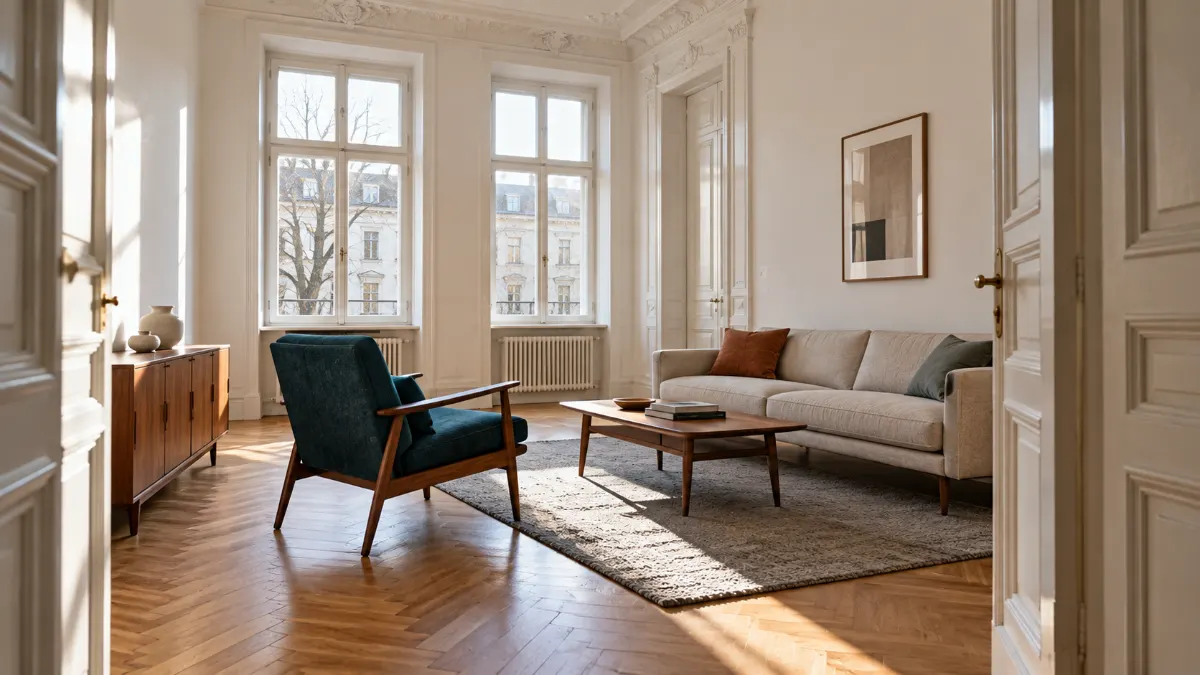
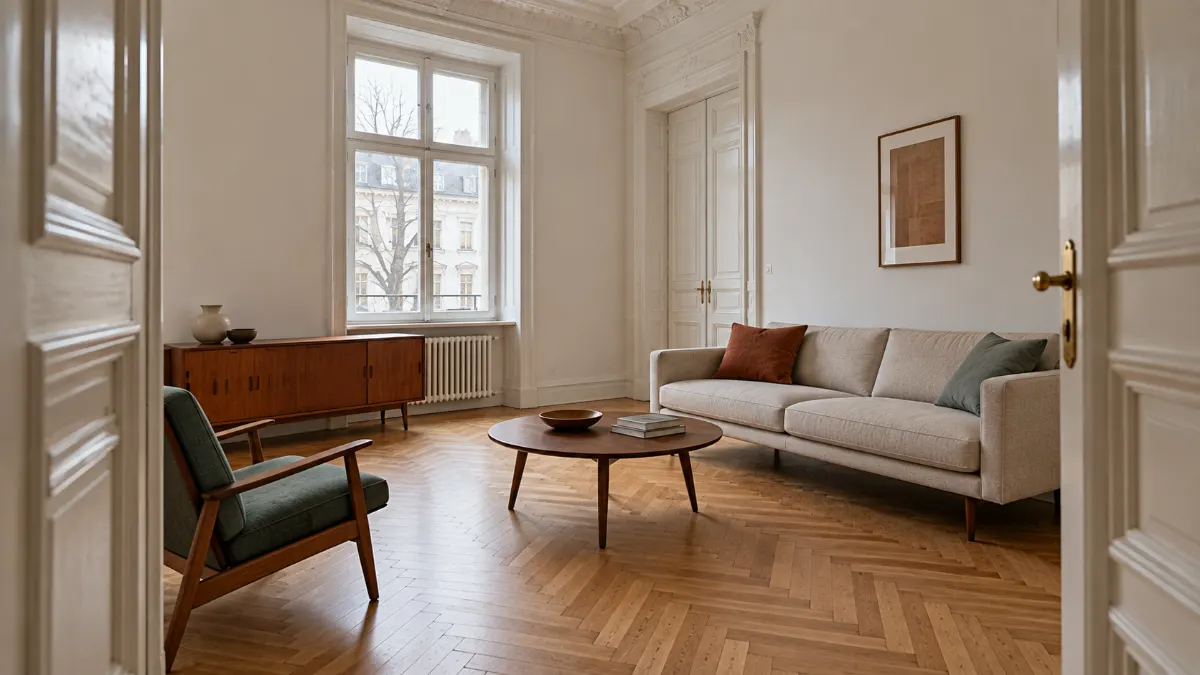
Many older apartments in Berlin, Paris or London have very high ceilings. Low mid-century pieces can look lost under them. Add one taller element, such as a floor lamp, a tall plant or a large piece of art.
9. Add Curves, Lamps and a Few Favorite Objects
A room full of straight cabinets and rectangular tables can start to feel stiff. A few curves soften it.
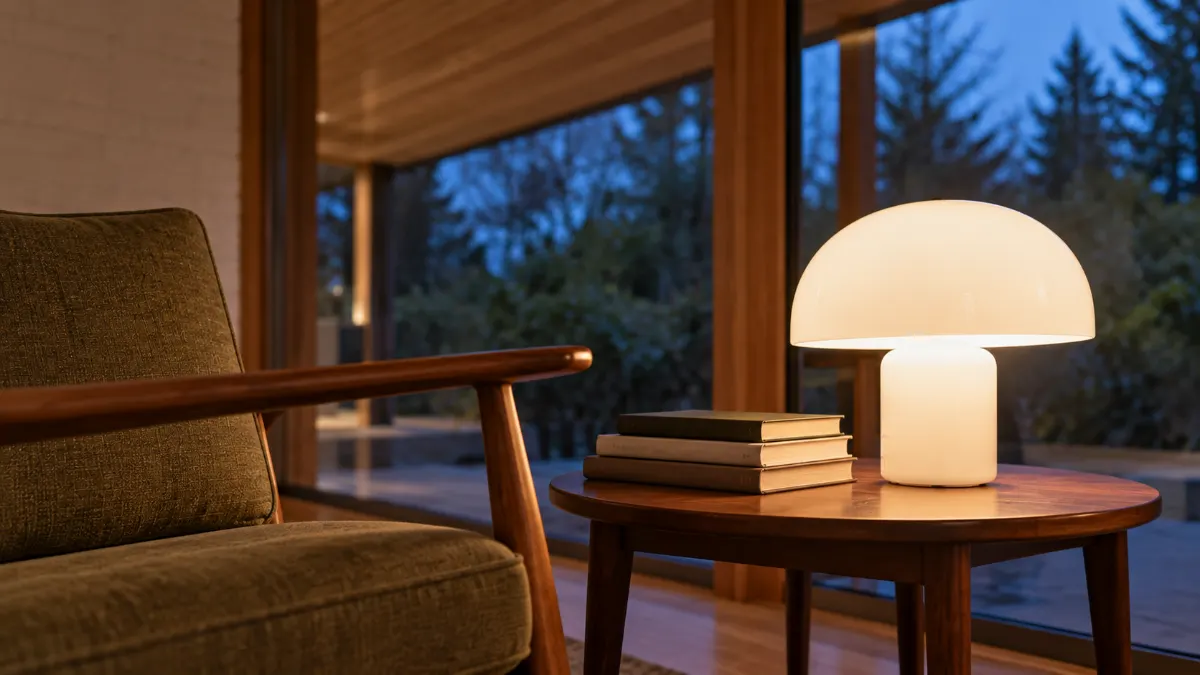
An oval coffee table can help. So can a round glass pendant, a mushroom-shaped table lamp or a round mirror above the credenza. Curved sofas and chairs are covered in more depth in our organic modern living room ideas. Bulb color and lamp placement are in living room lighting ideas.
Keep the small objects to a few. A lamp, a short stack of books and one bowl on the credenza usually look better than a top covered end to end. Some empty space around a good piece helps it stand out.
10. Small Mid-Century Modern Living Room Ideas
In a small mid-century modern living room, use fewer pieces that look light. A compact sofa on visible legs and one lounge chair may be enough seating. Add one credenza for storage and a slim or round coffee table.
Going miniature everywhere can look busy. One solid piece, usually the credenza, gives the room some weight. It also hides everyday clutter. Apartment-size sofas are covered in small condo living room ideas.
Keep the colors simple in a small room. Use pale walls, one wood and one accent color in two or three places. Plan the main walkway before you add the lounge chair. If the chair blocks the walkway, leave it out.
Final Thoughts
A mid-century living room doesn't have to copy any decade. It can be a few well-shaped pieces, some warm wood and a little bold color, next to furniture you bought for comfort.
A good first step is to choose the wall your main piece will sit against. Measure its length. Then look for one low credenza or tapered-leg sofa that fits it before you buy anything else.