
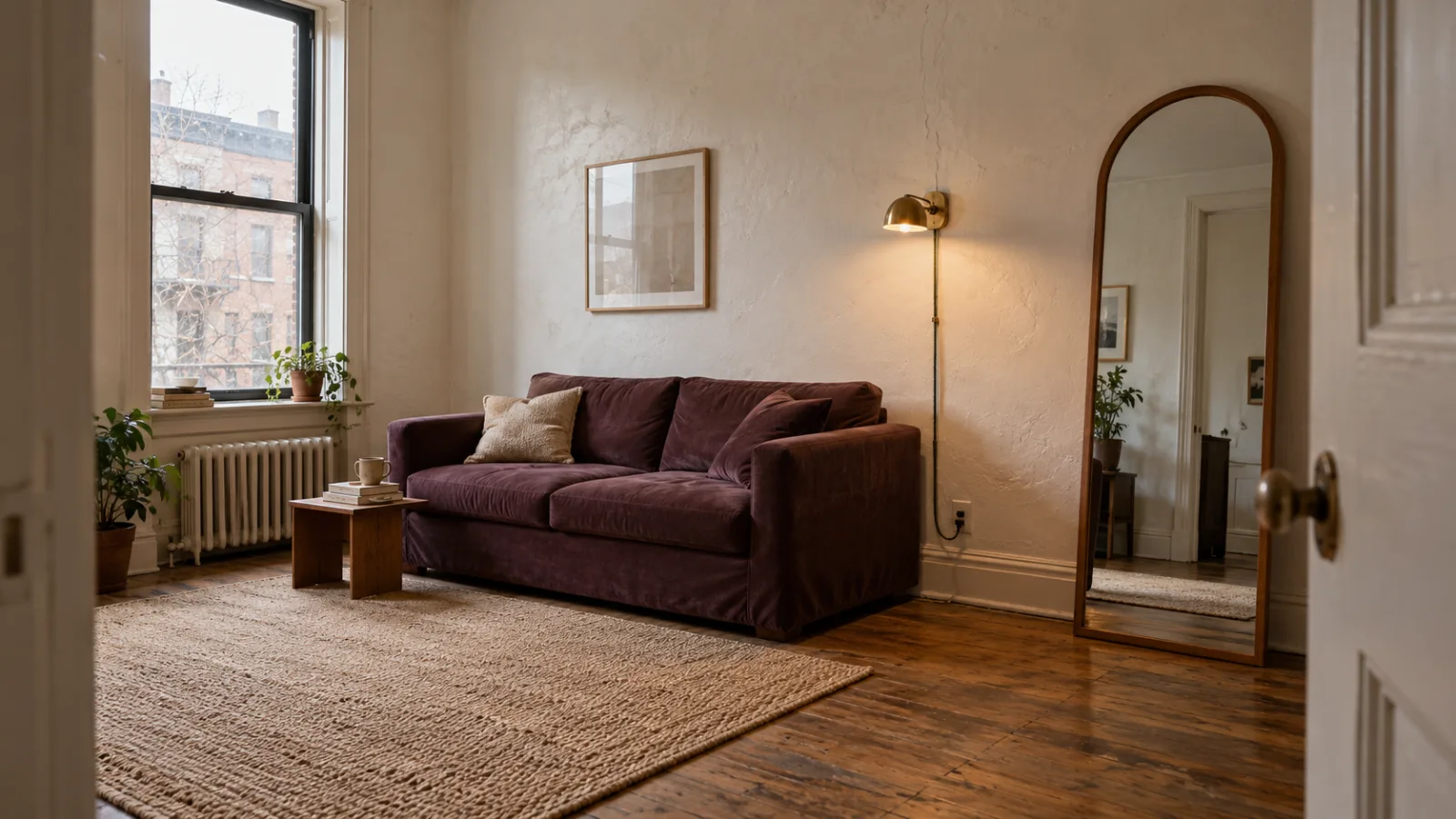
Renter-friendly living room ideas start with one simple question. Can you put the room back the way you found it when you move out?
Most leases don't ban decorating. They limit changes to the building itself, like holes, paint and wiring. So the trick is to add things to the room instead of changing the room. Think of a lamp that plugs in, a mirror that leans and a rug that rolls up. The room starts to feel like yours, and most of it can come with you to the next place.
If your living room feels dark or bare, start with wall lights in section 4 and hanging art without drilling in section 2.
In this article
- What Makes a Change Renter-Friendly?
- 1. Check the Lease Before You Decorate a Rental Apartment
- 2. No-Drill Living Room Ideas for Art and Shelves
- 3. Lean a Big Mirror Instead of Hanging It
- 4. Add Wall Lights Without New Wiring
- 5. Peel-and-Stick Ideas for Renters: Start With One Wall
- 6. Cover Dated Windows and Finishes With Fabric
- 7. Put a Rug Over Floors You Can't Replace
- 8. Choose Freestanding Storage Over Built-Ins
- 9. Bring in Color Without Painting
- 10. Small Rental Living Rooms: Fewer, Better Pieces
- Final Thoughts
- Frequently Asked Questions
What Makes a Change Renter-Friendly?
A renter-friendly change is one you can undo without a repair. When it comes out, it shouldn't leave holes, peeled paint, sticky marks or stains. It also has to be allowed by your lease. "Removable" on a package is not the same as "allowed" by your landlord.
1. Check the Lease Before You Decorate a Rental Apartment
The first step in how to decorate a rental apartment isn't shopping. It's reading the lease.
One landlord allows small nail holes. Another bans all adhesives. A condo building may have its own rules about balconies and drilling hours. Before you buy anything that attaches to a wall, check three things.
- The lease. Look for rules on painting, drilling, adhesives and "alterations."
- The wall. Smooth painted drywall, old plaster, concrete and tile all behave differently.
- The product. Read the weight limit, the surfaces it suits and how to remove it.
Then take dated photos of every wall, floor and fixture before you change anything. Photos won't settle a dispute on their own, but they help show what was already there when you moved in. In the US, deposit rules are set by each state, so check your state's tenant guidance. In England and Wales, your landlord must protect your deposit in a government-approved scheme, which offers a free dispute service if you disagree about how much comes back.
If something needs a screw, ask your landlord in writing.
2. No-Drill Living Room Ideas for Art and Shelves
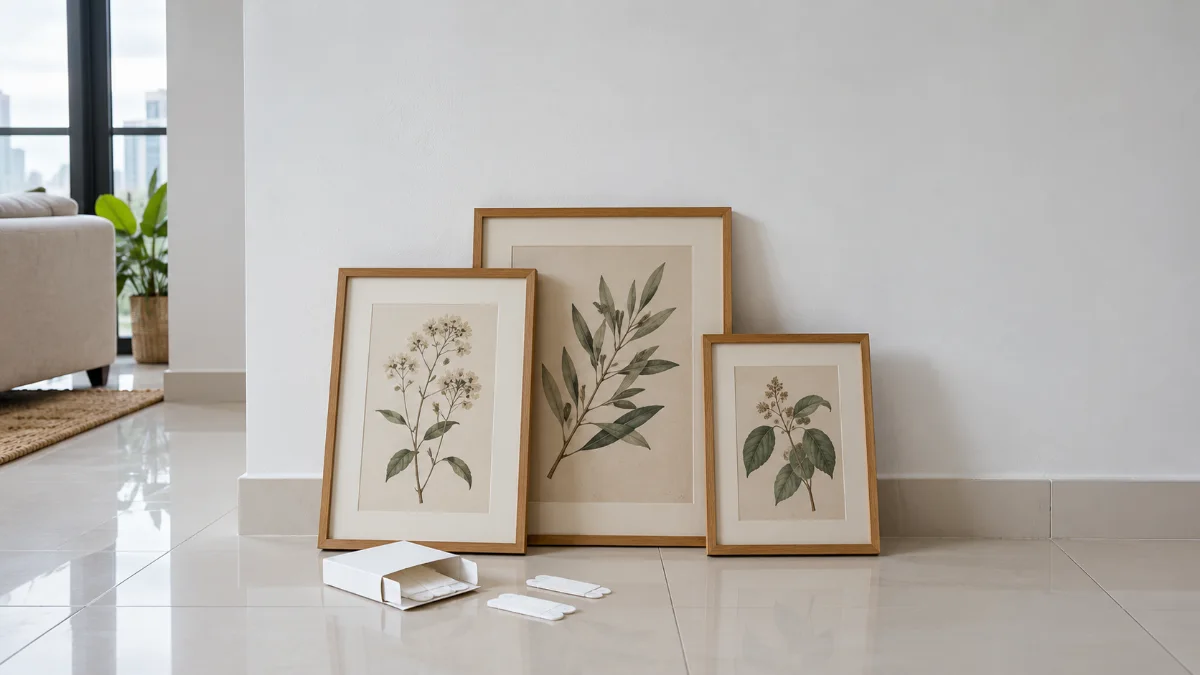
For light art, adhesive picture-hanging strips are the most common no-drill option. They work best on smooth painted walls, with frames well under the weight limit.
Limits depend on the strip size. 3M's Command picture-hanging strips are a useful example. The figures below are from 3M's US product pages.
| Strip size (3M Command) | Weight limit with 4 pairs | Largest frame |
|---|---|---|
| Small | About 1.8 kg (4 lb) | About 20 × 25 cm (8 × 10 in) |
| Medium | About 5.4 kg (12 lb) | About 46 × 61 cm (18 × 24 in) |
| Large | About 6.8 kg (15 lb) | About 61 × 91 cm (24 × 36 in) |
3M also says to wait seven days after painting before using them. It says not to use them on wallpaper, over a bed or for valuable items. These limits are 3M's guidance for its own strips, used as directed. They aren't a promise for every frame or wall. Other brands list different limits, so follow the package you buy. When you take a strip off, pull the tab slowly straight down along the wall, not outward.
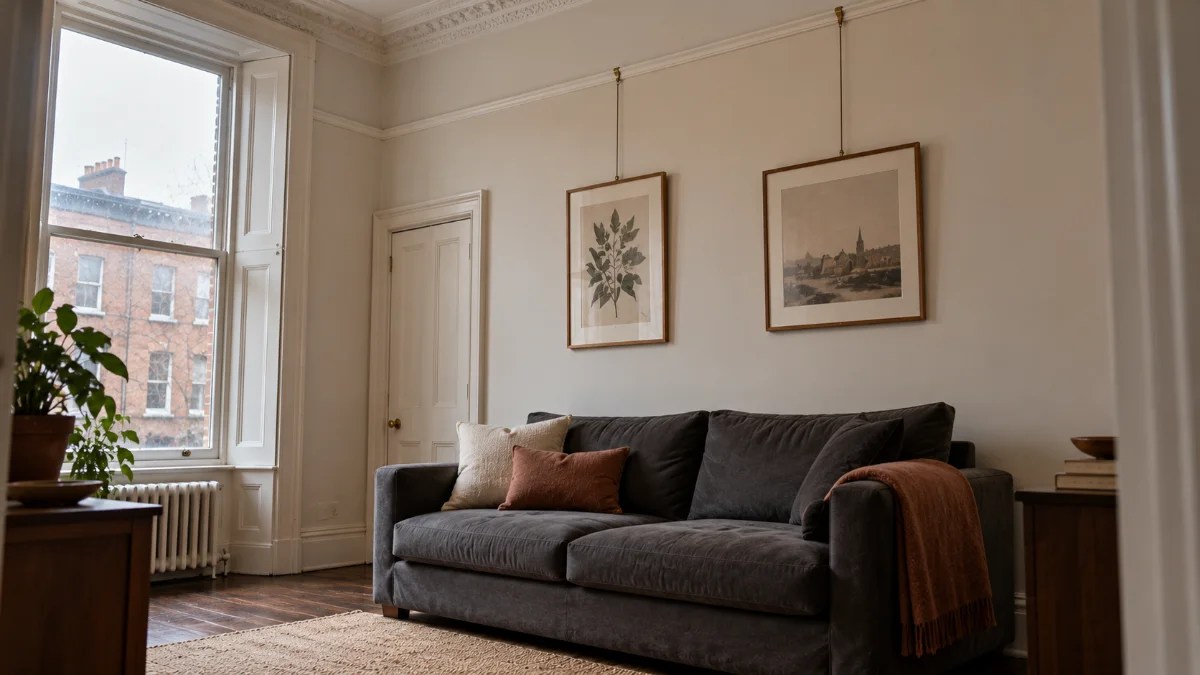
Older homes sometimes have a better option. Many older apartments, from prewar buildings in New York to Victorian flats in Manchester, have a picture rail. This is a wooden molding that runs around the room just below the ceiling. Hooks sit over the rail, and a cord or chain drops down to the frame. You can move art as often as you like, and the wall stays untouched.
For shelves, skip wall-mounted ones. A freestanding ladder shelf or a tension pole shelf can hold books and plants instead. Check the maker's height range and make sure the pole sits firmly before you load it.
3. Lean a Big Mirror Instead of Hanging It
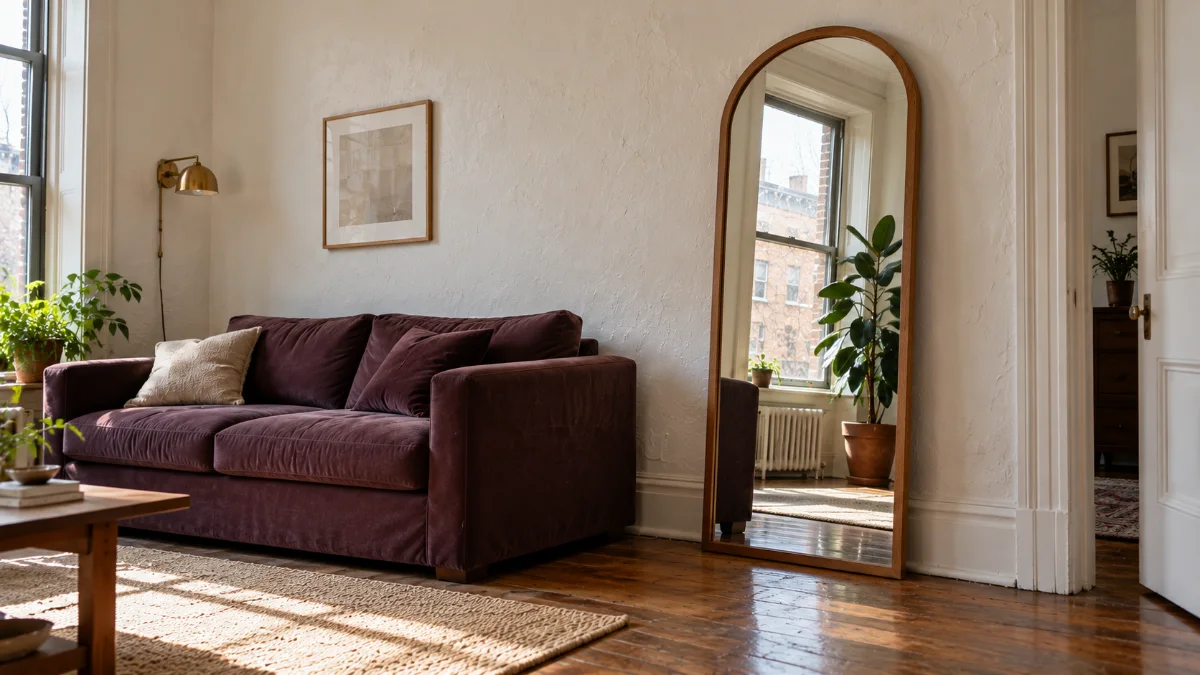
Heavy mirrors are where adhesive strips stop making sense. A full-length mirror often weighs more than any strip is rated for. Leaning it on the floor solves the problem.
A tall mirror can fill a blank wall the way a piece of furniture would. It also bounces daylight around the room. A mirror opposite a window can make the room look brighter.
Leaning still needs care, because a big mirror is heavy. Follow the maker's instructions for leaning it. Many say to set the base on a non-slip pad and to fit the included anti-tip strap. A strap usually means a small fixing, so ask your landlord first. If you can't secure it safely, choose a smaller mirror on a sturdy console, or place it where nobody walks past.
4. Add Wall Lights Without New Wiring
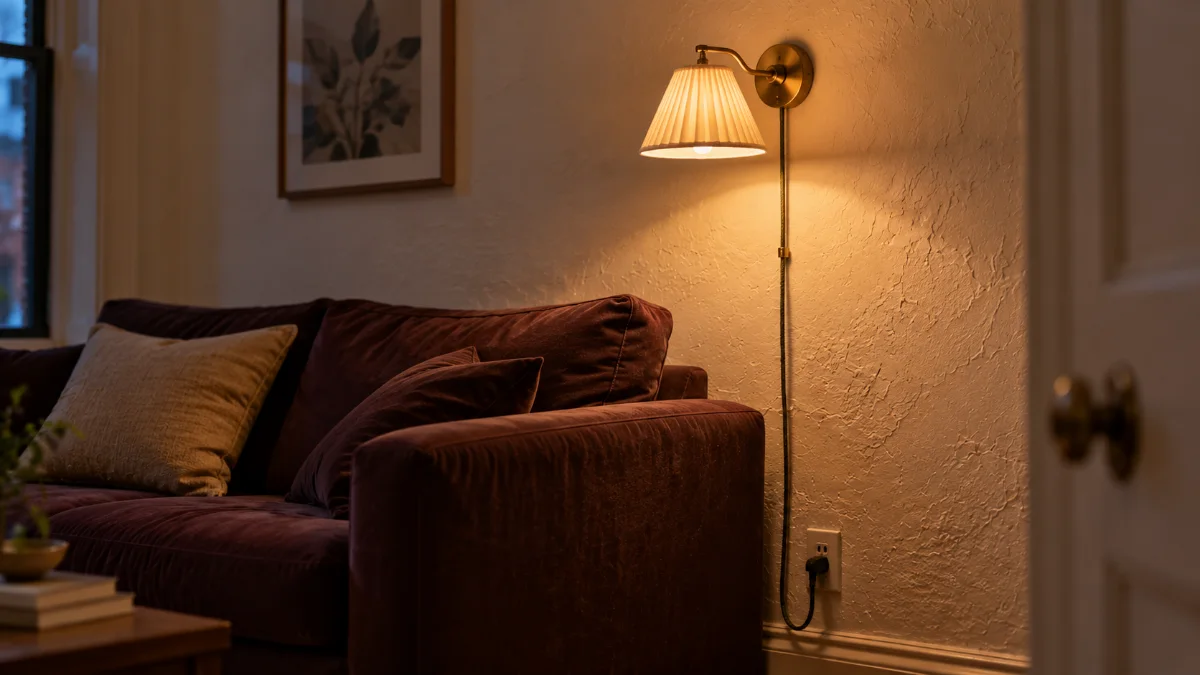
A plug-in wall sconce gives you a wall light without touching the building's wiring. It plugs into a normal outlet, so you don't need an electrician.
This helps most in rentals with a single ceiling light in the middle of the room. A sconce beside the sofa puts light where you read.
Most plug-in sconces still mount with a backplate and two small screws. "Plug-in" means no wiring. It doesn't always mean no holes. Small screw holes are usually easy to fill, but check your lease or ask first. If holes aren't allowed at all, look at battery-powered sconces. They give less light and need recharging. Many mount with adhesive, so the same rules apply as for strips. The wall surface and the product's instructions decide whether they come off cleanly.
Then plan the cord. A cord that runs straight down to the outlet looks tidy. A cord that crosses the wall at an angle looks like an afterthought. Paintable cord covers usually stick on with adhesive, so treat them like any other adhesive product.
For safety, look for a mark from a recognized testing lab, such as UL or ETL in North America. Bulb color and how many lamps a room needs are covered in our living room lighting guide.
5. Peel-and-Stick Ideas for Renters: Start With One Wall
Removable wallpaper can change one wall without paint. It works best on smooth walls with paint that's fully dry and in good condition.
The wall matters more than the wallpaper. Textured walls cause trouble, because the glue only touches the bumps. Fresh paint, flaking paint and very flat, chalky paint can also come off with the paper. One brand, Jungalow, advises against using its peel-and-stick products on textured walls or on unpainted drywall or plaster. It also warns that some paint may lift on removal. Other makers have their own lists, so read the one for your product.
So test first. Stick a sample somewhere hidden, like inside a closet or behind the sofa. Leave it as long as the maker suggests, then peel it off slowly. If paint comes with it, stop there.
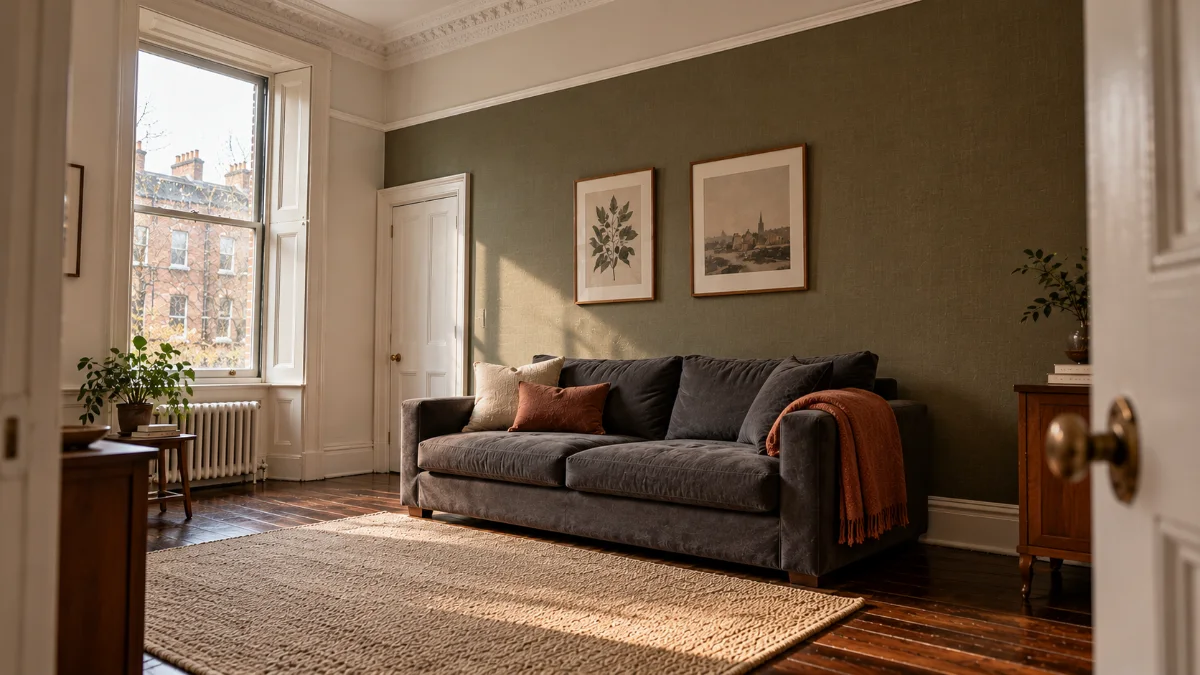
One wall is usually enough. The wall behind the sofa is a natural choice, since furniture covers part of it anyway. You don't need a loud print, either. A soft linen texture or a muted green can make a plain white box feel different.
6. Cover Dated Windows and Finishes With Fabric
Every rental has something you'd never choose. It might be yellowed vertical blinds, a tired fireplace surround or an odd corner full of pipes.
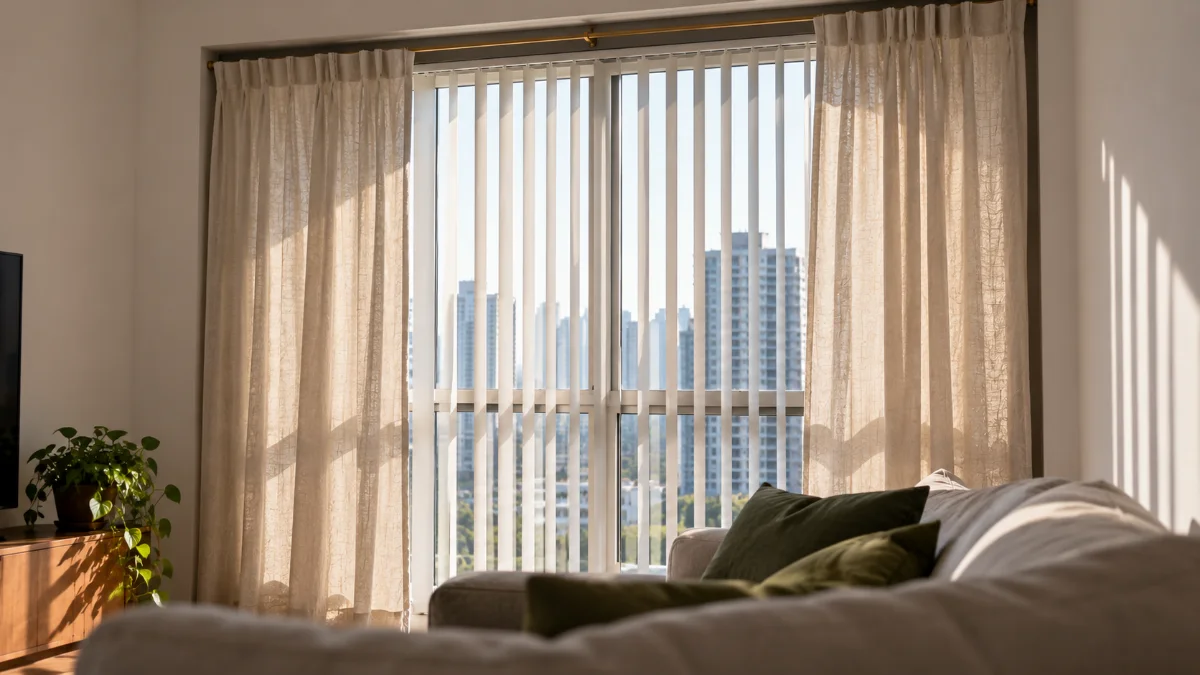
You can't remove these things, but you can put something in front of them. Fabric is the easiest layer. If you can't drill brackets, a spring-loaded tension rod fits inside the window frame. Check that the rod's length range suits your frame and that its weight limit covers your curtains.
For other problems, use pieces that stand on their own. A big framed print on a mantel can pull attention away from a dated fireplace.
One caution for humid homes, like many apartments in Miami or Houston. Fabric pressed against a window or wall for months can trap damp and encourage mold. Leave a small gap so air can move. Our guide to furniture for a humid climate covers airflow in more detail.
7. Put a Rug Over Floors You Can't Replace
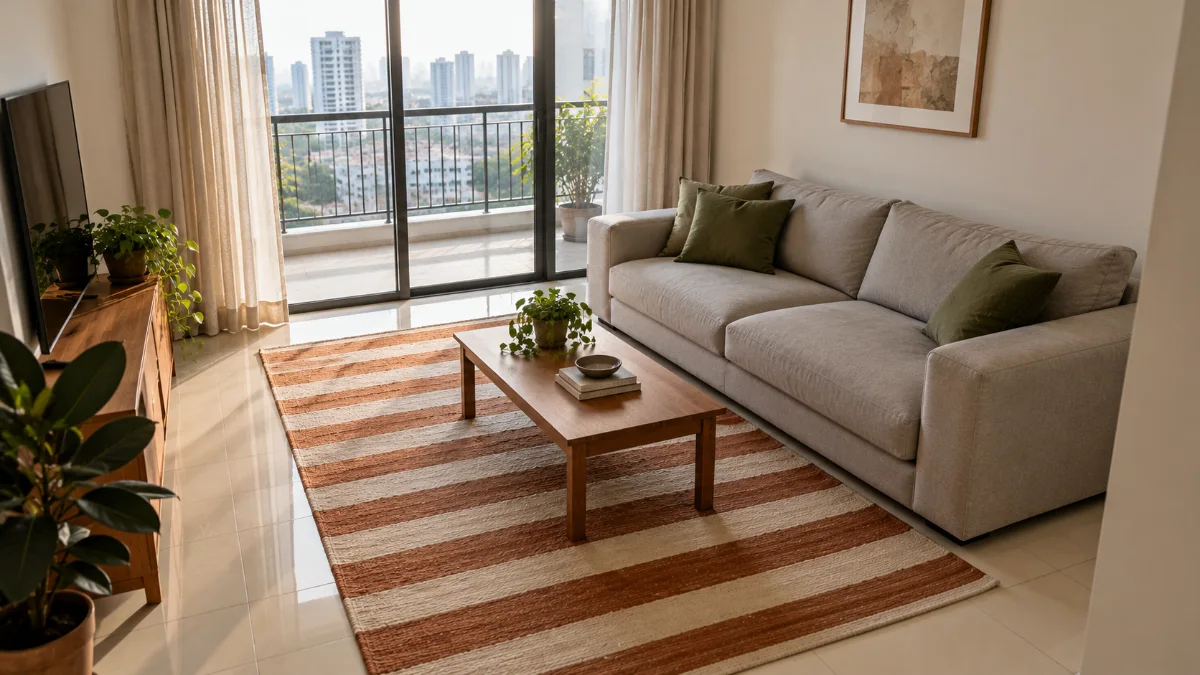
A rug is the classic renter-friendly decor fix for a scratched, cold or dated floor. It covers the problem and rolls up when you move.
Choose it with the next home in mind. A rug sized exactly for this room may not fit the next one. For sizes and placement, see our living room rug size guide.
In a rental, the rug pad matters too. Some vinyl and wood floor makers warn that certain rubber or plastic backings can discolor the surface. Check the floor's care guide if your landlord has it, and pick a pad labeled safe for that floor type.
Climate changes the choice. In a cold Chicago apartment, a wool rug adds warmth underfoot. In a Miami condo with tile floors and air conditioning, a flatweave cotton rug is light and easy to wash.
8. Choose Freestanding Storage Over Built-Ins
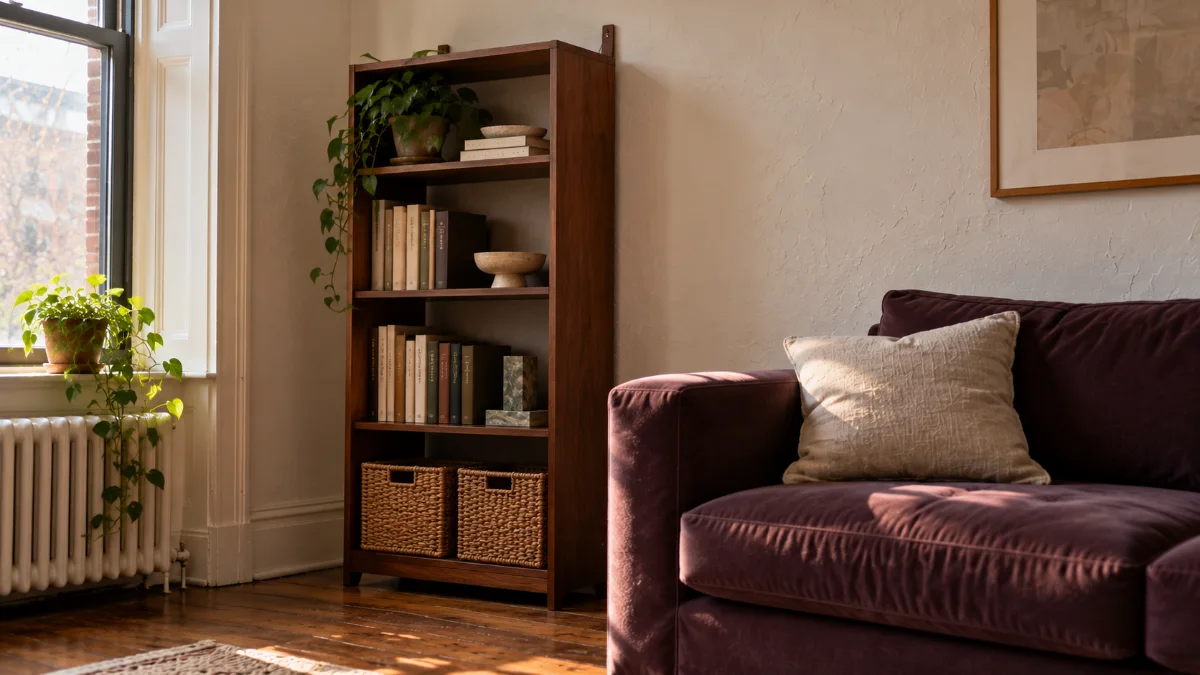
Built-in shelves are a permanent change. A freestanding bookcase or cabinet gives you the storage, and it leaves with you.
Low cabinets, ladder shelves and storage benches suit most rental living rooms. Pick a finish that would also look good in a different room, like plain oak, walnut or a painted color you like. A piece that only matches this rental's carpet may look odd after the move. More ideas are in our living room storage ideas.
Tall furniture needs one honest warning. "No drill" should never mean "no anchor." The U.S. Consumer Product Safety Commission recommends anchoring TVs, bookcases and dressers to the wall. Tip-overs send thousands of children to emergency rooms each year. If your bookcase comes with an anti-tip kit, ask your landlord about fitting it. If it can't be anchored, choose a lower piece instead of leaving tall furniture unsecured.
For a TV, a low, sturdy media unit is a safer base than a tall dresser. Our TV wall guide covers media unit sizes.
9. Bring in Color Without Painting
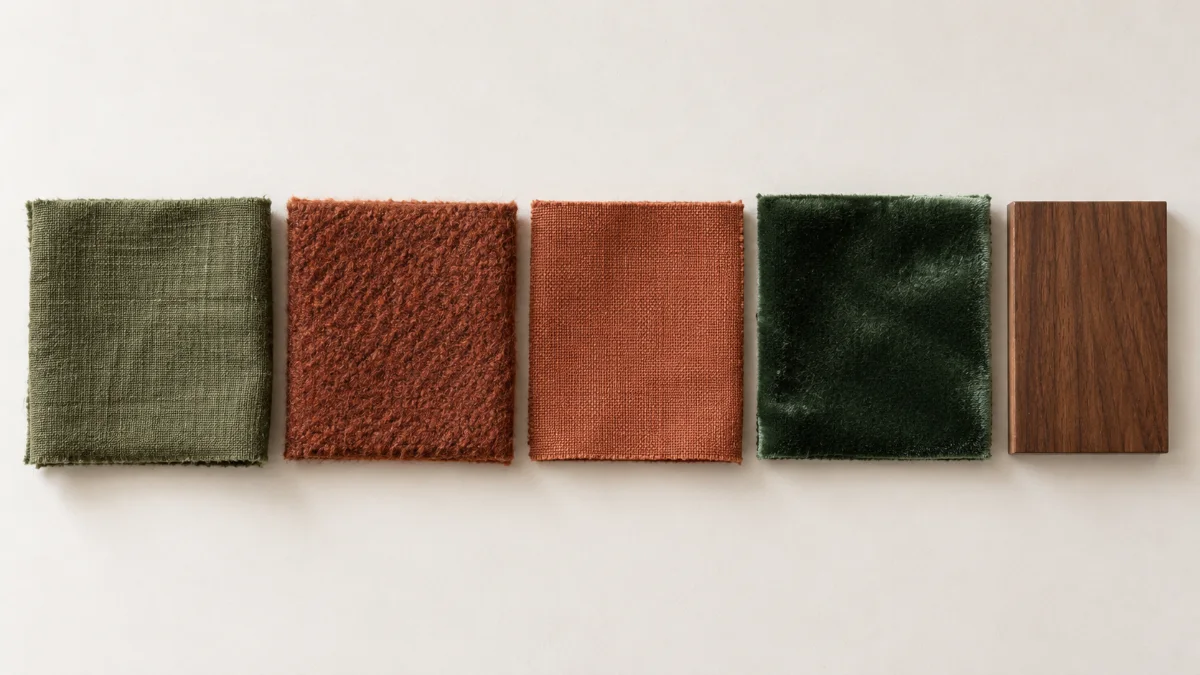
If you can't paint, put color into things you'll take with you. Cushions, throws, curtains, lampshades, art and a single armchair can all bring color into the room.
This is a good place to be a little braver. Paint is a commitment, but a rust throw isn't. Olive, terracotta, deep green and warm brown can make plain white rental walls feel warmer. If you get tired of a color, you swap a cushion cover.
How to build a full color scheme is covered in our living room color schemes guide.
10. Small Rental Living Rooms: Fewer, Better Pieces
In a small rental, it's tempting to fix everything at once. The room fills up fast, and none of it stands out.
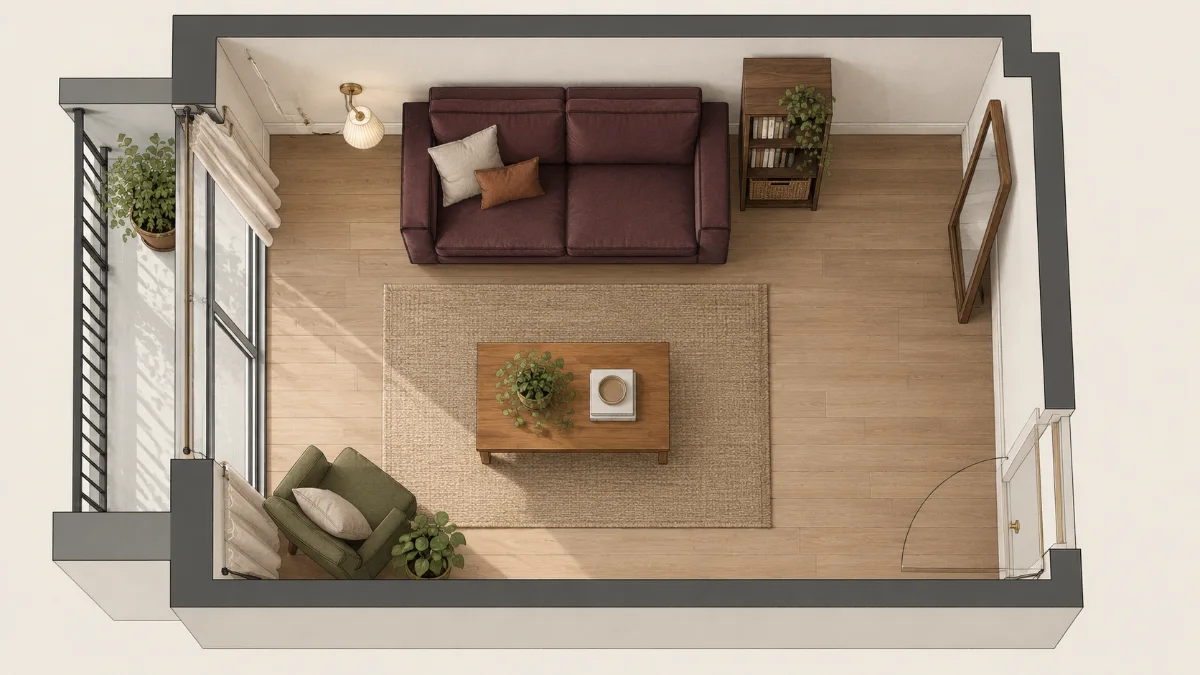
The most useful small rental living room ideas start with one problem. Pick the thing that bothers you most and fix that first. If the room is dark, start with a sconce. If the walls are bare, try one large leaning mirror or one big print. If the floor is the problem, start with a rug. If clutter is the issue, add one freestanding cabinet.
In a walk-up, measure the stairs and turns before you buy a tall bookcase or a big mirror. In a small condo, keep the path to the balcony door clear. Our small condo living room guide has more ideas for tight spaces. If your living room is also your bedroom, see our studio apartment layout ideas.
Final Thoughts
A rental doesn't have to stay exactly as you found it. The useful line is between changing the room and adding to it. Lights that plug in, mirrors that lean and rugs that roll up all stay on the right side of that line.
Start here. Take dated photos of every wall and floor today. Then pick the one thing in the room you like least, and find a layer that can sit in front of it.