
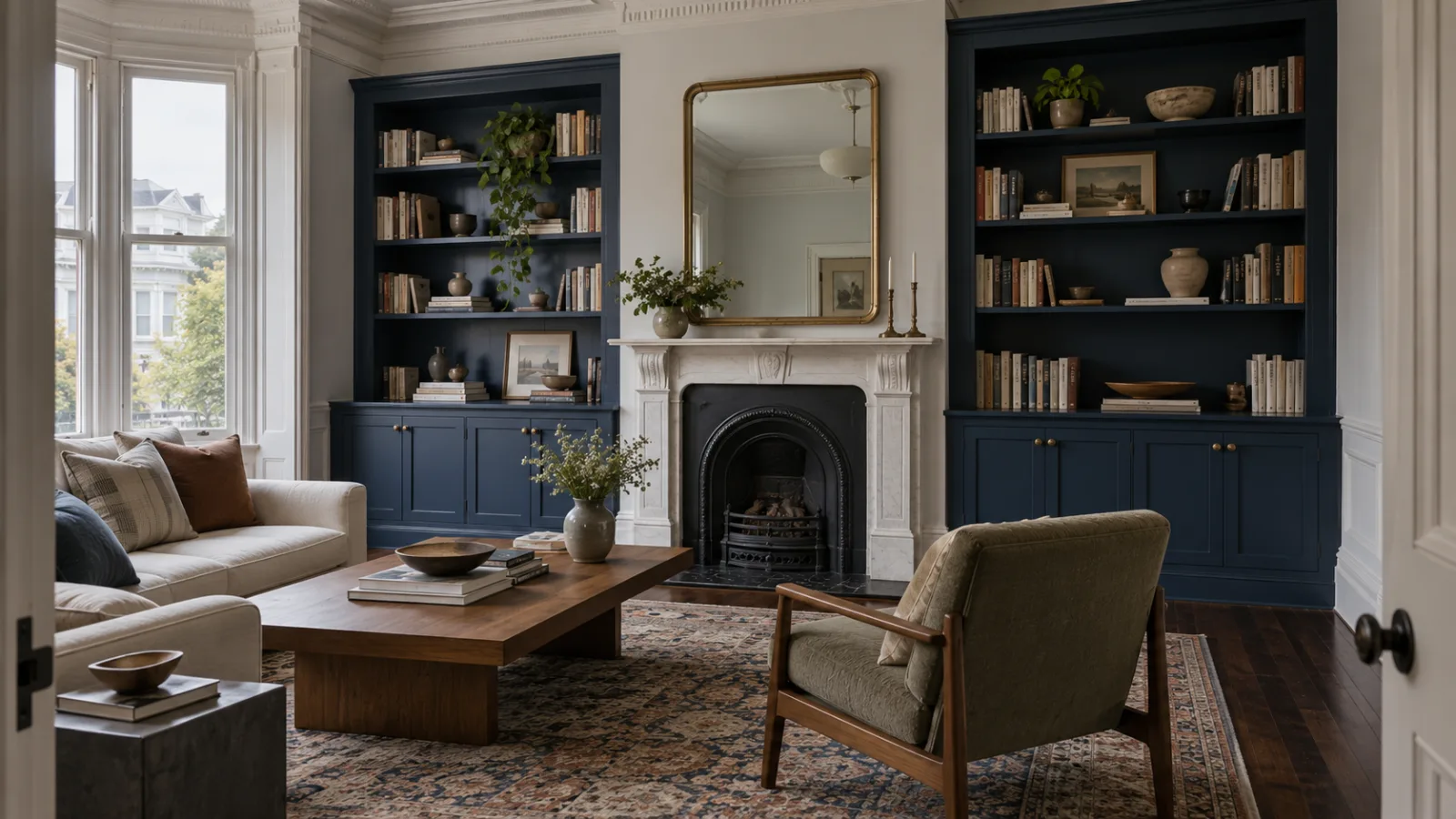
The most useful living room storage ideas start with one simple question. What should people see, and what should stay hidden? Books, a few ceramics and a plant can make a room feel lived-in. Chargers, board games and a tangle of cables usually can't.
Storage tends to get bought one piece at a time. A bookcase comes first. Then a basket, and then a cabinet that almost matches. Before long, the room has plenty of storage and still looks messy.
A little planning helps the pieces work together. If you're short on time, start with open and closed storage in section 1 and shelf depths in section 3.
In this article
- 1. Open vs Closed Storage: Decide What Goes on Show
- 2. Make a List Before You Buy
- 3. Choose Shelf Depth for What You Store
- 4. Built-In Shelves in the Living Room vs Freestanding Bookcases
- 5. Closed Below, Open Above
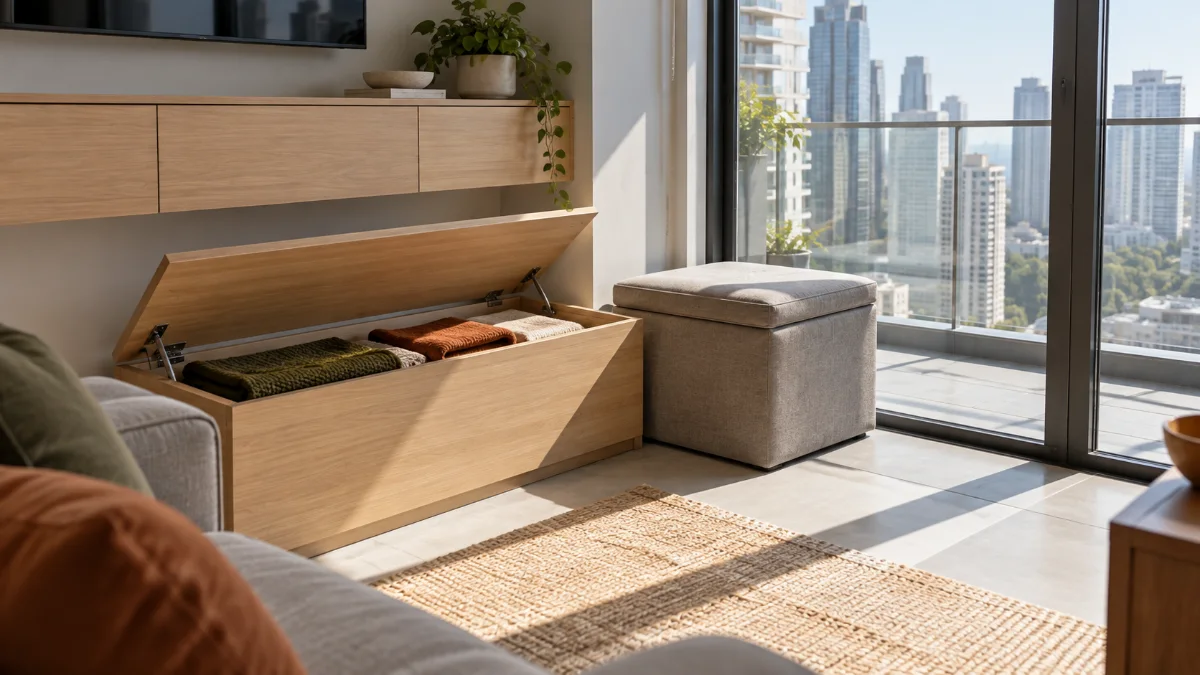
- 6. Hidden Storage Ideas for the Living Room
- 7. How to Style Shelves in the Living Room
- 8. Living Room Shelving Ideas for Awkward Walls
- 9. Small Living Room Storage Ideas
- 10. Anchor Tall Bookcases and Cabinets to the Wall
- Final Thoughts
- Frequently Asked Questions
1. Open vs Closed Storage: Decide What Goes on Show
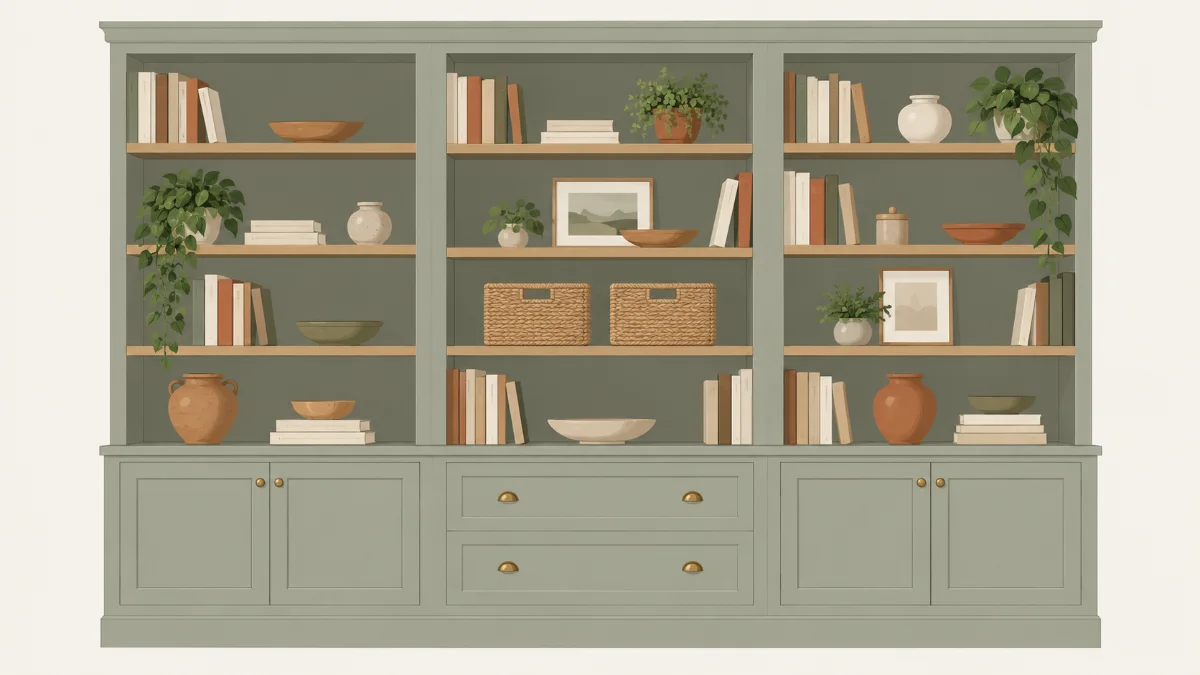
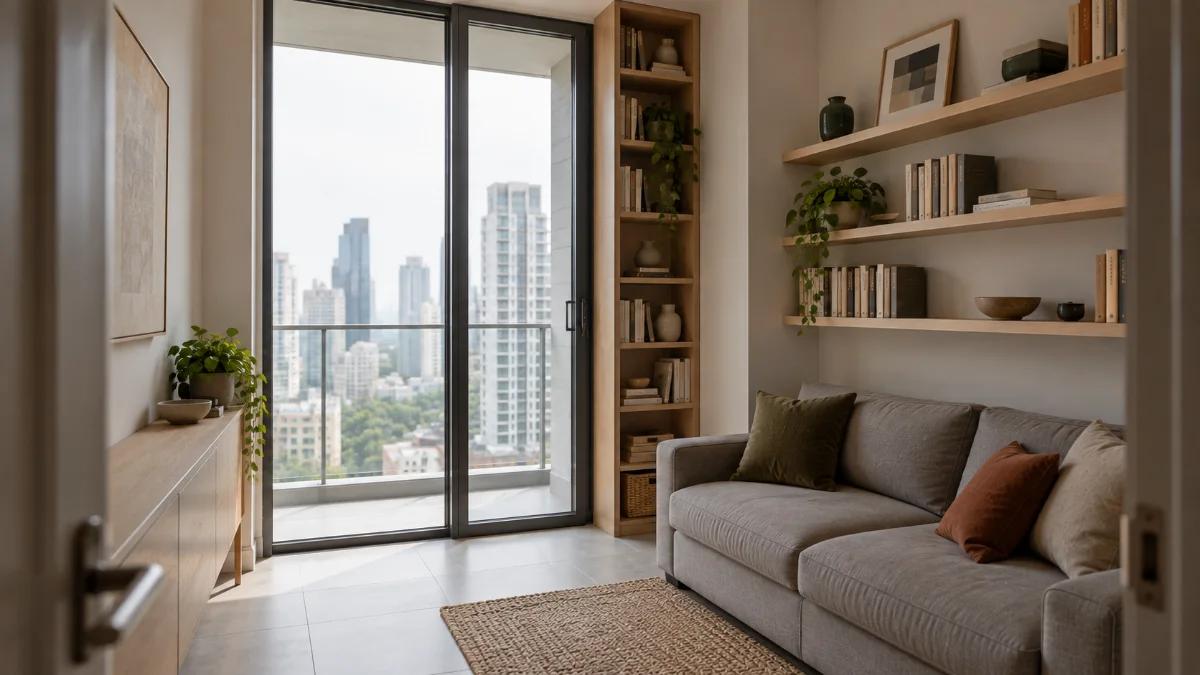
Use open shelves for things you like looking at. Use closed cabinets, drawers or baskets with lids for things you need but don't want to see. Most living rooms work best with some of each.
Open shelves keep a room feeling light and personal. But they show everything, including the stray remote and last week's mail. Closed cabinets hide that everyday mess. A whole wall of plain doors, though, can make a living room feel like an office.
So sort your things into two groups. Books and art you love go on show. Games, cables, paperwork and toys go behind doors. Throws and magazines sit in between, and that's where open baskets help.
If you live somewhere humid, give closed cabinets a little airflow. Don't shut damp fabrics or books inside them. The furniture for humid climates guide covers materials and airflow in more detail.
2. Make a List Before You Buy
Most people buy storage first and decide what goes in it later. That's how you end up with a nice cabinet that's too shallow for the board games. Or a bookcase full of things that aren't books.
Try the opposite. Walk around the room and write down what actually lives there. Think books, throws, toys, games, chargers, the router, paperwork and pet things.
Then measure the biggest item in each group. An oversized art book, a vinyl record or a games console decides how deep its shelf or cabinet needs to be.
The list also shows what doesn't belong in the living room at all. If half of it is paperwork, a drawer in the hallway may help more than another cabinet. Cutting a room down to fewer pieces is covered in the warm minimalist living room guide.
3. Choose Shelf Depth for What You Store
Standard bookcases are often about 25–30 cm (10–12 in) deep. That fits most paperbacks and hardcovers. It also keeps the bookcase from taking over the room.
On a much deeper shelf, small books slide to the back and dust collects in front. On a shallower shelf, hardcovers hang over the edge. If you're building shelves, you can change the depth by section. Use shallow shelves for photos and small ceramics, and deeper ones below for baskets and games.
| What you're storing | Shelf depth | Space between shelves |
|---|---|---|
| Paperbacks | 15–20 cm (6–8 in) | About 25 cm (10 in) |
| Hardcovers | 20–25 cm (8–10 in) | 30–35 cm (12–14 in) |
| Binders and magazine files | 30–35 cm (12–14 in) | Measure the tallest item |
| Art books and board games | 35–45 cm (14–18 in) | Measure the tallest item |
| Vinyl records | 35–40 cm (14–16 in) | At least 33 cm (13 in) |
These ranges come from one planning guide based on common bookcase sizes, not an official standard (Layoutr bookshelf depth guide). Actual sizes vary by maker. The same guide suggests supports about 60–80 cm (24–31 in) apart for full rows of books, because longer shelves can sag over time. Adjustable shelves are worth having, because your collection will change.
Deep cabinets also stick out into the room. Check that they don't narrow your walkway. Walkway widths are covered in the living room furniture layout guide.
4. Built-In Shelves in the Living Room vs Freestanding Bookcases
Built-in shelves suit homeowners with an awkward wall to fill. Freestanding bookcases suit renters and anyone who might move or rearrange the room. Our renter-friendly living room ideas cover more changes you can undo.
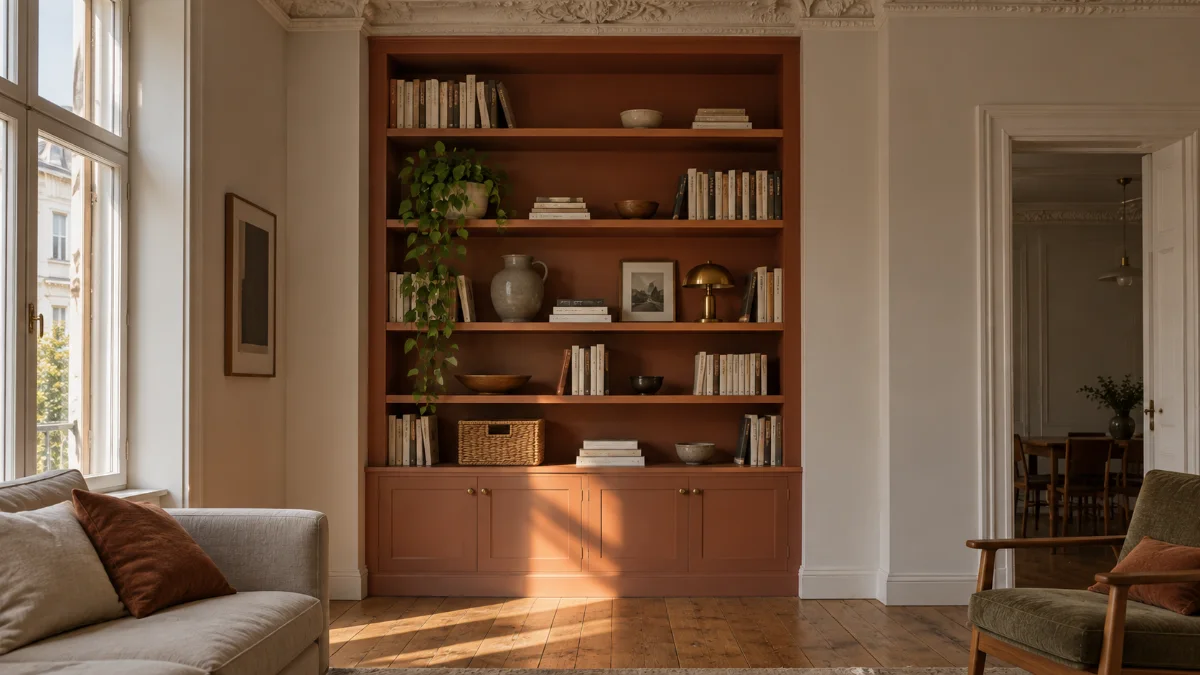
Built-in shelves in the living room look best in alcoves, around a fireplace, or across a long wall that's hard to furnish. Many older houses, such as Victorian terraces, have an alcove on each side of the fireplace. Shelves built into them can look like they came with the house.
Built-in shelves: pros
- Use the whole wall, including odd-sized alcoves and the space up to the ceiling
- Look like part of the house, especially when painted the wall color or a strong shade like navy or terracotta
- Can combine shelves, cabinets, drawers and lighting in one unit
Built-in shelves: cons
- Cost more and take longer, because they're usually made to measure
- Stay with the house, so they're rarely an option for renters
- Are hard to change if your needs or taste change
Freestanding bookcases are the opposite. They're cheaper and easy to move or replace. But they leave gaps at the sides and top, which can look unfinished. Two matching bookcases with a low cabinet between them can get close to the built-in look. Choosing a paint color for shelves is covered in the living room color schemes guide.
5. Closed Below, Open Above
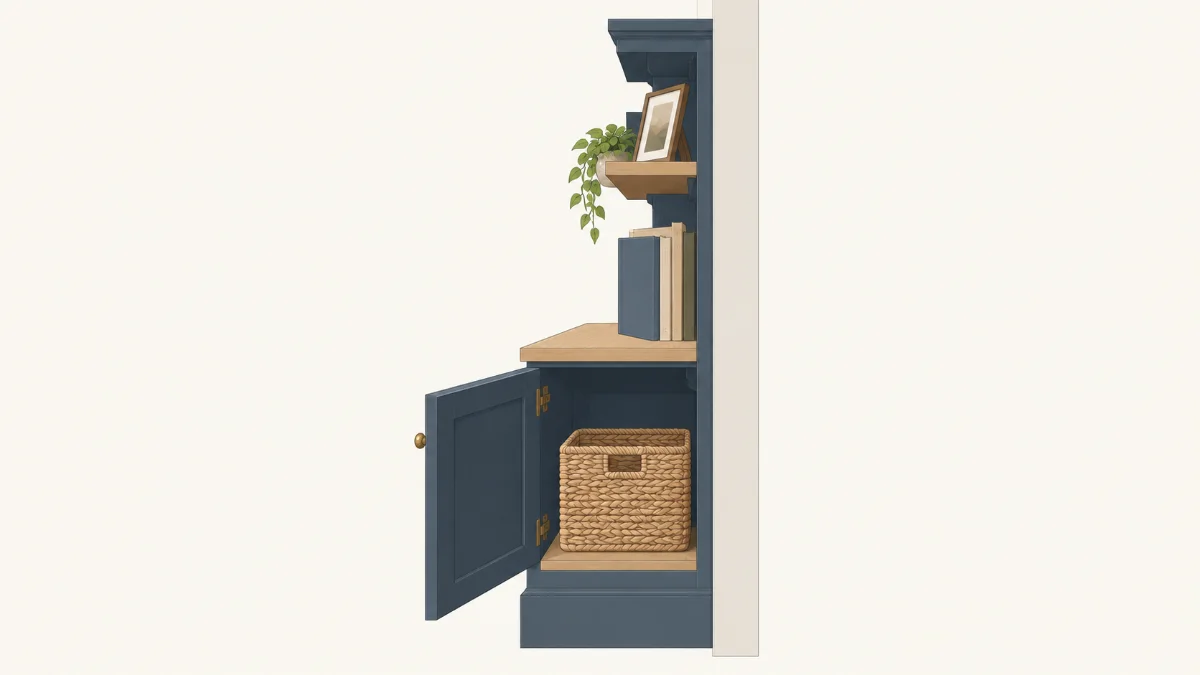
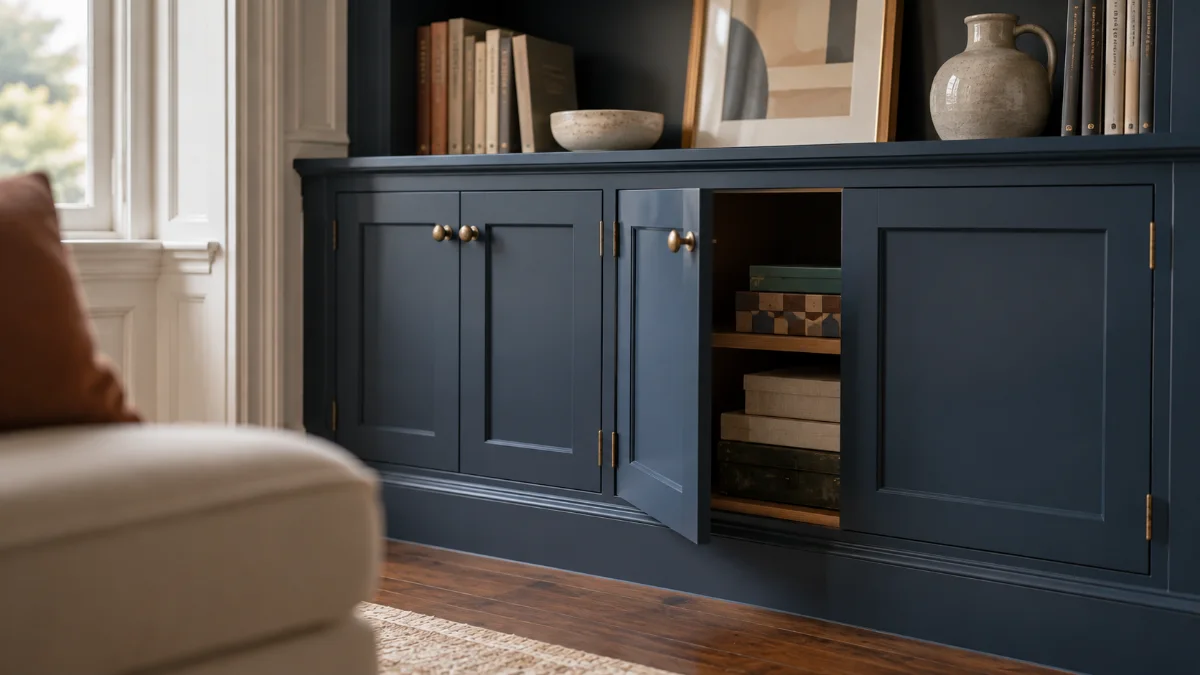
A common built-in layout puts closed cabinets on the lower part of the wall and open shelves above. Each kind of thing ends up where it's easiest to use.
The lower cabinets, about the height of a sideboard, hold the heavy and messy things. Think games, toys, the printer and spare cables. Kids can reach them, and the doors close on the mess. The upper shelves hold books, art and a few objects at eye level, where you'll actually see them. Keeping heavy things low also helps a tall unit stay steady.
The cabinet top becomes a handy ledge for a lamp or a leaning frame. If the unit goes around a TV, closed doors are useful for game consoles and the router. Add air holes or gaps so the electronics don't overheat. TV wall layouts and hiding cables are covered in the TV wall ideas guide.
7. How to Style Shelves in the Living Room
Shelves tend to go wrong in one of two ways. Some are packed from edge to edge. Others hold lots of tiny objects in a neat row. Either way, there's nowhere for your eye to rest.
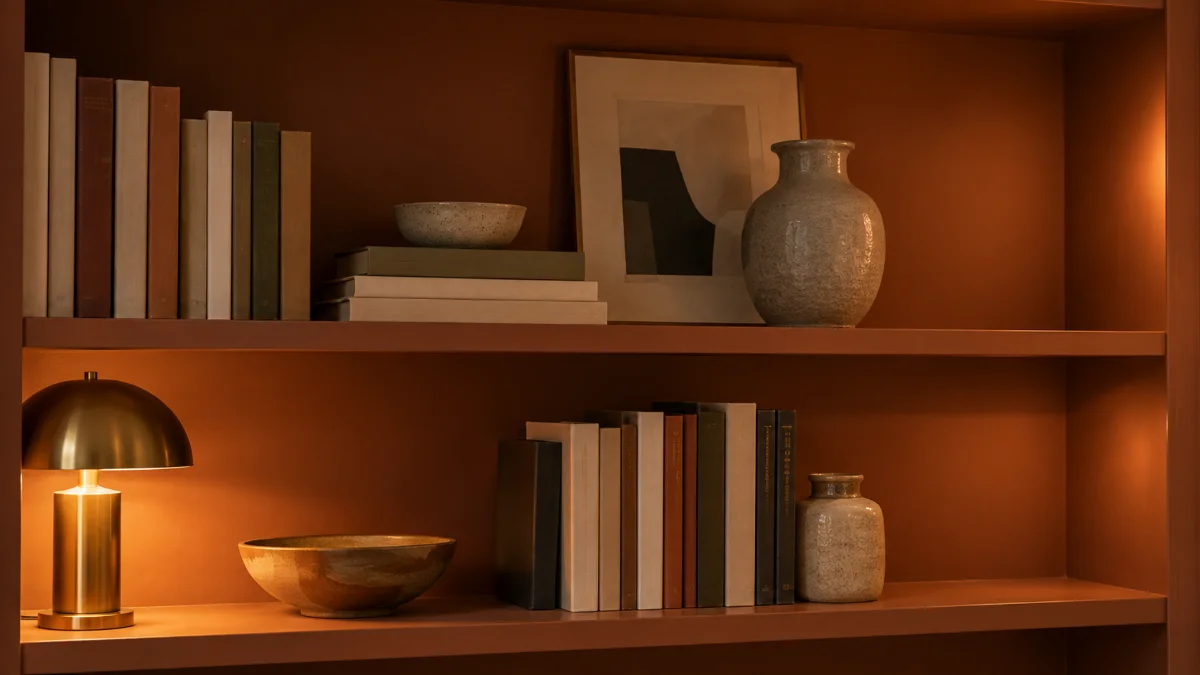
Styling guides often suggest letting books fill most of each shelf. The rest is shared between a few objects and some empty space. Treat this as a loose guide, not a target. If you own a lot of books, your shelves can be mostly books, as long as each one has a little empty space.
To style shelves in a living room, put the books back first. Mix upright rows with a few small stacks lying flat. A flat stack makes a little stand for a bowl or candle. Then add a few larger objects in groups of three, in different heights. A few bigger pieces often look calmer than lots of small ones. Put heavy-looking pieces low and in the middle, and lighter ones higher up. Finally, step back and take one thing off each shelf.
Baskets on the bottom shelf make the whole look more forgiving. Keep them in one material, like seagrass or rattan, so they look like a set. Mixing textures is covered in the modern cozy living room guide.
8. Living Room Shelving Ideas for Awkward Walls
Most living rooms have a wall nobody knows what to do with. It might be too narrow for furniture, broken up by a window, or above a door. These are often the best places for shelves.
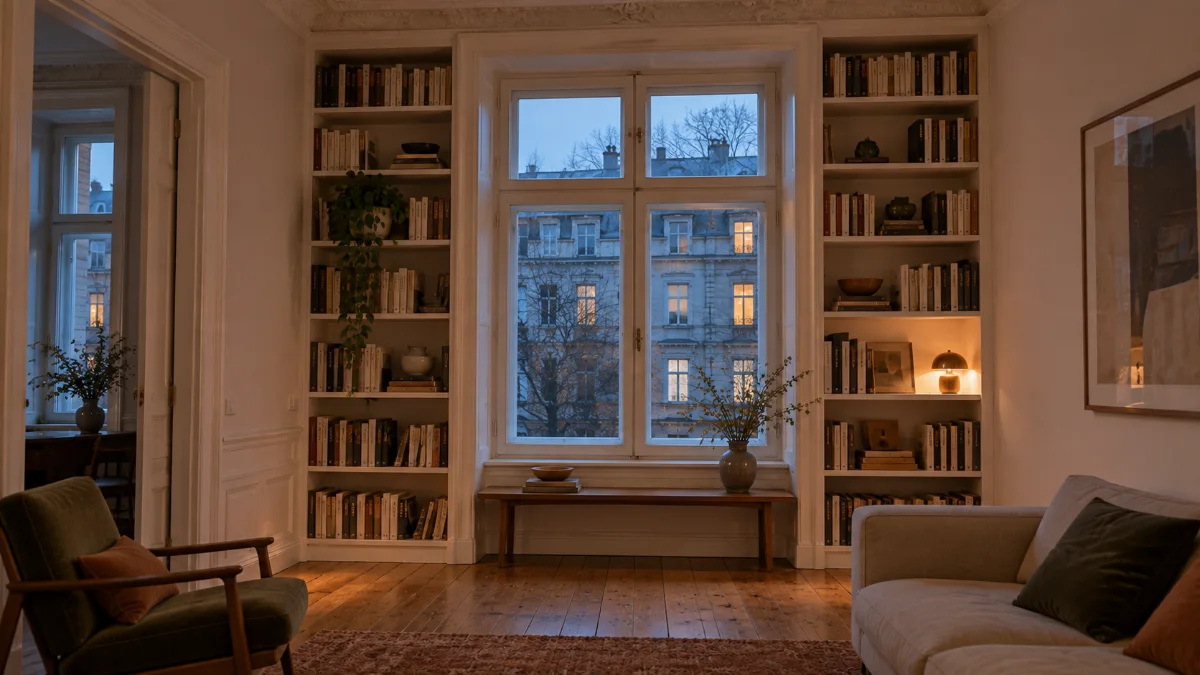
A shallow shelf over a doorway holds books without using any floor space. Slim shelves can also wrap around a window frame. A narrow wall beside a door can take a tall bookcase only 20–25 cm (8–10 in) deep, which is enough for paperbacks. Corners can hold floating corner shelves. In older apartments with high ceilings, one long shelf near the top of the wall can display art and books above eye level.
Shelves around a window look best when they hold mostly one kind of thing, such as books. That way the window stays the main feature. Keep low shelves under a window below the sill, so they don't block the light. Lighting for shelves is covered in the living room lighting guide.
9. Small Living Room Storage Ideas
In a small living room, store things up the wall rather than across the floor. The space above eye level is often the space nobody is using.
A tall, slim bookcase takes less floor space than a wide, low one, and it can hold more. Wall-mounted cabinets, floating shelves and furniture on legs all leave more floor showing. Seeing more floor can help a room look larger. Pieces that hide things while doing another job help too, like the ottomans and benches in section 6.
The mistake to avoid is filling every wall. Leave at least one wall fairly clear, so the room has somewhere calm to look. Low, simple furniture can also help, and the Japandi living room guide covers it in more detail. Furniture sizes for small apartments are covered in the small condo living room guide.
10. Anchor Tall Bookcases and Cabinets to the Wall
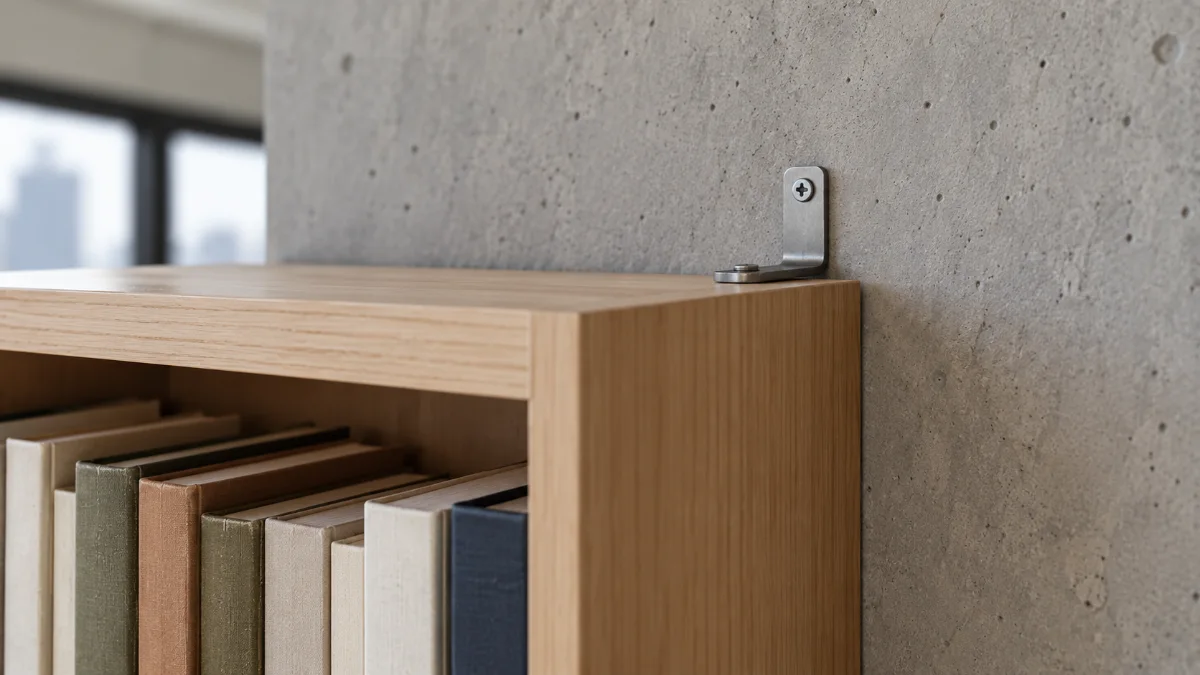
Anchor any tall bookcase or cabinet to the wall. This matters most if children or pets live in or visit your home. The U.S. Consumer Product Safety Commission (CPSC) says most anti-tip kits are inexpensive and take less than 20 minutes to fit.
The numbers show why it's worth doing. A CPSC report estimated about 22,500 emergency room visits a year from furniture, TV and appliance tip-overs during 2018–2020. Children accounted for nearly 44% of those injuries (CPSC Anchor It!). The U.S. mandatory tip-over rule covers clothing storage like dressers and chests. Bookcases and other shelving units are exempt (STURDY Act summary). So anchoring a bookcase is up to you.
Before you fit an anti-tip kit, check three things.
- Wall type. Drywall needs a stud or a suitable wall anchor. Brick and concrete walls need masonry plugs and screws.
- Instructions. Use the kit and fixing points from the furniture maker where possible.
- Loading. Put heavy books and objects on the lower shelves. Don't put a TV on top of a bookcase.
If you rent, ask your landlord before drilling. In earthquake areas, anchoring matters even in homes without children. California's emergency services office advises fixing the tops of bookcases to wall studs, not just the drywall (Cal OES furniture guide).
Final Thoughts
Most living room storage problems come from mixing everything together. The books, the cables and the toys all end up on the same shelves. Giving each group its own place, open or closed, often helps more than buying another piece of furniture.
Start here. Write down everything that lives in your living room, mark each item "show" or "hide," and measure the biggest thing in each group before you buy anything.